June 23, 2026
Why Hotel Tech Problems Aren’t Always Tech Problems
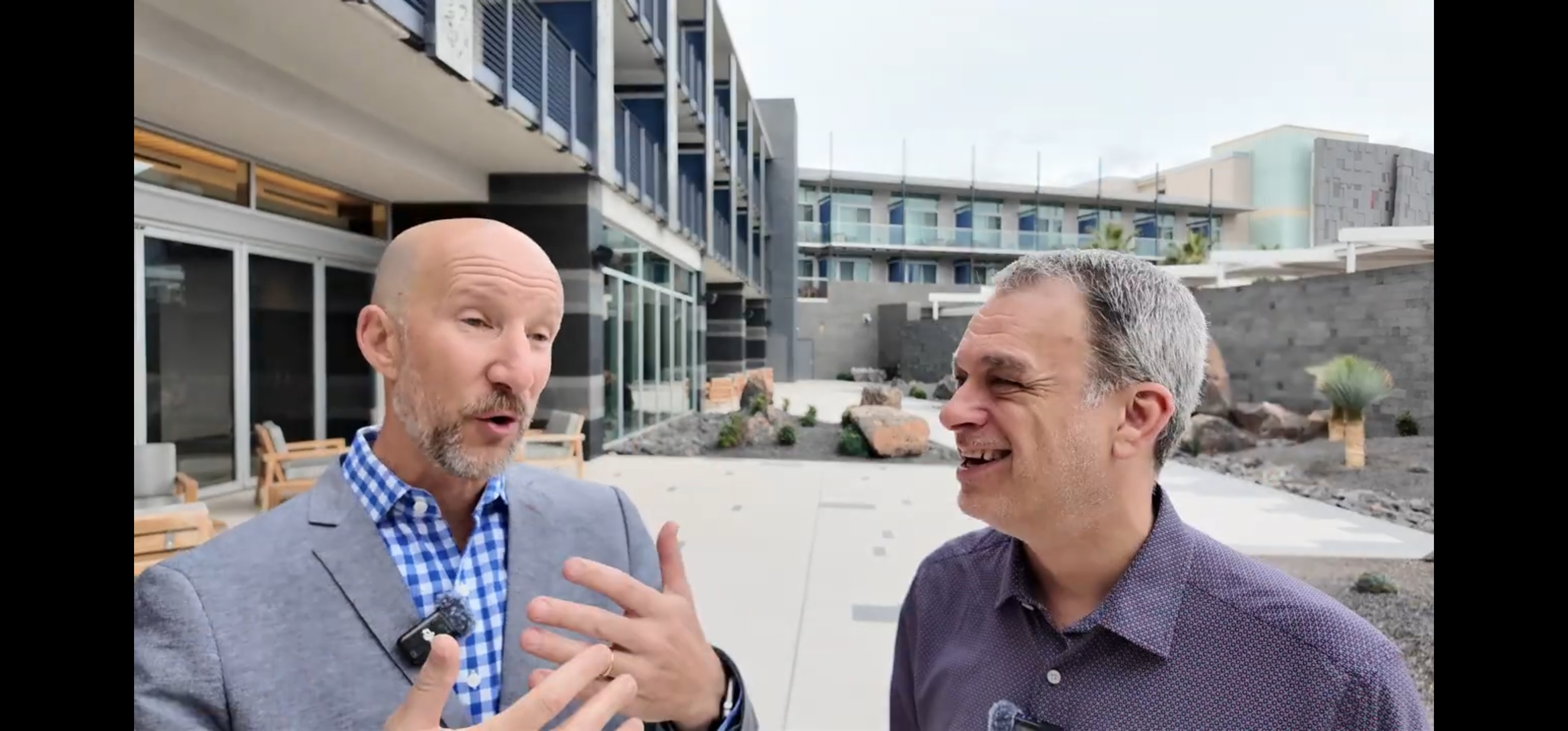
Recorded during HITEC in San Antonio, Glenn Haussman talks with Isaac Rodriguez, VP of Business Intelligence at Twenty Four Seven Hotels, about why buying another technology tool doesn’t always fix the real problem.
Isaac looks at data, workflows, automation, and the places where hotel teams lose time without always knowing why. He explains why Twenty Four Seven Hotels starts with the process before adding more technology.
He also shares how the company looked at its month-end finance process, got the right people aligned, improved accuracy and efficiency, and used automation where it made sense.
Thanks to Unifocus. Workforce management redefined. Visit unifocus.com.
Want the weekly roundup of news, videos, and what you might’ve missed from #NoVacancyNews? Text HOTEL to 66866.
Transcript
Glenn: [00:00:01] Hey, everybody, it’s your hospitality friend Glen. And I’ve got Isaac Rodriguez with me. He’s the VP of Business Intelligence with my friends over at 24 over seven hotels. But before we get all this amazing information from Isaac, I’d like to thank our friends over at Unifocus, Workforce Management Redefined. Please do me a favor, check them out unifocus.com. All right. Your VP, Business Intelligence. Yes, sir. I’m VP of Being Dumb. What is a VP of Business intelligence mean? What is business intelligence anyway? I think the cleanest way to define it is we’re, we’re kind of in charge of responsible for making sure that all of the data and tools that are front facing or back facing for all of our senior leadership at our hotels, making sure that they’re equipped with all the right data and tools that it’s clean data efficient tools so that they can do their job. So really removing the friction and drag of our, of our workflow processes.
Isaac: [00:00:53] So your job is at a high level to think about how people are going to be utilizing technology to make the company more successful in the long term, and then trying to stay ahead of the curve by implementing the latest technologies in order to bring that to fruition. Right.
Glenn: [00:01:08] Sounds good.
Isaac: [00:01:09] All right. Yeah, that sounds. I’m very impressed with myself on that one. So what does that what does that actually actionable insight mean for you? What are you actually doing to help get that data in front of people so they can react to it and make changes?
Glenn: [00:01:22] Yeah, I think it really comes back to just really understanding the workflow, taking the technology point out of it, but really understanding from a, from a mapping perspective, you know, trying to whatever process it is, do we really clearly know all of the process? Do we have all of the key leadership stakeholders? Are they all aligned in terms of that process? So a lot of it really starts with just the overall process mapping. Of any individual process. And then what we actually will do is then see what the opportunities are to either create efficiencies and standardization and to start applying automation through those things. So a lot of times you’ll find redundancy or you’ll find friction and drag, and hopefully automation can help.
Isaac: [00:01:58] Oh that’s interesting. You probably could also see a challenge or an opportunity over here, but then you could dig back down much further and say, oh, if we fix this thing, then it’ll go ahead and it’ll create more opportunities with this other.
Glenn: [00:02:13] Yeah, it really is going back and just making sure that everybody’s aligned in terms of the standards and the problem solving. A lot of times I think what we’re starting to to identify is our issues. And our problems are not necessarily technical, although we’ll blame the technology, we’ll blame the vendor. A lot of times when you actually sit down and bring all the stakeholders, you find out it’s really that everybody’s not aligned in the actual process itself. So that’s where we we kind of step in and hopefully help everybody gets on the same page.
Isaac: [00:02:38] Now I’m getting excited because when it comes to technology, we usually talk about the technology, not the corporate alignment behind it. So what does that look like? How do you hope to achieve? Maybe just give me one example of how you got everybody behind something and then found success.
Glenn: [00:02:53] Yeah. Recently, I think just in terms of our finance departments, again, being very strategic and mindful. So rather than try to do everything all at once, we honed in on one vertical, one department or actually one process. Yeah. Like our month end process and really focusing on on the point A to point B of how we can improve our efficiency, our accuracy, and our effectiveness of our month end process. So a lot of times it’s corralling maybe department leaders and department heads that don’t necessarily want to talk about a, you know, about the issues because maybe they’re part of the, the friction or the drag there. So it’s really kind of getting, making sure that everybody understands what we’re looking to accomplish and then set that down. So we just recently really revamped and automated our entire month end process. So we’re closing quicker now. We’re using automation to ensure that there’s a quicker touch points with the Ms.. It also helps in training. And I think a lot of times again, going back to the technology, the technology is there. We’re just not properly training our teams.
Isaac: [00:03:48] Right. And this is, I’m going to guess because I never worked at a hotel, this is important to make sure that the owners of the properties you manage are up to date with as much information. If you have a branded hotel, you’re fully in compliance with whatever they have as well.
Glenn: [00:04:01] That’s correct. So so again, a lot of times right here, we’re going to be talking to a lot of vendors this this week at high tech. And before I think we jump into any, any existing automation or process vendors, we really want to make sure just in house that we really understand do we, do we fully know what we’re trying to accomplish before we go and hire all these vendors? Because you might end up with the same type of problems, but still a lot more vendors and technology.
Isaac: [00:04:25] Costs, I get you. All right. Last question I have for you. It seems like there’s so much to do. Where do you start?
Glenn: [00:04:32] Yeah, that’s a great question. One, we know we can’t do everything at once. So we’re really slowing down and looking at what’s the highest impacts where typically it’s the ones that have the most departments in a particular process, like a month end process where you have operations, finance, it all kind of working together through that. So really kind of trying to tackle the biggest problem first, I think, and focusing on that, not necessarily trying to do everything all at once. So we’re being very deliberate with our processes in terms of our process mapping, I should say, and our workflows, just to make sure that we have everything kind of buttoned up. But there’s just so much opportunity, I think, with the automation world.
Isaac: [00:05:11] All right. When I talk to you again in high tech 2027 in Orlando, what are you going to tell me?
Glenn: [00:05:18] Oh, what am I going to tell you? I don’t that’s a good question. Yeah. Yeah, I don’t know.
Isaac: [00:05:27] Technology is just moving that fast.
Glenn: [00:05:29] Yeah. I think it’s still anybody’s guess on, on, on where technology is going to be in a couple of years.
Isaac: [00:05:35] So let me ask you this question. How do you know when a technology is the right to adopt, to wait for or just say no entirely because something else is going to pass it by?
Glenn: [00:05:47] Yeah. I think it’s all case by case. I case. I think it’s really kind of looking at the what you have currently existing. I think a lot of times again, right now at this state, we’re so technology rich, it’s really going back to making sure our people are properly trained in the systems. We’re not very big on implementing a lot of systems. If anything, there’s probably redundancy because there’s so much overlap between all of all of the different types of applications that we’re using.
Isaac: [00:06:11] Yeah. And the best part is if you could start to strip those things away, you already know what the you already know the challenges of having a front line employees that there’s a high turnover rate. So the more systems and stuff that you can get rid of, the more that you use technology to stream that workflow, the less training issues you have, the better customer. I mean, employee engagement, you have your people leaving will drop. And before you know it, you’ll be as happy as Isaac over right over here. Anything else you want to add?
Glenn: [00:06:37] No. Thanks for the opportunity.
Isaac: [00:06:38] Hey, thank you for being here. Thank you for being here. Like, share, subscribe, all of that wonderful, good stuff. Love you guys. Thanks so much for watching. Isaac says goodbye. I say, see you later. Bye, everybody.


More Episodes
-
July 28, 2026
She Runs a Hotel Management Company. She Grew Up Unable to Stay in One.
-
July 27, 2026
Hotels Finally Fixing Decades-Old Data Problem
-
July 25, 2026
FNA 216: Chex Marks the Spot
-
July 24, 2026
How AYANA’s Midplaza Jakarta Stands Out in a Crowded Market

Subscribe