
July 24, 2026
How AYANA’s Midplaza Jakarta Stands Out in a Crowded Market
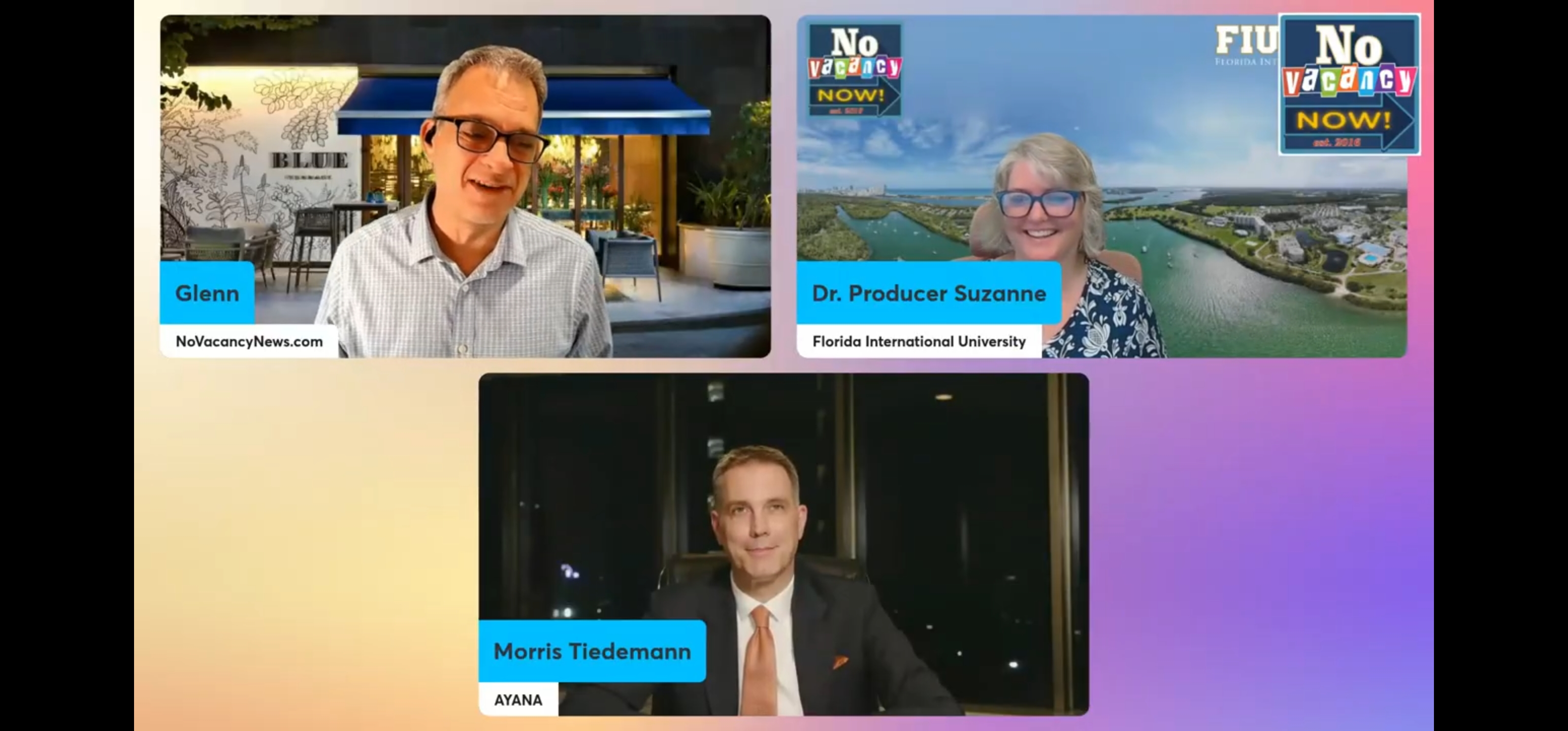
Morris Tiedemann, General Manager at AYANA Midplaza Jakarta, joined Glenn Haussman and Suzanne Bagnera from halfway across the world to explain how a hotel competes in a market flooded with luxury.
Morris took a job in Urumqi in 2003 when he had to buy a book to figure out where it was. Twenty-two years in China taught him to move fast. Then AYANA called, and he had to slow down. Indonesia rewards patience.
The property sits in downtown Jakarta but feels like a beach destination — a pool, a tennis court, and gardens taking up real estate that most operators would have built on. The differentiator isn’t the amenities. It’s Indonesian hospitality baked into every touchpoint, backed by AYANA’s larger story in Bali and Komodo.
Morris also explains how a new GM earns trust when he doesn’t speak the language yet, why culture drives everything in a general manager’s job, and the discipline of not “repainting the shop” in your first week.
Visit ayana.com/jakarta.
Actabl, they give you the power to profit. Visit actabl.com.
Want the weekly roundup of news, videos, and what you might’ve missed from #NoVacancyNews? Text HOTEL to 66866.
Transcript
Glenn: [00:00:00] Hey everybody. Thank you so much for tuning in to the one and only No Vacancy, more than ten years of bringing you the news that you need to know. I’m Glenn Haussman. We got doctor producer Suzanne Bagnera in the house today. Suzanne. How you doing and why all of a sudden am I changing our intro? I don’t know what that’s all about.
Suzanne: [00:00:18] Listen, I stopped asking. Why working with you a long time ago. I’m just. Well, I think based on the time in which we are doing the recording, this is before the full consumption of coffee, and that would be why you’re not functioning.
Glenn: [00:00:31] That’s right. We’re doing this one at 7 a.m. this morning. I’ve got my invisible coffee cup over here, and it couldn’t none of this would have been possible without all the effort of my friends over at Actabl. Actabl, they give you the power to profit. Visit actabl.com. All those labor solutions will help you save some money. So I’m excited today, Suzanne, because we’re going to be talking to someone who’s like all the way across the world in Indonesia. How cool is that? I think this is going to be our first guest from who’s working in that part of the world. That’s pretty.
Suzanne: [00:01:03] Exciting. I feel like I have been in that, in that region for meetings yesterday morning. And now today, I am just super excited for today’s guest and to hear what’s happening.
Glenn: [00:01:13] I know, listen, I was excited when we had a guest from Newark, Jersey the other day, but this is like real exciting over here. So let’s bring him on. Mr. Morris Tiedemann. He’s the general manager of the AYANA Midplaza Jakarta. Morris, how are you today?
Morris: [00:01:30] Good. Thank you. Good evening from Jakarta. So really excited to see you so early in the morning.
Glenn: [00:01:36] Yes. And good morning from new from New York and Florida respectively. So it’s great to see you. I love doing these interviews halfway around the world. And the first thing that it makes me think about is how amazing is this technology? It’s after 6 p.m. by you, 7 a.m. by us, and it’s kind of like we’re just down the street with each other. How cool is that?
Morris: [00:01:58] Yeah, it is fascinating. And you know, I can see your background in the background of yourself. It’s time to, I guess.
Glenn: [00:02:07] Well, you know.
Morris: [00:02:08] It looks like. Evening.
Glenn: [00:02:10] Yes. Yes. Well, I knew we’d be doing this in the evening, so I posted this picture. Plus, it’s one of the pictures that were sent to me, so I didn’t really have much of a have much of a choice on what date time it was going to be. Morris. I was looking up your we’ve never met before. We’ve never had a conversation before. So I did something really unusual. I went and I did a little research on you by looking at your LinkedIn page. And I know you you said you were of German descent and you have been working in a in a lot of places in Asia, particularly China and now in Indonesia. Tell. I’d love to learn a little bit about your story as a as a German who became a hotelier and then went across the world because. Morris. We don’t do that really here in the United States, right. We don’t usually have. There’s no legacy of the amazing American hotelier around the world, but European hoteliers, that’s a different story.
Morris: [00:03:06] Well my story actually started because I didn’t know what to study. So I decided to apprenticeship in a hotel, and my parents were actually tremendously against it. And they found, or they tried to find anyone who could persuade me not to work in a hotel. So I think the friend of my aunt, they invited to come over for dinner, and all she had to do the whole evening was telling me how bad hospitality is, right? And Well, I couldn’t convince them, really. And we found a compromise. And I said, I will send out one CV to one hotel, and if they take me, I will. The Korean hospitality, or at least I tried. And that’s what I did. So I sent out one CV, I got the okay and wow, I was a new apprentice in this industry.
Glenn: [00:04:01] All right, Maurice, I’ve got a I got a kid that just graduated college. Maybe you could help him with his resume. If you could get a gig with just one, then you’ve got some superpower there, bro.
Morris: [00:04:12] Well, it was the old fashioned, you know. Yeah. You know.
Glenn: [00:04:18] No, I.
Glenn: [00:04:20] Right. I might have said this before on a show, but in order to make myself stand out when I graduated, like, 1993 my resume, I, my CV, I put on like a purple piece of paper so it would like, stand out from everybody else. That was my big move. I didn’t work for a decade, but at least I had purple paper.
Suzanne: [00:04:38] At least I did pink. And I actually worked in the industry, so it worked for me.
Glenn: [00:04:44] So. So Maurice, get this job and tell me about that first job and how it enlightened the excitement and passion for you in hospitality. And I ask this because Suzanne and I deal a lot with trying to get younger people excited about the hotel business, particularly since she’s a professor. So share.
Morris: [00:05:02] Well, the first thing was mainly an apprenticeship. So you go through all of the different departments in a hotel room for a period of time, and then you also have a school. So one month work, one month school and you get paid for all of it. Very little.
Glenn: [00:05:16] Unfortunately, no.
Morris: [00:05:18] You get paid. So but then I really found the passion for my job. And it was a hotel where they took care of me, they mentored me, they coached me, they showed me how it works. And I learned a lot. And I think up to now, I’m really benefiting from this one.
Glenn: [00:05:36] That’s awesome.
Morris: [00:05:37] So yeah.
Glenn: [00:05:39] So how many languages do you speak?
Morris: [00:05:42] Well, unfortunately I speak English and German and a little bit of Mandarin and hopefully very soon Bahasa, the language speaking Indonesia.
Glenn: [00:05:54] All right. That’s cool. My son. My son took up Mandarin. It’s such a complicated language.
Morris: [00:06:00] So it is. I’m not very good in it, by the way.
Glenn: [00:06:02] So that’s all right. You know, twice language, Morris. You know, twice as many languages as me. So I’m not I’m not here to you know, to, to judge or anything like that. I’m just curious because you folks in Europe and Asia seem to know a lot more than we do here in the United States. It’s a much more global point of view, which I think helped set you on the right course for understanding different cultural nuances and all of that kind of stuff in order to be able to excel. So what was that first like when you were first getting that career going and that fire in you was enlightened?
Morris: [00:06:37] Well, it’s all about challenges and, you know, opportunities also, I think, you know so I, I got a scholarship in Switzerland and then I went to Saudi Arabia and I was well, I, I at that time, I thought, I’m not really qualified. But, you know, I took the opportunity for this and took the challenge and it worked out pretty well. Came back to Germany and then they offered me a hotel in China.
Glenn: [00:07:07] That’s wild.
Morris: [00:07:09] And then Well, they told me it was in Urumqi, Xinjiang, and I had no idea where it is. So I, you know, at that time there was also limited internet. So you couldn’t just go and just look it up. So you had to get some books. And then I found it finally the city, which is in the west, close to Kazakhstan and I 2003, I went there.
Speaker 4: [00:07:35] Wow. Wow.
Glenn: [00:07:40] Yeah, quite the adventure. So what was it like for you being somewhere so culturally different and, like, something that doesn’t feel like what you were growing up with necessarily. How was that adjustment period? Like, what kind of job did you have and how did you find your way?
Morris: [00:08:01] At that time? My, my job was a assistant rooms or rooms division manager actually. And so we have to do this again. Yeah.
Glenn: [00:08:10] That’s okay. And just go.
Morris: [00:08:14] At that time, my job was rooms division manager and I was in charge for housekeeping in front of us. Yes, it was all different. And it was so completely different that I decided to stay actually longer because it was still interesting after 15 and 20 years.
Glenn: [00:08:35] Wow. Suzanne.
Suzanne: [00:08:36] So you’ve moved then into this role of being general manager for a lot of these different properties. But prior to that, because in many instances, you’ve had different career trajectories, different departments that you’ve worked for. Not that you can necessarily pick the favorite department. But what was the, the continued passion and driver that you wanted to stay in hotels because you enjoyed that nook of the business after that apprenticeship.
Morris: [00:09:07] I think for me, it was once you reach a certain level and especially as a department head or something like this, I felt really comfortable with the job. I, I like to work with people. I like to work with, you know, employees. And I like to work with guests. Happy guests is something I really, really, you know, strive for as a hotel manager that we get them. And with employees, I like to lead them that we motivate, you know, and have a now this one also one more time I start the whole thing.
Speaker 4: [00:09:43] Yep. Go for it.
Morris: [00:09:45] Sorry for that. So so what, what I really like about it is, is, you know, to work with people I like to work with people and I like to work with my team and with guests. I like to tell stories. I like happy guests, especially when they leave and return to us, get loyal guests for us. And for team I, I like to see them develop. So when I work with team members especially the younger ones, you know, my idea is to create this motivation and this passion about the industry, to make them really feel that they want to be good in the industry and they want to achieve something.
Suzanne: [00:10:35] I’m sure on some level, the your parents almost created a sense of opposite momentum and inspiration for you, where they tried to discourage you into the or out of the industry, and you fell in love with that passion. And so knowing that you had to fight your way probably makes it even more personally connected with the youth to try and get them to stay. As we know, the pipeline all around the world is in some level globally challenged to get people, especially youth, into our industry.
Morris: [00:11:07] It is so, so very often it is difficult to to get young people into the industry because I agree the working hours are not ideal. Very often you will lose a lot of your friends. To be honest, I lost a lot of my friends because they were off on the weekends and I had to work on the weekends. They were off and partying, and I was the guy who had to serve the other people who party, right?
Glenn: [00:11:31] Yeah, it’s a real shame the hospitality industry isn’t known for partying or anything like that.
Morris: [00:11:36] Yes, and well, we do it on other days. Right? We we. We find our way around and you know, for, for for salaries and something like this. There are jobs which pay significantly better. Right. At every level. And you really have to like it. But then, you know, once you find your way and you have a certain level, I think also a certain level in the hierarchy, I think then it’s more fun to work there actually. And, you know, you enjoy it. And therefore, I would encourage people to join the industry, which is very interesting because here in Indonesia, we don’t have this lack of people to want to join the industry because here hospitality, especially in the, in like Bali, the, the island, one of the islands here in Indonesia people see hospitality as a quite decent job.
Glenn: [00:12:36] Yeah, yeah, it is very different over there and it probably makes your life a lot easier. But you only started this position at at the Iena Plaza, Jakarta back in January of this year. Moving from China after many, many years. Why did you like this opportunity? And tell me a little bit about what that adjustment period was like for you and your team to be able to get to be able to get that ship going in the direction you want, and then we can talk about the specifics of the property.
Morris: [00:13:09] Okay. So, so I was 22 years in China. And then you think about, you know. Yeah, it’s at the end of your career. Will you, will you, will you stay there maybe for another thing or two or something like this? Or would you like to try something else? And for me, it’s always I perform best when I’m out of my comfort zone. Yeah. And therefore, I decided, well, if there is something which comes up in another Asian country, I would like to try it out. And then this opportunity came along, and I think this property is really unique in many ways, and maybe we can talk about it a little bit later. But so I decided to give it a try and come to Indonesia. Now China is well known for China’s speed. So decisions are made very, very fast. And the scale of the change, which I saw from 2003 up to two last year.
Glenn: [00:14:08] I can imagine it’s unbelievable. I remember going to China once and like I was in places like Shanghai, and like, you couldn’t even count the amount of cranes that were there building stuff, right? It was that kind of craziness. So please continue.
Morris: [00:14:26] And you had really, you know, the whole lifestyle change, you know, when you look at what people earned at that time when I came and then until I left, you know, it’s tenfold, wow. You know, this salary increases. So so everything changed. When I came. People still were lucky. We had the staff showers because they were allowed to take a shower. Their warm shower, which they didn’t have sometimes. And now this is a modern, you know, country which is similar to to any developed country actually. So but what I when I come back to the speed thing, I think the China speed is really what is the most remarkable thing. And I think I took it away a bit how I want to see results, how fast we should move forward and some of that. So then I come to Indonesia. It’s it’s a little bit laid back in comparison to China. But it has these walls, these tremendous walls of the people. People are very, very friendly. And you have these traditional traditional, authentic Indonesian hospitality. And that’s really something where I alone again. New things. And every day I learn something new. And it’s really about this Indonesian warmth, which I find so appealing about here. How long it takes me. Well, I’m still in the transition period, so I still have to pace myself sometimes. And, you know, and it’s usually also, I have to say when you start as a new GM, right? You have to refrain from redecorating the shop within a week. Right. You very often have to to be a little bit. Yeah. Let’s have a look at it because they know anyway what we we are out.
Glenn: [00:16:21] I don’t know, your picture just vanished.
Morris: [00:16:25] Apparently the camera is overheat. I have a whole team here, by the way. Oh, seven people are sitting here.
Glenn: [00:16:35] Oh, goodness. That’s a lot of pressure. I don’t think I know.
Morris: [00:16:39] And they rolling their eyes all the time. When I say something, I have to be very careful when I talk about the team and something like, yeah, something else or otherwise.
Glenn: [00:16:48] Hey, there we go.
Morris: [00:16:49] Oh, here we go, go go, go back. So so can can we do that one more time?
Glenn: [00:16:56] No, no no. That’s it. I told you one and done man. All right.
Morris: [00:17:01] One and done. Yeah.
Glenn: [00:17:02] So I wrote down I already wrote that we lost you at 1620. I got some notes going on here, so don’t you worry. I’m glad we got the camera back. I will clap, count to one. And then just what.
Morris: [00:17:15] Was the question again?
Glenn: [00:17:17] Oh, I know Maurice.
Morris: [00:17:18] My age. You know, I’m just.
Glenn: [00:17:21] Part of the problem that I have is I, like, listen very intently. So I could ask the next question and then I kind of get lost very easily because my brain only can hold like two seconds worth of memory.
Suzanne: [00:17:33] So we were wrapping up with what the transition was like.
Morris: [00:17:37] Yeah, exactly.
Glenn: [00:17:38] All right. So let me jump in with a with a quick question. All right. And that way I think I know what I’m doing. So we’ll see. All right. Here we go. Let me just write something. All right. Here we go. All right. So Morris, I love this story, but the one thing that I, I thought was really interesting at the very beginning you said you really love being outside your comfort zone. The reason why I’m bringing that up is because that’s something that I think is a hallmark of great professionals. If you’re too comfortable, then I think you might be, you might lose your game. So I love that you want to walk that tightrope a little bit. So taking that, being out of your comfort zone, how do you walk into a building and win the trust of people over that period of time? So you can then go ahead and make proactive changes as opposed to, say, coming in and trying to make make design changes within a week of being there.
Morris: [00:18:38] Yeah, I think good point. I think it’s very important that when you lead people that they trust you and you have to earn this trust. So they have to know. They have to learn your energy levels. They have to know that you’re authentic, that you’re fair to them. And I think you have also, you know the function of being an example. So mainly as a general manager, I think you drive culture and that’s the most important thing. And once you drive culture and they see how you do it, then people will follow you and trust you and have respect for you. And then also, you know, go along with you the way in this direction where you want to go.
Glenn: [00:19:32] But when you in order to drive culture, you still have to understand the Indonesian and the local culture. So it’s got to be an interesting track for you to figure out socially what the norms are, while also trying to be as authentic you can within the set of guardrails that you don’t quite know what they are yet. What’s that challenge like?
Morris: [00:19:56] Yes, I think you’re right. There are some guardrails. And you know, I have to adapt to the culture, which I am still in progress of it. But I think once you are honest, authentic and fair, yeah, people also will forgive these small mishaps, which will which will happen once in a while, hopefully only. And
Glenn: [00:20:24] I can’t imagine any of that’s happening with you, Maurice. You got your stuff together, so.
Morris: [00:20:28] I hope, I hope so, you know, but also you get more aware. I think the more in more different countries. You were the more culturally aware and, you know, emotionally aware of what happens to other people.
Suzanne: [00:20:44] I think, Glen, that speed transcends it transitions itself faster the more you’ve done from being a general manager myself and going from property to property. Look, you know, you typically go in and being very open minded to listen. At least that was my approach to listen to the employees so that I could start to build that, that trust and we could start to learn together. And I think that’s a really great opportunity to learn within those guardrails from the employees as well, because that creates that fusion that is so exciting. And having been a fellow IHG general manager as well, seeing that you were doing that in China I know all too well the, the great opportunities that you’ve had that way.
Morris: [00:21:29] Yes, I agree. So, so I think, yeah, what you said is right. You know, listening is very important. You have to you know, it’s it’s what I said before. You know, you have to be refrain yourself from, you know. Yeah. Repainting the shop immediately after you arrive. Right.
Glenn: [00:21:45] So, yeah.
Morris: [00:21:46] You have to learn a lot and you have to be honestly also to be very, very humble as a, as a, as a general manager. And I think this is sometimes general managers have a lot of egos very often. And sometimes we have to, you know, calm ourselves down.
Glenn: [00:22:02] Yeah. I hear, you.
Suzanne: [00:22:06] Know, a little bit about what this next adventure is that you’re doing in terms of the property and the infusion of luxury is such a trend that we’re looking at now. Tell us about what what you’re doing now.
Morris: [00:22:21] So one of the things I, I think surprised me when I came to Jakarta is the amount of competition here. So it’s, each really not only the quantity but also the quality. So up and down in this area or up and down this road, actually, you find a lot of high luxury hotels. And one of the things which stands out here in Iowa is our Indonesian heritage. So we are Indonesian hotel group. And it was actually this property was before Intercontinental Hotel. And then it was turned in 2017 into an Iowa hotel. Iowa means a place of refuge in Sanskrit. So we try to offer this unique experience that when you come out or when you come inside the hotel actually, and out from this busy traffic, which is, you know, in Jakarta, well known. Yeah. Then you come into the hotel and you feel like you’re in a different world. This is a place of refuge. The meaning of the word ayana is really something we take very seriously. You have the smell. You have the friendliness of the people. The lobby is really stunning, and it’s unique.
Glenn: [00:23:48] Yeah. Here’s a picture of the the respite out at the the pool behind everybody and then. Yeah.
Morris: [00:23:54] And the pool. Yeah. You have to imagine this is in the center, really right in the center of Jakarta.
Glenn: [00:24:02] Wow, wow.
Morris: [00:24:05] It looks like a beach destination, right? Or holiday destination?
Glenn: [00:24:08] No, it surely does. And the reason why I’m saying wow a lot is I’m just thinking about the price of the real estate and how it’s being used for a pool in the middle of a downtown as opposed to another building or something like that. Pretty amazing.
Morris: [00:24:22] We have some other facilities too. You know, we have a tennis court even there.
Speaker 5: [00:24:26] No way. Yes.
Glenn: [00:24:29] You have been required to switch it to pickleball like every tennis court here in the United States yet.
Speaker 5: [00:24:33] So yeah, they have here.
Morris: [00:24:35] Paddle is very important. Yeah, very, very you know popular at the moment.
Speaker 5: [00:24:41] Yeah.
Glenn: [00:24:42] So what are let’s talk a little bit about the hotel itself. Of course, we got the regular the guest rooms. How are you trying to define yourselves within a crowded marketplace that you just said has so many luxury properties?
Morris: [00:24:56] So again, so I think, you know, when you have so many hotels and so much competition, you have to stand out somehow. And our point to stand out is actually our Indonesian hospitality. And it doesn’t really reflect in the pictures you show now, but we have a tremendous amount of restaurants like our blue Terrace and you just, your background shows that we have. And now you’re showing something which is really fantastic. That is our Jimbaran launch lounge. Outside we have a garden and a water feature there. And you. You have these islands where you can sit and enjoy yourself. Wow. It’s fantastic.
Suzanne: [00:25:42] Now, question for you. A lot of resorts that have seating spaces or outdoor spaces are engaging in dynamic pricing and reservations now. Is that something that those little islands are reserved spaces, or is it just open to the guests at any point in time?
Morris: [00:26:02] It’s actually open to a guest at any point of time. You can book, of course, the whole thing. If you have a party and they often have some private parties there and weddings and so on because it’s so beautiful. But overall it’s open for the public also and for hotel guests, of course.
Suzanne: [00:26:19] Wonderful. I love that opportunity to just enjoy that respite that way.
Speaker 5: [00:26:24] Yeah. Let me know when you’re coming.
Suzanne: [00:26:26] Pretty great too.
Speaker 5: [00:26:27] Yeah.
Glenn: [00:26:27] She’s catching a flight this evening, actually. So she’ll be there tomorrow morning. Yeah. As we’re recording this, we’re going to be we’re going the other direction in the world to Texas next week.
Speaker 5: [00:26:41] Oh.
Glenn: [00:26:42] We’re recording this. So a little bit, a little bit, a little bit different. They don’t have that Indonesian hospitality over there. They just got giant beef ribs. But Maurice I’m curious as to how do you then how do you think about the people in Indonesian hospitality and setting yourselves apart from everybody else who is probably saying the same thing? What does that definitive factor that makes your people the best people in the city?
Morris: [00:27:10] Well, first of all, we have this story. This story. So we are not individual hotel. We have a beautiful hotel complex in Bali. And then I don’t know if you ever heard of this on Komodo which is the Komodo dragons are there.
Speaker 5: [00:27:25] He’s now.
Morris: [00:27:26] Literally dragons in in a national park, which yeah, on some of the islands there are these dragons. And within this area, not far away, we have another property and they are outstanding properties and award winning properties and really unique in so many ways. So we are not alone with our hotel, but we have this story and the story drives our team and also the way we operate. So we stand out. We are not only one luxury hotel like the other ones, but we really celebrating this Indonesian tradition, hospitality and Balinese warmth and passion.
Glenn: [00:28:21] Nice. All right, I got one more question. But Suzanne, before that, do you have anything else that you want to.
Suzanne: [00:28:26] Bring it home, my friend?
Glenn: [00:28:28] Maurice, how is the general tenor of the the the market here in the United States? I keep thinking that the hospitality industry is going to kind of come undone because of our economy and a lot of other factors that are going over here. So I’m just curious as to how’s your market looking? How are you feeling about the future and what are you doing in order to make sure that your hotel is filled every night?
Speaker 5: [00:28:50] Well, of.
Morris: [00:28:50] Course they are. Now, these you know, worldwide uncertainties, I would say. And they’re impacting everything. The the oil prices are going up and we are not immune to that here in Indonesia. So there’s a short term impact on that. Overall, I think Jakarta in itself is underappreciated and there’s still a lot of potential there. Especially tourist market is not yet developed properly. Business is there, but the tourism market still can be further developed, I guess.
Glenn: [00:29:26] Correct. I think you get like a lot of I speaking out of place of knowing nothing, but that’s never stopped me before. I think that you get a lot of Australians and stuff going to like Bali and that sort of a, of a thing. So maybe there’s an opportunity to get them over to you. Who is your main, who would be your main drivers of leisure?
Speaker 5: [00:29:45] I think.
Morris: [00:29:47] You’re right. Indonesia has a lot of different islands and there’s tourism there and it’s beautiful. It’s like, you know, these sandy beaches and the blue water and palm trees and so on. So it’s really beautiful. Bali, of course, it’s the number one tourist destination within the archipelago, but there are there are many, many others which are not yet discovered actually by the tourist masses, I would say. All right. Yes.
Glenn: [00:30:17] Don’t tell anyone now, but tell me after after we stop recording.
Morris: [00:30:21] I’ll give you the whole list?
Glenn: [00:30:22] Great.
Morris: [00:30:23] I give you my bucket list here. You know, I put it all together. What I want to see. But yes, you’re right. Jakarta still has to develop it. It has a beautiful old town because it was you know, when, when the city started and the city celebrates now 499 years this year. There are some old buildings which are really worth a visit and so on, but they’re not yet there to market themselves. You know, it’s still low profile actually, which is good because on the other side, when you come now it’s a hidden gem and you’re not you know, you don’t pay these prices like these high tourist destinations and you don’t have these masses going there and having taking a picture of the same building and.
Glenn: [00:31:15] Yeah, so what Mars is really talking about is the general overtourism problem that a lot of jurisdictions are having. It’s like you want people to come, come, come. And then at some point it’s like it’s a little too much. And it’s really starting to damage the city. Right.
Morris: [00:31:29] Yes. It’s always a problem. And I, I think, you know, once it’s getting, I think tourist destinations are working very hard on it to make it more sustainable in terms of, you know, without the house prices going up and through the roof and so on, and also more sustainable tourism that you don’t have so much waste and you make it simply enjoyable. And this is also what we try to do as a luxury hotel, right? Experiences is all about experiences and we want to give the experiences is not a mass experience but a unique and personalized experience.
Glenn: [00:32:05] Awesome, I love it, Maurice. I really appreciate you being here today. How about a quick plug for your your hotel?
Morris: [00:32:12] Well, it’s a hidden gem gem, and no, sorry. Can we do it again?
Glenn: [00:32:18] Yep. Hold on one second. So, Maurice, before we go, how about a good plug for your hotel?
Morris: [00:32:27] So, Ayanami Plaza Jakarta is a hidden gem in the middle of the city where really Indonesian hospitality meets luxury. Global luxury? Okay, now we have to do it again. Sorry.
Glenn: [00:32:44] All right, that’s all right.
Morris: [00:32:47] And then I got. Yeah. Three times. So everything else. Okay.
Glenn: [00:32:51] And it’s I’m wide awake and I’ve had coffee, so I.
Morris: [00:32:54] And now you’re right awake after.
Glenn: [00:32:56] I know. Here we go. All right. All right. Maurice, thank you so much for being here. But before you go, how about a quick plug for your hotel?
Morris: [00:33:05] Ayana Plaza Jakarta is a hidden gem in the middle of the city of Jakarta, and it offers tranquility, Indonesian culture and the best of the island’s hospitality.
Glenn: [00:33:21] I love it. Maurice, thank you so much for being here. We really appreciate you. Please hang out for a second and thank you all for being here today. But before we go, Suzanne, what’s one thing you’re taking away from this interview?
Suzanne: [00:33:33] I feel like Indonesia is our next stop on the travel plan. I really love the fact that they have a property in the city, but they have that beautiful outdoor, tranquil space that you can escape that. So I’m I’m down for a visit.
Glenn: [00:33:49] I like escaping to tranquil spaces. And if you’re in a tranquil space, know there’s nothing better than liking, sharing, subscribing, and listening to one of our shows that’ll make you feel tranquil over there because we’re so chill and laid back over here. Anyway, thank you all so much for being here. We really appreciate it. We’ll see you right back here. In another episode of No Vacancy live, live. And until then, remember you’ve got one life. So blaze on and.
Suzanne: [00:34:13] Follow your passion.
Glenn: [00:34:14] All right. See you guys later.

More Episodes
-
October 10, 2026
How Raines Finds More Profit Inside Existing Hotels
-
October 9, 2026
Why Hoteliers Have More Pricing Power Right Now
-
October 6, 2026
What Higher Interest Rates Mean for Hotel Deals
-
October 5, 2026
How Hotel Leaders Build Relationships at The Lodging Conference



Subscribe