February 11, 2025
How AI Can Enhace Hospitality—And What You Need to Know!
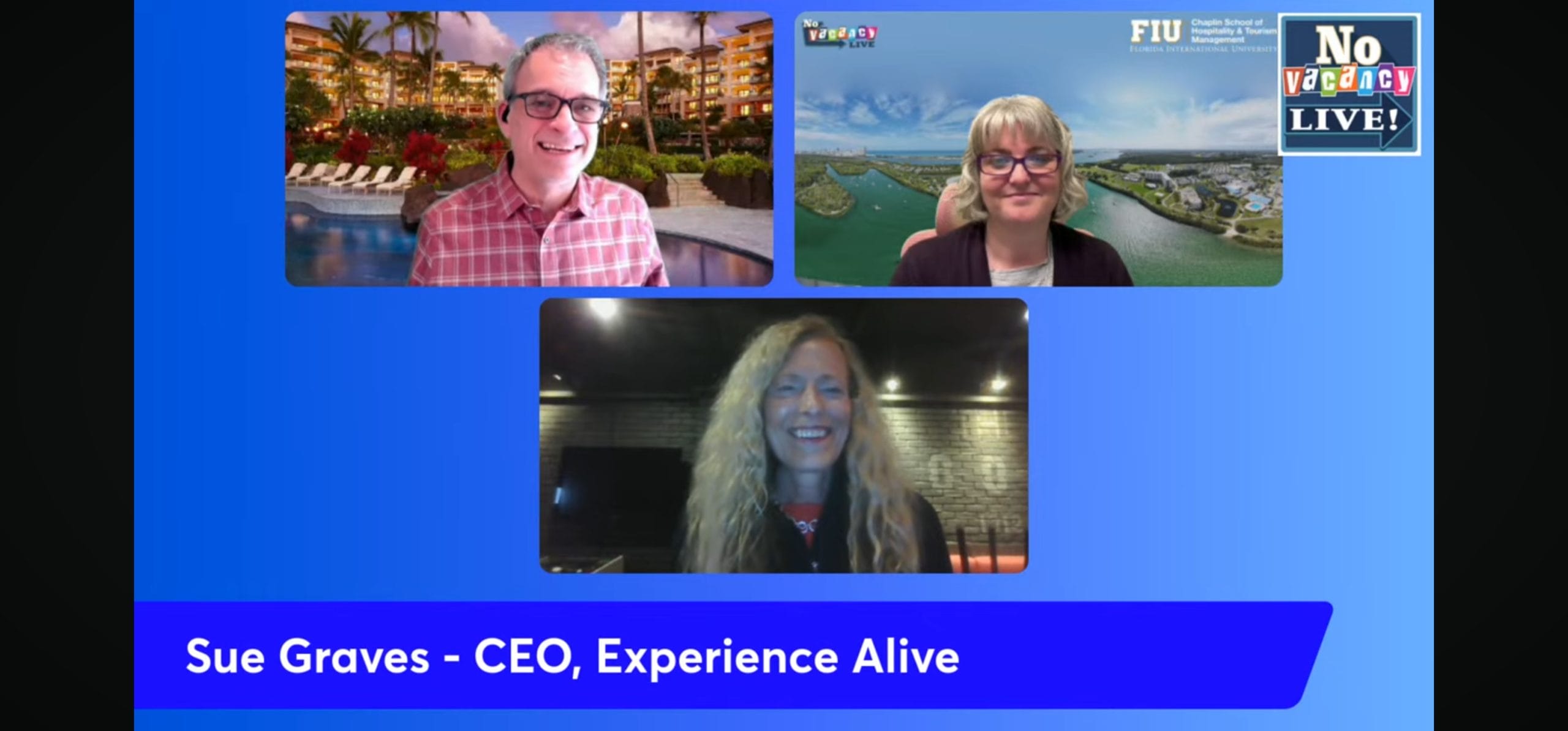
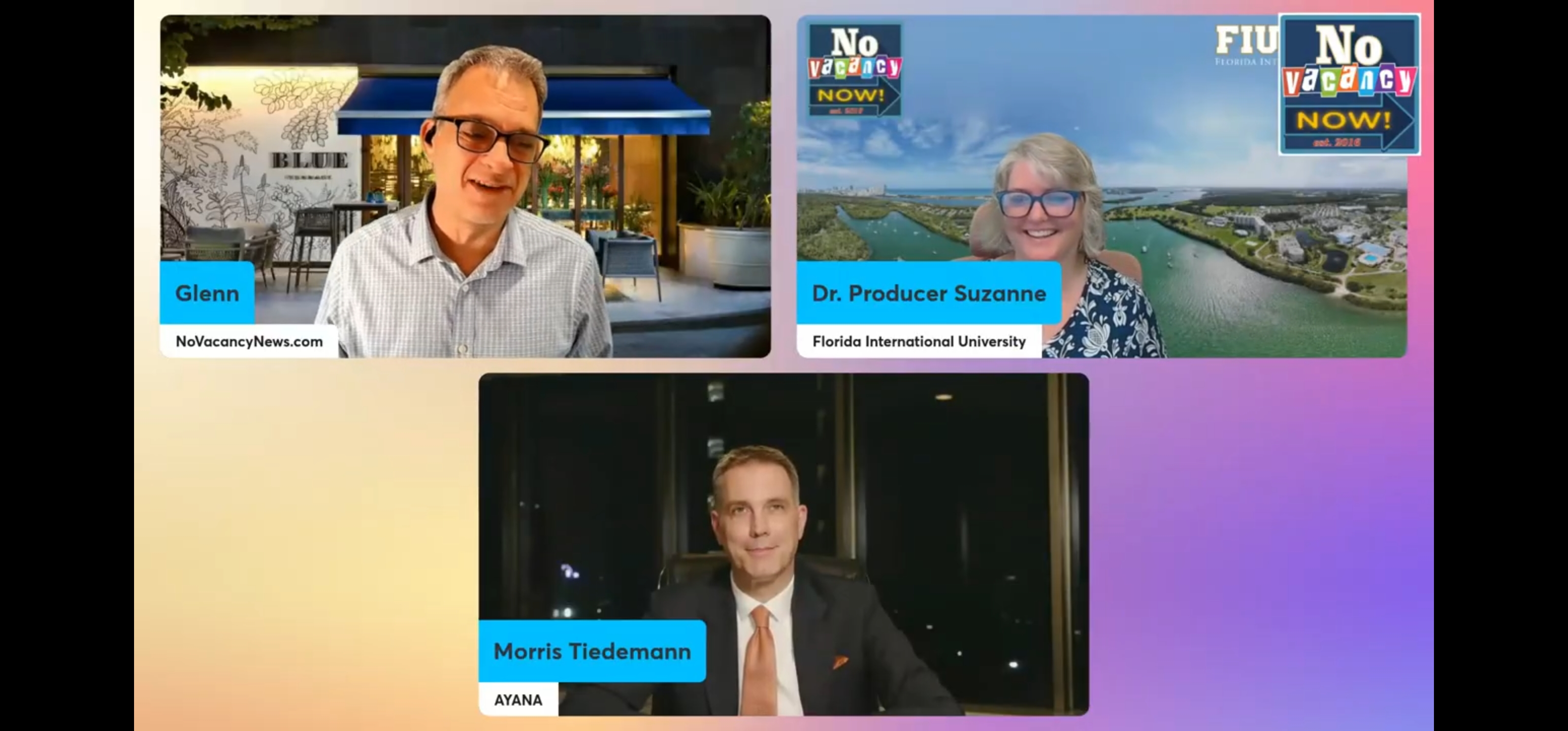
🚀 AI isn’t replacing hospitality — it’s enhancing it! In this episode of No Vacancy Live, Susan Graves (CEO, Experience Alive) discuss how AI and machine learning are reshaping hotel operations while keeping the human in hospitality.
💡 Key Takeaways: AI as a Companion, Not a Replacement – Let tech handle the repetitive tasks so humans can create extraordinary guest experiences.
Conversational AI is Here – No more outdated phone menus! AI-driven customer service means guests get instant answers.
Solving the Labor Shortage – AI-powered hiring solutions helped one hotel process 320,000 applications in 90 days!
How AI Can Increase Revenue – Stop losing sales due to missed calls and inefficient guest interactions.
The Future of Hospitality – AI-driven automation, robotics, and smarter operations mean better experiences for guests and employees.
🎯 Want to future-proof your hotel? Tune in for insider insights and real-world solutions!
📢 Don’t forget to:
👍 Like this video
💬 Comment your thoughts
Transcript
Speaker1: Hey, everybody, welcome to No Vacancy live. But delayed or delayed but live. I don’t know how you you kind of say that poor Anthony had a little bit of a tech issue. Today. He was I think we were just talking about. He was trapped in 1997 with DSL, internet or something like that. Don’t stay at that hotel is my message to to him. Hey, I’m Glenn Housman. That’s doctor producer Suzanne Wagner. Amazing professor from FIU. How are you doing today?
Speaker2: I’m good. I’m excited to be here today.
Speaker1: Yeah, I’m excited for you to be here with us today, too. But I’m also excited because we’re going to have a great conversation with somebody today who I feel like we’re only having on the show to just validate everything I’ve been saying for the last couple of years over here with the emergence of AI. But listen, even if she agrees with me, doesn’t mean I’m right about anything. Right? But she’s definitely right about everything. So let’s welcome to the stage. Sue gray, CEO with experience Alive. Sue, I’m excited to have you here because, as you know, Anthony and I did a keynote speech last year at High Tech talking about keeping the humanity in hospitality when it comes to this rapid shift over dependence on technology. And I know you feel the same way. All right, now, I’ll just shut up for the next hour. Talk to you. How are you? Welcome.
Speaker3: Hey. Awesome. And I’m super excited to be here. Thanks, Glenn. Thank you, Suzanne, for allowing me to be on the show and share some cool tech stuff that’s happening with AI and machine learning, and really helping the industry continue to have fun and help offload some repetitive tasks from employees, because that’s what we need to do right now. We need to have some more fun in the industry. That’s why people go to college. To come into our industry is to engage with customers and create awesome experiences, and my goal is to make sure we continue that. So I’ve got a motto for the year. I think I shared this with Suzanne. My my motto for the year is let the tech take care of the repetitive tasks and the ordinary. Let the humans take care of and create the extraordinary. So that’s what we need to be doing this year and beyond, is let’s let the human needs take over and create extraordinary experiences, and let this tech take over some of these repetitive tasks that are boring and mundane. And, you know, employees don’t want to do them anyway.
Speaker1: So, you know what makes an extraordinary experience for me that is human interaction. It is not jumping off a cliff and cliff diving or anything like that. I know I look like I’m that wild, you know, like the Red bull. People keep trying to sponsor this show, but sue for me. Really, what creates a great experience is when the person who works there connects with me on a human to human basis. I’ve said that this might be the 100,000th time I’ve said I’ve said this in public, but hospitality people are so great at what they do. Like 98, 99% of it’s kind of the same, but it’s that little bit that humanity that really can take us over the edge and create those great experiences. So we’re off to a positive feedback loop right away.
Speaker3: Here we are. I couldn’t agree with you more. And in order to do that, we’ve got to try to offload some of this these repetitive questions that come that are necessary that the guests have. And but, you know, let me ask you a question here, Glenn.
Speaker1: Yeah, I love it.
Speaker3: Comfortable. Are you with you know, if you call down to the front desk, do you need a human to tell you what the restaurant hours are, or are you okay with the, you know, conversational AI in any dialect you want giving you that information? Are you okay with that?
Speaker1: Yes. I’m okay with the information. As long as the dialect is Joey from friends. Right? So that’s what I want.
Speaker3: I don’t know if they have that dialect, but the group I work with has about 20 different dialects. I think they could probably add that in there, but.
Speaker1: I want them to pick up go. How you doing? You know, it’ll be great, but no, you’re absolutely right, Sue, because it’s like we used to call down there and that was just the way of doing things. But it turns out people don’t really like having those kind of interactions anyway. I, you know, I find it weird. I find it awkward, I find it uncomfortable. I also don’t like particularly certain hotels, like Las Vegas hotels. It’ll just ring and ring and ring and ring. And that winds up putting a barrier between the guest and the experience rather than creating a positive, which is I don’t have to talk to somebody, I get my towels. And then there are other human beings that can then talk to me about stuff that’s important, right?
Speaker2: But Glenn, you liked pushing all of the buttons in that path to get the answers that you wanted. Wasn’t that what you liked?
Speaker1: Well, listen, to be fair, the menu, the the dial phone menu recently changed, so you have to listen to all of the options. So why do those messages always change on every single customer service line that I call? Why do they always tell me that I have to listen to every single number? All right. We’re not really talking about that, so we.
Speaker3: Don’t have to do that anymore. You don’t have to do that anymore with conversational AI.
Speaker2: Yeah.
Speaker3: Yep. You know, that is an old way of doing things. And to have the customer sit on the phone and say, dial one for this, dial two for this, dial three for that, that’s over. People we gotta move forward. And so there’s conversational AI where you can actually ask the question as soon as the phone rings. Conversational AI will take over, get you, transfer you dramatically to the right department or help you with a question. If the AI cannot do that, it will transfer you to a human to take that.
Speaker1: It’s much better than what I normally do is I hit zero repeatedly, but the menu keeps starting and I’m like zero. Operator So I’d like your system much, much better, but so you’re absolutely right. And really, what we’re talking about is separating you know, a stuff of those boring things that people don’t want need to engage in any way, and allowing people to engage in the positive things and creating those relationships between guests. Because, as you know, it’s hard out there. You can’t really push up those rates in the one way you’re going to be able to do that is creating that amazing emotional experience by connecting experiences to the guest. So. So I think what we’re really talking about here is how do we start to think about this? Because we get into this topic I, I, I everybody has an AI, but how do we think about it to start thinking about taking out the mundanity and returning to the excitement and the reason why people became hospitality professionals in the first place?
Speaker3: Well, I think, you know, one thing that I find it kind of makes my day, actually. But then it’s kind of scary. So when I’m sharing solutions with C-suite or asset management companies or even general managers and I bring something up, what would it look like if you could do this? Oftentimes when I ask them, hey, what are your biggest obstacles? Nearly everybody has obstacles with labor, right? So there are plenty of labor solutions out there using conversational AI to cut On-boarding time 80%. There’s a hotel out West that hired 6500 people in less than 90 days, using conversational AI as a companion. I don’t call it a bot. I call it a companion. That would not be possible. They expected 80,000 applications. They got 320,000 applications. So if you can imagine trying to sift through 320,000 applications on a human front, instead of using technology to help assist you. You would never get the hotel open. So these are some things that are available right now. And where I was leading is like a lot of people don’t even know what’s out there to help support the goals that they have and overcoming the biggest obstacles that they have. And so that’s what I’m on a mission to do, is to help create knowledge around what is available with AI, machine learning, robotics and otherwise to help reduce these obstacles, save money, bring more EBITDA to owners and operators. You can have it all. Yes you can. I’ve done the ROI on all of them. You can have it all. The owners can be happy. The guests can be happy. The employee can be happy. Everybody can can work in a in a A happier environment and make more money. It can happen.
Speaker1: Sue. Suzanne.
Speaker2: Yeah, I think that’s the big piece of the concern that a lot of folks have is where in which are they sourcing and understanding the ideas that are going to help meet their goals and get them to that point. And then that hurdle of how do we jump off the cliff and use these tools. So that’s really where your experience starts to come in and help that process. So how does a hotelier, for example, think about jumping off that cliff and trying to figure out what their goals are? How do they get through that process?
Speaker3: So a big part of the process is just understanding what your biggest obstacles are and your biggest needs and how they align with the goals you’re trying to achieve. And once you have that figured out, then what kind of solutions am I looking for? Where are my obstacles if my If my obstacles are in hiring, you know there are solutions to accommodate that. And I can support, you know, support anybody listening with, you know, giving them solutions to help solve some of these, some of these problems. So what I’ve done is, you know, I have an operator background. You know, I work for a large enterprise organization for over 25 years in five different brands from, you know, operations to corporate and beyond. And I started as a housekeeper, so and I worked almost every job in a hotel. I housekeeping is by far the hardest job in a hotel, physically and mentally. So, you know, yes, banquet serving is tough, but you can’t get you can’t get off those rooms when you have those rooms, and those rooms can’t be sold unless they’re clean. So it is a it is a tough job. But so I’ve done that and I put myself through college waiting on tables so I understand the ground up approach to, you know, what people need and how to overcome those because I’ve done most of those jobs.
Speaker1: All right. Also, I understand that you’re you’re a hustler when it comes to scamming people out of bowling. You act like you don’t know what you’re doing, but you’re hanging out in a bowling alley right now, I think. Ready to bowl some 300. That’s all. I that’s it’s just my observation. I don’t know, but but, Sue, when you’re thinking about places that are, like low hanging fruit in order to really orient your head to get started, you mentioned labor, but what are some really good categories maybe to focus on if you don’t know where to begin? I find a lot of problem in in my life sometimes is everything seems like so big, but if you can break it down into little tiny components, well then every little bit seems achievable. Achievable. So how should we orient our brains? What should we think about first when going down this this exciting, dynamic road of imbuing our people with AI and make them be better people.
Speaker3: I’d say. From my perspective, we got to stop the phones from ringing. And because number one, there’s a labor scarcity, right? So you’re supposed to have three desk clerks, you have two, but then one calls up so you know you’re stuck no matter what. You can have a perfect day and then somebody’s kid gets sick or whatever. And I’ve lived it. So I understand that those dynamics exist on a daily basis in a hotel. So how do you drive consistency? Drive consistency by having a companion, like an AI solution to help address those repetitive questions that are coming in, you know, you know what time does your shuttle run if if they’re an airport property or otherwise, what are the restaurant hours? How much is valet? Do you have? Jacuzzi suites? All these are necessary questions that need an answer for the customer. But do they have to be answered, you know, by an employee? Or can you give a quick answer? What the guest really wants is a quick answer. What the employer really wants is to take care of the guest in front of them, right? They don’t want two phones in their ear and then a finger going, just a minute, you know. So.
Speaker1: I get the finger, but not usually that specific thing.
Speaker3: So yeah, I’m talking about this finger. But you know, what I’m saying is, if we can relieve that stress off the front desk, the employees having a better experience, and when our employees have a better experience, they create a better experience for experiences, for our guests. It’s just like a trickle down effect. So how do we cover some of these little things? And this is easy to implement. It’s a quick ROI. It makes a huge difference for the guest and employee experience and frankly, better in some cases. This AI solution can actually respond to a guest in a in their language.
Speaker1: So that’s true.
Speaker3: Yep.
Speaker1: So that makes it that makes it even better. Because now what you’re telling what you’re saying to hoteliers is it’s not just this, but you’re able to help another group of guests that might have been falling through the cracks before. So by answering these simple questions, it’s going to just increase their stay from that alone. Right. That’s that’s pretty cool, Suzanne.
Speaker2: Well, I think the other piece that we think about is the back of the house or our internal guests. Right. Those employees. And I think that’s a really important piece when we think about how can we reinvent our tech stack to support our employees so that they can deliver those experiences? And this is one of that small component that can really help on that retention. I know Sue and I have had a conversation before, and I hadn’t really thought about it that way. But an employee doesn’t necessarily come to work and want to feel energized when they have to answer the same question 100 times in the course of a day based on those phone calls. And that really kind of resonated to, you know, how can we think about doing that, that differently. And so I would say from the pessimist, if you will, as those that are trying to learn the technology and the tool. Sue, how do you connect, prepare and educate those to understand that these models can actually be trained so that they don’t necessarily hallucinate? Like a lot of what we see in AI, but we’re providing the training, if you will, for that tool.
Speaker3: Yeah, that’s precisely it. You know, this isn’t something that you just, you know, put out there. This is something that takes a lot of care feeding and care, if you will, by a human. Right. So the humans are training the LM models for the proper responses based upon your culture, your value system. You know your brand, you know you want AI to be like another agent, right? You want it to be another agent? It’s just a different kind of agent.
Speaker1: So like James Bond?
Speaker3: Yeah, exactly. But you know, this this agent is a part of the team.
Speaker1: License to kill. Your guest complaints license.
Speaker3: Yeah. So. Yeah. Exactly. So, you know, it takes a lot of training. You’re training? The what’s interesting is within a very short time, the model is listening to the responses by employees.
Speaker1: Right.
Speaker3: Creating a transcript for better training. Right. That management can use that they don’t have right now. So all of this is better because now you’re training for consistency. Not only that, if you have a new I’m just using a desk clerk as an example. If you have a new desk clerk, there’s a lot they’ve got to learn. Every single question comes through the desk. Everything. How much is valet? Da da da da da, which I need to be transferred to sales for a large event. I’m looking to book. They don’t even know the employees yet. This is their first week on the job. Guess what? You can train the model to answer those questions and to transfer that to the right sales person. So if you think about it, we’ve got a couple of things going on here. We’ve got we’re taking care of the employee who doesn’t have to learn that right away anyway. Not right away because the AI model, the AI agent, which is your helper, your companion, already knows that answer. So let I take care of transferring to the right sales person. How much revenue are you losing? Because, number one, they’ve been on hold for eight minutes, right? Waiting for you to take care of another. Call a guest in front of you. Number two, if they’re transferred to the wrong person and it goes to voicemail, you know, the event planners is busy as the desk clerk and the sales manager, they just call another hotel. It’s a very competitive environment now. So this speeds up and, you know, reduces revenue loss. Although I can’t quantify it, you just kind of theoretically have to say to yourself, as an event planner, I’m going to sit on the phone for eight minutes waiting to get to the right person, or maybe the wrong person to take care of my issue. Right? Let’s use this to the greatest extent to save revenue and save our employees.
Speaker1: Yeah. These are these are things that I definitely think are a win win for hoteliers hospitality, you know, hospitality guests and anyone trying to do business in hospitality. For for sure. Where do you think where do you think all this is going to lead to? You know Sue, are we just going to, you know, not have to do anything anymore except smile at each other and everything will automatically happen.
Speaker3: We’re going to create much better experiences for guests. Yeah, we’re going to retain employees. You know, one thing we got to all think about is we do have a labor scarcity. There is a low birth rate around the around the world South Korea, Ukraine, all they have, and Taiwan, they have the lowest birth rates. I visited South Korea twice last year and they they use robotics as a companion. You know, I had no problem dining at a restaurant, ordering myself at the table on a screen. And a waiter did come, but the waiter came with a robot that carried some of the items for him. So think about in its current state, think about guest experiences and trying to preserve our employees. We are actually lengthening the life of an employee that can work for us by utilizing robotics as a companion. So in its current state, a server with a six top or an eight top has to probably make three trips to the kitchen and back, right? Think about it. So now you got two people that have been served or three. They’re not going to eat until everybody gets served. It’s just. The way things go. It’s the right thing to do. Right.
Speaker3: So now they gotta wait for the server to come. There’s nothing wrong with what the server is doing. It’s just enter in robotics as a helper. Now you’ve got the robot carrying the other four people’s plates, right? Or drinks and beverages accompanying the waiter to the table. Waiter or waitress to the table. Now everybody gets to dine at once. Yes, you still might have to run back to the kitchen, but you’re saving the the legwork of of of the person having to run back and forth to the kitchen, potential slips and falls, and the guest has a better dining experience because now they’re able to to dine together. And you probably the server probably wins because you’re flipping the table. It’s all about flipping the table as fast as I can flip that table. I’m making more tips so everybody wins in that model too. So this is how we need to start thinking about the future. What can I do to help my associates extend their life and have more fun. It creates a better guest experience at the end. And this these are just a couple of examples that I’m sharing that nobody can argue that that creates a better guest experience.
Speaker1: No, for sure. And the robots have yet to figure out to ask for their part of the tip pool. So until that day, you’ll be really making out.
Speaker3: Yeah, yeah. Hotel hotel Luma in San Francisco. I’m going to do a call out here. They actually ordered two more robots. Because the robot they were currently using has become part of their team and actually delivers coffee and danishes and any retail items to a guest right in the morning. And there’s such.
Speaker1: A need in the morning to be talking to someone and feeling like they have tip money ready and all of that kind of.
Speaker3: Yeah, they ordered two more and they are they are making money. They’re paying for the robot because of it.
Speaker1: All right, listen, I don’t need some guy giving me the stink eye when he realizes I’m alone in the room. And I ordered that much food.
Speaker4: You know. So better.
Speaker1: Better for the robot. Now, over at Fi, you doctor producer Suzanne, you got yourselves an AI course to help people kind of understand this whole kind of universe as well.
Speaker2: We do.
Speaker1: And continuing to watch our show or talk about this.
Speaker2: And Sue happens to be one of our industry experts in the course.
Speaker4: Who would have known?
Speaker2: Hey, I’ll throw up this flyer. And so you can definitely scan that QR code. And our course really looks at starting in, in March, and we really are going to focus on all of these different aspects that we talk about with Sue and the different tools that are out there. We have a variety of different experts. And truly, this course really generated because of this podcast.
Speaker4: Because.
Speaker2: It. Yes. And because.
Speaker4: We have.
Speaker1: This podcast is actually AI generated too, so you.
Speaker4: Can see how good the technology.
Speaker1: Has come already.
Speaker3: Very advanced. Very advanced.
Speaker2: Exactly. Listen, many times our guests and even the questions that have come by through our followers and fans have really been around the AI space and really hearing a lot of some of the concerns that people have and how do they connect to this next level of component. And so that was what created this course. So I’m actually the instructor of the course with my colleague Dale. We’ve got amazing people like Sue. And we’ve had a lot of other guests. I know Alberto, you know he’s another one of our guests, Santana. And so there’s a lot of different.
Speaker4: Alberto is awesome.
Speaker2: He is. And so a lot of folks have lent their expertise and knowledge in aspects relating to how can you be better at data management, customer service, the journey, strategic management operations, and just having a better understanding of AI and machine learning, and it’s an online course. It’s self-paced and so you can reach out to me and I can help get you started. It’s going to be a lot of fun. And you’ll learn from experts like Sue.
Speaker1: Awesome, I love it. Sue, before we before we wrap up today in your ultimate panacea of hospitality, what would you like to to see how people incorporate technology and what is that world going to look like?
Speaker3: Well, I’d love to help, you know, modernize the industry as fast as possible because it’s necessary. Yeah, we’ve got, you know, staff running on a little treadmill, so to speak. Or what other kind of wheel you want to pick?
Speaker4: I like hamster wheel myself.
Speaker3: Yeah, I’ve used hamster wheel before, I think with Suzanne, too.
Speaker4: But maybe.
Speaker1: Maybe cheese wheel.
Speaker4: You know.
Speaker3: Whatever wheel you pick, we’re running, Mean and so, you know, the run in, but they can’t take ten minutes to have a discussion and think about, hey, what can I do to impact the running so that I don’t have to run so much? And I can actually think strategically, and there are so many about the business and the forward momentum for our guests, our employees and everything. I mean, we have we have a tremendous turnover rate in the industry right now. I mean, you know, almost over 70% of hotels are are suffering from labor shortages. You know, there’s about an 80% turnover you know, overall.
Speaker4: So the good news is that number is low.
Speaker1: Considering.
Speaker4: The last.
Speaker1: Few years. That’s back to industry averages over there. So at least.
Speaker4: It’s not.
Speaker1: Over 100% how it was during Covid.
Speaker4: And stuff. Yeah.
Speaker3: But we you know we add in the low birth rate and you know labor shortage and people you know trying to get the best employee. And even wages are increasing and they’re still not finding, you know, the right the right employees. So how do we preserve the most valuable asset we have currently, which is our current labor force? How do we preserve them, keep them happy, and drive some consistency with these properties and create better guest experiences so all that can be done. I ran three airport properties and 2000 to 6000 calls come in a month for shuttle. You know, just that often that alone. And there’s a solution for that that that I found. And when I found them I said, oh my gosh, where were you guys?
Speaker1: Yeah, I mean, that shuttle thing alone. I’d love to be able to just like have on the app for the hotel or something like that push button for shuttle with.
Speaker4: What it is that.
Speaker3: I found one. Glenn.
Speaker4: I love that because.
Speaker1: I get I really I’m tired, I’m crabby. I’m like the last time I had to do it, my flight was canceled and I was trapped overnight at the hotel.
Speaker4: And.
Speaker1: Not not in the mood to talk to people. But then I had to talk to the front desk person who had to make me go to the shuttle person who then told me they’d be there in 15 minutes. But I had no idea what that really meant. So the whole thing was very, very stressful.
Speaker3: Guess what? There’s a solution out there that solved that. Imagine taking an Uber or Lyft and knowing right where the car is and how far you have to go. Love it. There’s something that’s been developed for shuttles. So now you can you can call you can order your own shuttle and then you can track it. No running around, no more phone calls to the front desk. You’re frustrated. They’re frustrated.
Speaker4: Right. I just I just.
Speaker1: For this alone like.
Speaker4: Oh.
Speaker1: Let me I could run back in and hit the bathroom because I know that the the van’s not going to be here.
Speaker4: For.
Speaker3: Yeah. You can track it, man. I found all these really cool novel solutions that are game changers. So.
Speaker4: All right, so I guess.
Speaker1: I guess the last question I have for you is, how can we find you? How can we learn more about experience alive and so great.
Speaker3: Well, the best way to find me is LinkedIn. I’m on my LinkedIn all day. Susan Graves, I’m the lady in the red dress. So Yeah. Find me on LinkedIn connect. Happy to have a conversation with you and share a few solutions. So. Yeah. Awesome.
Speaker1: Thank you for being here. Sue, we really appreciate you.
Speaker3: Thanks so much, Glenn. Thank you Suzanne. Appreciate it. Y’all have a great day.
Speaker1: Thanks. You too. I want to thank you guys for for being here today. Suzanne, listen, I would recommend that they go ahead and they download the audio version of this podcast where they get their shows if you want to rewatch it. We are where you are. Facebook, Instagram, LinkedIn, YouTube. Hey, we are there. Meanwhile, I want to thank everyone for being here. Make sure you like, subscribe and share this video. And remember, if you’ve got one life. So blaze on and.
Speaker2: Follow your passion.
Speaker1: See you all next time. Alright. We’re off.
Speaker3: Hey, that.

More Episodes
-
July 28, 2026
She Runs a Hotel Management Company. She Grew Up Unable to Stay in One.
-
July 27, 2026
Hotels Finally Fixing Decades-Old Data Problem
-
July 25, 2026
FNA 216: Chex Marks the Spot
-
July 24, 2026
How AYANA’s Midplaza Jakarta Stands Out in a Crowded Market

Subscribe