April 27, 2026
Airline Search Data Predicts Hotel Demand: How Hotels Use It
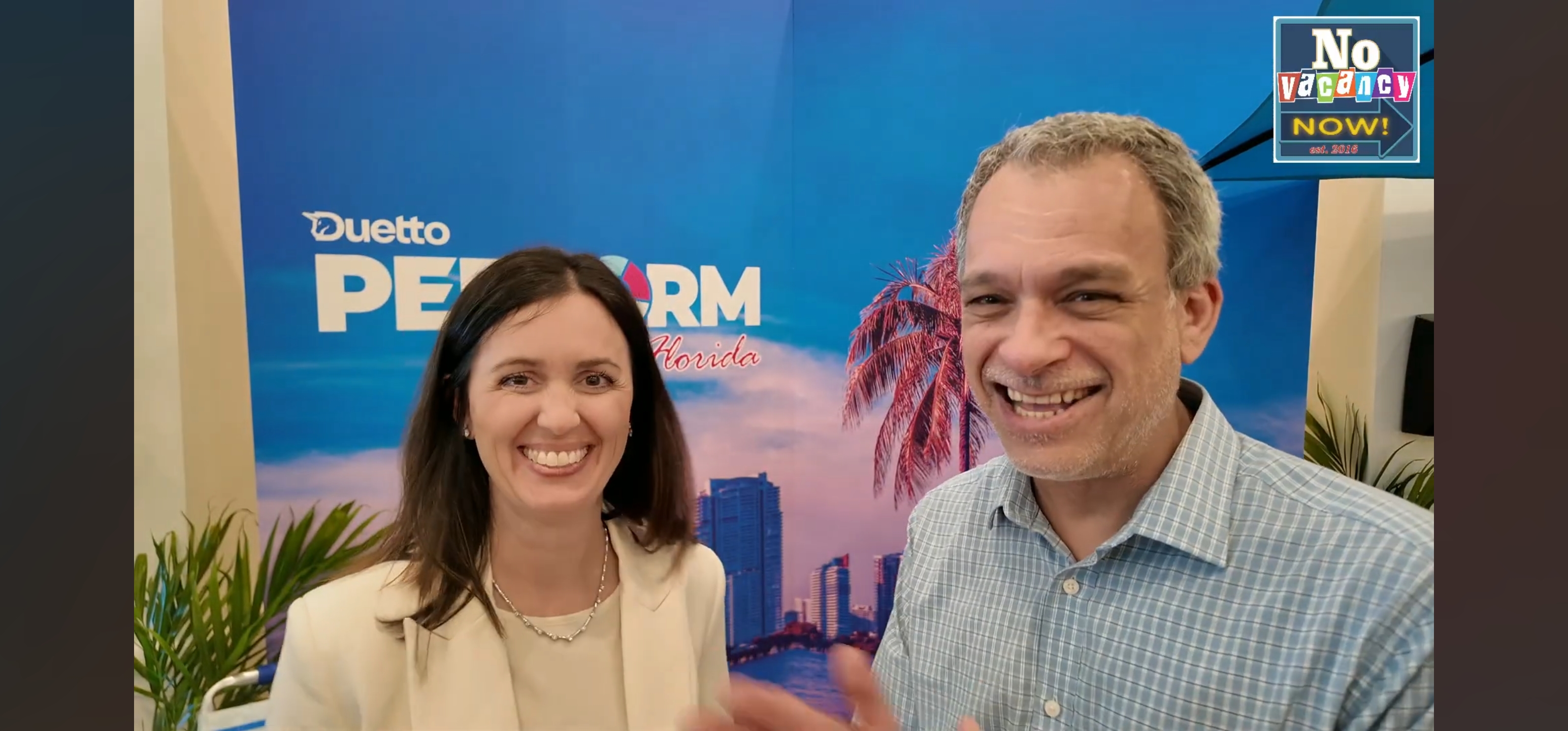
During DUETTO PERFORM, I talked with Katie Moro, VP Data Partnerships at Amadeus, about a real problem for hoteliers right now: data everywhere, decisions nowhere.
🛫 Katie explains using airline search and booking signals to separate intent from real demand
📊 She compares booking curves across hotels, airlines, and short-term rentals and adjusts for lead-time differences
🎯 She uses age-range data to tighten channel mix and marketing decisions
🏢 She says group profitability needs more than room nights—meeting space and F&B data matter too
✅ Her first move: audit what you buy, cut what you can’t act on, then work backward from the questions you still can’t answer
Want the weekly roundup of news, videos, and what you might’ve missed from #NoVacancyNews? Text HOTEL to 66866.
Transcript
Glenn: [00:00:00] Hey, everybody. It’s your hospitality friend Glenn here still reporting from Duetto PERFORM. And listen. I could not go anywhere now talking to my friend Katie Moro over at Amadeus, because she’s got the deets on data that we all need these days. And sadly, yes, I just thought of that. How are you?
Katie: [00:00:15] I’m doing well. How are you?
Glenn: [00:00:17] This is great. So we just did a panel together, which went exceptionally well because she’s a rock star. And one of the things we were doing was talking about data. She made some interesting observations. I thought we just had to share with the world. Number one is how do you get control of all that big data and start parsing it out into useful pieces of information?
Katie: [00:00:35] Yeah. So I think that for a long time in the hotel space, we’ve looked at hotel data, right? And so now we’ve seen it Amadeus the importance of other data sets. And so I’ll give you a good example. Right? So people for a long time had looked at airline search data, which is a great information for travel intents, but actually who’s doing the bookings, right? So you really want to see that search to book ratio, right? Not just saying it’s actually booking, but then you dive even deeper. What I find super compelling for hotels is we can look at the information within that traveler on the airline, which is booking more in advance in hotels. Right?
Glenn: [00:01:09] Right. It’s so true. I always book my flights and then worry about it because if I can’t get there, what’s the difference?
Katie: [00:01:15] Yes. And it’s been very interesting. I’ve done some analysis where I can look at actually hotel bookings, airline bookings and short term rental bookings. And the booking curves are consistently similar, but the lead time is different.
Glenn: [00:01:28] Interesting.
Katie: [00:01:29] So hoteliers really should be using both of those as key indicators of demand. Right. So if I take my example about the airline bookings data, even more specifically than just understanding the the occupancy demand coming in, right? It’s all about what types of travelers are coming. So my example is, you know, I can look at the airline booked tickets to say, what age range are people booking into my destination. So I’m going to mark it differently to a 25 year old than a 47 year old. Right. And so when you think about distribution and how to balance all of that channel mix. And then you think about social media and all of these investments that you have to make. That is a great way to really narrow down the scope and really make it actionable.
Glenn: [00:02:09] All right. Now, I know what you’re saying is you’ve been preaching psychographics for so many years. Why are you talking demographics? Well, it’s the information we have. And it’s really critical to just generally understanding the common mindset of particularly aged people. I behave very differently in my 50s than I did when I was 25, although some would say I don’t, but you’re wrong.
Katie: [00:02:30] And then the other piece for me, I go to Europe quite often for work. And it’s always mice, mice, mice. They’re looking at meetings and events, and they’re really trying to understand that area of the business because it is critical, right? When you think about you can only do so much with room revenue, right? How do you drive the other parts of the business? And so and Amadeus, we’re really focused on how do we bring that to life for the customers and make sure that they have that balance of what is the meeting space like? What is the square footage occupancy. How much food and beverage is coming in? Comparing that with the group room nights on the sleeping room side and making sure that you have that balance so you can really drive profitability.
Glenn: [00:03:06] All right. So I’m a big believer in the theory of just one more thing. Can’t do everything at once. It becomes too overwhelming. What is one thing they could do now after they like, share and subscribe to the to the channel that they should be doing in their business.
Katie: [00:03:19] I think that just as the first step, because there is so much data, it’s really take a step back and say, okay, what are all the data sets I’m buying today? What am I? What decisions am I taking because of these different data sets and really try to remove things that aren’t actionable and then say, okay, what, what questions am I trying to answer that I don’t have the data for? What data is that? And then find out how you get access to that data.
Glenn: [00:03:43] Okay. Like it. So you reverse engineer it.
Katie: [00:03:45] Exactly, exactly.
Glenn: [00:03:47] Yeah, I love it. Great. I’m so glad that we had a chance to be on stage together and to do this interview. It’s been great. It’s great. Hey, and you guys are great too. Thanks so much for watching. To the end. I already said like, share, subscribe, which I just repeat it again. See you again. Bye bye.

More Episodes



Subscribe