April 23, 2026
Front Desk Upsells Cut Turnover by 40% and Raise Pay
Front desk upsells can raise pay and cut turnover.
Glenn Haussman talks with Geoffrey Toffetti, CEO of Frontline Performance Group, and Sloan Dean, former CEO of Remington, about how hotels train front desk teams to build rapport, tailor offers, and use data + incentives to improve performance.
Ask better questions at check-in, then match the offer to the guest’s trip
Track individual performance daily and coach in real time
Use recognition, accountability, and rewards to drive behavior
Pay commissions that move the needle: about 10% of upsell revenue to agents; some agents raised pay 50%
Cut turnover: Sloan reports a 40% reduction in front desk staff turnover
Treat the front desk as the last mile of sales, not just a cost center
Want the weekly roundup of news, videos, and what you might’ve missed? Text HOTEL to 66866.
Transcript
Glenn: [00:00:00] Hey, everybody. It’s your hospitality friend, Glenn. I’m excited because today we’re continuing the series on how to help you make more money, making your guests happier. At the same time, I know how what a great solution to have out there. And in order to do this, I got two great friends with me today. We got the incredible Sloan Dean, former CEO of Remmington, of course, friend of the show and a fellow podcaster, and our new friend, Geoffrey Toffetti, CEO of Frontline Performance Group. Guys, so great to see you here today. Thanks so much for coming back with me. I’m I’m glad that didn’t scare you off after the last one over there.
Sloan: [00:00:38] Yeah. Good to be back.
Glenn: [00:00:39] Yeah. So Geoffrey, one of the places that I’m finding there is that real opportunity to engage guests, get them excited about their stay and offer them some more value propositions. So today I’m a little under I want to understand a little bit more about how you are thinking about training staff and building rapport at the front desk to help hoteliers make more money.
Geoffrey: [00:01:03] Yeah, it’s, you know, it’s basically part and parcel of what we do. So the whole thing is that when someone arrives at the front desk, you want to talk to them. You don’t want to just say credit card, an ID. And when you’re talking to them, use that time. Ask a couple of questions. What brings you to town? Have you ever been here before? You know, if you’re if you’re a business traveler, when do you depart? What time of day do you depart? And then use that information to align the best you have to offer with what they’re doing. So we don’t want to offer someone something they don’t need. You don’t take a single business traveler and offer them the penthouse suite, right? You, you say you match it up. So if they’re traveling with their family, think about privacy. If they’re if they’re a business traveler, you think about making it convenient for them to, to leave after their meetings. So you align the offer to what they have. And then the key is giving the hotel and this is really what we do. We give the hotel all the tools they need to motivate their front desk teams to train their front desk teams and to track the results and manage their incentive programs. So it’s turnkey for the property. And it’s really about people like Sloan who see the big picture, motivate their teams to get on board, and then magic happens.
Glenn: [00:02:08] All right. So I like this in premise. Joffrey. Right. You don’t know me very well, but I get excited about actionable insights, right? But they don’t just appear there. So, Sloan, how are how were you when you were CEO thinking about actually getting front desk representatives? And we know what the turnover rate like that is to really understand it and learn how to listen and respond with potential opportunity.
Sloan: [00:02:38] Well, I think that’s part of where Frontline Performance Group is a great partner because I believe in what gets measured, gets improved. And so they’re kind of data analytics platform allows a front desk agent on their iPhone or a front office manager or a general manager to see the actual performance of individuals, you know, how are they doing versus their peers? Right? How are they selling certain room type upgrades and then allows for real time coaching. And so I think that kind of measurement daily and intentionality is what pulls through the results. And you know, it is a bit nuanced in that you have to coach and counsel the front desk to pick up on. Okay. Well, Sloan was here by himself. He probably doesn’t want a suite with multiple bedrooms because he’s just by himself. But all of a sudden, if he’s checking in and I have my four kids with me you know, he may be interested in that. He may be interested in the kids club. If you’re a resort, he may be interested in the business lounge upgrade if he’s traveling by himself. So those are the kind of the things that being able to tailor that kind of, you know, a customer can be different, whether they’re on a business trip, whether they’re traveling with their family or they’re on a leisure. And the PMS doesn’t tell you all that, right? It just gives you the confirmation number. The main person on the folio. And so in a way, it is allowing you to customize the experience and also monetize things that you maybe didn’t pre-arrival. And again, what gets measured gets improved. And I think that’s where their data analytics platform allows you to drive performance using data.
Glenn: [00:04:19] Right? So Joffre, how do you turn data into people actually doing stuff?
Geoffrey: [00:04:26] Yeah. Well, I mean, you can tailor the coaching and the training specifically to them. So you know exactly what I mean. You have two front desk agents that are both doing okay, but one is really good at selling room upgrades. The other is really good at selling ancillary amenities. How do you cross-pollinate that so that they both get good at both? That’s really the magic of the coaching and training, you know. And there’s also, you know, in our world, we have a blueprint, a philosophical blueprint that says if you want to motivate people, you need three things. You need recognition, you need accountability, and you need reward. The platform gives you all three of those built directly into its functionality so you can recognize people’s performance. You can actually give them a thumbs up on their performance and it shows up on the team feed. So if the GM likes your performance, we know it gives you an energy boost. We’ve done the analytics, so it’s every facet of how do you activate hourly employee performance is built directly into the platform.
Sloan: [00:05:19] Yeah, it’s almost kind of Gamifying front desk, which I think is how we’re going. The world is moving towards, you know, if you think about this younger generation and how they like to interact and, and do business, it is, it is kind of the gamification of front desk and you know, the analytics platform. What I liked about it is I would actually go to the hotels and you would see during break periods, like front desk agents looking at their own stats. You know, it’s great. Create some competition.
Glenn: [00:05:50] That’s great. And my guess is smart hoteliers are rewarding those that are at the top. Aside from my understanding is the product works is Sloan when you were using it at Remington, they were able to actually make bonuses with each upsell. Yes. Correct.
Sloan: [00:06:06] Yes. Correct. Yeah, we would be we paid out his historically, about 10% of all upsell revenue actually went to the agents themselves and the commissions. And we actually had some agents who their pay was up 50%. Wow. Because, you know, their hourly paid, but then they’re making these substantial commissions relative to that. And obviously, you know, you, you’re happy to pay them because you’re making more money too. But again, it helps what we found. It actually helps with retention, right? Because if all of a sudden, instead of making $12 an hour, you’re making 17 or 18 an hour when you factor in the bonus, obviously you’re, you’re more inclined to stay.
Glenn: [00:06:47] Yeah. Joffrey.
Geoffrey: [00:06:49] Yeah, no, that’s exactly right. The, you know, we have front desk agents in some resort destinations that are making six figures. It’s, you know, it can literally double your income. And when I was a front desk agent, when I started way back before my career began I was a front desk agent and I doubled my pay on, on walk ins and upgrades. So it’s, it’s been around a long time and a point that you were just making, Glenn was we actually recommend a three tiered incentive. So your top performers are actually making a larger portion of their upsell. So they might make 15%, the bottom might make five, but the the bell curve averages to about ten on average, right?
Glenn: [00:07:25] So you’re like double encouraging them so you can get bonuses. But when you get achieve, well, I’ll say like in video game unlock this level, right? Exactly. Then you get more.
Geoffrey: [00:07:37] And the app actually shows them where they are now and how much to the next tier and how much more they would make. So it’s constantly sharing with them two more upsells and you’re going to hit the next tier.
Glenn: [00:07:47] Sloan, you love that data. Any idea how much it actually helped keep people on board and not going down the street for another job.
Sloan: [00:07:56] Well, I mean, we on average saw a 40% reduction in front desk staff turnover. So substantial. I would say it’s a substantial impact. I mean, think about it. If if you’re you know, making 15 an hour and your friend down the street is making 22. And by the way, they’re being trained better because they have better data. They have training protocols. You’re going to, you know, you’re going to have a harder time holding on to those really, really talented front desk folks.
Glenn: [00:08:26] Yeah. And Jeffrey, I don’t want to suck up to you too much, but there’s also these old there’s also all these other expenses that you don’t normally see. You got to rehire somebody, you got to retrain somebody, retrain.
Geoffrey: [00:08:38] It’s massive. It can, it can be the whole first year of their, of their pay. You get wasted because you also have misfires. So you hire someone, they don’t work out, you fire them, you get someone else, you want to lock in your top performers at a front desk, let’s say 2 to 3, four years is a is a decent tenure. But then you also have this crop of people. This is something else we educate the hotels on. You have a top performing front desk agent. You should put them in sales. You should put them in banquets. You should continue their sales process because they’re proven to be good at sales. A lot of the hotels aren’t looking at it that way until we start educating them. This is a labor pool you’re cultivating for for higher level service or sales roles.
Glenn: [00:09:18] Yeah. And I’ll say it’s one thing that I’ve always about, I’ve admired about Sloan’s leadership style is really promoting within and giving people opportunity to, to rise up and shine within an organization. So any final words before we wrap this one?
Sloan: [00:09:31] I think I think that that last point is a strong one that you have to reimagine the front desk. It is an extension of your sales experience and customer experience. And too often, I think hoteliers, we’ve treated it as a cost of delivery. You know, it’s almost a loss leader, if you will, versus it should be that last mile of sales.
Glenn: [00:09:52] Yeah. So what we’re really talking about is turning the transactional into the experiential Joffrey. This sounds like a good time for a good plug for you guys.
Geoffrey: [00:10:03] Yeah, that’s that’s exactly right. Experience is everything. Guest experience is what we’re all about. And the it there is no trade off. The more revenue you make, if done right, the better your experience will be.
Glenn: [00:10:14] Yeah, I love it. How can we learn more?
Geoffrey: [00:10:16] You go to WW dot frontline PG, that’s performance group.com or hit me up on LinkedIn. I’m very active there, as is our our company page. So we’d love to hear from you.
Glenn: [00:10:28] Excellent. Gentlemen, thank you so much for joining us. I really appreciate you being here. And I want to thank you guys for being here. Make sure you check out our first episode where we focus all about how this kind of works. And next time we’re going to be taking a closer look at helping your FNB side of the business. So until then, I want to thank you guys for watching. Be sure to like, share, subscribe and all of that kind of stuff. Remember, you’ve got one life. So blaze on and I’ll see you next time.


More Episodes
-
September 29, 2026
Inside HomeTowne Studios by Red Roof: Why This Extended Stay Model Works
-
September 28, 2026
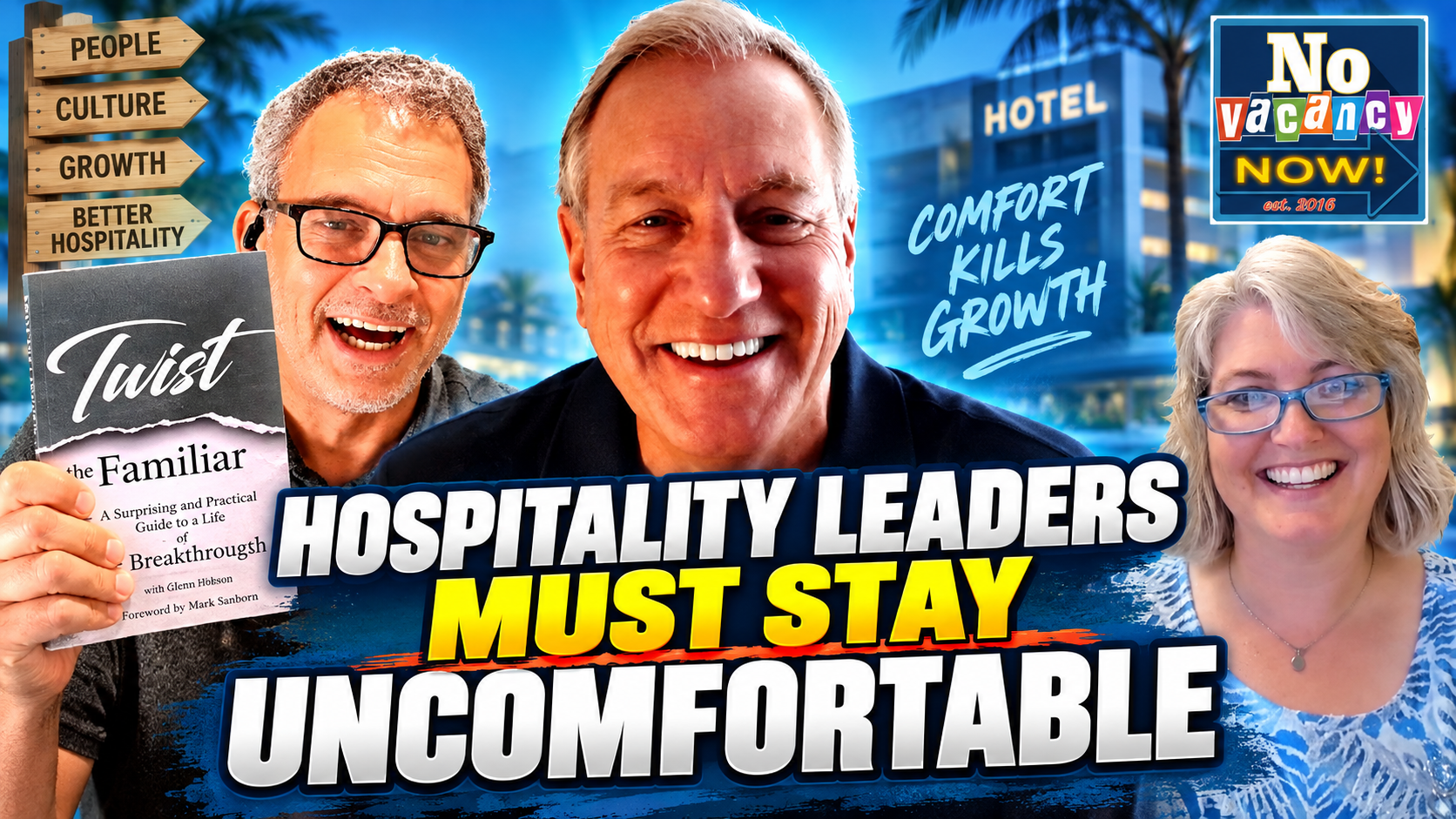
Why Hospitality Leaders Must Stay Uncomfortable
-
September 28, 2026
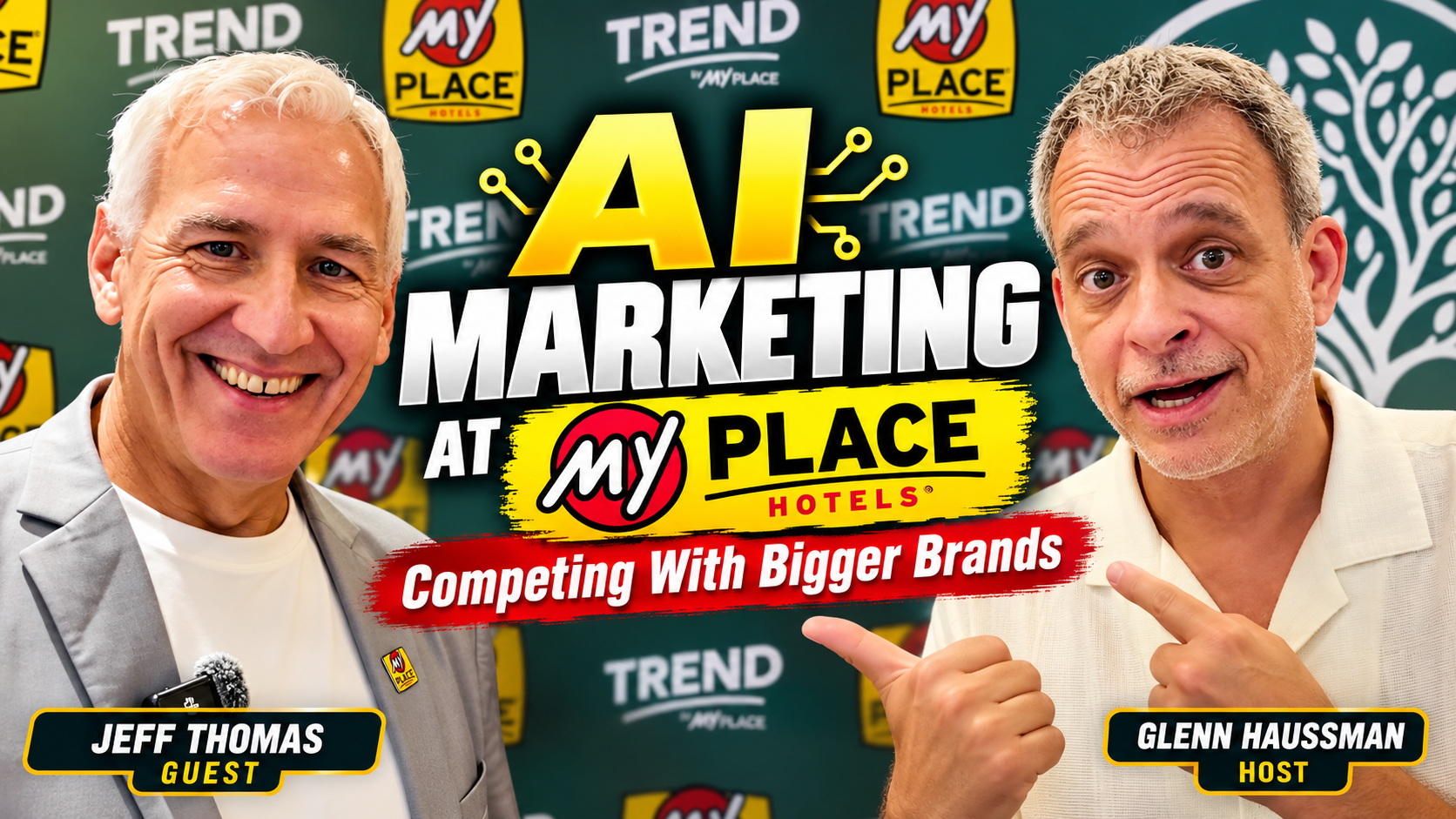
Hotel Marketing With AI: How My Place Hotels Competes With Bigger Brands
-
September 26, 2026
My Place Hotels: Growth, Leadership and the Next Generation

Subscribe