July 13, 2026
Your Phone Is Your Room Key Now (And It Works)
Your phone is your room key now. And it’s about to change how guests check in.
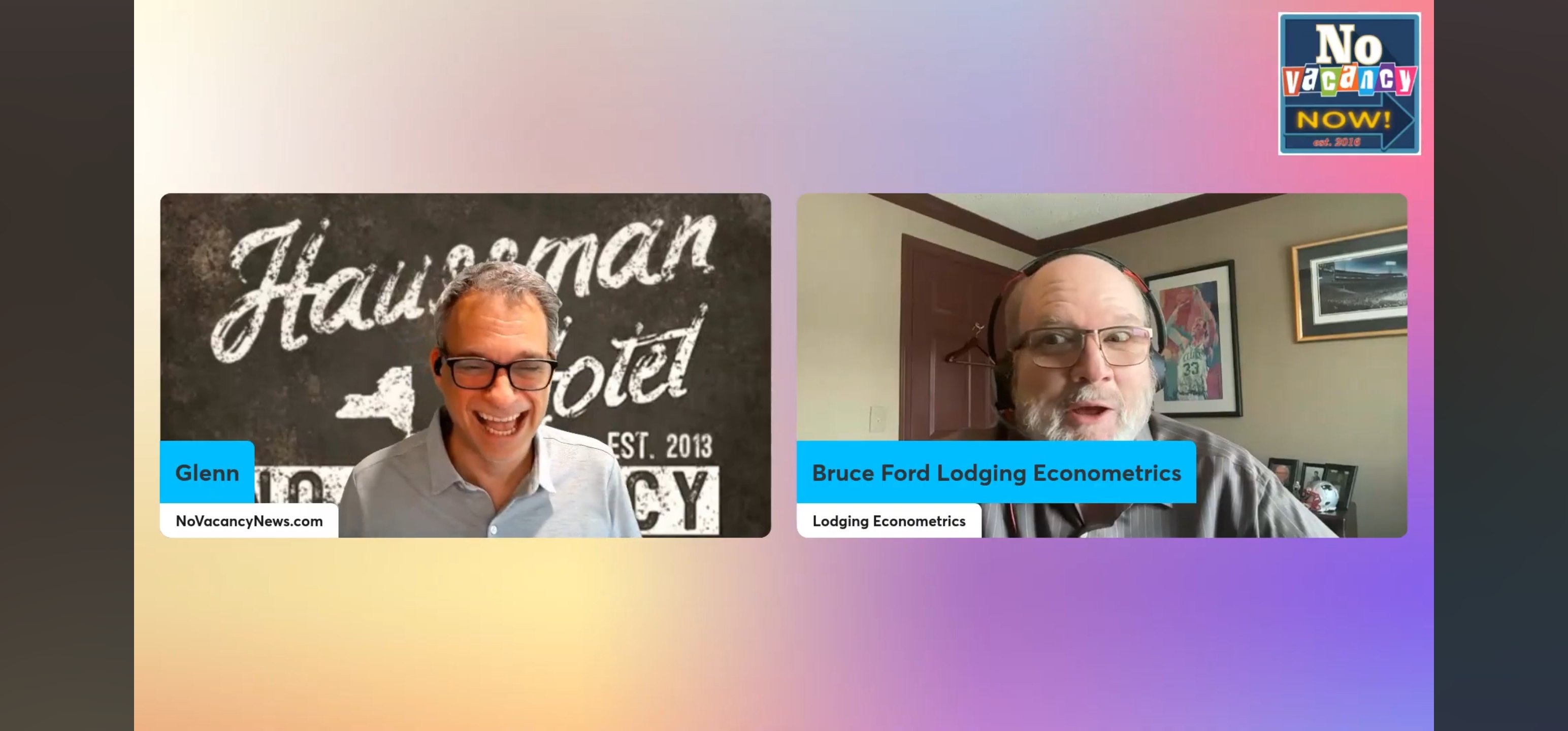
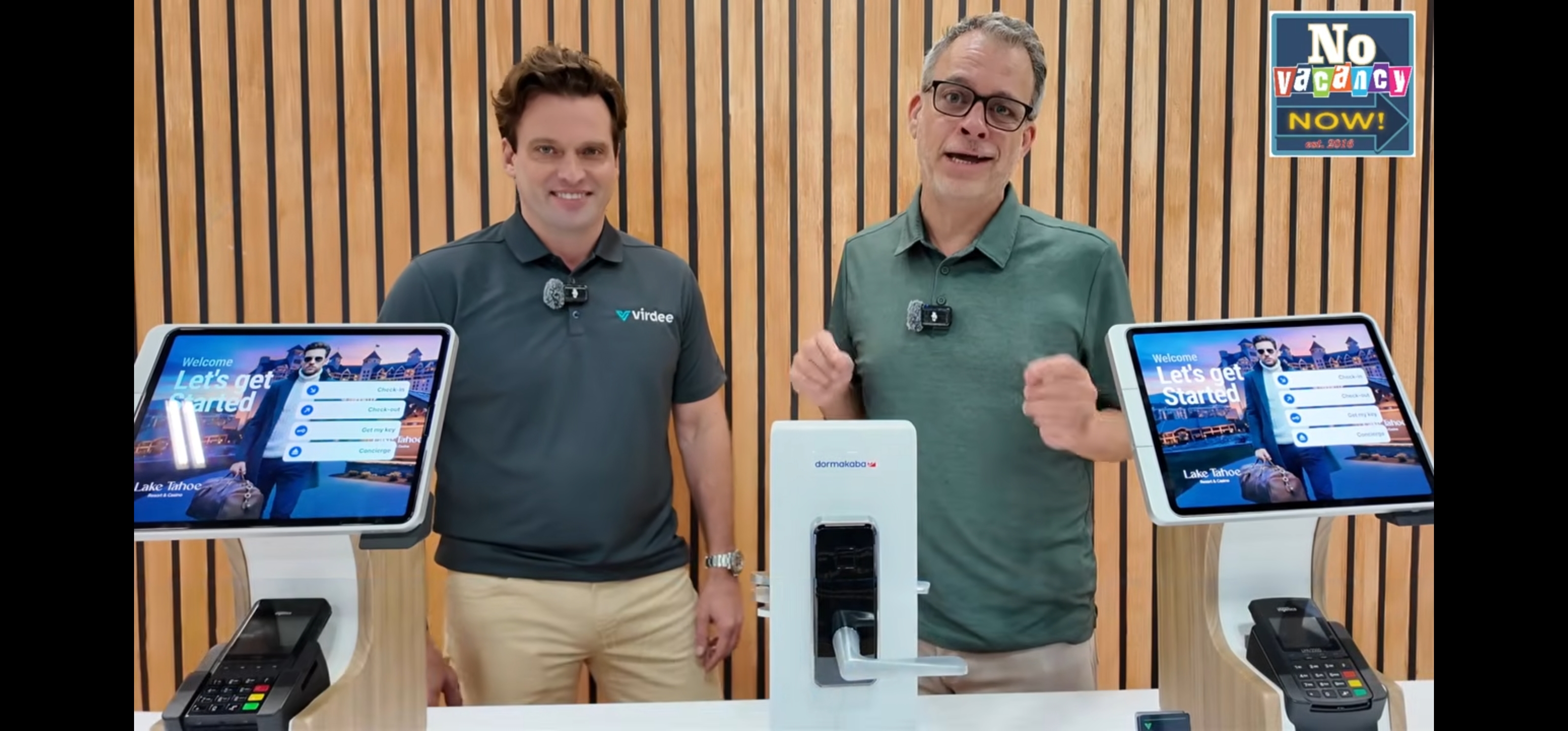
Branigan Mulcahy, Co-Founder & CEO at Virdee, showed Glenn Haussman at HITEC how wallet key technology actually works — Apple Wallet, Google Wallet, Apple Watch, NFC. Tap your phone to your room. It opens. Done.
Glenn already tested this at Harrah’s Las Vegas and loved it so much he came back to talk to the person who built it. Watch Glenn’s earlier test here: https://novacancynews.com/no-keycard-…
Old digital Bluetooth keys had 2% adoption because they were cumbersome and required apps. This one has zero friction. The moment your room is ready, you get a notification. You skip the line and go straight in.
Here’s the kicker: your phone dies, you still have access for about 5 more hours. Express mode reserves power and treats room access as mission critical. So even when your battery is dead, dead, you can still unlock your door.
Caesars is rolling this out now. Brands that deploy it first are going to see guests actively prefer staying at their hotels.
Visit virdee.ai.
Want the weekly roundup of news, videos, and what you might’ve missed from #NoVacancyNews? Text HOTEL to 66866.
Transcript
Glenn: [00:00:00] Hey, everybody. It’s your hospitality friend Glenn, with my friend Branigan Mulcahy, Co-Founder & CEO at Virdee They got this awesome technology to help get you into rooms quicker. But not you. Your guests into rooms quicker, upping guest satisfaction. Branigan. It’s great to see you, man.
Branigan: [00:00:16] Good to see you too, Glenn.
Glenn: [00:00:17] All right, so I recently had a chance to use this technology, and I’ll put a link down below at Harrah’s Las Vegas. And boy, my mind was blown. It was so much easier to just tap my phone into the room and get in than older technologies. Yeah, yeah, we’re super excited about that project and wallet key technology in general. So Caesars obviously is, is the owner of Harrah’s. And so we’re deploying the wallet key technology across all of their properties in Las Vegas this summer. Wow. So we’re excited. Oh, that’s pretty exciting. And when I was over at Harrah’s, that was the first one to launch. And I could already see that people were enjoying it. But what does it really do for the hotel owner? Why should they care about this sort of thing. Why are we moving towards this technology from traditional key cards, which, by the way, I’ve got a stack that’s probably like that big of them at home. Yeah. Yeah.
Branigan: [00:01:08] So I think if you if you’ve seen some of the news in the Las Vegas market, you know, there’s still a lot of people going there. And oftentimes there’s big lines at check in. Oh yeah. And, and when people check in, sometimes their room is not ready. Right. Right. And so there are big lines at check in. And then there are also big lines for people like coming back to get their room key once their room was ready. One of the cool things about.
Glenn: [00:01:31] You promised you wouldn’t call me out on that. I know I keep going back and back. I know.
Branigan: [00:01:36] And you try to make sure it’s they’re working on it. Right. And so one of the great things about wallet key technology is that you can, you can put your wallet key on your phone anytime before you check in, after you check in. It’s, it’s there and available and it can be there even on like future stays. So you can put it there once and it’s there for a long, long time until you delete it. What happens when your room is ready is we will push a notification to you to say, hey Glenn, you’re in 1456 tower two. Your room’s ready. You can go straight to your room with your.
Glenn: [00:02:11] Phone, and that’s great. Assuming I could find tower two, I get right in there, which is great because particularly in a market like Las Vegas, and quite frankly, I’ve been to hotels all around the world. And there’s nothing worse than just sitting around on line from the customer perspective, you give me that opportunity to just let me go get a drink, or if I’m at a casino, go play some slot machines or do whatever I want to do. And overall, I think I’m walking into the experience with a net positive impression instead of being like, oh, where’s my room?
Branigan: [00:02:43] Yeah, exactly.
Glenn: [00:02:44] Yeah, exactly. How is this working right now? Because you use it on a phone. And then you also got the the Apple Watch, right?
Branigan: [00:02:50] That’s right. I got my handy Apple Watch here right now. And what this does is it. You can put your key on your phone and the watch at the same time. Yep. It’s all part of whatever is connected to your iCloud account. And then you can just tap your, your watch to to the lock itself.
Glenn: [00:03:08] So what, what do hoteliers get out of this? Why should they invest in a product such as yours when people weren’t complaining about the old way of doing things?
Branigan: [00:03:17] Right. So I think, you know, over the last decade or longer, there was a big investment in, you know, from from Marriott, Hilton, other brands in digital key technology. And so the Bluetooth BLE, digital keys was very common. You had to download a mobile app to use it. And it was, it was viewed as a way to drive loyalty. Right, right. But the actual utilization of those Bluetooth digital keys was probably around. It was in the single digit percentages, like probably around two, right?
Glenn: [00:03:47] That makes sense.
Branigan: [00:03:48] So it was pretty low.
Glenn: [00:03:49] And I personally had a number of issues with it, which I sampled it. And then I just kind of said forget about it, you know?
Branigan: [00:03:56] And it took a long time to use. It required an active internet connection. You had to go into the app. You had to find the digital key within the app. You had to click a couple buttons to activate that digital key. And it was just, it was cumbersome. It got to the point where there wasn’t parity with the traditional key card. Right. You have a key card in your wallet or your pocket. You pull it out, you tap that on the lock, it opens immediately and you’re done. And so from a user experience perspective, the legacy BLE keys just weren’t, it just wasn’t as good as just carrying around a key.
Glenn: [00:04:29] Now this new technology, it kind of reinvents everything from the ground up. So it’s not Bluetooth, it’s NFC technology. And what’s really cool about it is it works. I just take my phone, I tap it against the room and everything happens. But honestly, not my phone because I’m an Android user. Yeah. Right. Right now you’re an iPhone. You’ve released the, the, the watch all of that. But you’re going towards Android as well, right?
Branigan: [00:04:51] That’s right. So we have both keys in Apple wallet and keys in Google Wallet supported on our platform, which is, you know, if you look at the percentage of guests coming to hotels, it’s, it’s basically 100% coverage. And that’s important. A lot of our customers, because if, if you want to provide a good guest experience, we’re going to provide a consistent experience for whatever that guest is bringing to the table. Right?
Glenn: [00:05:16] So that’s great. Does it work on traditional handset phones with long cords? My mom is asking.
Branigan: [00:05:21] You know there’s only so much.
Glenn: [00:05:23] Yeah, there’s.
Branigan: [00:05:24] Only so much.
Glenn: [00:05:25] That’d be quite the court from New York all the way down to Harris, for example. Well, this is a really cool technology. How could we learn more? How could we get engaged with you guys over at Verdi?
Branigan: [00:05:33] Yeah, yeah. So there’s a couple more things I’ll say about technology. Just like the, the legacy view was to say, you know, Bluetooth keys, we’re going to drive loyalty. I think keys in, in Apple and Google Wallet are going to be the big driver of loyalty in the future. I know that’s outside of the context of a mobile app, but for me, I know that whenever I stay at one of our client properties, it’s on on wallet key technology. And that list is growing rapidly. Yeah. I think like the, the whole industry is going to move to this in the next few years. I’m excited to stay at those properties because as soon as I check in, boom, my phone lights up and says, hey, here’s your room key. Yeah. And that’s pretty cool. Like, I, I only want to stay at hotels that had that. And so the brands that start to deploy this across their, their footprint, they’re going to see, I believe, an uptick in, in loyalty and rebooking. And that’s just going to be a huge driver, huge ROI.
Glenn: [00:06:29] I agree, because what we’re really talking about here is another way of removing friction from the process. And each one of these little things that you do at your property leads you to the ultimate goal of extreme customer satisfaction, which means they’re more loyal, which means they’re going to rebook. So look at this as part of your overall ways of connecting with the guests and allowing them the freedom to come and go as they please. Anything else that you should add? I got one thing I want to add. Sure. One thing that kept me away from worrying about this technology is, hey, what if I’m out too late in Las Vegas or something and my phone dies? Well, it will work even after I’ve killed my phone. Now, that is really impressive. Yeah, that’s right there.
Branigan: [00:07:11] That’s really cool. So one of the, the, the special things about our certification to work with Apple is that we’re, we operate in what’s called express mode. So express mode means that that this device is just the equivalent of a fob, right? So as soon as it touches that, that lock, it’s going to immediately tell it to open. Right. The benefit of that is that it reserve power in the iPhone. So if your phone dies, then it carries a little bit of reserve power. It treats that as a mission critical function. And it’s going to continue to power that until your phone is like dead. Dead? Yeah, right. Dead, dead. So it’s usually about five hours after it dies.
Glenn: [00:07:50] That’s pretty impressive and will definitely outlast one of my nights on the road, that’s for sure. Maybe not 20 years ago, but And now for sure. All right. How can we learn more?
Branigan: [00:08:00] So. Well, first off, for those who haven’t, like, seen a lock unlock. Yeah. I do want to show. Oh, yeah, that’d be great. How that looks. So let me turn this here and let me pause or I’ll let me turn it here so we can see. Yep. And then it’s just you just tap it.
Glenn: [00:08:19] Oh, I heard it.
Branigan: [00:08:20] Boom. Nice. You’re in. Yep. It’s that fast.
Glenn: [00:08:23] And now you’re not. Yeah.
Branigan: [00:08:25] Yeah. Now it’s locked, not opening. And then you just put it put it there.
Glenn: [00:08:30] And yeah, you can see this going in and out for any doubters over there. Yeah. It’s beautiful. I just love how simple it works. It’s just so easy. You don’t have to think about it. Right. And I think that’s where we’re at right now. You want to make sure the guests can do what they want to do when they want to do it right. Really, really awesome. I love what you guys are doing over here.
Branigan: [00:08:50] Yeah. Our like our most important metric that we track with all of our customers is guest NPS. Right. So we put guest experience number one, no matter what we’re doing, what we’re working on, whether it’s the wallet key technology, whether it’s some of the new AI capabilities that we have in two way communications with the guests, the way we automate some of the check in, check out processes, anything that we’re doing there to have touch points with the guests, we want to make sure that that’s the best possible experience. And so we just, we track that and, and it’s what we care about the most.
Glenn: [00:09:27] Beautiful. I love it. All right. Verdi.ai. Right. Verdi.ai virdee.ai. Check em out. Tell em Glenn sent you. That’s Brannigan. Hey, you already know me. I’m Glenn. See you later. Bye, everybody.

More Episodes
-
July 11, 2026
214: The Guest Canceled, So We Roasted Glenn’s No Good, Horribble, Terrible Travel Day
-
July 9, 2026
How Loews Hotels and Universal Orlando Built an 11-Hotel Resort Powerhouse
-
July 8, 2026
We Drove The Vegas Loop With A Casino Resort President
-
July 7, 2026
The Luxury Boom Is Reshaping Where Operators Are Betting