November 24, 2025
Using AI to Fight Human Trafficking and Crime
Human trafficking is a global crisis — and hospitality sits on the front line.
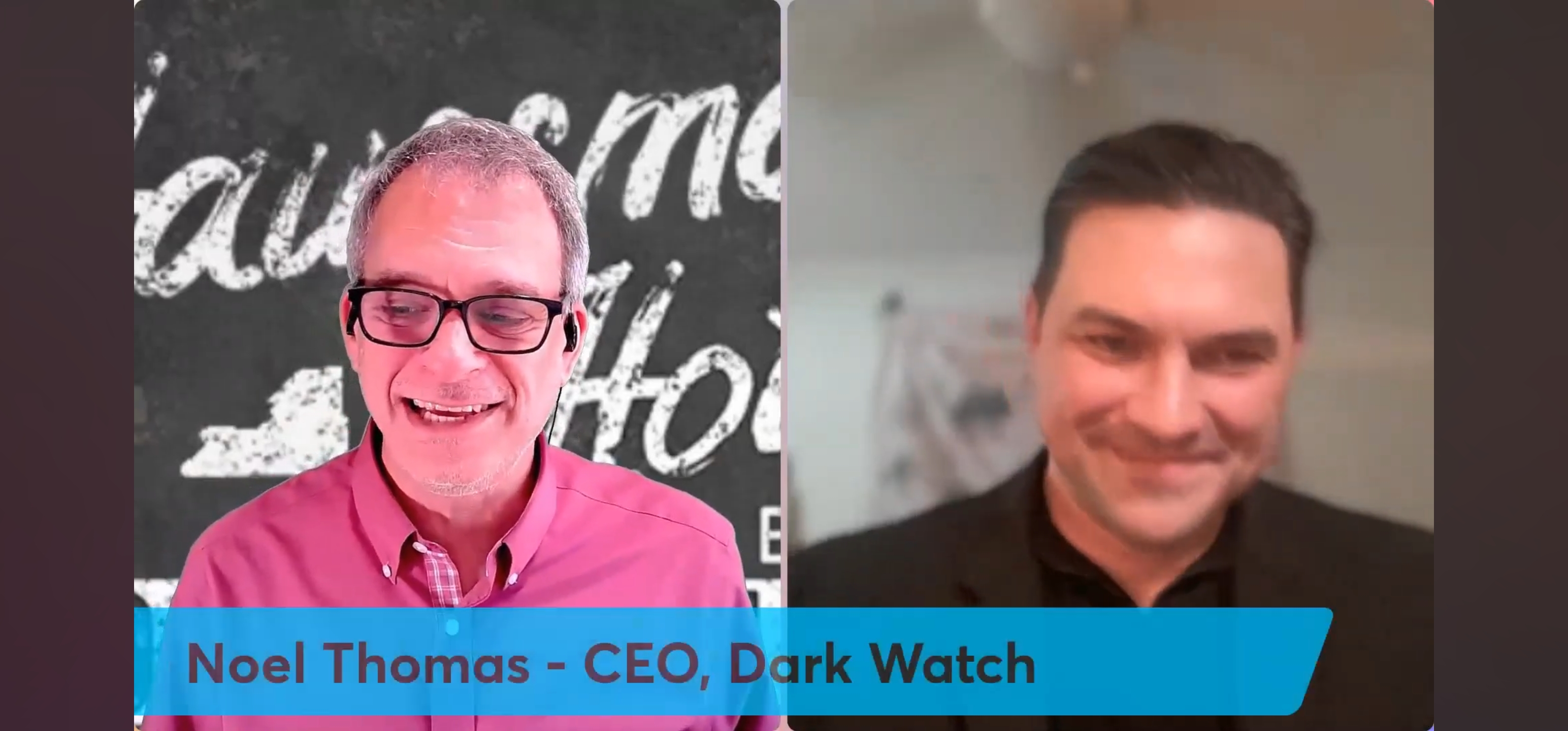
In this episode, Glenn Haussman talks with Noel Thomas, CEO of Darkwatch, about how his company uses AI to detect trafficking networks, identify high-risk individuals at check-in, and help hotels raise their standard of care without adding more workload to frontline staff.
Noel shares his powerful personal story, the moment that changed his life, and why he has dedicated 15 years to fighting exploitation through nonprofit work, government service, and now technology.

He also breaks down how Darkwatch connects watchlists, organizes criminal intelligence, integrates into PMS systems, and helps hotels detect threats — including trafficking, terrorism, and organized crime — before they reach the guestroom floor.
What we cover:
🛑 How AI recognizes trafficking indicators in real time
⚙️ How Darkwatch plugs into PMS systems without extra training
🔍 Why watchlists and behavioral patterns matter
🏨 How hotels can raise their “standard of care” for safety
📊 Why collaboration across banks, rideshare, travel, and hospitality matters
📘 The story behind Noel’s book Dark Traffic and its hotel-specific cases
Your turn:
What more can our industry do to prevent trafficking and protect vulnerable people?
Transcript
Glenn: Hey, everybody. It’s your hospitality, friend. Glenn. And today I want to be serious for a minute. You know how important it is for our industry to stop the scourge of things like human trafficking. And I gotta tell you, we’ve done a great job of creating a lot of visibility around it over the last ten years, thanks to a lot of great partners out there, including companies like the American Hotel and Lodging Association. And it seems as if every hotel I go into now, the bathrooms, there’s notifications. People are really thinking about it. In airports, we see this, but we got to take it to the next level and to remain vigilant. I think because we’re entering an AI technology era, it’s more important than ever to think about how we could leverage technology to help save people and keep our world safe. And I found a really cool company while I was at the lodging conference back in September. I want to thank our friends over at Visual Matrix, Patty Jefferson, for introducing me to him, Noel Thomas, CEO of Dark Watch. And you can find them at Dark Watched. I know, great to see you. Thanks for putting good energy into the universe and saving people.
Noel: Awesome. Thanks for having me here, Glenn.
Glenn: Yeah, it’s great to see you so dark. Watch is really interesting because I really see that you’re leveraging technology in new and interesting ways to help to stop things like you know different crimes outside human trafficking. I’m thinking, like, Mafia type crimes and all of that kind of stuff is pretty. It’s pretty interesting. Before we learn a little bit about that, how important is it to you and Dark Watch to help stop human trafficking?
Noel: Well, I’m glad you mentioned that. So for me, it’s really personal. And I share this, this story because I think it really helps everyone relate to that. This could happen to anyone. So our family was walking in this indoor market when I was a child. My sister was four years old at the time. I was about eight and my dad’s walking with her and this lady approaches him and starts commenting on his shirt when he looks down in that split second. My sister was gone.
Glenn: Oh my God.
Noel: So he trusts his instincts. He runs towards the exit of this building, and a man we didn’t know was walking out the door with my sister. My dad recovers her at the last second and the man runs off. So that left a deep impression on me as a child, you know, being eight. Fast forward. Played in rock and roll band. Got to travel the world. And I first get this flyer on human trafficking where I learned that 50 million people are enslaved around the world. It’s a $250 billion industry. So I took a team over to India to see it firsthand. And while we were in India, I saw this 14 year old girl that was being trafficked right above a police station. And it was in that moment that my life changed 15 years ago and have dedicated my life to fighting human trafficking, everything from the nonprofit space to working in government. And now starting this, this tech company to provide the technology to detect and disrupt the the human trafficking trade.
Glenn: And what’s really interesting to, to me is, as I said in my intro, we’re talking a lot about leveraging the power of AI in our industry, particularly to make customer journeys better, make more money. But you guys are a data company that’s combating human trafficking with this digital intelligence. So how does it work? How do you detract, like criminal organizations exploiting victims? And how are you helping stamp this problem out?
Noel: Absolutely. So the the AI is looking for watchlists. This could be fugitive list. This could be international lists. It’s scraping that information and compiling it into databases, where then we start to build the criminal connections. So we’ve worked very closely with the DoD rideshare companies, banks now hospitality and and travel and entertainment broadly. And so the first step is identifying that human trafficking risk. The next is to run the AI over all of that data very broadly, and look for certain behaviors of organized crime or high threats to the brands or flags that we’re working with. The last piece is in the AI is is creating a way that brands can collaborate with each other when they come across human trafficking. And so what we’re seeing is that when we work with the banks, the banks want to work with the hotels and the hotels want to work with the banks, because they’re kind of seeing this problem from different angles. But that intelligence is important to share. And that’s where the AI can pull those trends out from that shared information as well.
Glenn: All right. So practically speaking, what does this mean to hoteliers and how they operate their business of trying to stop this from happening.
Noel: Well, the first thing is, is with all the the litigation that’s been happening is to have the right tools that raise the standard of care. So when this litigation occurs, they’re looking for what’s known as constructive. Notice that the brand knew or should have known that this was going on. Right. So whether it’s darkwatch tools or other tools that are on the market, by having a tool, it raises the standard of care from nothing to now an industry standard that will stand up. Right.
Glenn: I love this. It really plays into my philosophy of being selfish by doing the right thing. So you’re helping your own business by helping the universe. So it’s a real win win. Go on. Noel.
Noel: Well that’s it. I mean, you know, as a business owner myself, right? It’s. We’re always looking for the double bottom line. How can we make the world a safer and better place and add to the bottom line? And this technology does that for our brands. It does that very simply because you think about families that are looking to bring their children like, say, our family. Right. That was looking to stay at this hotel. And I had the choice between a hotel that has the the the latest and greatest protections of technology and AI in the market. Like I said, whether it was Darkwatch or some other provider or nothing, over time, that standard of care for families is going to get higher and higher, where the expectation is I’m only going to go to brands that are doing everything to keep me and my family safe. So that’s where they start adding to the bottom line, where they build up the reputation there. They’re working to prevent these, these bad incidents from from occurring. And as an added bonus, you know, in addition to the human trafficking that we look for, we’re also looking for things like terrorism, fugitives, violent felons the types of risks that keep hoteliers up at night and providing them a real solution, that they could rapidly identify it and respond within milliseconds to these types of threats.
Glenn: You mean an example of rapidly responding in milliseconds to a threat in the hospitality business?
Noel: So the easiest way is that someone is going to check in and and scan is done against our database within within dark watch in that second. When that match occurs, it then goes to the global head of security, who then works through what actions they want to take. And so that’s all happening behind the scenes. It never occurs with the front desk. And, and that way it protects everyone that’s involved and allows the brand to have total control over how they want to respond to this issue and get ahead of it. And that’s the beautiful thing of how this is set up. And just hearing the the market feedback is each brand, whether it’s geography or things they care about or their own internal policy, they want to be able to bespoke set up this risk engine to fit their specific needs. And it’s important to do so because someone let’s say in Latin America versus New York or California or the Midwest, they’re all going to have different concerns of what they care about, and they need the tools that are also geographically tuned to their specific threats.
Glenn: Wow. That’s that’s pretty pretty fantastic. And I like that it takes away the onus of responsibility from the property level people. You can have inexperienced folks that don’t know how to handle these types of situations, and they shouldn’t be asked to do it. So pretty interesting. Was this just, like, plug in to a PMS, like our friends over at Visual Matrix who introduced us, for example.
Speaker3: Exactly how this can work. Right? And that’s what the market.
Noel: Was telling us when we were building the the patented technology is that they wanted it to plug into their own workflow. They didn’t want one more new system that they had to learn or implement or bring through their CIO or Cisco. Right? They wanted to use the tried and true infrastructure. And that’s exactly one of the ways in which the brands will, will use this type of solution.
Glenn: That’s pretty that’s pretty interesting. All right. No just let me tell the audience, hey, I’m not getting paid for this. I want to give them some promotion because it’s the right thing to do. We have to work together and be successful. Why don’t you give yourself a plug?
Noel: Dog watching. Oh also the author of a book called Dark Traffic that talks about the organized crime behind human trafficking and specifically how it relates to hotels. There’s a story in there of how I went out on a raid to a motel on the government side. And the front desk was actually participating with the trafficker. So very relevant to our hoteliers to at least understand and be aware of the risks that the brands want to to stop at the flag level. This is a great resource for them.
Glenn: Wow. That’s That’s pretty interesting, man. No. Great getting to know you. I really love learning from you. And I really hope you all learn today. Man, that is quite the story. Please check out Dark Watchdog. Oh, don’t do it for me. Do it for you. Do it to help save lives. Please share this very important video. Really appreciate you being here. And we’ll see you next time. Take care.

More Episodes
-
April 24, 2026
FNA 208: Seeing Red
-
April 23, 2026
How Margaritaville Hollywood Beach Turns Meetings Into Repeat Leisure
-
April 23, 2026
Front Desk Upsells Cut Turnover by 40% and Raise Pay
-
April 20, 2026
Hotels Don’t Need More Systems: They Need Connected Data



Subscribe