November 14, 2025
Turning Pressure Into Profit: The New Hotel Playbook
Hotel costs keep rising, but smart operators know how to stay profitable without sacrificing culture.
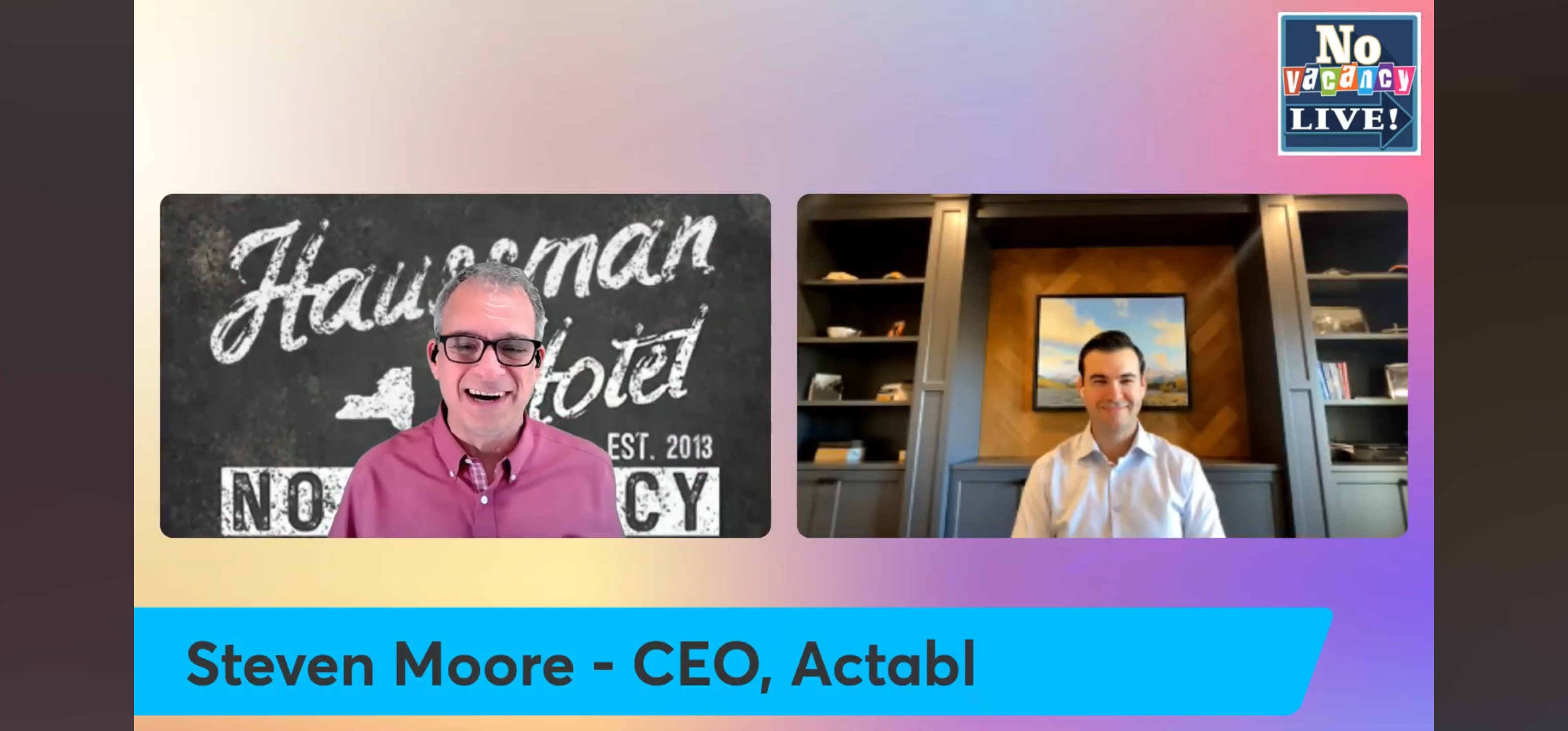
In this episode, Glenn Haussman talks with Steven Moore, CEO of Actabl, about how hotel leaders can turn operational challenges into opportunities.
Steven shares how effective labor strategies, transparent leadership, and people-first technology create profitable hotels that guests — and employees — love.
What we cover:
💡 Finding profit in the details of daily operations
🏨 Using data to guide smarter labor and service decisions
🤝 Building a culture that supports performance
⚙️ Eliminating waste without losing quality
🧠 Applying technology that amplifies human skill
🎯 Leading with clear goals and accountability
If you’re working to improve both profit and culture, like, subscribe, and share below:
What’s one leadership move that boosted your performance this year?
Transcript
Glenn: Hey, everybody, it’s Glenn, your Voice of Hospitality here, and I’m so glad you could join us today. Listen, I’m out there on the road seeing many of you. And one of the things that I’m finding in common is we’re trying to do more with less. You know, I know everyone knows it’s getting harder to push rates. We’ve got to become more efficient at the property level because there’s still money to be made, especially if you start lowering those expenses. So at the lodging conference a few weeks ago, one guy was making a real splash with his philosophy. So I said, hey, let’s get him on the show, let’s talk about it. Let’s find out. That’s why we got Stephen Moore, the CEO of Actabl. Steven, great to see you, man.
Steven: Yeah, good to see you too. Thanks for having me on.
Glenn: All right. So I laid out the problem. So how are you seeing this big picture where we are in hospitality right now?
Steven: Yeah. So it was a bit depressing at the lodging conference. I mean, great to see everybody, but you hear everyone’s speed stats and what they’re talking about, and it’s some variation of revenues flat. It’s contracting. Things are really hard. What are we going to do? And so we’re trying to make the case that even though things are hard on the top line, you can still make money in hotels. And there’s still reason for optimism on the profitability side.
Glenn: Yeah. I’ll tell you, Stephen, I have been focusing on you’ve got to give people reasons to spend money and you’ve got to create value. And that means making sure your hotel is really running efficiently. So when you’re out there, what are you thinking about those operators that are keeping those margins stronger? What’s really separating the winners from those who aren’t? I’m like thinking about low hanging fruit, where people get a little bit of help immediately.
Steven: Yeah, well, no surprise, half of your expenses are in labor. So when you think about what you’re going to focus on, it’s like you can focus on one thing, be an expert in that, find profits there, be really, really good at generating efficiencies there. Or you look at the other half of your expense profile. You might have to be an expert in 50 different things, right? Or at least 25 different things. So hey, take the simplicity when you can get it. I know operating is about doing a thousand things really well, but if you can focus on half your expense and win, go there.
Glenn: I think that that makes a whole lot of sense to me. All right. So well, I don’t you know, what I don’t get is why you think that people already don’t have this figured out. What do you think are some of the roadblocks that are keeping them from having this portion figured out?
Steven: Yeah. Well no surprise. Hotels are very dynamic operations, so I think there’s a lot of turnover in hospitality. Right? When you’re thinking about managing your labor force, you don’t want to overschedule, you don’t want to under schedule. You don’t want to use too much contract labor. And so how can you use technology efficiently to make sure you’re not only managing your labor, your largest expense well, but you’re also using that technology to create a great culture going forward. People are showing up, not having things to do. People aren’t showing up, having everything, plus everything else to do feeling overwhelmed. And so not only driving efficiency with technology, but driving a great culture with technology.
Glenn: Yeah, and when you drive the culture with technology, I think that’s where it leads to the ability to strip out some of the things that we don’t love to do with technology, maintain the things we do love to do with technology. And by getting rid of the dislikes, we kind of strip out a lot of those hours, which might help lead to that labor issue that we’re having out there. One of the things man I see is people going into like, stuff inorganically like cut, cut, cut. Not really like, you know, thinking about how to do it logically. How are you thinking these days about how hoteliers should think about cutting expenses logically in the hotel without, you know, just hacking up the operation out there?
Steven: Yeah, I think it’s a great point. Anytime there’s pressure, you tend to look a little bit more narrowly and right in front of you. So we saw one operator that actually cut their labor management system and program. And for every dollar they saved on the actual expense of the program, labor costs increased $5. Right. So it feels really good. Day one you cut something off of the the line item expenses, and then six months later you’re like, oh, shoot, that was the wrong call. On the flip side, you know, you pay a lot of attention to this. You’re intentionally pursuing a labor management program, creating a great culture. And we’re seeing hotels find a lot of savings. You annualize those savings, you apply those savings across a whole portfolio. Those are big dollars that you can generate relatively quickly.
Glenn: All right. So how does this whole thing fit in? Because you know, I hear all the hoteliers talk culture, culture, culture. But then I see a lot of turnover at the same time.
Steven: Yeah. No, it’s a very high turnover industry. We know this. There’s a lot of money to be saved by, you know, hiring two people a year to do a job versus six people a year to do the job. And so I think at the end of the day, people want to make a difference, right? They want to know, hey, what’s the goal? What do we need to do to get there? How do I contribute to that goal? So we’re trying to push a lot of transparency through technology. We’re trying to push a lot of accountability through technology. And then just to your point, earlier, equipping people so that they can do more of the things they want to do with that technology. And that leads to, again, not only profits, but a culture where, hey, if you’re not having to hire so many people over time onboard so many people over time, that’s going to lead to a lot of direct bottom line impacts, too.
Glenn: Yeah. What do you mean about transparency with technology? How does that help?
Steven: Well, I think it’s really important that people know what am I doing today that is going to impact our ultimate goal. So first you got to be really clear on what the ultimate goal is. And then you say, hey, let’s begin with the end in mind. Work backwards into what you do today. Right now this decision matters and it makes a difference. And if you can tie that, what I’m doing today to how it matters to something that’s bigger than me that creates a high engagement culture. And I think that creates a lot of longevity in the culture.
Glenn: Yeah. We just we’ve been doing a lot of programming here, trying to get hoteliers you know, the information they need to be able to empower their employees that comes through like great tech training and technology and combining all of those things. And that’s what that transparency comes in. Because if you have the transparency, you could do the training in like small, small little technology bites, for example, and really get somebody empowered to be able to make those decisions that for the benefit of the guests and the hotel simultaneously. Or I just maybe I’m just making that up. What do you think?
Steven: Oh, exactly right. That’s exactly right.
Glenn: Yeah. So how do you think hotels are, like, still leaving money on the table, for example, when it comes to using technology in the right way?
Steven: Yeah. I mean, I think you’ve got to look at where we’ve been as an industry. So we talked a lot about 2020. We don’t need to rehash that too much. But that was a catalyst for okay, we’ve been behind. There was this McKinsey study in 2016 that was rating the I think, 26 verticals on their tech adoption. And hotels were third from the bottom, so not a great look for hotels. 2020 helped accelerate that. I did a beautiful man.
Glenn: I’m gonna take it. What it gets. I just want to know who’s better than us. That’s.
Steven: Yeah. Yeah, well, I think agriculture, maybe construction. I think they were down there. So, anyways, there’s an opportunity to just use technology. There’s also an opportunity to look and say there’s too much fragmentation in this space. So if you’ve got one hotel, 15 different tech systems, none of them talk to each other. The data’s not shared. There’s no workflow continuity. You go to the next hotel in your portfolio. It’s a different 15 different systems. You have to acknowledge there’s too much fragmentation. Very hard to run a playbook, very hard to be efficient as an operator. And so use the tools, try to consolidate into platform of tools. And then there’s no good conversation without AI. So we can talk a little bit about that, but get everything into the cloud. So you can use AI I think is what’s next.
Glenn: Yeah I agree, but it’s it’s so challenging because I talked to a lot of my management company friends and fortunately they have successful businesses, so they’re dealing with a lot of different brands under different brand families, and that makes it a lot harder for them to unify all the technology, particularly if certain brands have specific platforms. So how do you envision hoteliers being to put everything in the cloud to be more effective and then utilize you know, advanced levels of technology to, to be able to make every property within the system more successful.
Steven: Yeah. So you need to have a technology strategy. I think this is something that a lot of management companies actually overlook. There’s a lot of functional owners that will pick technologies. There’s not necessarily a tech czar at management companies, which I think may be a missed opportunity. But there’s a couple, you know, core systems that the brands might mandate, but they’re really not mandating a lot of texts. They’re not mandating every tech system. So how can you find that platform that’s going to transcend, you know, any PM’s mandate or CRM mandate that you can operate across all of your hotels, even with different flags and different mandates across the portfolio.
Glenn: Yeah. That sounds that sounds great, but not easy.
Steven: Oh, not easy at all. Yeah, easier said than done. And I think to your question earlier, it’s like, man, there’s a lot of short term pressure right now. Right. And that’s not something that you’re going to like. Oh we’re going to change all this next week. That’s a multi-year program. And so I think continuing to make those investments even with the short term pressure.
Glenn: And I will say, I will say, Stephen, if you could change it all next week, you’ll kill your teams, you know, great call next week. Right? So when you’re talking about creating a tech strategy, you not only have to think about the types of products that you need, but an implementation so you don’t drive everybody crazy, changing too much too quick because that could completely upend operations at the hotel. So how do you how do you think about balancing that? You see a lot of hoteliers going through this.
Steven: Yeah. It’s interesting. So it’s not just, you know, from a competitive standpoint for us. We’re not just competing against our same functionality. You know another tech providers we’re competing against just like it budgets in general. You know, because there’s only so many things that a management company can ingest at a time. And so I think you’ve got to think about, okay, what’s the product going to do for me? But what is the change management piece? The vendor can help me work through with the team. And then also, am I partnering with someone that I can pick up the phone and they’re going to get things done. Not everything’s going to be perfect, but I know they’re going to make it right. And with someone that I know is investing in the future here, because I don’t want to have to go through this again. Right. I don’t want to be changing things every 2 to 3 years. I want my vendor to change and innovate with me so that I know I’ve got the right platform for the long term.
Glenn: Yeah. That’s great Stephen. I covered a lot of ground really quickly. I love it. But before we before we give up for the day and tell everybody they got to go out and do this on their own, what’s one practical thing leaders can do tomorrow? It’s going to make a, you know, an impact on profitability.
Steven: Yeah. I think be very I think it’s going to be culture. So be very clear on your why be very clear on your vision of how you’re going to execute on that. Why be very clear on your values of how you want to operate in that vision. And then my favorite thing to do, get all of your leaders in separate rooms and ask them, what’s the one most important thing that we need to get right this quarter? See what they say. There might be a little bit of difference to make sure that everyone’s saying the same thing. At the end of the day.
Glenn: Look, you got to talk to your people. They know best and always the why not only great hospitality tip, but a great parenting tip to always, always, always explain the the why it makes life easy. Stephen, thank you so much for being here. Really appreciate it. I want to thank all of you for watching. Hey, while you’re at it, learn more. Why not check out Active.com? I’m Glenn, thanks so much for watching. Be sure to like, share and subscribe and we’ll see you right back here next time on another No Vacancy. See you later. Bye.

More Episodes
-
November 15, 2025
FNA 194: Trippi-ing Over Ourselves
-
November 14, 2025
992: The Fastest Fix for Hotel Leadership Shortages
-
November 14, 2025
Training the Waldorf Way: The Training Behind the Waldorf-Astoria Reopen
-
November 13, 2025
Behind the Scenes: MGM Resorts and the Precision of F1 Las Vegas
Subscribe