November 14, 2025
Training the Waldorf Way: The Training Behind the Waldorf-Astoria Reopen
What does it take to reopen one of the world’s most famous hotels?
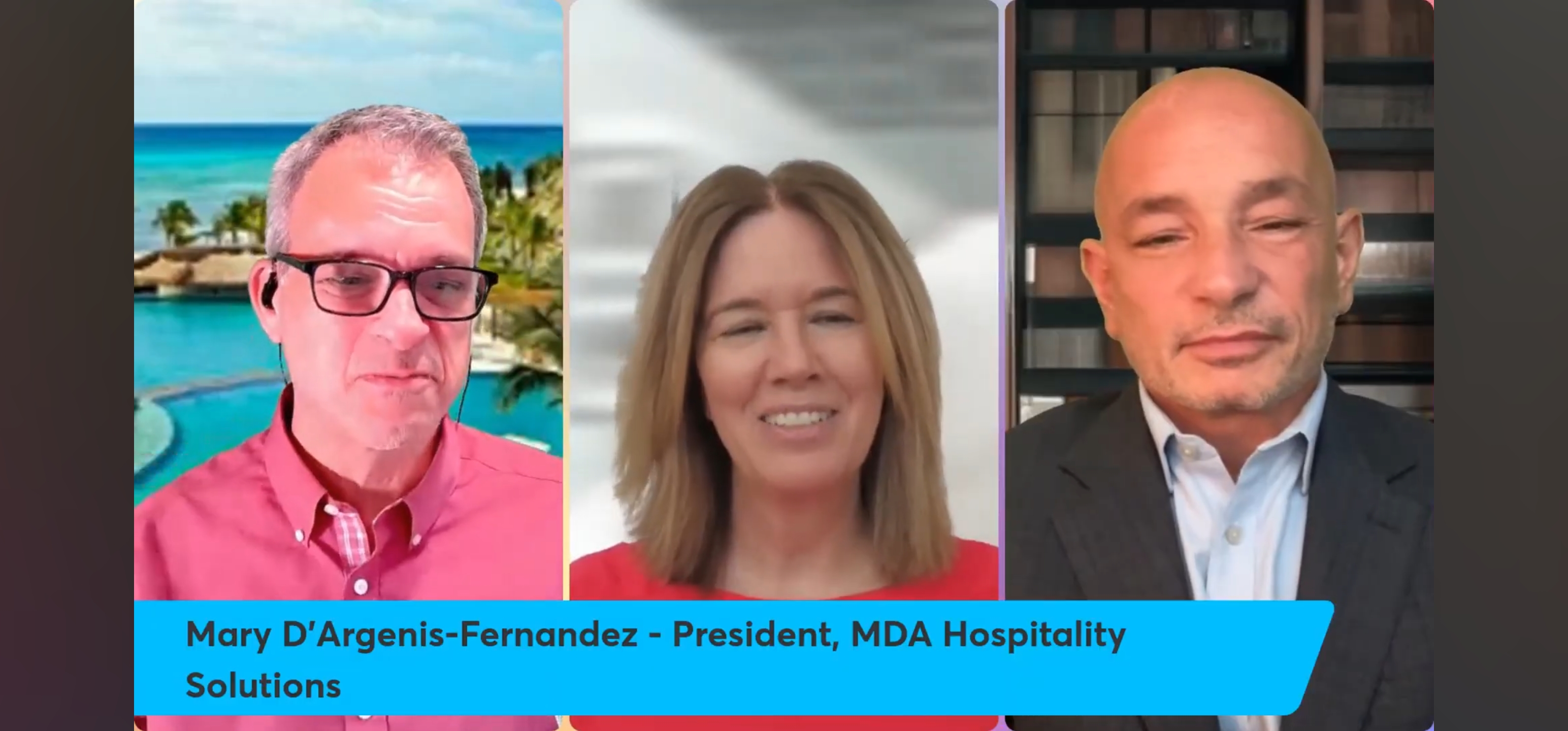
In this episode, Glenn Haussman and Anthony Melchiorri talk with Mary D’Argenis-Fernandez, President of MDA Hospitality Solutions, about how her team trained the staff at the Waldorf Astoria New York for its grand reopening — from creating service standards to building confidence across every department.
Mary also shares how training programs elevate both profit and morale, why consistency matters more than perfection, and how her company now brings five-star standards to hotels worldwide, including new projects in Italy and Sardinia.
What we cover
🏨 How MDA prepared the Waldorf Astoria New York team for excellence
🧠 The link between training, guest satisfaction, and profit
🍽️ Why even five minutes a day of training can change performance
🌍 MDA’s international work across Europe and the Caribbean
💬 Lessons from Disney, Chick-fil-A, and the world’s best hotels
❤️ Why hospitality training is the foundation of human connection
🙏 Special thanks to Actabl — Actabl gives you the power to profit. Visit Actabl.com.
If you care about keeping humanity in hospitality, like, subscribe, and tell us:
What’s one small training habit that makes a big difference for your team?
Transcript
Glenn: The following is brought to you by our friends over at Actabl. Actabl gives you the power to profit. Please check him out@actabl.com and enjoy today’s show. Hey. Hey Anthony. It is great to see you. Look how crystal clear we’re looking. You know, I’m really crystal. Why are you in the kitchen? Get out of the kitchen. It’s too hot. Oh, that’s a good point, because earlier we recorded a show on kitchens and stuff like that. But thank goodness, with the magic I have, I could go like that. And now I could be somewhere somewhere more exotic. What do you think about that? You’re more exotic than. I’m in my library. Oh my goodness. So, Anthony, what we’re going to be talking about today, I think we got a common theme going this week. We’re really focused on F and D. We’re gonna be talking about training for FMD. And today’s guest I’m very excited because we got Mary D’Argenis-Fernandez. She’s president of MDA Hospitality Solutions. They do fab training. I don’t want to I don’t want to step on the on the lead. They did the new Waldorf in New York City. And by new, I mean old, but new again. Let’s welcome Mary to the show. Mary. Welcome. It is so great to see you. How are you?
Mary: Good. Thank you for having me today.
Glenn: All right. So how does this work? Trading to get them going and and stuff like that.
Anthony: Well, specifically the Waldorf. I’m very excited to hear about that.
Glenn: I know, like, where do you come in? How does this all begin? We’ll start there. And then we’re going to go in the Wayback Machine and talk about your career a little bit. But sure, let’s start with how does all of this come together.
Mary: Well, we’ve been a partner for Hilton America’s managed property since 2017. And so it’s a natural progression that we worked in collaboration with the team on the opening of the Waldorf Astoria New York. And specifically, what we did is we support the training for all of the operations in collaboration with the leaders of those operations. So the food and beverage director, the senior vice president, all of the leaders of the outlets. It would be Peacock Alley, Lex Yard, Yoshoku, in-room dining and private bar. Those are the five areas. And then we returned for banquets. In total, we were on site for eight weeks with my team and we worked on that for roughly six months prior to being on site. So it’s the development of the calendar. What is the training day look like? How do we divide amongst all those different areas? What are the learning objectives. And and then we see that through fruition. The on site training for the initial opening was five weeks. And then as I mentioned, we returned for three more weeks for the banquets, which opens I believe it was July.
Glenn: Yeah.
Anthony: And having employees came back that were how long was it closed? Five years. Six years?
Glenn: Seven years. I feel like 20 years.
Anthony: I did the last event there and it felt like 100 years ago.
Glenn: No, I don’t mean 20, 1819. I was going to make a joke that you haven’t been working much longer, then that place has been closed with with Hilton.
Mary: But I to be honest, I would remember it then I don’t recall. I believe it has definitely been over five years potentially eight that I’ve misquoted.
Glenn: Forgive everybody. Anything pre-COVID seems to like blown into each other. So it’s so strange. Great to see world class property back and have you be a part of it. Anthony.
Anthony: Sorry those employees actually came back.
Mary: Well, again, I wouldn’t want to misrepresent what they what you know, how many team members are there? But there were quite a few.
Glenn: More than one. Less than all.
Mary: Yeah, yeah, there were quite a few that returned.
Glenn: That’s amazing. After all that time that they came home.
Mary: And with the banquets team as well, there were a lot that returned from the banquets department.
Anthony: So the Waldorf banquets, you can make a nice slip. Yeah.
Glenn: So when you’re working at the Waldorf, it’s pretty high level. What do you how does the training really come together. And what are you actually training for? Because I don’t know. I mean, I’m sure it’s not basic stuff like this is a fork, but probably, you know, more on the systems and operations. But really, at what level are you working at there?
Mary: So that’s a great question. If you think about all of the work operators put into getting to an opening, there’s a variety of details that take place from developing menus. Right. Cocktails was was actually largely led by another company. So we worked on the sequence of service, the steps of service, all of the you know, FMB processes as well as the food knowledge. So we would partner on the other aspects of it. So if you think about all of the menu items that they have each day, we have to launch several of those. And then it would be, how do the team members acquire and learn that knowledge and retain it so that when on the first day that they open, it’s as if they’ve been open for 100 years? You know, it needs to be that it’s not the first day of opening. They need to be polished, ready to go. So it would be we divide it into three categories. It’s content, mock service, and trial males, otherwise known as friends and family. So content is the acquisition of the knowledge mock service is team on team training in the space. And then the last step is friends and family where outside guests would come in and we have QR codes where they can rate the service and give us feedback so that we can take action on that immediately before it opens.
Anthony: Among all the challenges. And, you know, if you’re in this business for more than a couple of years, you understand how big of a challenge that was, what you just said, what you what you did in opening the office, probably the biggest opening in our country, in the hospitality business in quite a while. And that’s it. Because of the hundred years, because of the legend, because of the expectations. So out of all the surprises and I’m I’m sure at this point in your career you’re not surprised too often. But was there one surprise? Even you said, oh, I wasn’t ready for that one.
Mary: No, we I think we we really there were no surprises that I felt. I mean, we’ve been working with Hilton for eight years now, and we know the team very well. I think a great surprise was just how wonderful the team was, right? Like that. They were so talented. You’re pulling from the best experience in not only New York City, but the country. They hired the best. So when you’re working with the best, it kind of makes your job a little bit easier. But there were things that needed to be taught, because you’re bringing a lot, a lot of different people together for a monumental opening.
Anthony: So you’re based on your experience that that would be your answer in that.
Glenn: So does it become less of this is how you do it, as opposed to this is the Waldorf way of doing it. Does that make new ones make sense?
Mary: It is because, you know, everyone has different skills from where they worked before. And even if they were at the, you know, the Waldorf or, you know, before it closed. You have to bring all of these people, hundreds of new team members and old team members together so that they’re working cohesively. So it’s a team building. It’s ensuring that everyone feels comfortable and confident. There’s a lot of, you know, interesting recipes. So there’s a lot to it in terms of like the service style and what is the expectation.
Anthony: You know? I would imagine that even the young people that don’t understand the legend of the Waldorf when you’re in those walls. Eric Long was my mentor, right? Eric Long was there 20 years. And John Doherty, you know, I’ve known John for many, many years. And he was the youngest chef ever at the Waldorf. And he was there for 20 years. He was there for 20 more than 20 years. Matter of fact, that Eric Long’s retirement, John Doherty, he got on stage and all he said was working for you was hard. And then he got off the stage. So, so I so, so, you know, I that place has like. That’s my heart. I just love the world. Did the people coming in that maybe are new to the Waldorf get it? Like, did they understand that building they were in?
Mary: Oh, 100%? They they were they were so proud to be there. It was an incredible level of respect for our industry. People that really love what we do and were in quest of delivering the best service. So 100% they they spoke about it every day. There was a lot of pride.
Anthony: Yeah, there’s there’s a lot of legacy and a lot of things to look, you know, to, to hold. And that changed so much. But just kind of make it better. But you keep that legacy because a lot of things I mean you could probably stay there better than anybody. How many things actually were created and invented at the Waldorf?
Speaker5: Oh, yeah.
Glenn: Did you marry when you were an ice cream at Disney World? We were back in the college program. Ever imagine that food and beverage would be your life. And you’d work with world class companies like this.
Mary: Never, never. Actually, I started with Disney when I was in high school.
Glenn: High school? Not even the college program.
Mary: Yeah. Through college, my my dad used to travel to Orlando just to stay at Disney. He ran his business from Orlando in the summer and we would vacation. When I turned 16, he took my Social Security card and we got a Florida ID and he said, it’s time to work.
Glenn: Wow.
Mary: So I was given two options custodial or food and beverage. Being a 16 year old, I selected food and beverage and never looked back. I’ve had the time of my life in college, I was pre-law. I thought I was going to be an attorney. And I’m just so happy that I ended up in this industry.
Glenn: What was it that made you want to make food and beverage your life?
Mary: I really think it’s the Disney company. You know, I had such a great experience working for them that it probably launched me in the right direction because my family’s background is business. So while I’m in food and beverage or I started in food and beverage, really, I look at it as business and trying to, you know, increase net profit and and trying to find ways and food and beverage is probably one of the most complicated operations.
Anthony: Yeah. Challenging was complicated and turnover is insane. And so you have to be a special type of person. I always said I’m a hotel guy. Right. And of course, I’ve won a lot of restaurants and culinary, but my heart is the front of the house. And but I have so much respect for people that I partner with that handle the hard parts of the business, which is the food and beverage. And you know anybody you have one restaurant in a 1000 room hotel, and that one restaurant takes up 80% of your brain, right? So how how do you keep that love with the turnover, with with all the challenges with, you know, you can charge $500 for a room today and 3000 for a room tomorrow. It. You know, a steak is a steak is a steak. You can charge maybe 30 bucks or 40 bucks. You can’t charge 3000. So the profit margin.
Glenn: Did you ask the salt Bay? He charges the dip it in gold, baby. Yeah. Sorry. Go on. Mary.
Anthony: He blew himself up. But anyway, you know, Bobby was saying the other day on some TikTok, he said, you know, a Tuesday night restaurant is $100 a person. Just a regular Tuesday night restaurant. It’s $100 a person, and they’re making money, right? So. So how do you deal with just all of these? Not only the labor shortage, the labor market, the the technical shortage, but just the the the margins are just so small.
Mary: You’re you’re absolutely right. I mean, as I told you, like, my background is business. And if you look at all the places where I’ve worked, we’ve always increased the net profit. And so the reason why I’m in this space that I am today, which is training and development, is because if you want to increase your net profit. You have to have the right people working for you, and they need to know how to do their jobs well. And so we see that from this basis while, you know, we enter with training, it’s it’s really it leads to increased guest satisfaction, reduced employee turnover and a higher net income. And we see that with every place, every place that we work with.
Speaker5: So that.
Anthony: Waldorf’s and Hilton’s don’t you find what I find is that training is the first thing to go off to.
Mary: 100%.
Anthony: We don’t have any money for training. It’s like, then you might as well build it, right. You see that over the years that people it’s like more challenging because people are like, well, we don’t have we don’t have money for training. Right now I’m only at 60%. I can’t train, I don’t have employees, and I don’t have money.
Speaker5: Right.
Mary: I think it’s an excuse. Yeah. And it’s an excuse and it’s it’s really, you know, having done this for as long as I have and seeing the results of, of this work. I worked for a property before I started my company, and I was there for five years and we had we were bleeding in terms of, of net income by a lot. And we had a terrible retention rate. And when we started working on this process, it’s deliberate. It’s intentional. It’s something that you have to do every day. It’s like working out. You can’t expect to get great results when you work out once a week or never, you know, so you have to continuously have a plan and a strategy. If you don’t have that strategy for developing your people, they’re going to walk away and your guests will as well.
Anthony: Right? And, you know, people work for people that have their back and training. You’re telling me I care about you. I have your back like I’m going to teach you. I remember when I walked into the Plaza, I was a night manager. They just threw me into the role. And then I became director for an office. And I literally took the bellman and doorman’s break room for our training class because, you know, training going on at the Plaza in 1992, we actually started our own training at the plaza because and I started hiring people had no hotel experience because they the people that were there weren’t doing a great job. But like you said, I was intentional about the training. I’ll hold you accountable to high standards, but I have to hold myself accountable for you and it’s not got any better. And thank God for companies like yours that can get into that door. And it’s not. You know, it seems to me that the five star hotels, the Waldorf, the legacy properties will spend that money because they know what’s at stake. But it’s the mid-level companies, the three and a half, four star hotels that needed even more desperately because those people aren’t coming out of the kitchens of the Waldorf or of the Michelin star kitchens. So they really need the basic where’s the spoon? Where’s the fork? Basic training. And if you give them that, they will become that great employee.
Speaker5: Well, I think you can use the chick fil A example.
Mary: That’s definitely not you know, you’re not talking five star, but you get a five star experience by going to chick fil A. You know, even the way they expedite the the drive through. But they invest a lot in training. They ensure that their people are trained well and they use the right language and they take care of their guests. And the lines are will wrap around the building around a chick fil A, and you can go to a stores over and they’re not doing as well.
Anthony: I went to chick fil A drive through a couple of days ago, and I’ve been through several, you know, a couple times. But I just went through and I literally as I’m driving out of the drive through, I said out loud to myself without realizing it, that was delightful. Literally said, that was delightful. And they don’t say no problem. They say, my pleasure. I took them two years to get that through everybody’s head, but it is absolutely insane to go through that drive through and then go through your competitors drive through, which we won’t name. That is horrific. And and it’s like steal from your from your from your competition. But they they can’t steal because they won’t spend the money. You know in those managers to your point, those managers with chick fil A make 150 grand a year. Mcdonald’s makes 60,000 a year. So there’s a difference there. They’re investing in that product. And everybody like us, we talk about I talk about it every leadership class I talk about I talk about get rid of no problem and talk about, you know, my pleasure and chick fil A two years to do that. And everybody has the same story about chick fil A. So why their profits are better than most of their competitors. So, you know, you are a beacon for people to understand like invest man, just like your your your your business or you’re investing yourself, you’re investing your children. You have to invest in training before you invest in almost anything else.
Speaker5: Yep I agree.
Glenn: Mary, I’m curious as to what was missing in the market that you felt you could start your own business, and then also what gave you the guts to do it? Because that’s pretty serious move to do.
Speaker5: Yeah, that’s.
Mary: Another great question. Originally when I started the company, it was focused on increasing profits, and I was working with several companies to do that. And what happened was in 2017, I started getting a lot of calls for training.
Glenn: Interesting.
Mary: And it was from people that had worked with me previously. They knew the results of what I had done for other companies, and they’re like, do you think you could just do that for our company? And then many long term relationships were established as a result of it. So my business pivoted based upon what requests were coming in. And so that’s really how it happened. I didn’t intend for it to be this way originally. But the need in the marketplace was more for what we have, and we’re seeing phenomenal results.
Glenn: Good for you. That’s really that’s really impressive that not only did you start your own business, but then you were able to read the tea leaves out there and see where to go.
Anthony: Anthony, you’re married in your space. I’d have to do that. It concerns me the most is people go into your space coming out of college or coming out of a year or two of work, and then they become training experts, or they become consulting experts. But you are hardened by this business. You can see it in your tone of voice. Even when I ask you the question about the Waldorf before you answered, I knew your answer because you, you you were you were just like, no, there’s no surprises. We’re prepared for everything. And we work with great people. And and that level of experience doesn’t. You don’t find that too often and you have to pay for that. And but there’s people that come into your side of the business that don’t understand. Sunday morning, standing in the lobby with 600 check ins, 600 checkouts, with two bellmen mic and crap hitting the fan and what that feels like. Or having a banquet in the ovens don’t work, you know? And the chickens going out cold. There’s a feeling that happens that is so just so emotional that that that’s where I would imagine why you’re so good at what you do. So when he asked that question to you about, you know, why would you do this or that? It’s like you’ve been built for this.
Mary: Yeah. And and my team is built for this. So I think you hit it right on the head, which is we are not you know, our team has years of experience in leadership. And so that’s what’s most important is that they understand how to fix a lot of those challenges. But they don’t they they lean on the leaders, but then they know how to translate that when they’re working with the employees. So if a leader says to us, we need this to happen. We know what that means. And so I think that is number one is that we’re not we are built for trainers that like I, I use the word trainer, but really everyone on the team has been an executive or a food and beverage director. So they’re it’s they’re not even entry level leaders. They have been doing this for a long time and they’re skilled. And that’s why I think we’re so successful. But another thing I think we do well, and it’s interesting, I go to a lot of conferences. I was just at one last week. And they’re not focused on service. There’s a lot of focus right now on AI, and the service element is really where we excel. So we have a niche in that aspect. But we also have leaders that have experience.
Glenn: Right.
Anthony: And you know what I what I say is AI then you’re going to be left behind. However, there’s less touchpoints than there were even now than there were ten years ago, 15 years ago. So that one employee or two employees that you come in contact with. That service level has to be so intense and you know better than anybody working at Disney World. You know, I realized right in my book that I, I didn’t realize this, that I fell in love with the business when I was nine years old in the parks. And I asked the gentleman cleaning the park where something was. When my mother asked where something was, and he brought us there, he knew about the ride. He knew how to get there. He knew the shortcut. He knew information. And years later, when I was reading a book by Disney because I was running Nickelodeon, it said those were the most trained people at Disney back in the day because they’re the ones who are most approachable. And that’s the moment, at nine years old, talking to that person, I fell in love with the park. I fell in love with the place. Yeah. So so you’ve got to have less connection with those connections, have got to be meaningful.
Mary: And if you look at Disney’s retention, it is like they just celebrated their 50th anniversary here in Orlando, and I knew several of the cast members that were that started in 1971. They worked with me. And so they’re there for 50 years. They I watched the post and it’s they’re very proud and it’s Disney and their people.
Glenn: But for sure and Mary, you’re also I’m sure pretty proud of the fact that you’re branching overseas. You’re going to be working with resorts over there in Italy.
Mary: Yeah, we we were just in Sicily in Berkeley and as well, Sardinia. So we were really proud of that. So that was amazing.
Anthony: Well, listen, I love Sicily. I’m Sicilian, I spent time in Sicily, and the food’s the best, but they need you.
Mary: Yeah.
Glenn: Yeah, well, I went to Mino’s last night for dinner here in town. Right on. Yeah, but I’m sure not as good as going over to Italy. So any nuances that you saw that you had to kind of change the way you do training either culturally or whatever.
Mary: It was amazing. So we actually had in many of our trainings, we, we train in both English and Spanish, and we also translate a lot of our documents.
Glenn: They only spoke Italian.
Mary: Yeah. Of course. So we what I did is we retained someone that I worked with at the Four Seasons who is from Sicily, and he helped us in, in both of those projects. So we were there, but he was our, our translator. And then we also had everything translated into English prior. And we also learned how to use the closed caption on PowerPoint, which, as you see, can do that as you speak. It translates it into the language I spoke in English, it translated into Italian, and if they spoke, I could have translated into English for me.
Anthony: And of all the places in Italy, the one place where it’s hard to find English speaking people Sicily, I. I did two rows in Sicily and nobody spoke English. And it was not only they don’t speak English, they have no time for you. They don’t care. And I fell in love with it because the food, the people were lovely and warm, but didn’t speak English. And you need to learn Sicilian in, you know, 24 hours.
Mary: Yeah, yeah, they were amazing. I’ll tell you one, one takeaway that I found really interesting. We have an activity called the words You Choose, and it’s like, kind of what you were saying. No problem. Two negative words putting together to kind of answer something for a guest, you know, rather, my pleasure is better when we we’re going to use this, you know, kind of modified for Italian. We learned that in Sicily, at least where we were, they didn’t use any slang at all. They didn’t use any, like, negative words. So they’re like, this really doesn’t apply to us. And what they asked for instead is, could you please teach us some proper ways to say things in English? So they took that activity and switched it into something that would benefit them. But yeah, they don’t use a lot of slang. They have much more proper. And they wanted to, you know, really understand the best way to speak in English when they’re talking with their guests.
Glenn: Well, that’s pretty that’s pretty neat. I love that. So, Mary, before we wrap up today give us one actionable insight that folks can do to make their teams just a little bit better immediately.
Mary: I would say invest five minutes a day on on training. So if you have a pre-shift, did you devote five minutes towards something that would help them learn and speak less, listen more, let them do the speaking. Because if you’re speaking, you’re not really allowing them to learn. So take that five minutes and have them teach you what they know.
Anthony: Yeah, I love that. And, you know, one of the things I train is if you don’t have a pre-shift, it’s like flying an airplane without a, you know, without navigation. It’s like, I don’t understand how you get to how you can land the plane if you don’t pre shift it. Right. You know, if you look at whether it be a doctor or whether it be a pilot, when you look at a pilot, when the cockpit is open before you take off, they’re going through that same checklist that they went through for 30 years over and over and over again. And they’re looking at it. They’re not just checking it off. They’re looking at. So checklists and training and pre shifting. You do those three things in ten four and more like say hello. When you pass somebody you do those things and you you turn around the company and then people just they’re looking you know I’d imagine you find this that people are looking for the big thing during. It’s a small impact, especially in our industry, where when you stay in the hotel, you’re staying at home, you’re staying, you’re doing everything in a hotel you do at home. So that connection is more emotional than even just going to a restaurant because, like, you have to feel safe. And so so I applaud, you know, and I heard about your company and I know you do great things. So please stay in the green room so we can spend together.
Glenn: Yeah. Awesome. Mary, thank you so much for being here. We really appreciate you. Check out MBA Hospitality Solutions. That was really fun Anthony. Yeah.
Anthony: No, it’s it’s the most important. Everything in our industry today. All these consultants, all these businesses. She has the most important business in our business period.
Glenn: Yeah, yeah. And I mean more than ever I, you know, I don’t stop saying it. Humanity keep it in hospitality. That is the way to do it.
Anthony: And you know what we suck at in hospitality industry.
Glenn: All right, let’s get controversial as we wrap up.
Anthony: We gotta, we gotta, we gotta because you get good hospitality by training. You don’t get good hospitality. You get up in the morning.
Glenn: Yeah. That’s right. Make sure you get back on the training regimen. All right. Listen to us on LinkedIn. Download the show wherever you get your podcasts, find us on YouTube. And of course, No Vacancy News.com. Thanks, everybody. Remember, you’ve got one life. So blaze on and be yourself. See you next time, everybody. Have a great afternoon.

More Episodes
-
August 15, 2026
FNA 218: Red Roof, Red Jackets & Really Bad Advice
-
August 13, 2026
Why This 14-Room Fantasy Hotel Gets Millions of Views
-
August 13, 2026
The Dirty Dancing Hotel Lost Its Lake. Here’s What Happened Next
-
August 11, 2026
SBA Hotel Loans Just Got Bigger: How Owners Access Up to $10 Million


Subscribe