November 18, 2026
Hotels Keep Promoting Employees Without Preparing Them
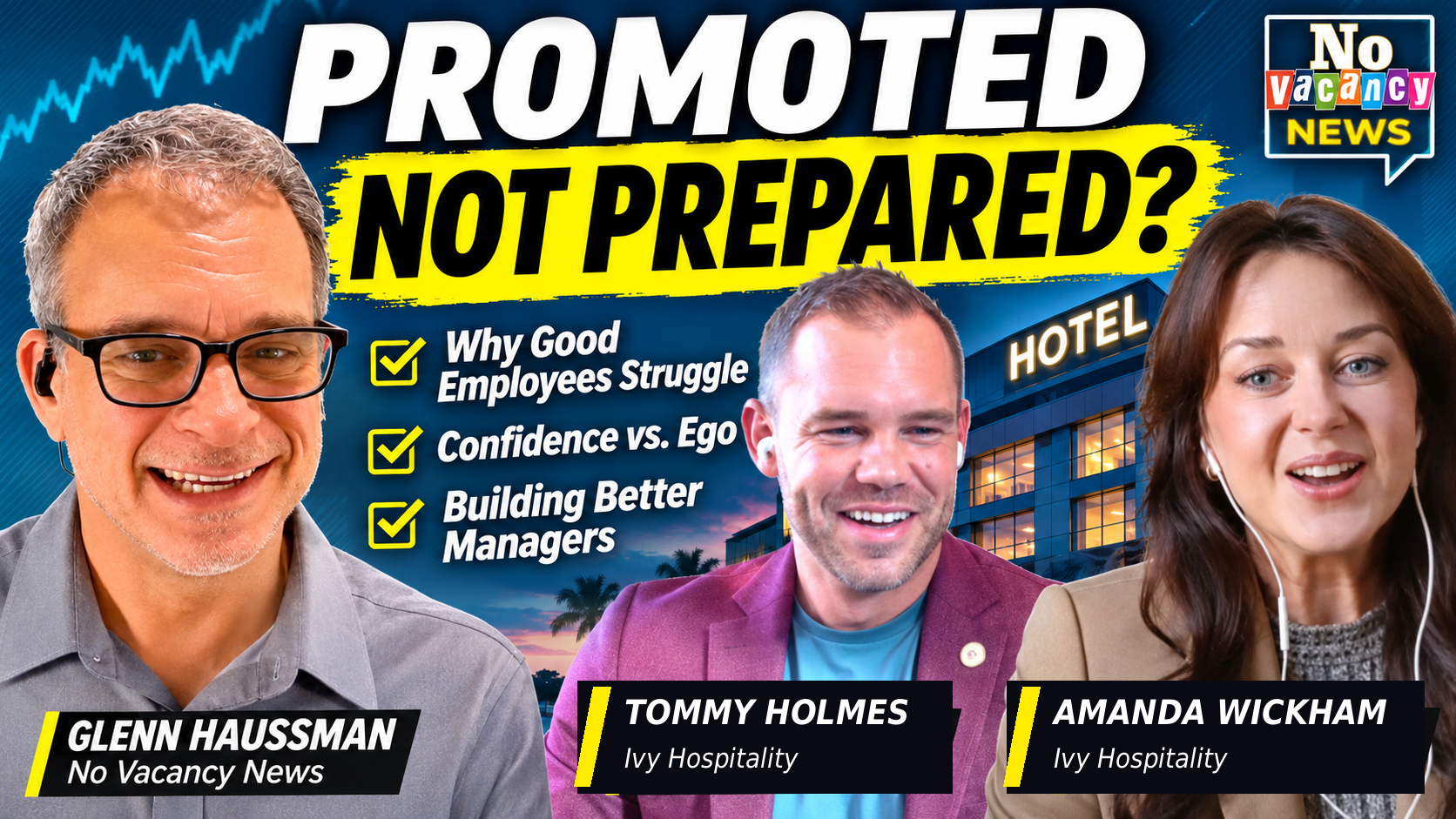
Hotels promote their best employees into management positions, but doing a great job doesn’t automatically prepare someone to lead a team. So why do we keep expecting new managers to figure everything out on their own?
Glenn Haussman talks with Tommy Holmes, CEO of Ivy Hospitality, and Amanda Wickham, VP of People, Culture & Communications, about this challenge across their 38-hotel portfolio.
Ivy is developing leadership programs for employees at different stages of their careers, but the discussion goes further into how insecurity, ego, and fear of failure affect hotel management decisions.
Tommy and Amanda also share their approach to building confidence, encouraging honest feedback, and creating an environment where managers acknowledge mistakes rather than pretend they have all the answers.
Hear how Ivy Hospitality approaches leadership development and why the psychological side of managing people deserves more attention throughout the hotel industry.
Thanks so much to Actabl for supporting this podcast. Actabl gives you the power to profit. Visit Actabl.com.
Want the weekly roundup of news, videos, and what you might’ve missed from #NoVacancyNews? Text HOTEL to 66866.
Transcript
Glenn: [00:00:00] Hey, everybody. It’s your hospitality friend, Glenn. Thank you so much for tuning in to another episode. I’m excited to have all of you here today because I’m back in the studio traveling all fall, but now I’m home for a few weeks and can’t wait to learn a little bit more about hospitality from some friends. I don’t get to meet on the road, but we got to thank our friends over at Actabl for making all this possible. Actabl they give you the power to profit. Do me a favor, check them out@actabl.com. All right. So I’m going to talk to some people I haven’t had on the show before the company I don’t know all too much about. So we’re going to be learning with each other today. And what I love about this hospitality industry is I’ve may have been in it for 30 years, and I think I know everybody. Then I turn around, I don’t know everybody. So today we’re going to get to know our friends Tommy Holmes and Amanda right there of Ivey Hospitality. Guys, welcome to the show. How y’all doing today?
Tommy: [00:00:58] Great, Glenn. Appreciate you having us on on the show.
Glenn: [00:01:00] It’s great to see you. So you guys are in Indianapolis. Kind of a an area, right? I spent a lot of time in an elevator there getting caught in a storm last summer. No, it was great. It was it was like a Faraday cage. So I was alone with my own thoughts there for 45 minutes. By the way, I don’t recommend that to anybody out there, although I do recommend Actabl our friends over over there, but so Tommy. So you guys are from Indianapolis. I love that you’ve got about 38 properties with and you’ve got, I think a good, a good mix of a lot of select service hotels, but you’re kind of got some aspirations of more of the full service, like double trees and that sort of of a thing. Maybe give us a 32nd rundown on the company in your point of view as an operator.
Tommy: [00:01:49] Yeah, absolutely. Born and raised in Indianapolis, so excited that our property support office is based in downtown Indy. We have, as you mentioned, 38 properties across Indiana, Ohio and Illinois. Majority of those properties are limited service focused service. We have 18 Hiltons, 13 Marriotts, six IHG and one Hyatt. We do have a few full service properties, but our area of expertise from a background standpoint is absolutely limited service focused service as we look into the next five years and we continue to broaden our leadership team. We expect to continue to build that full service pipeline. Yeah. We’re excited. We’re opening a a C hotel in downtown Cleveland. Oh, sweet. A really unique property for us. It’s in a historic building. We operated it previously as a Holiday Inn Express, and that’s being converted to an AC later next year. So that will be an exciting project and we’re excited to get into that realm of, of properties.
Glenn: [00:02:51] Oh, that’s going to be pretty cool. And Amanda, you’re not from Indianapolis, but you’re from you’re from Mississippi. How did you connect with these guys over here at Ivey Hospitality?
Amanda: [00:03:01] Yeah, it goes back about ten years. So I am I’m from the hospitality state of Mississippi. I commissioned in the Air Force when I graduated college and spent some time traveling the country and spending some time overseas as well. My family was relocated to Ohio, and at that point, I was entering civilian life and getting back to my hospitality roots. I worked in hotels while I was in grad school in Tallahassee, Florida. Go, Noles. And once I got to Ohio, I looked for opportunities. I found an organization called the witness Group, started working for a really small hotel in the middle of nowhere, Ohio, Chillicothe. Shout out. We still have that asset today. And it does extremely well. But there was my first opportunity to lead hotels and my regional director of operations was none other than Tommy Holmes. So hey, I led several properties for the witness group to help support some openings. Was still supporting active duty work. My spouse was active duty military, relocated to Maryland back in corporate HR. Tommy called in 2024, and I couldn’t wait to come back to help him launch IV.
Glenn: [00:04:12] And you are seeing this afterwards. But today as we’re recording this, it’s Veterans Day. So thank you, Amanda, your husband and all of the people who have helped make our country a place where I can do this for a living. How freaking fortunate are all of us out here? Tommy, how did you fall in love with hospitality? And was it at the Indianapolis 500 or some other sort of motor race?
Tommy: [00:04:39] Yeah. So it was in Indianapolis, not not the Indy 500. As a young child, my father would travel to Indianapolis quite a bit, and I was always intrigued by walking into a hotel as a kid and knowing how everything happened in the background and that’s honestly how I fell into it. Started in a hotel when I was 16 years old in Brownsburg, Indiana. And I left the hotel industry for roughly six months through the entire career.
Glenn: [00:05:08] Worst six months of your life, right?
Tommy: [00:05:10] Yes. It was it was a change, for sure. You know, those interesting phone calls that you get on weekends, all the, the moving parts. And I quickly came back into it and excited to, to see where we’ve gone so far.
Glenn: [00:05:25] Yeah. And I just love this industry. And one of the reasons why I wanted to talk with you is what I think is really cool about what you’re doing is you’re really very people focused. That’s why Amanda is here with us today. People, culture and communications, emphasis on the people and culture aspect of it. Because you guys are in an interesting position. We can talk about select service hotels all day, but I really like that people angle. And the reason why I started off our conversation asking you, where are your, origins were from is it’s so important for us to figure out how and where people fall in love with hospitality and engage them. And I cannot figure out, except through my friends over at the hospitality schools, it seems like almost everybody accidentally falls into this business. Amanda, as a as a people person, how are you thinking about engaging folks to come in to that first job in hospitality with Ivy hospitality? Of course.
Amanda: [00:06:22] Yeah. Glenn, you’re absolutely right. So many of the best stories of those that have gone through the ranks in our industry and within Ivy as well, are individuals who never saw themselves in hospitality but got bit by the bug. And they keep coming back. They can’t let it go. For us, it’s really about building meaningful partnerships in our communities. Really proud to say that we’re part of Indiana that has such strong hospitality roots. And we got Hospitality Indiana that is focusing on really reaching down to the younger generations and making sure that hospitality is an industry that they’re exposed to at a very early age. So it becomes something that they endeavor to do versus something that they fall into doing. So the more that we can engage the younger generations, you know, we love those stories of you have a CEO here who built a company he started when he was 16 years old, at a front desk in a comfort suites and has built a legacy that will impact generations to come. And I just think that is so precious. So many people don’t know that that’s a possibility. And hospitality really is an industry that you can get into with no prior experience and make it, you know, a part of your, your world.
Glenn: [00:07:37] Amanda, there are so many waves of hotel industry CEOs that all started like Tommy did, maybe not behind the front desk, but definitely bringing in bags for that first summer job, right? All of you know, so that’s why I, I’m trying to get people to really understand this and a lot of ways this podcast is preaching to the choir. But you know, Tommy, one of the things that I find a problem with is people don’t necessarily grow up realizing that there’s more to our incredible industry above the general manager position. So they don’t normally select themselves into hospitality except for that accidental fine. How are you thinking about what I just posited? Am I right? And if I am, how are you trying to change it?
Tommy: [00:08:22] Yeah, absolutely. I think telling our story. So if you look at our leadership team all of our, our vice presidents, I’m thankful that we all were growing through the industry together. Going back from 2012 when I hired my chief of staff Brett in his first hotel role at the front desk it was my first general manager position with Vision Hospitality based out of Chattanooga.
Glenn: [00:08:48] And shout out to Mitch Patel. Mitch?
Tommy: [00:08:50] Yeah, Mitch. Mitch. Mitch. His company definitely bled into me. And that’s how and why I am who I am today.
Glenn: [00:08:58] That’s why I was going to say for those of you who don’t know, he’s really just one of the kindest, most awesome people. That’s very much people forward. So you’re connecting dots for me, Tommy. I kind of see how you’re you’re imbued with that true sense of hospitality and wanting to bring others along.
Tommy: [00:09:14] Yeah, absolutely. And, you know, there’s a lot of conversations, especially as we were building the organization that I would refer to organizations that do it really well. Obviously we always have to be profitable. We have to make sure that we’re performing to brand standards. But if we do it through the people lens, we will be successful with all of those metrics. And I’m thankful today that that’s how we’ve gotten to where we are in 2026. And as we go into 2027 as Amanda mentioned, we partner with hospitality Indiana. Quite a bit. I sit on their board Along with.
Glenn: [00:09:48] That would be for people who don’t know the local CVB kind of a of a thing for bringing tourism to the city.
Tommy: [00:09:54] Correct. Yes. I sat on their board and a lot of our team members at Property Support also are involved within the organization, and we are all partnering together with other hoteliers and restaurant industry individuals. How can we make sure that that line level associate knows that the roads are endless and, and have those conversations early on? Anytime I walk into a property, anytime our property support team walks into a property, that’s the key focus. Because if you’re talking about it now, when they’re working at the front desk or they’re working in housekeeping, then you can keep them retained either within your company or keep them retained within in the industry. My, my goal is keeping them retained within the industry if they’re moving and progressing their careers. And we’ve done our job as leaders and our entire executive leadership team looks at it the same way.
Glenn: [00:10:45] Yeah. And with 38 properties and growing into new areas, with more of an emphasis on full service. It seems going forward you’re really able to create, I guess, career paths. So Amanda, where and what are those conversations like early? And the reason now why I’m going to this part of it is we have such a difficult time with engagement and keeping people employed for a long period of time. So my guess is without ever working in a hotel before that, you’re going in there thinking about it practically, how are you going to get people in for the long term, and how can you show you’re making a commitment to their career? So what are those conversations like when you first get someone in who doesn’t even realize that there’s opportunity afoot?
Amanda: [00:11:30] Yeah, I think it starts at the very first conversation that you have with the candidate, right? We often frame our roles as the culture conduit, right? So culture is nothing if it’s just a poster on the wall. So we’ve got to get buy in from our leaders. They’ve got to buy into the Ivey story, the Ivey mission and our values, and then pass that along to their line level associates. We have, you know, really a young company. We just celebrated our second anniversary, but we’re already digging in and challenging status quo on things like onboarding and professional development. You know, one of the things that we’ve learned is so many people in this industry are promoted into roles and not prepared to carry the duties out of their new position. So we are at Ivey working to launch our own internal development programs. We have a program called Cultivate by Ivey. We will have two different frameworks, one for emerging leaders and one for advancing leaders. So those that are just coming into supervisory roles and general manager positions, and then those that are seeking those above property level positions. And it’s about engagement and conversations all along the way, not letting performance evaluations and coaching Conversations, you know, end without asking, you know, what do you want for the long term? How, where do you see yourself with IV in the future? And so the more we keep that front of mind and the more we have those conversations to Tammy’s point, it’s it’s everyday conversations. They have to see themselves being in the positions that they want to grow into.
Glenn: [00:13:04] Yeah. Tommy, I’d love to hear more because from what I see from a lot of other companies, just from what I read online in, in groups and stuff like that is you only have these conversations that in that once a year meeting where all of a sudden you, you thought you were great all year and all of a sudden you suck because you know, so. Yeah. How do you avoid that trap?
Tommy: [00:13:24] Yeah. I, I would say it’s just the connection with the hotel leaders and the ongoing feedback, the, the, the positive feedback, what they’re doing really well. And then also the opportunities. And even as an organization, I say probably at least once a week, we don’t get everything right. I, we don’t get everything right, but we are the first to say, hey, we messed up and this is how we’re going to correct it. And I think it all goes back to the communication piece and connecting with the line level associates at the property support level. We don’t refer to ourselves as corporate. We have a saying within our office that there’s a corporate jargon jar that if you start saying some of those, those terminologies that my face just, just gets really red.
Glenn: [00:14:10] So hold on, hold on, let me circle back to that point.
Speaker 4: [00:14:13] There you go.
Glenn: [00:14:15] Yeah, there you go. You’re saying you’re creating a new paradigm here? Is that what. Yes.
Tommy: [00:14:20] Yes. And it’s, it’s all because I want our, our associates, line level associates, department leaders, property leaders to recognize that we are property support. Every day in the office, I talk about how is our property support team supporting the hotels to be successful. And if you look at our leadership team, it’s a very lateral approach that we have discipline leaders and then they have support within those discipline leaders. We are not a top heavy organization and and it’s intentional that we are not top heavy, because I want to make sure that the positions that we bring in, the roles that we bring in are directly supporting our, our hotels and our associates. And it’s really going back to that development piece of supporting the associates through the development of their careers.
Glenn: [00:15:07] Amanda, how do you make sure people actually feel this day to day?
Amanda: [00:15:13] Yeah, it, it starts and ends with our, our general managers. And that is something that we’ve been. I applaud Tommy for his focus in the first two years, being very intentional about seeking feedback. I think we had we had been active for just a few months before we launched a couple of surveys. We’ve engaged with them. We have a leadership council, which I think is a beautiful sub An organization, if you will, in and of IV that we have we have representation from general managers and directors of sales from across the enterprise with various tenure, various brand experience. We’re getting real feedback. To be honest, we weren’t sure how that would be received. And our general managers and leaders, they go to that leadership council all the time. Tommy is directly engaged. Those are conversations that are happening. Not with department leaders. Those leaders are coming together and they’re meeting with our CEO and our chief of staff directly. And they’re doing that in a way that’s very unfiltered, very candid, and that feedback gets trickled down to the executive team. Yeah. As we get buy in, as people see that we’re vulnerable, we’re open to sharing where we’ve gotten something wrong or what we need to adjust. And we’re listening that communicates to them that they are heard. And then in turn, our goal is that they’re, they’re taking that and turning that over to their teams and treating them in the exact same way.
Glenn: [00:16:41] So then. Tommy. Yeah. Go on. Go on.
Tommy: [00:16:43] I was just gonna say, I think, I think something that we’ve learned. So we launched the Leadership Council, I believe in February of this year. So we’re going on just a year. Something that we’ve learned is, you know, there’s things that we just have to do as an organization. And it all goes back to explaining the why. We’ve all read the book or majority of individuals have read the book, but when you’re going through the day to day motions, anybody can forget at times of explaining the why of how we do something or why we do something. And, you know, that’s a lot of the conversations within the Leadership Council of sometimes we’ve just missed the explaining of the why.
Glenn: [00:17:18] And that’s as a Gen Xer, as a Gen Xer, we were raised with the because, you know, you’d ask and you told because period. The end. Right. The why is so important because that not only explains. But then I think it engages and gives people that understanding and room for questioning and stuff like that. But Tommy, the question I was going to ask you before you mentioned the why is how do you make sure people feel confident in their roles? Because feeling comfortable is only one thing. Feeling confident that they’re getting it right is another, even if they make missteps, because obviously none of us are perfect.
Tommy: [00:17:56] Yeah, absolutely. I think it’s the it’s an ongoing effort, right? We it’s not something that you can do one time and then expect it to continue down, down the road. And it’s continuing to put tools in their tool belt per se. We host a leadership conference every year. We’ll be hosting our third annual leadership conference next year. And we’re very intentional about the types of trainings that, that we bring to those leadership conferences. You know, it’s great to have breakout sessions, but if those breakout sessions aren’t valuable and the team doesn’t walk away from conference to say, I feel energized and motivated to go back to my hotel and support my team, then we haven’t done our roles correctly. Last leadership conference in April. Amanda had a wonderful idea of bringing in a training or a trainer with an echelon front training, which is a military structured training class that really drills down to the accountability and how do you get the buy in for accountability versus just telling someone what they did wrong? That was a unique type of training for our industry, but our leaders saw the value of that training. So it’s thinking outside the box. It’s thinking about maybe other organizations within our space haven’t done these types of trainings and we’re testing it. Sometimes it works and other times it doesn’t. And we go back to the drawing board.
Glenn: [00:19:20] All right. So I’m going to ask Amanda. I’m going to ask you a question I’ve never asked before anyone. All right. So get prepared. I know. So I think I as I get older, I learn that a lot of bad decisions are made because of people feeling insecure about themselves. How do you think about that issue? So people don’t have that insecurity issue and then make decisions based on emotion rather than facts and reality?
Amanda: [00:19:51] Yeah, that’s a great question. Emotional leadership is something that we have to combat daily because we’re all human, right? And that’s one thing that we all experience. I think for us as an organization, keeping caring for the human first central, and also remembering that we’re all human is important, and then demonstrating psychological safety. If I can say I can’t actually put in words enough the gratitude I have to, to be a people leader within an executive team where the people leader has a voice and a seat at the table and it matters. And when we talk about psychological safety, that starts with us. We have that we have spent time developing psychological safety within our executive team, and it’s incumbent upon us to make sure that our directors and our departments feel the same. What we value, right, is everyone deals with insecurities. Everyone deals with imposter syndrome. If you look at our executive team, we’re all relatively young in terms of serving in executive positions, and IV is young. So we all have dealt with impostor syndrome. I always say you just call the baby ugly, right? Not that anybody’s baby’s ugly, but when you’re in situations with emerging leaders or advancing leaders and you’re noting that insecurity or you’re noting that hesitation, call it out and say, listen, this is something I struggle with daily. Here’s how I overcome it. The more authentic we have those conversations, or the more authentically we have those conversations with our leaders, the more they feel that stigma disappear, the stigma of getting it wrong or making mistakes. It’s about naming the failures and talking about how you’ve overcome them.
Glenn: [00:21:31] I absolutely love that, Tommy. One of the things that I find is that a lot of us psychologically, now that we’re getting pretty deep over here, we all feel like we’re the only ones, right? We’re the only ones this we’re the only ones that. And even here in my mid 50s, I still have that imposter syndrome and stuff like that. Right. So what’s your point of view for creating that psychological safety net? And, and to be honest, looking at your, your team over here, you guys are all pretty young, relatively speaking. I’m used to hanging around guys like in their 60s now, you know?
Tommy: [00:22:05] Yeah, I think it’s just being vulnerable in conversations.
Glenn: [00:22:09] And I like it. And I’m sorry to interrupt, but I think us older people, because we were raised by different types of people, we, you know, we’re not as connected to our emotions and stuff like that as much. So I think you you’re already a step ahead. Now, please. I’m sorry. Continue.
Tommy: [00:22:23] No, no. Yeah. No. No worries. It’s being vulnerable in the conversations. I, I sit with my leadership team. We, we operate on iOS, which is entrepreneur operating system. There’s weekly Elton meetings, and then we do a monthly executive business review, and we sit in those meetings with very open dialogue. Obviously it’s structured, there’s conversations, but it has to be open. We have to be vulnerable. And also showing our hotel leaders that we have those conversations. The past two conferences, we did a panel and essentially it was questions with Tommy, I believe was the title and I didn’t filter or the team didn’t filter any of those questions out for me. And I had very direct, open conversations of where I made mistakes in my career and also where my learnings were in my career. And if you don’t have those, and if you just put yourself, as you know, I’ve been perfect in, in the industry or I’m a VP or I’m a CEO and I haven’t done anything wrong, then then you’re just not being you’re not being honest.
Glenn: [00:23:28] No. And one of my favorite panels that I ever did. Tommy and Amanda was at the lodging conference and I’m like, so, CEO, tell me about the first time you were fired. And you know what? It made all the difference because we all tend to see people that have come before us and have those titles attached to them, that they were always that person and they didn’t have they didn’t grow. They were just there just somehow of a different class and different caliber. Not like us, the, you know, the, the younger folks. So yeah, I love that you’re taking that approach and being so honest. And I found the more honest and authentic you could be, the more successful you could actually become. Amanda.
Tommy: [00:24:08] I always.
Glenn: [00:24:09] I.
Tommy: [00:24:09] Always tell, I always tell individuals, we’re all people. And you know, when we talk about what we did on the weekend or what we’re doing for the holidays, everyone is just a person. And no matter what role you play within the organization, your role is as critical as everybody else’s role. And I love saying that at property visits because sometimes associates at line level, associates forget what their contribution is to the success of their hotel and to the success of the organization. And any time that we have the opportunity to remind them that we know what their contribution is, I think that goes a long way.
Glenn: [00:24:45] I love it. Amanda, what is one thing people out there that are doing a job in a hotel could do to take a step back and maybe rethink the way they’ve been approaching things so they can get a little bit closer to your philosophy?
Amanda: [00:25:04] Yeah. For me, I think that leadership is something that you demonstrate where you are. I’ve always kind of lived by the mantra, you bloom where you’re planted. And we’ve certainly had conversations with individuals who are very motivated and wanting to grow or they want to get that next step, that next supervisor title or that next rung in the, in the pay on the pay scale, but they’re they’re not remembering that you can be a leader within your team. You should be a leader within your team, right? Positional authority is one thing, but influence, right? Leadership at the end of the day is all about influence, how we’re influencing the people around us, our team members, how we’re influencing the guest experience. Are we elevating? What are the people around us are experiencing or are we detracting from it? And so those individuals that have the most potential to continue to, to move up and move onward within this industry are those that demonstrate today, wherever they are, that they have the capacity to do it. I benefited throughout my career of people being willing to teach me a business that I didn’t know. I came out of the military, I didn’t know hospitality or how to run a hotel, but I understood what it meant to impact and influence people. And I was so grateful to work for a leader who said, you know, that I can teach you the rest. And so if we just get people to focus on showing up as the right human, right, as the right teammate. We can create leaders out of that. That’s the canvas we need.
Glenn: [00:26:31] Also, on this Veterans Recording Day, I do want to say that a lot of the major hotel programs actually have hiring systems for people that have served in the military, because folks that have served in the military are very naturally connected to the systems and stuff that will make them successful in our industry. So that’s always a great way to go. Tommy before we wrap up over here today how are you thinking about your team and the future of your organization and expanding into this full service kind of hospitality environment?
Tommy: [00:27:08] Yeah, absolutely. Obviously, a lot of conversation today was about the development of our team.
Glenn: [00:27:13] So yeah, I want to talk about development of your business. So you people have somewhere to go.
Tommy: [00:27:16] Yeah. No for for sure. But I am going to lean into the development of the team as we grow the business because our efforts over the next 2 to 3 years is as we add new properties into our portfolio. We have three new hotels opening next year, all in the Ohio market. If we develop our team internally through our programs like cultivate, we will have internal leaders that we will be able to place into those general manager roles, into those director of sales roles. So if I sit in my seat in two years to five years from today, I will be happy and I will measure our success based on those team members that have grown from a front desk associate, a room attendant, a laundry attendant to a general manager, to an assistant general manager. And then that tells me that our team has done our job as leaders.
Glenn: [00:28:11] I love it. Any final thoughts? I know you guys know.
Tommy: [00:28:15] I appreciate the time, Glenn. Great to be on on the podcast and great, great to meet you and looking forward to wrapping up 2026 and our path is paved really well for 2027.
Glenn: [00:28:27] It sure is. Thank you guys so much for being here. I want to thank you guys for being here today to listen. That conversation was really cool. A lot of times I don’t know what to expect and this was definitely one of them. So my takeaway for you is remember everything that we do can be reinvented, can be done. Nothing is sacrosanct out there. So take a look at the the way you’re thinking about your people. Do they feel confident? Do they feel comfortable? Do they have a pathway that you’ve laid out for them? So they want to stay with you and you’re not going to be immune, and you’re going to immunize yourself from them just going down the block for that dollar more an hour, right? It’s about creating trajectory and opportunity for your people. Hopefully we set that stage up for you today. Please check out my friends over at IV hospitality doing great stuff. Iv hospitality.com. Thank you for watching. We’ll see you right here next time. Another episode of No Vacancy. I guess I should put up this screen when I close off. See you all later. Bye, everybody.

More Episodes
-
November 17, 2026
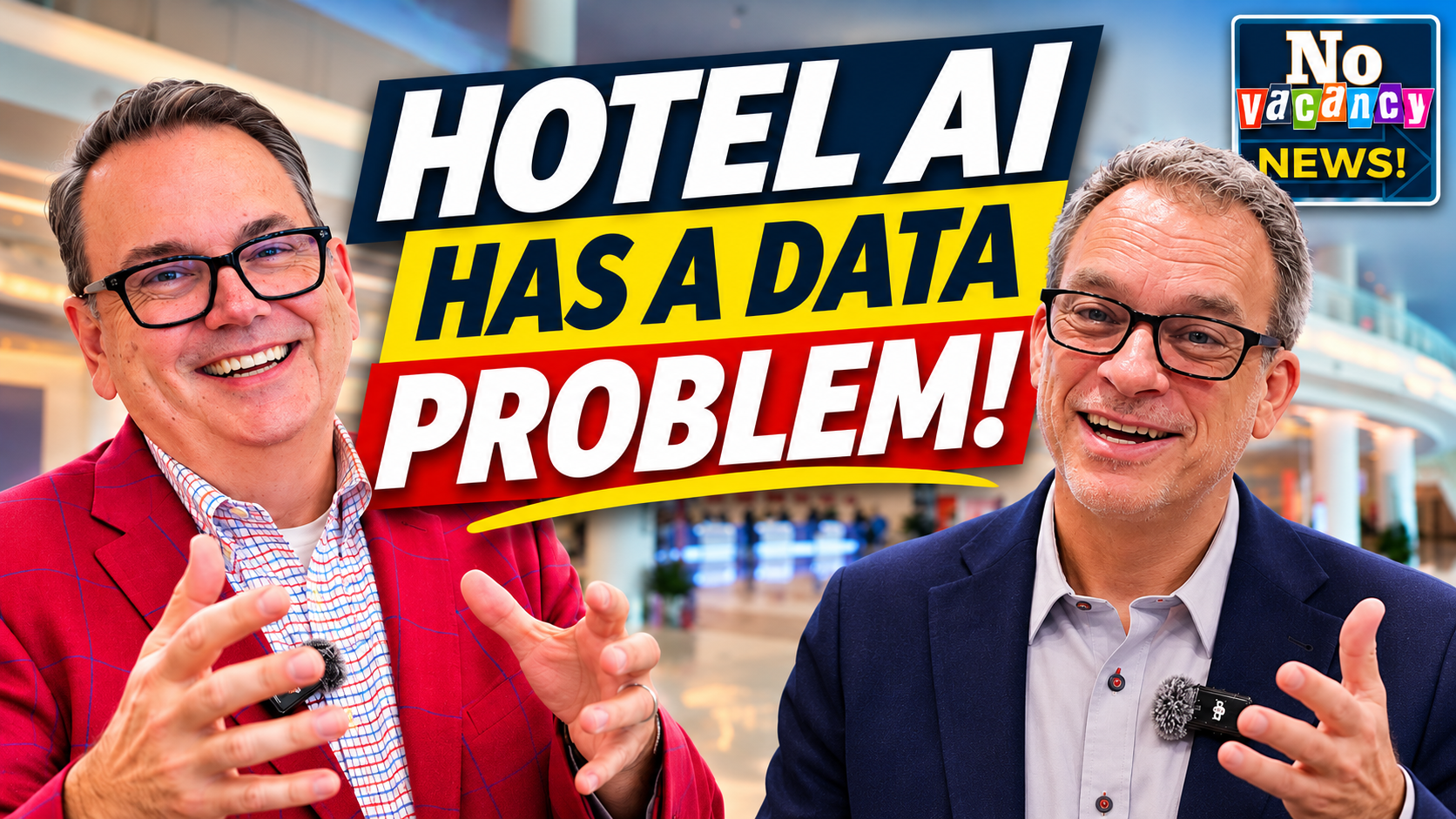
Hotel AI Has a Data Problem Nobody Can Ignore
-
November 14, 2026
FNA #225: Miami Vices and Vibes
-
November 12, 2026
Hotel Financing in 2026: Why Borrowing at 7.5% Beats Raising Equity
-
November 12, 2026
Why Hotel Guests Who Try Mobile Keys Never Go Back


Subscribe