April 6, 2026
Hotel Demand Shifts: Blowout Trips, Meetings, and “Value”
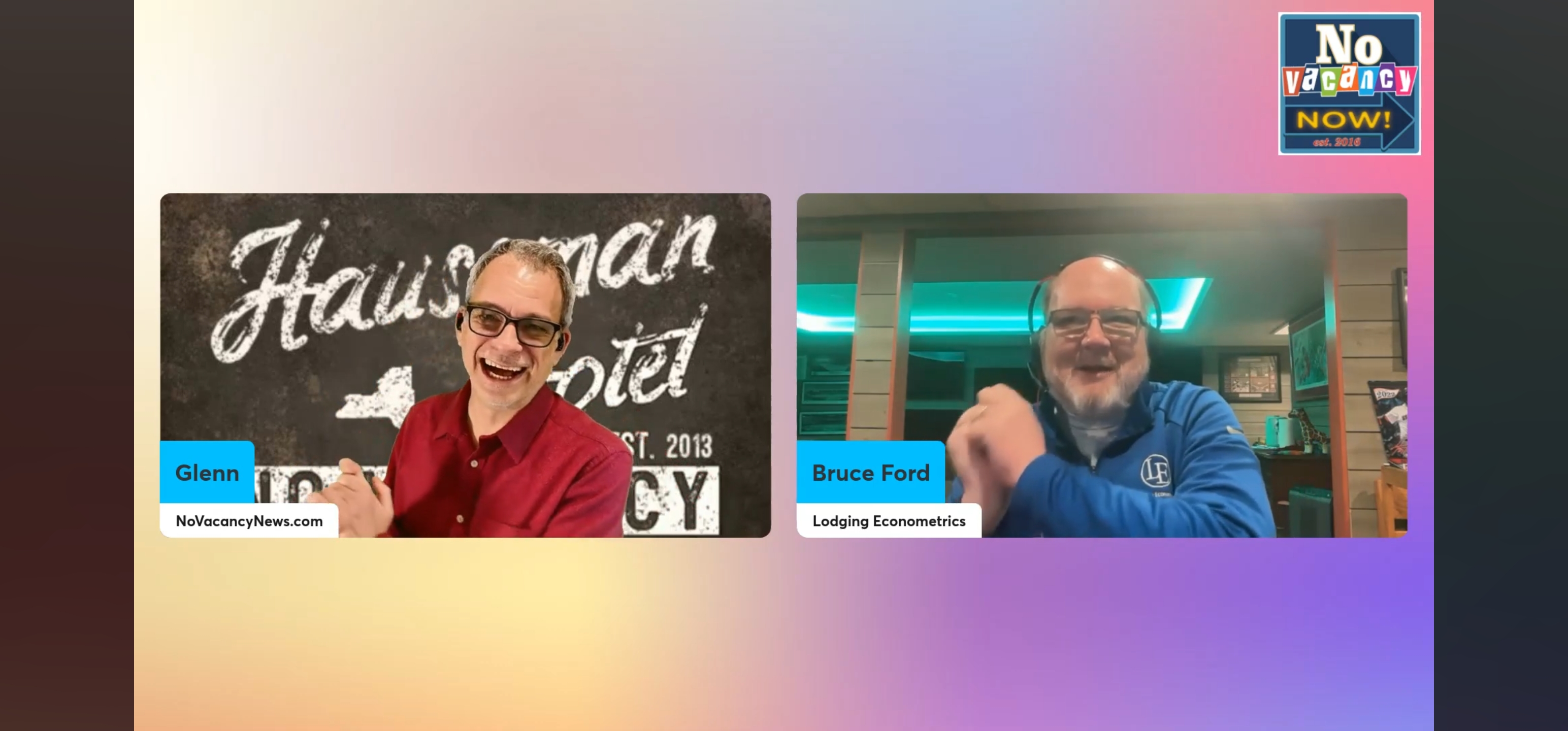
Bruce Ford keeps coming back to one idea: the next traveling economy will book and spend differently. He tracks the data as SVP at Lodging Econometrics, so he sees the shifts before they feel obvious.
📈 He talks “blowout trips” and experience travel, where guests spend big on the moment and stop sweating the room rate
🏨 He breaks down meetings demand: more meetings, smaller meetings, and a bigger need to capture total spend through #HotelOperations
⛽ He flags the cost ripple: diesel prices flow into everything, and operators feel it fast
🎟️ He talks incentives and loyalty leverage, and why discounts and perks pull travelers in when budgets tighten
💡 He reframes “value” as a three-day experience, not a 30-second transaction—club lounges and access matter more than ever
🏗️ He gives the #HotelDevelopment reality: financing still slows new starts, owners invest in renovations and conversions instead
📌 He closes with the investment climate: more hotels hit the market, transactions jumped last year, and he expects activity to continue
Thanks to Actabl for supporting this episode. Actabl gives you the power to profit. Visit Actabl.com.
Want the weekly roundup of news, videos, and what you might’ve missed from #NoVacancyNews? Text HOTEL to 66866.
Transcript
Glenn: [00:00:00] Hey everybody, welcome to No Vacancy. And I want to thank you all for tuning in today. Really a pleasure to have you here. Listen, it’s spring, although us here in the northeast and I think the Midwest will deny it’s spring weather related. We don’t know what’s going on over here. It’s very sad. It’s very depressing. That’s right. Because we’re going to be talking about what is going on in hospitality and everything you need to know. And you know, I can’t do it alone. We’ve got a great guest for you today. But first I want to thank our friends over at Actabl. Actabl. Remember, they give you the power to profit. Please check them out at actabl.com. All right. We’re going to talk consumer sentiment. We’re going to be talking pipelines. We’re going to be talking about meetings. We’re going to be talking about it all. To do that, I got our friend Bruce Ford s v p over at Lodging Econometrics. What’s up buddy?
Bruce: [00:00:44] Rah rah boom bah. Bugs Bunny, bugs Bunny rah rah rah.
Glenn: [00:00:48] Happy Early April and still feeling winter weather, I thought. Yes, I thought March was going out like a lamb. What’s happened up there, bro?
Bruce: [00:00:56] Well, I was out of my yard this morning and the robins are walking around and the bunnies are digging holes. So spring might be here. I don’t know, but we had snow the other day.
Glenn: [00:01:08] Yeah, man, it’s crazy the last week. You guys are watching this on the top of the week. Last week we had 75 degrees one day and then 40 the the next. I don’t know what’s going on.
Bruce: [00:01:20] But carrying out my insides. Glenn.
Glenn: [00:01:22] I’ll tell you what, Bruce. I think that kind of models, what we’re seeing out there today and consumer sentiment and all of that kind of stuff, it’s either you really things are really great or things are really bad depending on where you are in this k-shaped economy. How how are you seeing it today? At the end of the first quarter?
Bruce: [00:01:40] Well, we have to start with Glenn. Is that the next traveling economy? Yep. Okay. As the age that you and I have reached, you know, that golden age. Okay. The next traveling economy doesn’t consume travel the same way you and I do at all. They don’t book it the same. They don’t experience it the same. They don’t spend the same. They don’t travel the same. Okay, so that is a lot of evolution that’s happening without a real estate cycle all on its own. Okay. And when people start to talk about luxury and how well it’s doing, that has something to do with it. Okay? Because people are having these blowout trips, right? Experienced trips. Yep. These. I’m already spending 800 bucks for that concert ticket. Who cares if the four seasons cost 500? We’re staying there, right? Okay. And or or. Who cares if we have the double tomahawk for $175? We’re doing that because we’re doing it up.
Glenn: [00:02:53] Yeah.
Bruce: [00:02:55] And and so so the next generation not only has brands being announced for them, they not only have you know, AI powered travel decision making, but they also have, you know, their own sentiments is I like my house. I’m okay with doing a staycation to have that one big blowout, 4 or 5 day trip.
Glenn: [00:03:20] So you and I. Yeah. You’re saying that younger people are going to take bigger trips, but less frequently. And I would argue that us older folks are probably still taking more getaways as we have more times in our lives, theoretically, to get away.
Bruce: [00:03:36] Well, if you think about it, when we were that age, Glenn, we pined for the week off, right? Because that’s what you did. You took a week off, right? Now they want to take two days. They want to take Thursday, Friday and Monday. That’s well, that’s not a week. Okay. And it’s, it’s, it’s kind of like packaging it up a little bit differently, consuming it a little bit differently, wanting to be part of the party that happens on the weekends. Whereas today you and I travel and we’re like, well, I don’t want anything to do with Saturday and Sunday night. And it gives a place that I’m going to because that’s so not me. That is true.
Glenn: [00:04:14] I will say it’s very interesting.
Bruce: [00:04:15] How how’s how’s the party on Monday? Right.
Glenn: [00:04:20] Is there a, a 4 p.m. party going on on Monday? That’d be that’d be absolutely perfect. And we had we’re talking we’re two guys that used to really live in youth culture. We’ll call it right there. Right?
Bruce: [00:04:32] We both flown a couple million miles, been to 20 plus countries, you know, I mean, at the end of the day our, our, our feelings about travel are very different today than they were when we were that age. But it’s even more evolved today for that age. It certainly is. You know, you heard me say it on many casts together, Glenn, the new brand that comes out is as not for us.
Glenn: [00:04:57] Now, you have said that many, many times, painfully reminding me. But then again, every time I’ve stayed in one. Your point is crystal clear to me because they’re great products, they are just not designed for what I’m looking for, nor should they be. If you think about advertising demographics, the main main category is that 18 to 34 category. I think in in hotels you could say it may go up into the, you know, 21 to the 50 range and us being over that, we’re looking for a different type of product. Right, Bruce?
Bruce: [00:05:28] Yeah. And I think, you know, it probably the business travel age is like 24 to 40. Yeah, I think one way. Okay. And then 40 to 50. You think another way? Yeah. And then over 50 you think another way.
Glenn: [00:05:42] That’s where we’re looking for the party’s at 4 a.m. on A4PMI mean, 40 it may not be so bad because I’m getting.
Bruce: [00:05:48] That’s the that’s the fourth party, Glenn, not the 4 p.m. party. The fourth party. That’s what we’re looking for when you’re 25.
Glenn: [00:05:57] I remember I remember going to parties that started at 4 a.m. we called them 4 a.m. clubs or something like that. All right. What’s going on in greater hospitality here between primary drivers and supporting demand? Now we talked about event experience. So that’s really driving demand.
Bruce: [00:06:11] So not only in the event experience. And we’ll talk a little bit more about that. But that’s not just luxury. That’s people choosing to travel to an event in a different place, whether that’s a wedding or that’s a spiritual event or that’s a conference or that’s a kind of conference slash leisure. And I’m going to go to a concert, or I’m going to travel and hit all the baseball stadiums or whatever, but kind of going from left to right, the meetings. Why is that? Stay up. Well, the meeting frequency is up. The size of said meetings is all down, right? So if you used to have a 20 000 person conference, you. You probably have 15,000 people now, right?
Glenn: [00:06:57] But I will say, Bruce, conversely, if you have a conference with 80 people, you might have 85, 90 people. But the smaller conferences in no way make up for the difference that you’re seeing in the colossal drop from some of the big, giant conferences. Right?
Bruce: [00:07:12] Yep. And some of those meetings also are in effect because we have so much remote work going on now, and that’s still very much the case. We do have to get together eventually. That’s right. And doing that in a hotel, whether that’s an airport hotel or an in-town hotel, there’s all kinds of revenue that a hotel can capture. Getting 20 room nights, bringing in 20 executives, getting them into the restaurant, getting them into the bar, using the meeting space, catering, lunch, all of that revenue that you’re trying to capture. And is more and more important today than ever before. Yeah. And so those are in hotel meetings where you’re capturing as much of the revenue as possible, or you’re connecting things together that are providing preferred services that you offer, if you will. Yeah. So lots of different ways to go about that now. Leisure travel will look a little different this year. So. Glenn. Yeah, with kids and, and, and a large family, you know, like I said, we used to think about let’s take the week off. Well, we can’t afford to go away for a whole week now with three kids and two adults and get on a plane and stay in a hotel and rent a car and go to the amusement park and all that stuff, it’s very expensive.
Glenn: [00:08:36] Yes.
Bruce: [00:08:37] Prohibitively so. Yes. So I’ll tell you what. Why don’t mom and the girls go, and dad and the boys will go up to the lake and sit in the tent and fish all weekend. Yeah. How’s that sound?
Glenn: [00:08:50] Yeah, it sounds like a good idea. I. I think I think a better idea would be for my wife to do the fishing, and then I could go on a on a huge.
Bruce: [00:09:02] To each his own, Glenn. I’m just I’m splitting up, perhaps, or a smaller group of the family. Going away together is something that I think is going to be a little bit of a phenomenon. Interesting. So a little bit of a smaller cluster of people and that’s just really trying to be responsible with the dollars that are that we, we ultimately have less of because of the current economic situation that we’re in.
Glenn: [00:09:30] That’s true. As we’re recording this, we’re still processing the largest gas increase, I think, in modern history ever kind of a, of a thing.
Bruce: [00:09:39] And that really isn’t, hasn’t really even gotten all the way through the economy yet.
Glenn: [00:09:44] No, no, just the gas prices. We haven’t seen the shock in all of the other prices and products and services.
Bruce: [00:09:49] Yeah. Because if you think about it, Diesel’s five bucks a gallon now. Glen. At the cheapest. Yeah. Okay. That’s two x what it was. Okay, so every single thing that arrives at your grocery store is delivered on a diesel vehicle. Yeah. Every single thing that arrives at your department store is delivered on a diesel vehicle. Okay. It’s going to start rippling through more of the economy. It’s only a matter of time.
Glenn: [00:10:17] Yeah, I I use Owl exclusively delivery services, so I’m trying to be you know.
Bruce: [00:10:23] Oh. I thought you were going to tell me you were droning it.
Glenn: [00:10:26] No. Yeah, I could I would like to do that, though. That’d be pretty. That would be pretty cool, too. So any more.
Bruce: [00:10:34] Experience? Travel? I’m going to the concert. I’m going for the weekend. I’m going with the girls. You know, this is really up. The key is with experience travel again for the for the owner and management company, you got to capture as much of the revenue as those people want to put on the table? Yeah. How am I going to do that? So in terms of what the consumer is thinking though, they’re very attracted to incentives. Today you’re seeing more and more incentives. Disney has incentives. Marriott has incentives. Hilton MGM incentives the incentives. Yeah. Our frequent guests that are part of Brand.com. This is where the leverage begins. This is why they did what they did during the pandemic. And now they’re really going to try and put it to work. Okay. And hey, I get attracted with 20% off. I mean, who doesn’t, right? I mean, at the end of the day, that’s going to that’s going to get me interested.
Glenn: [00:11:31] I’m just at the point where I’m cynical, not with hotels, but with retail when they’re giving me 20% off, probably because they’re just charging 20% too much. So they could give me 20% off. Hey.
Bruce: [00:11:42] Did you go to a sales class, Glenn?
Glenn: [00:11:46] I went to life class, bro, you know.
Bruce: [00:11:49] So but I’m going to shop and I’m going to seek a deal, and I’m going to I’m still looking for a deal. I’ve always got to feel like I got to get a deal. And that might be more in tune with today’s consumer or at least two thirds of the consumers. Right? I’m not sure that that younger generation understands the deal that could be had, per se.
Glenn: [00:12:11] Well, let’s change the word deal into value. I think that’s what we’re really talking about, is making people feel good about the money that they’re spending, particularly as we’re going into more complicated economic times. You want people to have that good vibes, as opposed to a lot of that nickel and diming energy that’s been going around lately.
Bruce: [00:12:30] So that’s a great that’s a great point, Glenn. On the value. The value is also about the period of time that you’re on the experience. Okay. We might have in travel before wanted the value in the transaction we were about to do. Okay. That was going to happen within 30s and then okay, the value is received. Now they want the value to extend for the three days that they’re there. I’m going to pay for that club lounge, I don’t mind. Yeah, it’s $100 extra a day. I want to be able to go there when I want to go there. Club lounge is May. In fact, at the luxury hotels, I can tell you that that’s a big driver for a lot of the younger generation.
Glenn: [00:13:15] Yeah.
Bruce: [00:13:15] Interesting to have that private space that they can go to and quote, be part of the clique. Yeah, it’s really a thing.
Glenn: [00:13:22] Well, it should be a thing. And we’ve been talking about it for years that people want access, they want bragging rights. They want to be able to do things others can’t. And in a modern society where so many people get to travel so much, that’s the point of differentiation. That makes sense. Bruce. We’re almost out of time. You better wrap us up here, buddy.
Bruce: [00:13:40] So we’re going to build less hotels this year largely because we’re still in a financing quandary. Okay. So still building about 86,000 rooms this year in the United States. Still pretty low. Not really a lot of starts where we’re seeing the investment is in the renovation and conversions of existing hotels, remaking, reshaping, re leveraging the opportunity that they have at the property. And there’s more hotels for sale than we’ve ever seen before. Big jump last year, about 18% up on total number of transactions. And we expect that to continue this year. And those slides will be available as you watch this cast.
Glenn: [00:14:26] Yeah. And check him out. Drop a note B four at lodging econometrics.com. Bruce, thanks so much for being here, I appreciate it. Thank you guys for being here. Appreciate you watching.
Bruce: [00:14:37] Yeah, anytime I can get out of your day, I’m happy.
Glenn: [00:14:41] Hey. And I’m happy to. Thanks, everybody. Remember you got one likes a blaze on. See you all later. Bye, everybody.

More Episodes
-
September 29, 2026
Inside HomeTowne Studios by Red Roof: Why This Extended Stay Model Works
-
September 28, 2026
Why Hospitality Leaders Must Stay Uncomfortable
-
September 28, 2026
Hotel Marketing With AI: How My Place Hotels Competes With Bigger Brands
-
September 26, 2026
My Place Hotels: Growth, Leadership and the Next Generation

Subscribe