August 29, 2025
🎙️ No Vacancy Live | Hospitality Education, AI & the Future of Talent
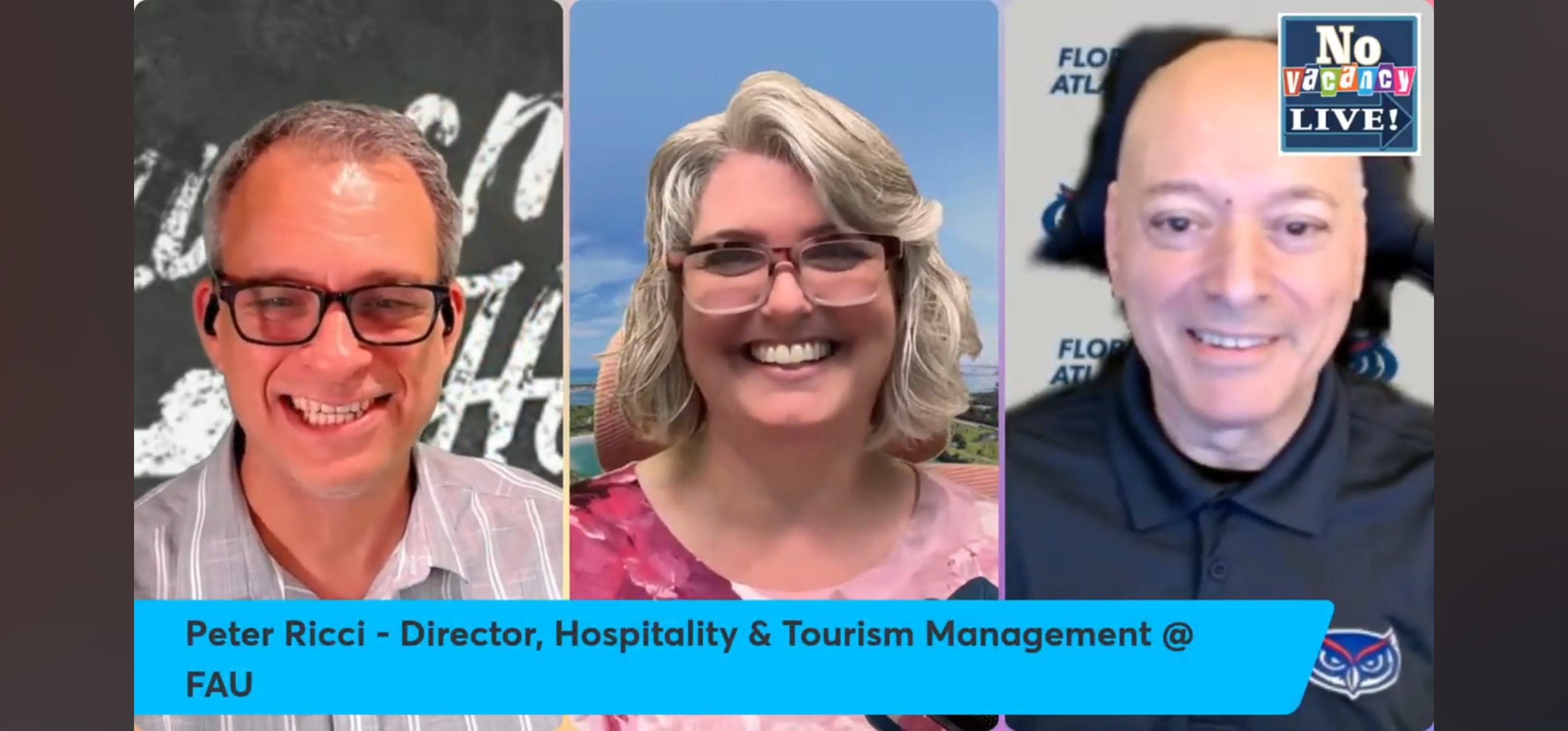
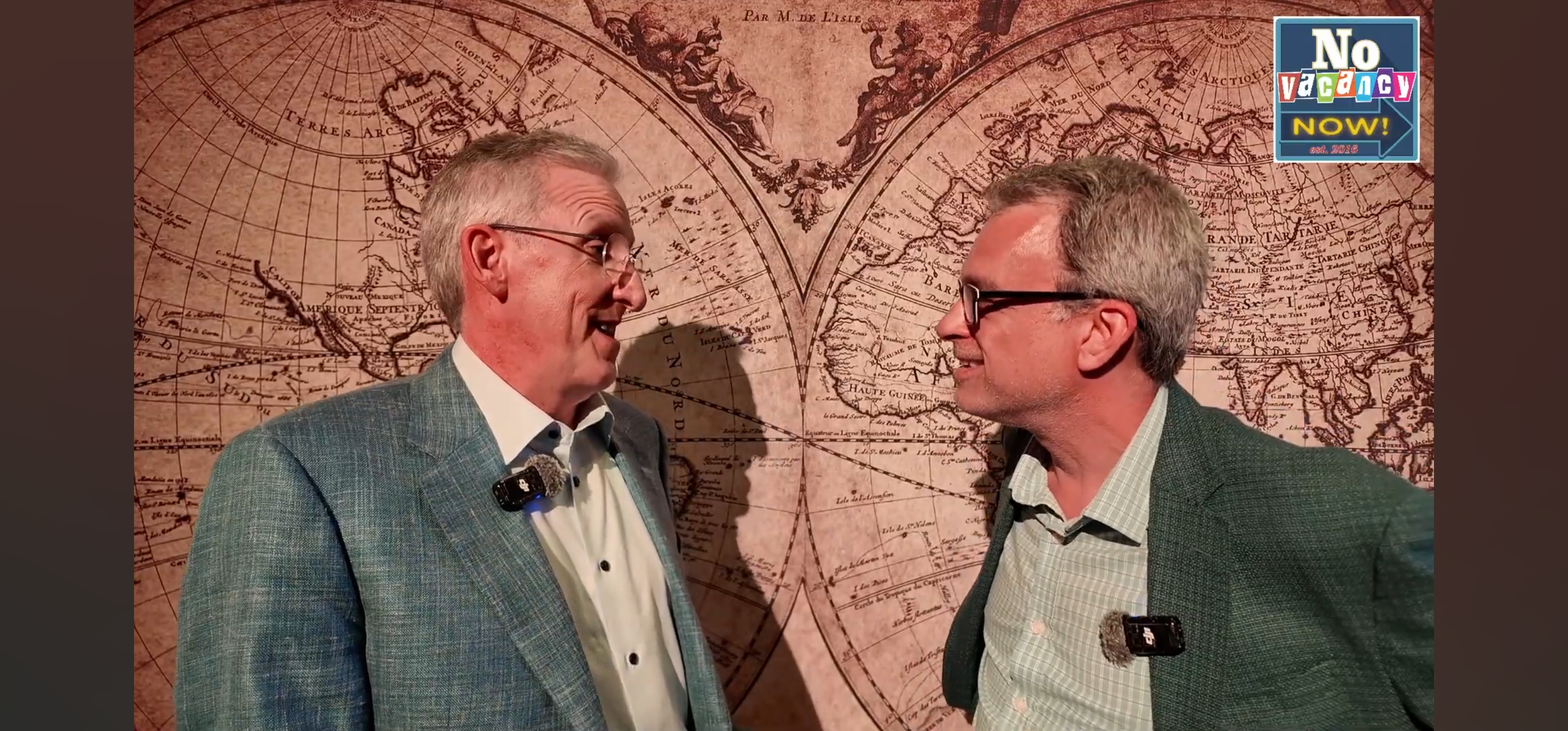
How is hospitality education adapting to AI, shifting student interests, and the demands of tomorrow’s workforce? In this episode, I’m joined by Dr. Suzanne Bagnera and Dr. Peter Ricci to break down the challenges—and opportunities—shaping the next generation of hospitality leaders.
🔑 What You’ll Learn:
Why enrollment in hospitality programs is dropping—and what that means for the industry
How AI is reshaping education, operations, and the way students learn
The long-term impact of online learning & flexible work experience requirements
Why hospitality careers extend beyond hotels & restaurants—into cruises, casinos, finance, and even marine biology
The rising importance of soft skills like communication & storytelling in a data-driven world
💡 Whether you’re an educator, student, or industry pro, this conversation will shift how you think about talent and the future of hospitality.
📌 Special thanks to Actabl for supporting this conversation.
👉 Actabl gives you the power to profit. Visit Actabl.com
Transcript
Glenn: Everybody of hospitality. Friend Glen here. Listen, we already know actabl gives you the power to profit, but now they’re giving you more actionable insights to drive that profitability. Do me a favor. Take a moment and check out Hotel Datacom. You’re getting set for budget season, right? And this new benchmarking data is going to help compare your hotel’s performance for the rest of 2025 and into 2026. Please check out hoteldata.com or the classic actabl.com. Have a great day and enjoy the show! Hey everybody, welcome to another episode of No Vacancy Live. We have got Doctor Suzanne Bagnell here with us, doctor producer Suzanne or DPS as we like to call her around here. Glenn Houseman, thank you so much for being with us today and spending some time with us. So so we are out to solve one of the biggest problems in hospitality today. And that’s pretty it’s pretty, pretty good one.
Suzanne: Hey, listen, that’s our mission is. What can we. What’s the problem? What can we do to solve it? So let’s make that happen today.
Glenn: All right, so my mantra for those of you know is educate, empower, entertain. We’re going to be focusing on the educate part tonight which will hopefully empower younger people. Speak for the entertaining. But one thing I can say is that we’re all going to be and I apologize. Reach here for this interview over here. Mr.. Peter. Reggie you sorry.
Peter: Man. Great to see that I am DP Suzanne is DPS that.
Glenn: Works great too. It’s great to see you. So I think I’m getting me wrong I don’t know. There hasn’t been much talk about this, but it seems that we’re having trouble getting students to join the hospitality universe. And by not hearing about it much, I’m like, I think that’s the only issue I hear about every single day in my life.
Peter: Yeah. You know, it’s I hate to say it over and over again because, you know, people invite me to, to to give chats, and we’re saying the same story. I mean, yes, enrollment is down. But we focus on the positive. But today’s focus is everybody in the world asks about AI. It’s like beating the dead horse. Every conference, every trade show, every angle. I’m moderating upon a panel on I at the Fila summit, and it said hard Rock in Hollywood in another couple of weeks. And we took a very different angle. We have someone talking about the journey of the consumer, another person talking about the changes in SEO and SEM and how that’s going to impact their a lawyer to talk about cases that are involving hospitality clients of every sort. Someone who developed an AI platform for telephone technology, and it’s actually pretty fascinating. So I thought maybe we could talk about AI in education because everybody’s always asking me, are you using it? Are you incorporating it? So, you know, my take thus far has been when we first heard the term, there were the, the, the faculty across the country. Immediately they go in different directions. There are some that say, how do we ban it? Let’s ban it immediately, you know, and not going to happen, not going to happen. It was the same thing when we started online testing, the same thing when we started using learning management systems. How do we ban them? How do we get rid of them? So you got your head in the sand group, which is luckily a small minority, and you got the 80% who don’t really know how or what to do with it yet. And then you get the 10% cutting edge that are using it as much as possible.
Peter: So I’m in that 80%. And what I’ve done lately. Three question. Assignment in one of the courses that I put together by design. So the first answer has to be completely from you, the student. In your own words, your own brain, your own viewpoint. The second answer has to be completely from the eye software that you prefer. And, you know, a lot of them still gravitate to ChatGPT, but there’s so many now. We do have preferences. And then the third one has to be blended. Then I have them sit back, read everything, and give me their reflection on which they thought was the best. Well, the first time I ran this, they all thought the blended was the best. Then it was half and half blended and completely a little of everything. So it’s interesting to me as an educator to see them try to use it themselves and go from there. But one of the one of the problems we have with, you know, with all of us as adults in the business as well as students is a lot of people want to use AI, but they don’t take a class on how to use AI. And so I have some funny examples, sad but funny, where it’ll say I chose my major in finance because I really like it. And then you’ll see parentheses insert why you like it here. Right. They submit it that way or I chose my major in insert your major here and there’s nothing inserted. So I it’s kind of like maybe when Microsoft Word came out and everybody was trying to use it or when we were all on original, you know, call up on AOL dialect.
Glenn: So I’m going to go with shrinking attention spans, combined with the typical disconnect of younger people who are getting caught more easily now because when I was a lazy buffoon in the 80s and early 90s, I did not have the means ahead of me to be so stupid to get caught. I’m sure I was lazy and exactly the the same in exactly the same way. So. Or are kids really getting less focused?
Peter: Well, you know, I try to take it as learning as learning examples all the way through, like, you know at simultaneously the attention span of everyone’s shrinking. Right? So simultaneously, students and I and I can’t generalize because Florida Atlantic University is in South Florida. It’s a metro area. Most of our students work, so the movement to fully online courses has been tremendous for the two decades I’ve been here. Every semester there are fewer and fewer who want to be in person. So I had to revamp my entire A curriculum. Instead of requiring an internship that often had more touchy feely components, I switched to requiring work experience hours in the industry so that I could feel more comfortable that you were at least interacting 1000 hours with guests, liking it, and not running for the hills. So, for example, we have hybrid classes where you may only meet three times a semester and the rest is online. When they see hybrid. They don’t register. They assume it’s partially in person. I don’t want any part of it. So if I try to put on the schedule a completely face to face class or even a hybrid class, they often get cancelled or they’re under enrolled while this section fully online will boom. So it’s a convenience flexibility shortness of time. And it’s not only those of us who are adults that are older. It’s middle, it’s younger, and it’s exceptionally young because they start kids in K through six, K through seven with technology. So we have to adapt and then and then pivot. So what I you know, I pivoted on how we measure your work experience. I pivoted on assignments because if I just stick my head in the sand, which I could easily do as a 60 year old, I I’m not helping the cause, you know? So where I lack and where I think Suzanne can help is, you know, she’s teaching courses on AI, and I think more people need to take courses on AI before they say, I don’t know anything or I’m not using it. You know, it’s funny.
Glenn: Yeah, you’re absolutely right. Because when I started first using AI to try to improve my workflow over here, I didn’t know what the hell I was doing, and while I haven’t taken a class, which I definitely recommend people do. I do like see articles every single day. They started coming up in my customized feeds and stuff like that. So I’m I’m learning a lot and it’s really starting to reveal what I didn’t know I didn’t know. And it’s one of those things that are really important in order to be able to. Peter though, I gotta go back to this whole different trend. So maybe it’s not that people are not interested in hospitality anymore as a career. Maybe we just haven’t fully realized that the world has changed and they’d rather work in a hotel while learning about how to work in a hotel in the industry online versus, you know, being in person everywhere, every every minute of the day. Is that a possibility?
Peter: Well, you know, in Florida, we we have a very vibrant deans and directors group. I tried to start at 20 years ago, and we could never get it off the ground. And post pandemic.
Glenn: It seems about normal.
Peter: Well, well. But in post-pandemic world, the the fantastic being at University of Central Florida Rose and College, Cynthia had reached out to me and said, let’s try it again. So she and I are basically informal co-chairs of the group, and we have all eight programs actively involved, and we did a collective study to see how many majors we have now collectively versus before. And we’re about 6000 versus 9000 is my best guess more. Right? So I step back and analyze, because I’ve lived in Florida since I was 12 years old, I wanted to see what the workforce is now and about how many people we should be producing with bachelor’s degrees. That would be entry junior level supervisors. And my best estimate is about 15,000, because there’s 1.2 million people that work in the industry in Florida. So we’re definitely about a half or two thirds of what we even need. And then you have to think about it. Florida’s higher education system is the 50th least expensive in state in the country yet. Yet it’s one of the best. So our graduating hospitality students, because we’re Florida, the number one destination, they get plucked to go work out of state or out of country. Right. So we’re not even producing 6000. For Florida’s workforce, we’re probably producing 4000. Right. So collectively, we’re trying to do something about it, whether it’s get a tuition discount, make hospitality sexier, do something. So we’re all on the same page. But I do think there is a permanent downturn and interest in fields that are service oriented where you have to be in person, serving others because it doesn’t match the technology, the time shift, the rapid pace of society and the attention span. Our our our old style is just a lesser number of people that want to do that. Now. They exist. And so what’s better is I gravitate to them and I find them jobs I can. And Suzanne, you know, chime in here because you’re doing the same thing, right?
Suzanne: Yeah. Well, first of all, I’d say that Florida is probably the best because you know, our center guest is is one of those leaders. And in that state, we’ve got some really great educators in this, in this space. But it it really is, I think also in a, in a combination to that as well, is really understanding what hospitality truly is. And Peter served on a committee with me, amongst many other educators for the American Hotel Lodging Association, as we put a workforce together to take a look at the landscaping of hospitality, I know. My dean, Michael Chang, has been up with Katherine from Hilton with the US Travel Association and really looking at our industry. And this is where that combined effort of our industry folks need to be working with education. We definitely have a pipeline crisis, if you will, in terms of, you know, to Peter’s research, needing enough people, but truly getting people to understand, I mean, there’s many times when we do recruiting, we hear hospital instead of hospitality, and there’s that sense of confusion. And decades back we used to be referred to most programs were hotel restaurant management, but that evolved into hospitality management because hospitality was more inclusive. But that is typically a term used primarily more in the United States in comparison to other countries that go a little bit more to tourism. Hence, many times you’ll see hospitality and tourism in that level of title. But it really looks at how are we attracting and connecting to not only the high school students, but it’s the middle school students and their parents as another form of audience member so that they understand. And Glenn, you went through this with your boys and making sure that you’re feeling confident that your children are going towards a degree, towards a major that is going to have a future to it. And understanding it. And so it does.
Glenn: Fortunately, my kids are going towards computer programming, so they’ll probably be good at a job.
Peter: See part of our problem right there now. So so the good thing, you know, back in the 80s and 90s and early 2000, you thought server, bartender, etc., the industry has morphed just like the rest of the world. There’s jobs in it. There’s jobs in digital marketing sophistication. And this gentleman I met who created this IAEA based telephone system, the telephone system is amazing and it really makes you feel human features. But it’s an automated telephone answering system for hotels and restaurants. Right. So and, you know, the US has always had the issue where we’re not as beautiful to work in hospitality. It’s not a career that you pass down from your grandfather to your father, like European countries or the Swiss schools. We’ve always had all these different ball of wax. So it’s not a negative. It’s that we’re evolving to learn where we’ll be able to make an impact. And I do see a trend. And we were an early adopter of this trend that hospitality is moving to protect the academic Programs into business schools. And so I just did an analysis of 2019 compared to 2025. And they’re about 25% more programs in Aacsb schools. Aacsb, the Association to Advance Collegiate Schools of Business, is kind of like our big accrediting body.
Peter: I don’t know if that’s good, bad, or doesn’t matter because you know, like some of the programs across the country have moved to become a Department of Commerce, and they’ve blended hospitality and logistics and supply chains. Others have moved to become a department of entrepreneurship. And they’ll have, you know, hospitality startup types. So we’re evolving, and we should be like the rest of the world. My I can tell you the positive is that I have no problem with any student not earning their minimum of 1000 hours our average student graduates with over 2200 hours, which is one of a full time year. But we’re in South Florida. There’s lots of jobs, and we have a working student demographic, right? If I went to University of Georgia or I went to Penn State, or I went to where I went to school, University of Florida, there weren’t as many jobs in those rural college towns. So it’s going to be different for every type of institution, I think. Suzanne and Michael at FIU are in the fabulous location because you’ve got the cruises, you’ve got international, you’ve got so many Michelin star restaurants. I mean, it’s a world of of opportunity to work in while you’re studying.
Peter: So maybe we’ll see a shift in academic hospitality programs surviving or thriving when they’re located in tourism meccas like UNLV or or whatnot. So I don’t I don’t know where this is going to all roll out, but this is what we’re dealing with right now. I’m very pleased to have enough butts in seats taking classes. So we’re almost back to where we were before, and I’m trying to learn I. So the next time Suzanne runs her eye class, I want to take it because I need to be cognizant. And I’m I’m kind of shocked already at how much variety there are across AI programs already. You know, it was only ChatGPT ChatGPT. Now, there’s so many that I have students who don’t want to use ChatGPT because they’re liking this one as more cutting edge, or they like what it puts out for them. But in the background, as an educator, I have to just continue to remind them that not everything is in there. They really think that everything is in Google. If you Google, everything is there. And we know that’s not the that’s not the case. Whether it’s whatever.
Glenn: It’s also it also comes up with different responses. If you do it twice in a row, sometimes completely change its mind, you know?
Peter: So what kind of things are you putting in an AI course? Like what kind of ingredients are?
Suzanne: So we’re really looking at it from the entire industry, and not just from a generative AI standpoint, like your ChatGPT, your perplexity or Gemini. We’re looking at what are the variety of tools that are out there to support the business end of the operations for hospitality businesses, because our course is is really focused on industry participants, not individual students at each university, because we know that they’re literally from this show of how many guests we have had. We’ve had so many folks that have said, I know I need to be using it, but we don’t really know how best to be using it. And so that’s kind of the strategy that we put forth together in that, really taking a look at how can you become more operationally efficient? How can you use these tools to implement better strategic decision making? How can you employ a better experience, not just for your guests in terms of what that journey is, but how can you think about your tech stack that you’re developing for your employees so that you can automate, automate the mundane and make it so that the employees can then focus on the guests more? And then I think another aspect that many really seemingly forget when you’re playing with a new tool, although I would say educators like to argue this, and those are the ones that want to put their head in the sand are going to be the ethics and the data privacy and the security that goes into what you should and shouldn’t be doing.
Suzanne: We definitely take a look at that and kind of the future. And because there is no general textbook to this. It’s evolving and changing too much. My colleague Dale Gomez and I, we identify individual company CEOs, CTOs, CIOs that are building the technology. And that’s part of what that lecture content is that we’re hearing directly from them, so that you have a better understanding as to how that can work. And we fully support the fact that we are not at this stage seeing that we are taking jobs away. I think that’s another concern where people like to put their head in the sand or be concerned. But again, it’s automating that mundane. And how can we make our people more efficient? We already, in most instances are struggling and trying to find talent. So how can we make it? You know, you talk about your friends with the Voice concierge service. We’ve got two great companies that we’ve incorporated into our program. Jessie Fisher from guest OS is one, and Ryan Daniel from Eva is another. And and quite honestly, we are looking at the fact that how can we alleviate you know, 80% of the calls that are coming through so that that agent is not answering all of those calls when it needs to. It’s got the guardrails to be able to have the appropriate information that it can source from, and then seamlessly transfer to the human to then take over that conversation.
Peter: Wow. That’s fantastic. And I’ll make a point to make sure I connect you with the gentleman I met. And it’s by a fluke that I was so in love when I heard he was going to be on the panel, because the restaurant that I like to frequent in Deerfield Beach, Florida, is called oceans 234. And every time I would call, they just seem to have the best automated system. And within a few minutes, if I needed a response, a human was calling me or do everything feeling human like. And then I find out that he’s the person who developed this AI software for the phone system. So, you know.
Glenn: Yeah. To me, about phone systems, two things. One, stop lying that you’ve recently reorganized your phone. Make me listen carefully. I. Number two, you are not experiencing higher than normal call volume. You are experiencing lower than you should have staff to save money. So let’s say let’s fix both of those things.
Suzanne: Glen. Glen, that’s a Friday night audit conversation. We can’t get into your pet peeves here.
Speaker4: So Pat. And then let me let me go.
Glenn: Into a different thing. Let me reassure people that we will lose jobs in hospitality because of AI, and we’re going to lose jobs everywhere else. But that doesn’t mean that it’s necessarily a bad thing. You don’t see phone operators anymore taking a plug from one thing and putting it into another thing. But those people went on to get different jobs, new types of careers, new types of opportunities are going to be born out of this colossal change. So let’s not get all panicky that all jobs are going to be going away. I like the mindset of being able to focus on how to leverage AI to make us all more successful in what we’re currently doing.
Suzanne: Okay, pop quiz here for you. Glenn. Operators. They’re traditionally called PBX operators. For all the dollars and donuts for today, what does PBX stand for?
Speaker5: Phone indicated when you were moving things.
Glenn: I know, I don’t know, it’s a phone thing. The exchange is probably the last thing.
Suzanne: Private Grand exchange.
Glenn: Private exchange.
Speaker5: As you moves the.
Suzanne: Branches. And it kept.
Speaker5: All private.
Speaker4: Variants.
Peter: On it’s being done by done for you by I. But you know I agree that that we’ll have job shifts. We won’t have you have some loss of job titles and positions, but we’ll have all these new roles and technology and development and, and whatever. It’s just going.
Speaker4: To it’s.
Peter: Cool. It’s cool. So, you know, another point is maybe hospitality education needs to move into other areas of the universities where the industry evolves. Maybe it moves. Maybe there’s always a home for culinary arts, because to teach people the the logistics of cooking, the menu design and so on, maybe another part of it moves away from phone systems into the IT department, or who knows what the future is. But I think the evolution that I’m seeing right before my eyes in my 20 years into the business school is good and bad, because if it’s done properly, it works very well because you can blend your marketing majors in your accounting majors with hospitality minors and get them jobs at cruise lines and theme parks and airlines. Or you take a hospitality major and you see they’re really strong in numbers. You make them a finance minor, and then they wind up doing financial performance for SeaWorld or whatever the case is, you know? So I think it’s a fun time. I think educators need to be more open minded to learn more about technology and get out of their historical wheelhouse. One of the things students tell me all the time, if we hear one more time, I paid my dues. I worked on the line. They don’t want to hear it. They want to hear what’s exciting, what’s fun, what’s the future? That job that I’m going to like. And I agree with them. Why?
Glenn: I’m just curious as to this human resource, this resource position at SeaWorld. They have to. What’s the process for firing like a penguin or something like this is the type of hospitality stuff that we need to learn at our great universities.
Peter: You’ll take over this talk about the combo majors. I have some marine biology students for us, very strong and marine biology and OSHA science. I have several of them who minored in hospitality because they went to work at SeaWorld, says thinking about combinations.
Speaker4: Yeah. Very cool. That’s fantastic. I mean, I.
Glenn: Just came back. As we’re recording this, I was in Las Vegas and I was speaking to the SVP of Corporate Finance with MGM resorts. Be sure to check that interview out when I post it. We were talking about untraditional jobs, like you could work as a marine biologist at Mandalay Bay, right? Because they’ve got that massive aquarium there. But people don’t think about that sort of thing, about how, again, it comes back to my favorite thing to say these days is whatever it is you love. We’ve got that in it.
Speaker4: That’s pretty.
Peter: Absolutely. And the other thing we’ve got that people often forget we are the creme de la creme icing on the cake to teach you people soft skills. So my finance majors, who minored in hospitality and became personal financial analyst. They’re better because they’re more responsive. They communicate better and they deal with their clients faster.
Speaker4: Yep.
Peter: You know, my marketing majors who also studied our soft skills, they’re.
Speaker4: Better with client.
Peter: Relations. So we are everywhere woven into every business where this skills.
Speaker4: Right.
Glenn: Are true. Yeah. I think it makes me think of the best advice my mom ever gave me. Don’t worry so much about the major. As much as learning how to write well and communicate effectively, that will get you a long way in life and get you through a lot of problems. I think we need a little bit more art of that as we get behind the computer screens, more and more and more.
Suzanne: Well, and I think the next phase that kind of goes with that, Glenn is taking that reading and that that verbal communication and now really peppering in really deeply that that aspect of critical thinking. Right. And so as I comes into the picture, you know, to to Peter’s point earlier using the examples people are, you know, blending it, not blending it. Are you questioning, are you thinking through that and reflecting upon that? I think educators need to also think through how can you incorporate driving home that ability to critically think about what it is that you’re receiving and not just take that data dump that you’re getting in a quick second response to your your prompt.
Peter: Yeah. And that’s a lot of the roles that you see today. And I hear it from HR leaders all the time. You may be my revenue manager for the NCL getaway. So you’re the revenue manager for my one ship, and you’re amazing at that. Analytics and this and that. But can you tell me the story? Yes, this this this. But where are the people skills and communication skills to take all that data and then tell me the story. What do I need to do? Do I need to increase the size of my casino? Do I need to add more suites. So I love the data that we have. I would I would have killed to have this data when I was a hotel general manager, you know then. But it’s if you have all that dump, certain types of people are good with the data and the manipulation and the analyzing of it, but they’re not able to tell a story. You need both. So we have a lot of opportunities in very different ways. And I say it every time I’m on anybody’s screen, come work in hospitality. It’s the fun. It’s the most fun. You make good money. We play hard, we love each other. We it’s just a great industry. And stop thinking of it as only hotels and restaurants, you know, go work at Mandalay Bay and train dolphins or, you know, or, you know, be a doctor at sea and go work with Christine Duffy at Carnival. You know, I mean.
Speaker4: You.
Peter: Think anything? Anything.
Glenn: Yeah, I want to I think I want to be a ship’s purser, like gopher. You seem to have a lot of a lot of fun.
Peter: No one watching this. Members gopher too much unless they’re a mermaid. So we’ll have to bring you a new version of gopher.
Speaker4: So I know we’re back for another.
Glenn: Love Boat remake. They made one in the the 90s. I think we we need. Or is it the early 2000? It’s on the UPN network or something?
Speaker4: Yes. They did. That’s right.
Peter: There’s a great guy on YouTube that is a cruise director. Tells the story, left the business, just went back. It’s a great show of what he does as a pers or a cruise director. So, yeah, there’s some great jobs out there, great jobs.
Speaker4: But we’re.
Peter: You know, we’re all evangelists of this business.
Glenn: Yeah, we sure are.
Speaker4: Peter.
Peter: You know, and tell your kids and tell your cousins.
Glenn: And exactly. That’s that’s all there is to it, remember? Tell everybody it’s not just good money. It can be great money. I, I am the poorest dude in the room at almost every single hospitality conference I get to. I’m not looking for donations. I’m looking to say.
Speaker4: The.
Glenn: Great career for people that could focus on on that career. So you should really go for it. I’m talking about like you know, people at the major management companies, the hotel investors, the major brand people. I just think about working for a brand and getting all of that stock over the years and how well they do. So there’s so many great careers and you’re not even thinking about that’s off the property level. Not that the kids are going to. The kids who are watching this already know that is my guess. All right, Peter, any final thoughts?
Speaker4: No.
Peter: Come work in hospitality and come study in Florida, because we’re still the number one visited state of all 50. We have the the cheapest in-state tuition of anywhere in the best program. So if you’re if you want to study hospitality, study where the hospitality is taking.
Speaker4: Place.
Peter: I mean, we do it well. It doesn’t matter if it’s Tampa, Orlando, Miami, Boca. We have programs everywhere. They’re just great. So thank you guys for always having me come visit.
Speaker4: So. Well, we love you Peter.
Glenn: You’re the best. Thanks for for being here. We’ll see you next time. That was really fun. Susan.
Suzanne: Absolutely. I love having Peter on. He’s a wealth of information and just a true asset to the state of Florida and really hospitality education, because he really is eager and excited to be on podcasts and to be a panelist, be a moderator, and continue to preach that word.
Glenn: Well, I was eager and excited to have Peter on today, and I’m also eagerly eager and excited for you guys to make sure that you subscribe to the audio feed or subscribe to our newsletter. Text the word hotel to 66866. That’s hotel 266866. Every weekend you got a recap of all the videos we’ve done and all of the news stories that are out there. So until next time, remember everybody. You’ve got one life. So blaze on and.
Suzanne: Follow your passion.
Glenn: Yeah.
Speaker6: Later.

More Episodes
-
June 6, 2026
FNA 211: Memphis, Kooky Canuck, and Southern Lodging Summit
-
June 5, 2026
Gen Z, Millennials, and the Vacation Ownership Shift
-
June 4, 2026
Hotel Owners Facing Tough Choice: PIP, Sell, or Switch Management
-
June 3, 2026
Hilton Launches Undergraduate by Hilton for Smaller University Markets


Subscribe