April 17, 2026
Public-Private Hotel Deals: How Cities Finance Headquarters Hotels
Public-private hotel deals aim for economic lift, not a typical private return profile.
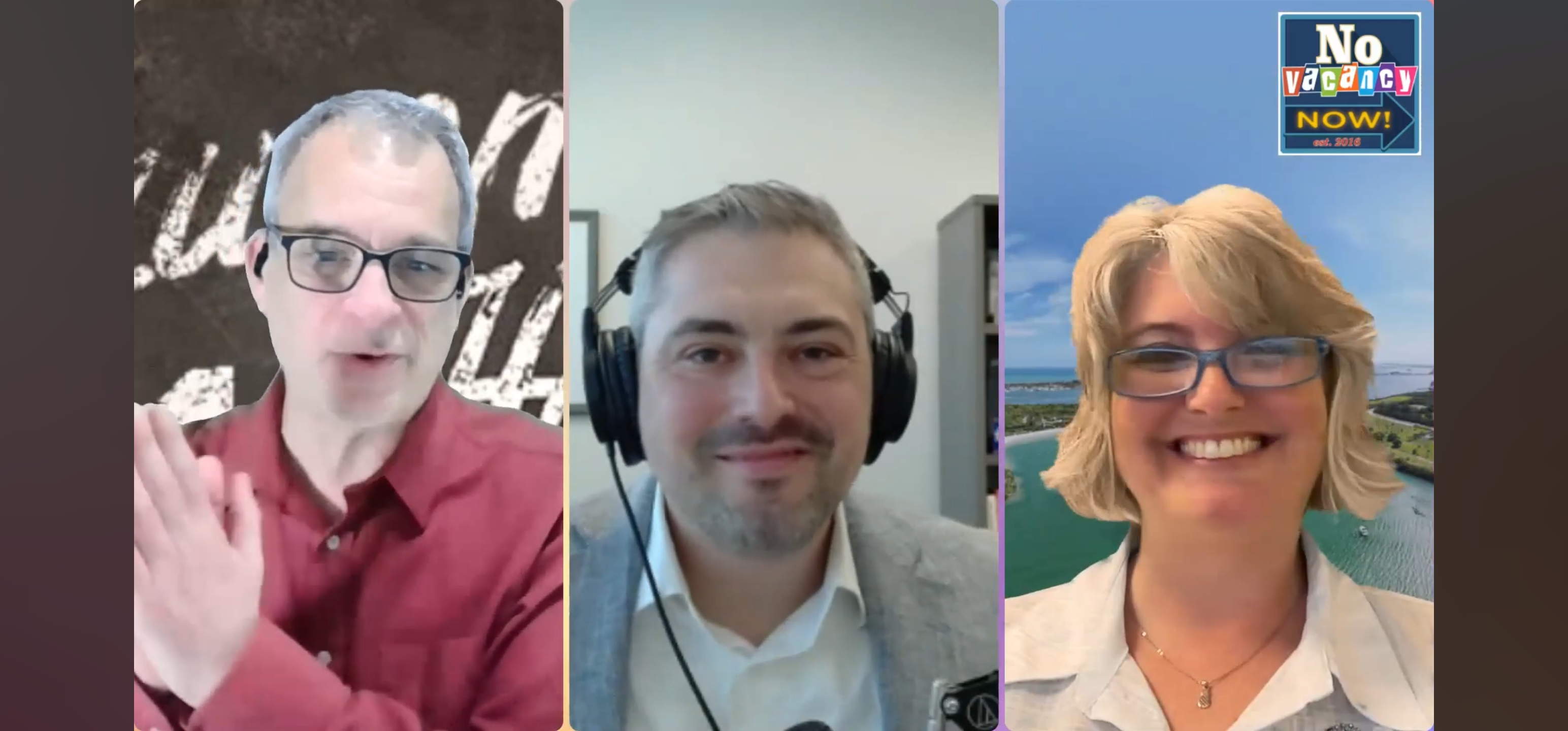
Glenn Haussman talks with Walter Peseski, Senior Vice President of Asset Management at Garfield Public/Private, with Suzanne Bagnera, PhD, CHA, CED, about how cities finance headquarters hotels, why brands matter to bond financing, and what can change demand overnight.
Why cities build convention-adjacent hotels
Why bonds and ratings agencies prefer branded hotels
Abilene example: DoubleTree plus unexpected Stargate-driven demand
Why public timelines stretch
Thanks to Actabl for supporting this episode. Actabl gives you the power to profit. Visit Actabl.com.
Want the weekly roundup of news, videos, and what you might’ve missed? Text HOTEL to 66866.
Transcript
Glenn: [00:00:00] Hey.
Glenn: [00:00:01] Hey, everybody. It’s your hospitality friend Glenn over here with the one and only doctor producer Suzanne bringing you hospitality stories. No one else in the industry dares to bring you. All right, that was very overstated, but the sentiment is there nonetheless. How are you today?
Suzanne: [00:00:18] I am always ready for whatever roller coaster you throw my way. And what we start with.
Glenn: [00:00:23] Oh, God. I don’t know what’s going on with me. I’d be like cuckoo for Cocoa Puffs lately. I, I, I would argue not enough drugs or something like.
Suzanne: [00:00:31] Hey, listen, you know, we do the key thing is, is we bring you things that other people don’t. So that’s the key takeaway.
Glenn: [00:00:37] Yeah, exactly. One of the things that I thought would be really fun today is a little understanding of how public private partnerships work, where they play a role. You work for an institution, for example. You know beyond what you do here with us at No Vacancy. And so what do you think? Do you want to bring in our guest today, or should I?
Suzanne: [00:00:57] I feel like you’ve already started that symbiotic relationship today. So I feel like you just need to keep rolling.
Glenn: [00:01:03] All right, all right. We got with us today senior vice president of asset management with Garfield Public Private, their company that does all of these things. So we’re going to learn a little bit more about it. And again, where they see opportunity these Sheroes. Welcome, Walter. Walter, how you doing, bro?
Walter: [00:01:19] Good. Good morning. Thank you for having me.
Glenn: [00:01:21] I totally forgot. Hold on one second, everybody. I’d like to thank our friends over at Actabl. Actabl, hey, they give you the power to profit. Don’t forget. Check out actabl.com. Sorry about that. Walter. Didn’t mean to put you right in the middle of our ad read over there. That’s okay. Very good to us. We want to be good to them. So interesting that you’re not just dealing with like you know, private mom and pop investors or, you know, private kind of stuff. You’re dealing with investment on the public side of things a lot. Did you set the stage for us and just say how all this works?
Walter: [00:01:56] Yeah. So look, our, our deals or deals that private investors don’t really want to be a part of. Right. So. Right. Oftentimes they are secondary tertiary markets that need to build headquarter hotels and convention centers to spark demand for the economy. Right? So the goal is different. The goal is not to to achieve risk adjusted returns and specific IRR there. It’s really for a broader economic catalyst. So that’s where we get involved. We we come in from from just the thought of, hey, this might be a good idea through helping raise the capital stack all the way through development. And then we stay on long term asset management. So we really do have long term relationships with these assets.
Glenn: [00:02:35] That’s really cool. So I think the best place to start is why don’t you tell us a story? And by coincidence I just saw, you know, the convention business is so massive and all these cities are either building convention centers. I’m on the the hospitality board of the Long Island Hospitality Association, and they’re trying to get a convention center going here. I just came from Fort Worth a couple of weeks ago, where they’re knocking down this classic building to like redevelop everything. So pretty, pretty hot market. Give us an example of a project you were involved in and how that worked.
Walter: [00:03:13] Yeah. So it’s, it really takes a lot of buy in here. Glenn. Right. So, you know, a common common perception is, you know, convention centers just are slam dunk business. And really, the convention centers don’t make a lot of money, especially communities that we’re in. They, they lucky to break even, right. It’s what it does for the broader, broader community. So, you know, I’ll give you an example. We, we built a, a DoubleTree in Abilene, new build DoubleTree, which you don’t see very often, but it’s probably one of the nicest double trees in the system. And where.
Glenn: [00:03:42] Was this.
Walter: [00:03:42] Located? Abilene, Texas. And it’s, we built it right across the street from a really older vintage convention center. So our hotel had bolted on meeting space. So it had 20,000 plus square feet of meeting space in it. And, you know, so I tell the story because it’s interesting, because we built that to be an economic catalyst for the city of Abilene. And then if you see Stargate announced their data center project in Abilene, it was the first collaboration for that project. And actually, it just flooded the market with transient demand. So, and there’s a unique, you know, we build this as a, a, a broader economic catalyst. However, the transient demand coming in is demanding rates of 300 to $400 a night. Wow. So balancing that, balancing the we need, we need groups in here for, for the long term picture versus we really want to take advantage of this lucrative transient business coming in. I think that’s, that’s a unique story that that’s hit us recently.
Glenn: [00:04:42] Well, let me expand upon that. Unlike when billionaires say they need a new sports stadium under the auspices that it’s going to help the community, but it never, ever does. Look at the numbers. I was teaching this like 15, 20 years ago at NYU that. However, what you’re talking about is exactly the opposite. It really drives money to everyone within the community. And Walter, if you’re if you got a convention center that breaks, even that city is doing pretty good because they brought in all of those people that aren’t just staying in that hotel that you might help develop, but they’re eating in the restaurants, they’re buying stuff, they’re helping keep people directly employed, and they’re moving that money through that town, in this case Abilene, in a way that would not have been possible before. So instead of going into the pockets of one owner of a sports team, it’s going into the pockets of a huge amount of people within the community. So I that’s kind of what I really love about what you’re doing. Walter.
Walter: [00:05:46] Yeah, it’s exactly right. And look, at the end of the day, the investor in the hotel is the taxpayer, right? Ultimately. So they, you know, they also get the benefit of that. A common pushback we get when we announce that we’re going to a city wants to go in and build a headquarter hotel and convention center is from private investors saying, oh, no, you know, I have I have a I have a courtyard by Marriott here. You’re building a the city’s basically putting me out of business. So one thing we’re really cognizant of is to, is to know we, our hotels are right sized, right? So we’re not going in and building a thousand room hotels. Right. So we’re our hotels are thoughtfully programmed.
Glenn: [00:06:28] What’s the size of that DoubleTree?
Walter: [00:06:29] About 200 rooms.
Glenn: [00:06:31] Beautiful.
Walter: [00:06:31] So it’s, it really does compress the market when these when these meetings come in and we really that’s that’s about the sweet spot of where we are. Our hotels are don’t go above.
Glenn: [00:06:44] No, let me tell, let me say something to those those other hoteliers out there that are in the town. This is really something that helps you because convention is not going to book in the town to stay at your courtyard. No offense, but in order for it to be working, you really need to have that model where you have a full service hotel that’s usually attached to the convention center. Suzanne. You’re nodding. Tell me a little bit. Tell me a little bit more.
Suzanne: [00:07:07] Yeah, no, that I think that’s the key piece, right? Because people are not wanting to have to deal with public transportation or walk across the street. Weather impacts you know, so that you can get yourself trapped in the elevator. Glenn, you know?
Glenn: [00:07:22] All right. Easy, killer. I mean, Walter, I got trapped in an elevator at a conference in the middle of a storm. No, I know you imagine being trapped in an elevator with me for 45 minutes. We did not go well. Mind you, I was alone.
Walter: [00:07:36] And I hope you entertained yourself.
Glenn: [00:07:39] I, I had no, I had my phone wouldn’t work. It was a Faraday cage. It was. It was absolutely hell. Anyway, now that we’re derailed. Go on. Suzanne.
Suzanne: [00:07:48] No, I just think that that’s what the the the traveler attending a conference is looking for is that ease of access and comfort. Right? To be able to go back and forth many times. These events are long in the scope of the day. And so when you can take that quick break to head back to your room or to change your clothes from one to another, or to take a meeting in your room as well. Yes, networking and so forth is great, but that serves as a great catalyst in that area. And then do that compression outwards.
Walter: [00:08:20] And look another, another key piece of what we do here. So we’re right now we’re developing in three state capitals, right. And really these these markets, the quote unquote meeting oriented hotel is is really obsolete, right? So we’re talking about 70s 80s vintage.
Glenn: [00:08:39] Yeah, stayed in a number of those. Walter, I will tell you the Hunter conference moved from a vintage big box hotel like that to a newer hotel because the outdated infrastructure just wasn’t cutting it.
Walter: [00:08:51] That’s right. I would even say the Hilton that it was held at is still in good repair. It was a respectable repair. A lot of these markets that we go and even state capitals not only not only are they older and obsolete, but they’re just in disrepair. And and that and that is the infrastructure of the city. So really groups that used to come don’t come anymore. So they really need these newer full service compacts with meeting space hotels that we’re building for them. And it really brings groups back that, that no longer come.
Suzanne: [00:09:23] Now. Walter, question for you. What made you all look at the state capitals as a location versus some other center, city or location that just happens to get a lot of conference space?
Walter: [00:09:35] Yeah. So the what’s really, what’s really special about what we do, we, our company’s been around for 30 years. We don’t sell business. That’s, that’s not what we do a lot. It’s all of our business really comes from referrals and cities that know what we do. And they call us and frankly, we, we act as a fiduciary of the city. So we don’t do projections. We don’t do underwriting. We. We are arm’s length. We simply. We engage third parties to do projections. And frankly, if a feasibility study comes back and says, look, city, you can’t afford this city. There’s not the demand for this, then we we’re along with the city to say, hey, this is not a good idea. So. Right. We don’t sell. It’s really what the business that comes to us. And right now the state capitals just happen to hit all at once.
Glenn: [00:10:24] That’s pretty cool. How do you think about the type of hotel product that would go into these into these markets?
Walter: [00:10:31] Yeah. So it’s unique. It depends on, it depends on, on the market. So I’ll say we, we, we knew built a DoubleTree and, and that’s, that’s unique. But I will say a lot of these markets, the full service hotels that we build are really the first full service hotels that the market has. So it wouldn’t be wise for us to go above, call it a DoubleTree. And really we found a double tree and a Hyatt Regency are really a perfect kind of entry level full serve. We so that’s, those are two case studies of what we’ve done. Really, we also look at the supply that’s in the market, right? If it’s really heavy, heavily skewed towards a Marriott or a Hilton or Hyatt will go a different direction. Right? And then it’s the city wants. So I’ll give you an example. We one city came and looked at our, our DoubleTree in Abilene. And it really is a beautiful DoubleTree. You can put a Hilton flag on it and nobody would question it, but they said, hey, we stayed, we stayed at your DoubleTree in Abilene. And yeah, and we get excited because it’s really nice. And she goes, that’s exactly what we don’t want, right? And, and really what she was saying is we want something that’s soft brand style, right? We want something unique to our market. So and there are other cities who want that, just that special, full service, reliable. So it’s, it’s really driven by what is the city want? What does council want? And then we kind of mold our project to their desires.
Glenn: [00:12:03] All right. Do you have any influence over their desires? Because you’re bringing some level of expertise to tell them what they should or should not be doing on some level, right?
Walter: [00:12:13] Yeah. We do, yeah. We do. We, I’d say influence in a way that we, we guide them to what we think is best, right? I think loyalty programs, just like in a private investment, loyalty programs matter. Yeah. So it’s rare that we stay, we, we go from a Marriott, Hilton or Hyatt. And really we are, we have the expertise. That’s why they hire us. So they, they take into account what we tell them, but it’s ultimately their, their decision to make.
Glenn: [00:12:41] Right. Like, I would be surprised if one of these went with a fully independent hotel, for example, because then you’re not tapping into the power of that loyalty system and the transient business that you could more easily attain. Suzanne.
Speaker 5: [00:12:53] Sorry, I was just going to say with the software.
Suzanne: [00:12:56] As you mentioned.
Speaker 5: [00:12:57] You know.
Suzanne: [00:12:57] Some don’t necessarily understand that versus that independent. And that really leads into the expertise that you all bring and that loyalty program that’s going to come with that brand to support being able to drive continued business in that space.
Glenn: [00:13:12] Well, to be fair, nobody understands anything. They don’t realize that hotels are franchise. They don’t realize how any of that works. Walter, sorry.
Suzanne: [00:13:21] But they could be going after those cookies for DoubleTree. I mean, that alone would be the reason to go with that brand.
Glenn: [00:13:28] Now I need a cookie.
Walter: [00:13:29] They are good. Now, another reason why they stay away from independence, too, is these hotels. The the the the bonds are sold and rated through organizations like S&P and Moody’s. And really they, they don’t want to see independent hotels.
Glenn: [00:13:43] So it sounds kind of sounds like what banks are looking for certain brands.
Walter: [00:13:46] Exactly.
Glenn: [00:13:46] Right on on flags.
Walter: [00:13:48] Yeah. I said banks might be a little bit more flexible. Bondholders not so much. And I would even say that’s that’s most of our hotels are, are brand managed because it’s easier to understand and manage hotel than a third party managed hotel. And that that industry itself is, is, is volatile, right? It’s it’s subject to M&A and, and sales. And so most of what we do is, is brand managed. That’s not saying that we won’t do third party, but we try to stay brand managed.
Glenn: [00:14:19] Yeah. Oh, that makes that’s interesting as well. Yeah. Again, nothing wrong with going either way. Just a particular interesting approach that you’re taking.
Suzanne: [00:14:29] I think that’s an interesting approach though, because a lot of times the brand is looking for not only location, but then size and volume, right? So you’re looking at that sweet spot that’s roughly around 200 rooms. So how then do you get the brand excited about the partnership? This way when you’re only looking at 200 keys versus 500 or 1000 room concept?
Walter: [00:14:56] Yeah. Because a lot of brands are going away from, from brand management, Right? Right. And especially in the markets that we’re in. So I think there’s two things here. First, the key is we have long term agreements. These the bonds are sold for 30 years. These these these management agreements are usually for 30 years. So that’s one thing that gets brands excited. I think the second thing is, is just our track record. So we’ve worked with all three major brands brand families and just the projects that we do, the relationships that we’ve had they’re, they’re very much open to what we do. So again, those, those two drivers really help us.
Glenn: [00:15:34] How do you how do you move things along? Because PRI public is not necessarily known for getting things done speedily. And if you got to build this thing, you don’t want prices to double in the 20 years, you have to wait for it to get done.
Walter: [00:15:49] It’s a lot of patience. Yeah, a lot of patience.
Speaker 1: [00:15:52] You look like a patient guy.
Glenn: [00:15:53] Me? Not so much.
Walter: [00:15:55] The team’s patient, right? So. And. Yeah. And it’s small things, right? So there’s a lot of stakeholders involved in these. And look, in any development, there’s a lot of stakeholders. But when you’re talking about a public development and there’s there’s different councils involved and different consultants involved, and you have to get on a certain meeting schedule to be in front of city councils. It just, it makes it what is a long process? Much longer. So look, we, we do our best to be conservative in nature because costs escalate. Right. And there are multiple stakeholders involved just from a pure development side, when I talk architects and interior designers. So patience and just setting the right expectations helps us and we’ve been doing it for a long time. So I can’t imagine you being a first time mover and trying to do this and nailing it the first time, but
Glenn: [00:16:50] Oh, you can’t do anything the first time. And Natalie. Right. First time for learning right over there. Suzanne, got any more questions for our friend over here?
Suzanne: [00:16:59] What’s the next exciting city that we’re going to see a development in?
Walter: [00:17:04] Yeah. So we announced projects in Roanoke, Texas, and Jefferson City, Missouri. We haven’t announced brands on those projects yet, but definitely you can expect announcements on the brand sometime soon.
Glenn: [00:17:20] Awesome, I love it. Well, so how can we learn more about what you guys are up to at Garfield?
Walter: [00:17:25] Yeah, you can you can look at our website Garfield public private.com. Also feel free to email me, look me up on LinkedIn. And we’re happy to be connected. We’re happy to connect that way.
Glenn: [00:17:35] Awesome. Walter, thank you so much. This is so super interesting to learn about how it all works with the public kind of stuff out there. So thank you and thank you for your patience getting stuff done.
Walter: [00:17:48] Thanks for having.
Glenn: [00:17:48] Me. Yeah, yeah. So that was that was pretty interesting. What’s your big takeaway, Suzanne?
Suzanne: [00:17:54] You know, the forward thinking motion is how can you connect that public and that private? And you’ve got to have someone that’s good at navigating that. And it’s great to see that they’ve been successful that way. Because as you mentioned, there’s a lot of infrastructure that, you know, have somewhat a lot of that has been neglected, and it’s not up to what we’re looking for. And as the demographic makes a shift and change, not always is something going to be a rebuild or a renovation to that or rebrand. Some of it has to be that, you know, fresh new brand.
Glenn: [00:18:26] So yeah, I love it. And what I love is that they’re out there finding ways to help support the communities and allow the community to sustain itself and the people within the community by bringing outside money in and giving those people great experiences. And speaking of great experiences like share, subscribe, all of our kind of stuff. All right. I might have been jumping on the great experiences over there, but we try. Meanwhile, remember everybody, you’ve got one life. So blaze on and.
Suzanne: [00:18:56] Follow your passion.
Glenn: [00:18:57] See you all later. Bye, everybody.

More Episodes
-
September 29, 2026
Inside HomeTowne Studios by Red Roof: Why This Extended Stay Model Works
-
September 28, 2026
Why Hospitality Leaders Must Stay Uncomfortable
-
September 28, 2026
Hotel Marketing With AI: How My Place Hotels Competes With Bigger Brands
-
September 26, 2026
My Place Hotels: Growth, Leadership and the Next Generation

Subscribe