July 2, 2026
How Hotels Are Getting Paid to Reduce Energy Demand
Here’s a shocker: Hotel energy prices aren’t coming down. Rick West, CEO at Commercial Green Solutions, and Kenny Weston, VP at Commercial Green Solutions, told Glenn Haussman at HITEC why hoteliers need to stop treating utility costs as fixed.
The “double whammy” is real: your kWh costs are up AND your demand charges are through the roof. But there’s $50 billion in rebates sitting in utility programs that most hotels don’t even know exist.
It’s not about spending millions on new infrastructure. One hotel cleaning a P-tack can save 17,500 kWh — paid for entirely by the utility.
Peak hours matter more than total usage. If you can shift energy use away from peak demand windows, you save on kWh AND on what utilities call your “demand charge.”
Utilities will literally pay you to participate in demand response programs because their job is keeping the lights on 24/7. They’d rather give away rebates than build new power plants.
Visit commercialgreensolutions.com or check them out on LinkedIn.
Want the weekly roundup of news, videos, and what you might’ve missed from #NoVacancyNews? Text HOTEL to 66866.
Transcript
Glenn: [00:00:00] Hey, everybody. It’s your hospitality friend Glen here. Thank you so much for tuning in to another episode of No Vacancy. I’m excited today because today I get to talk to a couple of friends of mine who are also out there helping hoteliers like you get a little bit smarter about energy. And as somebody who’s accused of putting a lot of energy out there, I need to reduce those energy costs out there as well. So I got our friends, Rick West and Kenny Weston from Commercial Green Solutions. Guys, how you doing today?
Rick: [00:00:30] Doing great. Glen. How about you Kenny?
Kenny: [00:00:32] Man, I’m doing awesome. Happy to be here. I’m excited.
Glenn: [00:00:35] So Rick, when you when you brought Kenny on board, how much was it because he’s awesome versus that he had a very close to your last name.
Rick: [00:00:45] Well, we have like six West’s that work at CGS, so I thought Weston, he would be sitting behind us. Yeah, obviously. And so he’s done a great job fitting in. And like, again, we’re very limited in what we can hire. So he, he did a great job. Kenny.
Glenn: [00:01:02] Kenny. My friend John Watson wanted to get a job and he was told, no.
Kenny: [00:01:06] It does not work that way. He has to be very specific. West and then on. Right. And so you have to you have to pull these things together. So no.
Rick: [00:01:15] Hassle. Hoff. Hasselhoff no.
Kenny: [00:01:17] No offs.
Speaker 4: [00:01:19] I got enough [00:01:20] joking. [00:01:20]
Glenn: [00:01:20] Around because.
Glenn: [00:01:21] One of the things that’s.
Glenn: [00:01:22] Driving me crazy guys, is these energy prices are going up, up and up. There’s a lot of confusion in the market, but I kind of see it as going back to when the country got freaked out and we pivoted away from nuclear and then decided not to spend any more money on infrastructure. So I’m feeling now that we’re in a era where everything has electricity, I feel like our the way we’ve set things up, it’s just not it’s just not working. So it’s a problem. What do you what do you see, Rick?
Rick: [00:01:51] Oh, look, I mean, you and I have been friends a long time, and I think we’ve been talking about energy for a decade together in some capacity or another. And I think what we’re seeing now is like a. It’s like a perfect storm.
Glenn: [00:02:02] Yeah.
Rick: [00:02:03] Of stuff because you’ve got commodity prices are going up because of uncertainty in the market. Everyone knows that. You know, there’s craziness in the world. Anytime fuel prices go up, electricity prices go up. That’s pretty normal. We’ve dealt with that before. But you know, now we got this like situation where we’ve got all these, you know, data centers and crypto miners. Yeah. Right. Ev charging and everything else going on. So all of a sudden everyone’s like, oh, let’s use more electricity that has to come from somewhere.
Glenn: [00:02:33] Yeah. And it’s it seemed. Yeah. So it’s funny because it’s just like you’re, you know, they’re eating up all this power, which leaves the rest of us to have to deal with less. So the prices continue to go up, right? Real supply and demand kind of scenario here.
Rick: [00:02:49] That’s what it is. And, you know, we face it in all industries that we’re dealing with. And I think one of the things is when you deal with our hotel friends that we’ve made through the years, you know, they’ve got fixed costs, right? And these fixed costs that they have, if they just keep rising 15, 20, 25% a year, you can only charge so much for a room, brother. You know that.
Glenn: [00:03:10] Oh, I know it. That’s where we are in this cycle right now, right? I’ve been out on the road all year long talking to people and those expenses, they keep going up, but it’s getting harder to push rates. Kenny, I’d love to hear from you on what’s going on?
Kenny: [00:03:27] Well, no, I think it’s the same thing. Exactly what Rick’s saying. You’re starting to electrify the world, right? Electrification is a great term. It’s a great thing. And it’s great because it’s innovation makes everything accessible to us. But the reality is when you have innovation and you don’t have the infrastructure, then that’s when you start to run into a problem, right? And a lot of times what we’re seeing now is the utilities are trying to respond and it’s like, okay, what do we do in front of the meter? How do we generate? How do we get that infrastructure in line? But there’s another side because it’s behind the meter, what’s happening inside of the buildings. And that’s exactly what we see over at KGS. We do a lot of jobs, a lot of work in the commercial building sector, and we’re starting to understand that it’s great to work on the infrastructure in front of the media, but you have to do the same thing on the back of the meter.
Glenn: [00:04:12] Yeah. True. And for me, what I’m doing here to cut down on power is I got a sack of potatoes and I plug some light bulbs into them. So we’re, we’re, we’re, we’re efficient over here at the house and resort pool club and smokehouse. But Rick, I think the real, the real answer here is figuring out how to consume less at the end of the day without affecting your ability as a hotelier to deliver great service. Right?
Rick: [00:04:40] Yeah. Look, man, that spot on, brother. I mean, the reality is we’ve always said that sustainability is great, right? But sustainability for sustainability sake doesn’t always make sense business wise, right? What we need to do for our friends in the hotel industry and all commercial industries, honestly, is we need to come up with solutions that are saying to them, look, wait a second, there are things that you can do. Like Kenney said on the back side, I love how you said that Kenney, like on the back side, because now that we’ve dealt with all these things that are going on as far as like the rates going up, demand charges going up, we’ve learned that there’s this double whammy thing going on. The double whammy, Glen, is basically like, your KW is going up, your cost of kW is going up, but your demand costs are going through the roof, right? Basically, if you think of demand and capacity, you’re talking about the grid’s ability to create juice for you to work. And so the grid is running out of capacity. So they’re going to charge you more for the demand you’re creating. So now this double whammy is if you can cut back how much you’re using, you’re going to save on kw h. So Glen, if you turn off all your lights in your house, you’re gonna save some money, right? But if you turn them off the right time of the day, you’re also going to save on your demand. So it’s not just how much you’re being charged with quantity wise, but you’re charged based on a thing that they set called demand. And that thing can be changed if you’re smart on the back end that Candy was talking about.
Glenn: [00:06:12] You know
Glenn: [00:06:13] Kenny, that’s pretty interesting because I just learned my my wife just educated me on me. This such a coincidence that here where I live between 3 and 7 is considered peak hours. So we don’t do our dishwasher anymore. We don’t do our laundry machines anymore. And you guys weren’t so important to me. I probably wouldn’t have this computer on in the afternoon.
Speaker 4: [00:06:36] Yeah.
Rick: [00:06:38] No, the thing that’s real, that, like, I can’t believe your wife’s. That that’s amazing. She married you, and she’s that savvy. That’s the combo, right? Yeah.
Glenn: [00:06:48] She’s still in therapy.
Glenn: [00:06:49] Dealing with that. Those two sides of her personality.
Kenny: [00:06:52] She’s speaking our language, though. I love it, I love, I love the I love to hear that.
Glenn: [00:06:56] Yeah. So Kenny so in in that vein, you know, tell me about like. Like, what could hoteliers do? Because obviously they can’t tell everybody not to do something. Exactly. During certain hours. So while it works for me, that’s not going to work for them. So you guys got to be more clever, right?
Kenny: [00:07:13] Exactly, exactly. It goes back to what Rick said is that double whammy, right? So it’s kind of like how much you’re using, but it’s really when you’re using it, right. And that’s when you start thinking about demand. Because if you’re asking for it to use energy, I’m asking to use energy. Rick’s asking to use energy at the same time. That’s putting the stress on the grid. That’s when technology comes in, right? And that’s when that that word energy efficiency starts to roll in getting smart devices, smart equipment to do things to help manage that. So we don’t have to use our resources to do that. A lot of times folks don’t understand it. But again, when you bring in energy efficiency, it absolutely helps with demand reduction, managing peak loads as well as energy consumption. So it works hand in hand. And technology plays a huge part in that.
Rick: [00:07:55] Well, I think that I think one of the things, Glenn, is when you have certain technologies that you can dial down, right? When you can dial things down during those hours. There are people in this industry doing everything from like large, large facilities to like doing battery storage, where you’re doing arbitrage, where you’re like using the battery during those peak hours and then sucking the juice out of the system during the non-peak hours. Right. And it’s, they’re playing the math game, which is smart, by the way. You got people every evening doing that to even doing things like, hey, we’ve got these smart thermostats. What if we cycle them? Like, what if we figure out to put like things in because your demand charges, Glenn, like those peak hours, they judge you for an entire year based upon these testing times. They take you. We kind of know when those testing times are going to be. So if you can stage your property and I’m not gaming the system, but I might be gaming the system. Like if you if, if you can figure that out and you’re not doing that.
Glenn: [00:08:57] Rick, you’re not getting the system. You’re doing what I did on my SATs. I figured out that there was only going to be 1 or 2 specific mathematical proofs. Probably. So instead of studying all 16, I studied like three. Nailed it. So I got, I don’t know, math. So I had to memorize some stuff. So what you’re saying is kind of like the same kind of deal. You understand the rules of the system. You’ve done your research, and with smart predictability, you can know something with a high degree of certainty.
Rick: [00:09:30] We’re going to change it from demand response to Glenn SAT approach. Like it’s the same thing like, like the whole world calls it demand response. But Glenn, I understood what you said, but yes, there’s a way to work the system if you can figure it out, or we can dial those things down at the right times and it’s going to save you because you’re again, then you don’t get the double whammy. The same 100 100,000 kW h spent under one structure of demand of demand versus another night and day, brother. And so that’s what we try to do is we try to educate people as to wait a second. It’s not just about spending a bunch of money to buy technology to do things. It’s about being smarter.
Glenn: [00:10:13] It’s also a lot cheaper than probably hiring a lot of dads to go around and knock on the doors and go, do you know how much room cost? Turn off the lights.
Kenny: [00:10:20] Absolutely. And look. And they’ll. And they’ll pay you for this too, Rick. I think that’s super important to know. A lot of a lot of folks miss that, right? It’s like the opportunity is yeah, a lot of folks miss that. There’s an opportunity to get paid to do this, right. I mean, you participate in demand response, you know, program. Then you say, hey, look, I’m going to commit to reduce demand at this amount, this time of day. There’s opportunity and there there incentives behind that. Right. And so the utility is happy for that because what utilities job is to make sure the lights are on. 247. I don’t know if folks know this utilities job. When a utility sees a blackout or a brownout, they have failed. That is not a good thing. So they will they will pay folks to participate in these programs. I think that’s super important to know.
Glenn: [00:11:00] All right. So obviously every jurisdiction probably has different times that it’s peak and stuff like that. And so far I’ve heard like batteries and stuff. But what are some other things that I could really do to like kind of control it? Some basic simple ideas.
Rick: [00:11:18] A lot of the utilities. So like there’s, there’s a, there’s a give and take with utilities. The take is we’re going to jack you as much as we can to make sure that we got our infrastructure paid for. That’s the take. The, the give is they’ve been collecting money for decades for rebates. And this money that they’ve collected on and a lot, a lot of utilities, it’s one little line item, a sustainability, you know, wherever empower Maryland, whatever it’s called, state by state or utility by utility, that money’s sitting in these buckets waiting to be used. If you cut down your consumption overall by using the rebate money, Glenn, you cut down your consumption, but you also cut down your demand. So let’s say we got a crazy program in Jersey and this isn’t a plug. This is just the truth. We got a crazy program in new Jersey. We’re replacing tax on utilities time a lot of times really. And so when you reduce that 1700 kW h per room per unit, that’s great because you’re going to save all that money on the on the electric bill. But you’ve also knocked down your demand to correspondingly. So not only are you saving one side, you’re now saving on the demand. So anytime you can use a rebate to cut down your consumption, you haven’t just saved the kWh, right. You now saved your overall like how you’re graded on your bill. That’s one thing.
Glenn: [00:12:41] Yeah, this is giving me a headache, which is why I’m glad that you guys have this stuff figured out because it’s, it’s it’s complicated, but I get what you’re saying. It’s so cool that you’re able to get those air conditioners paid for because to bring it back to what you said earlier in the conversation, they want to lower that demand. They don’t want to have those blackouts occur. So if you can lower each air conditioner’s consumption by, I don’t know, make up a number 20, 30% in aggregate. That really starts to add up. Therefore, you’re demanding less off the system and you’re using less whammy. Double whammy. Awesome, I love it.
Rick: [00:13:17] I’ll never forget my mom. My mom called me up. So I’m from Pittsburgh. I may have mentioned that to you a thousand times. Anyway. I’m from Pittsburgh and God’s city Jerusalem, Bethlehem, Pittsburgh, Mecca, Medina. There’s several cities.
Glenn: [00:13:29] You’ve got Smithtown, Long Island over here.
Rick: [00:13:32] Oh, yeah. Long Island. The whole the whole area. However, I’ll never forget she called me up, Ricky, because she still calls me Ricky. Ricky. Of course. Duquesne Light is so nice. They just sent me free light bulbs, and I’m like, those sons of. Yeah, I’m not going to say it because I know I’m like those sobs, those. She’s like, what do you mean? I’m like, mom, don’t you see why they’re doing it? She says, I don’t care. I got new light bulbs. And I’m like, I get it. You’re right. But I said, let me explain to you why they’re giving these things away for free. They would rather give away millions of dollars worth of stuff, Glenn, than build a new nuclear power plant. Yeah. That’s why we’re able to give away p tacks and thermostats and showerheads and all that stuff, because it’s it’s easier for them to make everyone more sustainable.
Kenny: [00:14:23] Absolutely.
Rick: [00:14:23] Than it is to build a nuclear power plant.
Glenn: [00:14:25] True. I would the bill on the light bulbs is cheaper than any legal bills from just saying you’re going to go ahead and build a nuclear power plant. I’ll just give one quick example to everybody growing up here on Long Island, they actually went ahead and built a nuclear power plant, spent God knows how much in 1970s and $80. And then it was such an outrage because, you know, you can’t get off Long Island if anything happens. That’s right. It never actually opened. So that and I think Three Mile Island really created an anti-nuclear culture here in the U.
Rick: [00:15:03] Yeah. Well, listen, I told I told Kenny and everybody inside CGS, the day that I read that Microsoft bought Three Mile Island, I knew something was up. I knew the money was in the money.
Kenny: [00:15:16] Absolutely.
Rick: [00:15:16] The money is in the power. When you see Amazon buying power plants and Microsoft like things, I don’t want to be a. I’m not a prophet of doom by any stretch. You know me, brother. Yeah, but things aren’t going to get better in the sense of utility costs. So what we need to do is come up with like creative outside the box ways to say, wait a second, we can fight this, but it’s not just about the thing that drives me effing nuts is when someone’s like, oh, I’m going to start buying my energy cheaper. Oh, that’s nice, that’s dumb. I gotta be honest with you like that. That’s a band aid on a whale getting eaten by a shark. Like it’s it’s nothing I can whales eat, shark sharks can eat.
Glenn: [00:15:57] I’m Isn’t like that right now and I’m very uncomfortable.
Rick: [00:16:00] I think I saw a documentary and it’s one of those like, dead whales floating and you got all the sharks eating the dead whale. So I think.
Glenn: [00:16:06] Anybody that knows anything about dead whale carcasses is like a blue whale. If they actually create their own ecosystems and they could be fed on for multiple decades.
Kenny: [00:16:16] Wow. Wow.
Glenn: [00:16:18] Talk about energy efficient, right?
Rick: [00:16:24] Yeah. I love how our conversations go. It’s my favorite things about talking to you.
Glenn: [00:16:28] Yeah. I mean, I also wanted to say, but like, even if you reduce like your energy at peak by 1 or 2%, that like makes a big difference, right?
Kenny: [00:16:37] And look, that’s a, that’s a huge part of it, right? And I’m listening to everything that we’re talking about right now, but it really boils down to scale, right? You got to think about this stuff at scale. It’s not just what you’re doing at your home on a residential level. You got to start multiplying. That’s exponential. And when you think about how much energy everyone is using, every business is using. I always joke with my mom again, same thing with Rick. We go into the store or something and she’s like, how do you all make money? I was like, well, look, just think about it like this. Walk into a Walmart or Sam’s, how many bulbs do you see in there? She’s like, I don’t know. It’s like tens of thousands. Now multiply that times 2000. Someone’s making money off that. But also they’re building up an energy bill on that. When you’re able to reduce that, find ways to reduce that and think about it at scale. That’s how you start to understand the magnitude of these utility programs, rebate programs, and why they actually give money away. So energy is truly an economic play.
Rick: [00:17:27] It’s it’s huge scale. The scale piece is nuts, man. Like they’re like, Kenny and I have done the work. Like we’ve got folks internally that do nothing but like pound the pencil, you know, pound the pound, the numbers every day on the rebate side. And there’s $50 billion worth of rebates out there for these commercial properties, 50 billion that these folks can have access to. But it’s hard to find it. It’s hard to figure out the nuance of it. It’s hard to do the paperwork in the whole nine yards. And it’s funny to think about how tiny we are as CG. We’re tiny. We went into a utility, I call it the Dunder Mifflin utility because it’s Scranton Wilkes-Barre, Harrisburg, PA.
Glenn: [00:18:11] Obviously ain’t no Pittsburgh.
Rick: [00:18:13] Ain’t no Pittsburgh. It’s Dunder Mifflin, for God’s sakes. But we went in this utility. They did not have a rebate for cleaning tax. We talked him into it. Within 18 months, we did 175 hotels, 175 hotels, saved a couple, like millions of kW h.
Glenn: [00:18:32] Yep.
Rick: [00:18:32] Wow. Yeah. No no no. Do you realize how little that is? Like, that’s that’s the reality. Like, I wish it was a big wow. Like I’m proud of what we did. Yeah, bro. It’s like there’s so much more to do, man.
Glenn: [00:18:46] Well, you know, I mentioned 1%. I’m a big believer in that rule of 1% in life. Just try to keep a little bit better, a little bit better, a little bit better. You’re not going to just wake up tomorrow and like do 20, 30, 50%. But like, if I keep going at it and going at it and going at it, you’re going to get like kind of like a whatever version of energy savings is like compound interest over time, you know?
Rick: [00:19:08] Well, that’s really well thought out. And that’s as like, we’re not really big on like, you know, you get some sustainability people, God bless them, who are all about putting, you know, windmills in their parking lots and grass on their roofs, which God bless them. I think that’s wonderful. At the end of the day, they’re.
Glenn: [00:19:24] Very excited about that. Sadly, the the windmills this big. Power out.
Rick: [00:19:31] Of it. But the reality is, if you use a utility rebate to clean one P tack, you just saved 175 KWH like that’s. What does that practically mean though?
Glenn: [00:19:40] What is 175 kW h represent to me living here right now in my house?
Rick: [00:19:47] Yeah, exactly. So if you do a whole hotel, whole hotel of tax at 17,500 kW h of just savings, you just save it and the utility paid for it. In some situations, that property may only use 500 000 kWh. So I mean, you just save 3 to 5% of your usage just by letting the utility pay for something that seems very simple. So like your whole like, let’s just move the needle a little bit mentality. Glenn. Like that’s where we live, man. Because you’re not everyone wants that magic box that’s going to fix everything. That’s not reality, bro. It’s like doing a whole lot of little things that add up.
Glenn: [00:20:25] Yeah.
Kenny: [00:20:25] And, and Rick, you said something that’s important to you. We’re joking about it, but, you know, like a lot of folks talk about sustainability and it becomes such a large umbrella. But at the end of the day, I mean, I’ve been in this industry for 17 years. It’s about getting projects done, right? It is about sustainability. But again, if you can actually get projects done now you have shots, you actually have you scoring on the board. And it’s not about, you know, let’s, you know, again, the windmill thing, right? It’s, you know, playing all these, it’s great. But it’s like, hey, look, if I can go in and give you hard facts, I’ve saved building x, X amount of kWh, you’re actually doing things. And if you start to replicate it again, it goes back to scale. Now you can start, you know, really making progress. You can start talking about energy efficiency. And again, you can that’s impact. That is.
Rick: [00:21:08] It is impact because it, it adds up. And I thought, you’re going to say that you were worried about those windmill people coming after me again. They came once. Kenny. They’re not coming back.
Kenny: [00:21:16] Rick. Look behind you, bro.
Rick: [00:21:18] Dutch. The Dutch hate me.
Glenn: [00:21:21] If you want to see if you want to see the actual video footage of that. It was put into the movie Frankenstein in the 1930s. So you see, you see what that experience was like. But Rick, Rick, we talked a lot here today and it sounds kind of like it sounds kind of like you’re cobbling this together, that together or another thing together. And at the end of the day, it winds up being real savings of energy, less money or no money out of pocket. And just an overall better way to think about power.
Rick: [00:21:54] Yeah. It’s, it’s the little things brother like you look at a utility and. But we’ve been very fortunate. And it’s because we have had success on those little things. Like we’re literally now going to utilities and they don’t have a program and KGS is talking them into it. We’re like, look, we know it’s kind of like it’s very harsh in the sense of like, we know you have the money, we know you have to spend it. And in your utility, I have 500 hotels that will spend it if you give me this number. And if we can start to educate the industry to just take advantage of the little things, everyone’s. It drives me crazy that everyone’s waiting for some amazing epiphany to occur, right? The reality is, just do the stuff that makes sense on a daily. And a lot of it is a lot of. It’s not even around KGS. It’s the the free stuff too. Like just have a towel program, right? Like, like, like have concepts inside your hotel with recycling and everything else where you can make a difference. Where KGS is just different is we honestly, and you’ve heard me say this probably seven times now, Glen, Glennis will be eight, right? I’m an. I’m an eco capitalist.
Glenn: [00:23:01] Yep.
Rick: [00:23:02] I believe in sustainability. That changes the bottom line for successful business. And those things exist back. Glen, when you and I were young, back when, like, you know, T-rexes were roaming around or whatever else was going on, you know, sustainability was expensive. Do you remember like, oh, I’m going to put in these things that’s going to cost me $1 million and the ROI is going to be never, never.
Glenn: [00:23:24] Yeah.
Rick: [00:23:24] Right. It’s, it’s changed. Like now, if you’re not sustainable, you’re losing money because the opportunities are out there. And if you’re not hitting them, it’s because you’re stubborn. Yeah. And you’re not open minded and you’re not willing to listen to the right people. Man. I man, I got on my soapbox there. Sorry.
Glenn: [00:23:40] I know for sure I was going to say you know, Rick, maybe you could just introduce us to the the right people out there. I wouldn’t know, I wouldn’t even know who that would be. Maybe you guys over there. Commercial solutions.
Rick: [00:23:54] There’s a lot of good company. There’s a lot of good companies, Kenny, But there’s one that stands above the rest I don’t want. I can’t remember their name. It can’t be across the bottom of the screen. There’s a it’ll.
Kenny: [00:24:05] They do a lot of projects. They’ve done a lot of jobs. I’ve actually.
Rick: [00:24:08] They’ve done a.
Kenny: [00:24:08] Lot. A lot of work. Yeah. Pretty good. They’re solid.
Glenn: [00:24:11] But yeah, but but but listen, I, I think this is great. And you’re really not asking people to spend a lot, a lot of cash. It’s all about helping them. It’s one of those services where you’re just going to save, save, save. So I check them out. Any final any final thoughts before we let you guys go?
Rick: [00:24:29] I’ll go first and I’ll let you go. Kenny. Okay. It’s not just about going with the company that’s on the bottom of the screen. Yeah, like I’ve been around this thing a long time, and. And the reason we’ve grown from two employees to 40 employees and crews on the road. A lot of that time, Glenn is putting people in the going in the right direction. Yep. Whether you’re working with us or somebody else, man, there are freaking answers out there. Do not stand pat. Do not accept the fact that your your, you know, your utilities are a fixed expense. They can be unfixed. But whether it’s us or somebody else who knows what they’re doing, who has plenty of references, who’s dealt with the whole world, who gets more selfies than anybody deal with those companies, right. Because at the end of the day, there are a lot of good folks on top of us, Glenn, that are trying to help folks make a difference. Kenny. I’m sorry.
Kenny: [00:25:20] No, no, it makes sense. Now, at the end of the day, just just pay attention to the signs, right? We we understand electric electrification is real. We see innovation. We use it every day. Everything from AI to EVs. You know, data centers like Rick talked about crypto. All of these things are here, right? And so I just think that if you’re a business owner, if you’re an operator, if you’re not paying attention to the signs, then it’s going to come back to bite you. Right? And so it’s not always about, you know, can I, you know, save a little cash right now? The reality is energy prices are not coming down. They’re going to they’re going to go up. And so if you can do things to make your buildings more efficient. I think you should take advantage of that.
Rick: [00:25:59] Final thing I add to what you just said because he crushed it, is simply there are ambulance chasers out there and they’re selling energy and they use everything that happens with the demand play and the capacity costs going up. And they’re like, oh, now’s the time to go buy energy block into a five year contract with me. They are ambulance chasers. They’re going to hell. Like, it’s like I’m telling you, like it really frustrates me as someone who cares about the industry, to see other people taking advantage of it. Don’t fall for that, Glenn, because it’s wrong.
Glenn: [00:26:31] I, I, I, I won’t, I’m canceling that deal right now. Sorry. I’m just so I was just about to have a meeting with someone about some energy.
Rick: [00:26:41] You were that close?
Glenn: [00:26:44] That close? I have a sign. I signed my name on the line. Now I’m going to reach out to Commercial Green Solutions because I have been set straight. And the fact of the matter is, you know, don’t take their word for it. Don’t take my word for it. That will totally get stuff done for you. And they, that’s what it, that’s what it’s all about over there. I gotta tell you guys, I really, I really love it because I’m all about that eco capitalism thing too, right? Because we’re not it’s not just going green for the sake of going green. It’s saving you money. And at the end of the day, you could reinvest that into your business or you know, buy me a drink sometime if you’re out to do that too. But you’ll probably, you know, save money in your hotel anyway. Guys, any final words.
Rick: [00:27:30] Kenny?
Kenny: [00:27:32] Look, Rick is a selfie king at this point by going to drink, you know? Look, pay attention to the signs.
Rick: [00:27:39] Stop it, stop it. Because. Look, man, so I made the mistake because I’m old. Glenn, you may understand this. Yeah, like we’re getting older now. So I said to some of the people inside our team, because we’re big, we’re like, check us out on LinkedIn, everybody. Because like I said to our team, I swear to God, I’m like, Kenny and I are like, we’re like the Kardashians of LinkedIn. And like, one of our younger guys spoke up and said, yeah, that doesn’t mean what you think it does. I’m like, wow.
Glenn: [00:28:06] I don’t know. I wouldn’t, I wouldn’t have gone for the butt surgery myself.
Rick: [00:28:11] That wasn’t me.
Kenny: [00:28:13] It makes me laugh. I love, I love when Rick says it actually, it cracks me up. I’m just like, Rick is passionate about this and I’m just going to ride. I’m going to ride along, man.
Rick: [00:28:21] If you want passion, you get me and Glen Housman in any place and you’re going to have some people with some opinions. Am I correct, Glen.
Glenn: [00:28:29] That there I don’t know. I don’t have much to say about that.
Rick: [00:28:32] Oh, yeah. Right. Okay. Well, no opinion right there.
Glenn: [00:28:36] Alright everybody, thank you guys so much for being here. Absolutely. And thank you guys for being here. Really appreciate it. Be sure to check out my friends over at Commercial Green Solutions and also like, share, subscribe to our podcast right over here. And remember, everybody got one life. So blaze on and we’ll see you next time.


More Episodes
-
August 15, 2026
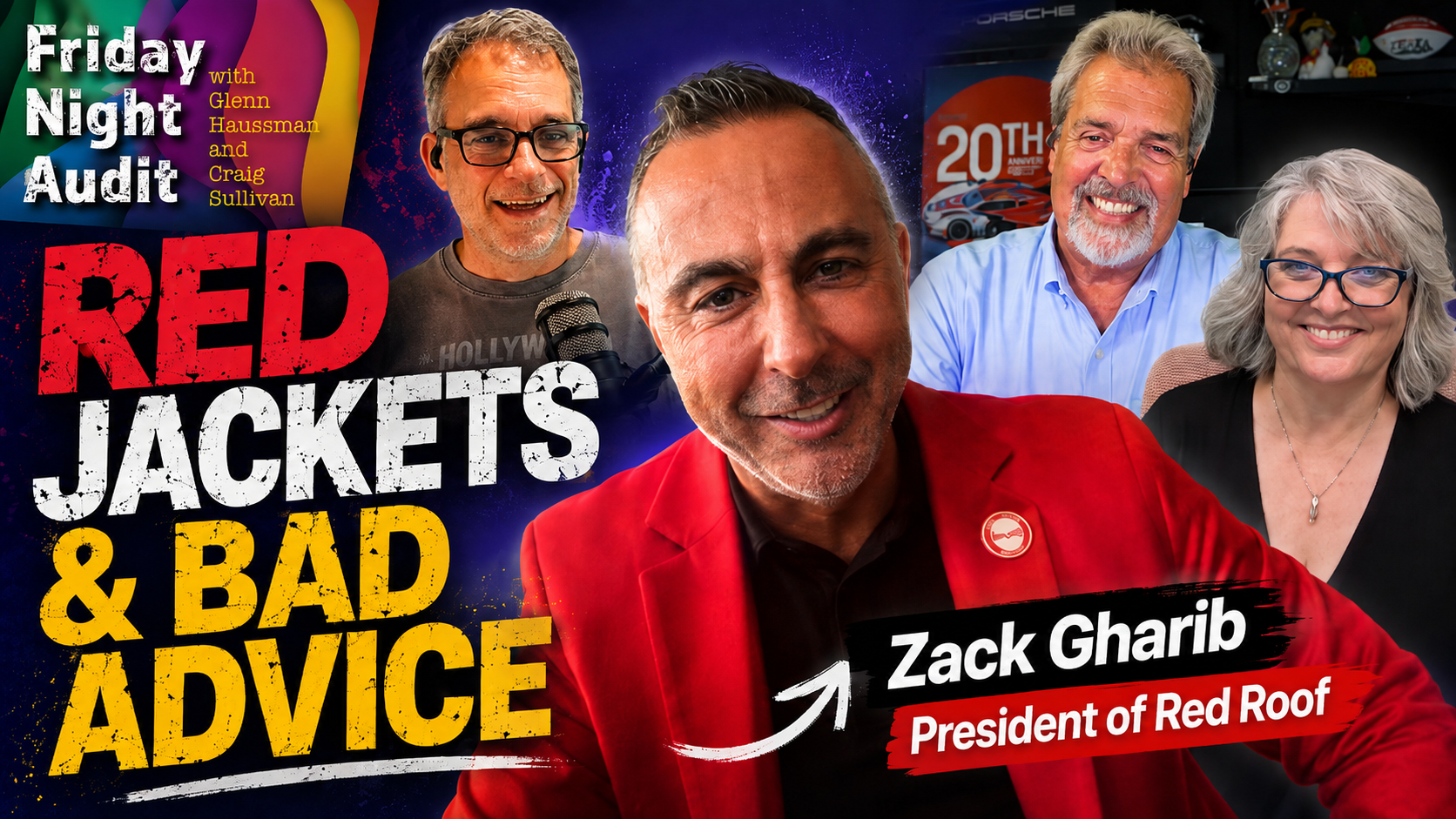
FNA 218: Red Roof, Red Jackets & Really Bad Advice
-
August 13, 2026
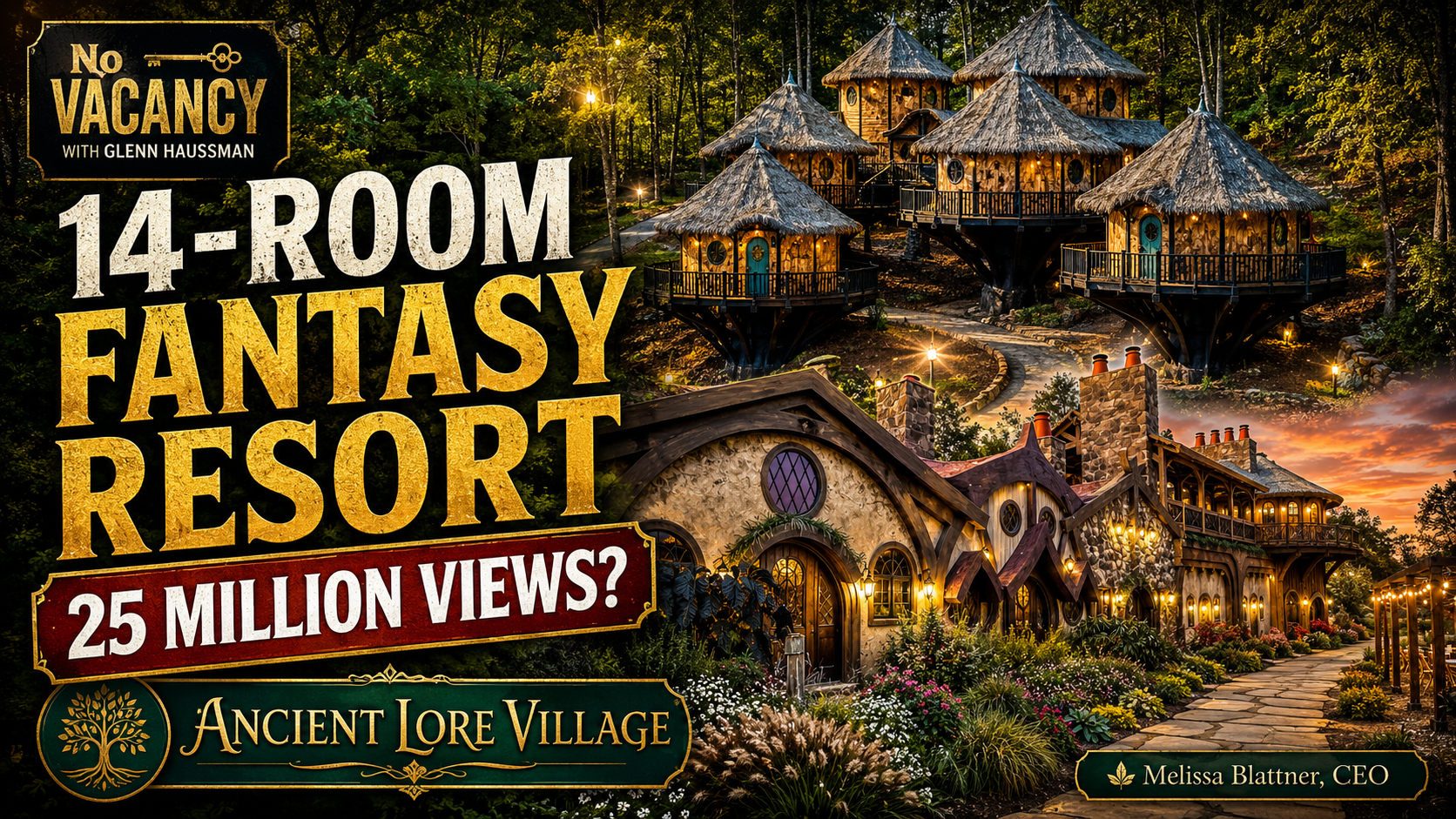
Why This 14-Room Fantasy Hotel Gets Millions of Views
-
August 13, 2026
The Dirty Dancing Hotel Lost Its Lake. Here’s What Happened Next
-
August 11, 2026
SBA Hotel Loans Just Got Bigger: How Owners Access Up to $10 Million

Subscribe