October 21, 2026
Are Hotels Automating Away the Guest Experience?
We’re automating more of the hotel guest experience while travelers increasingly crave technology breaks. Are hotels overlooking one of their biggest competitive advantages?
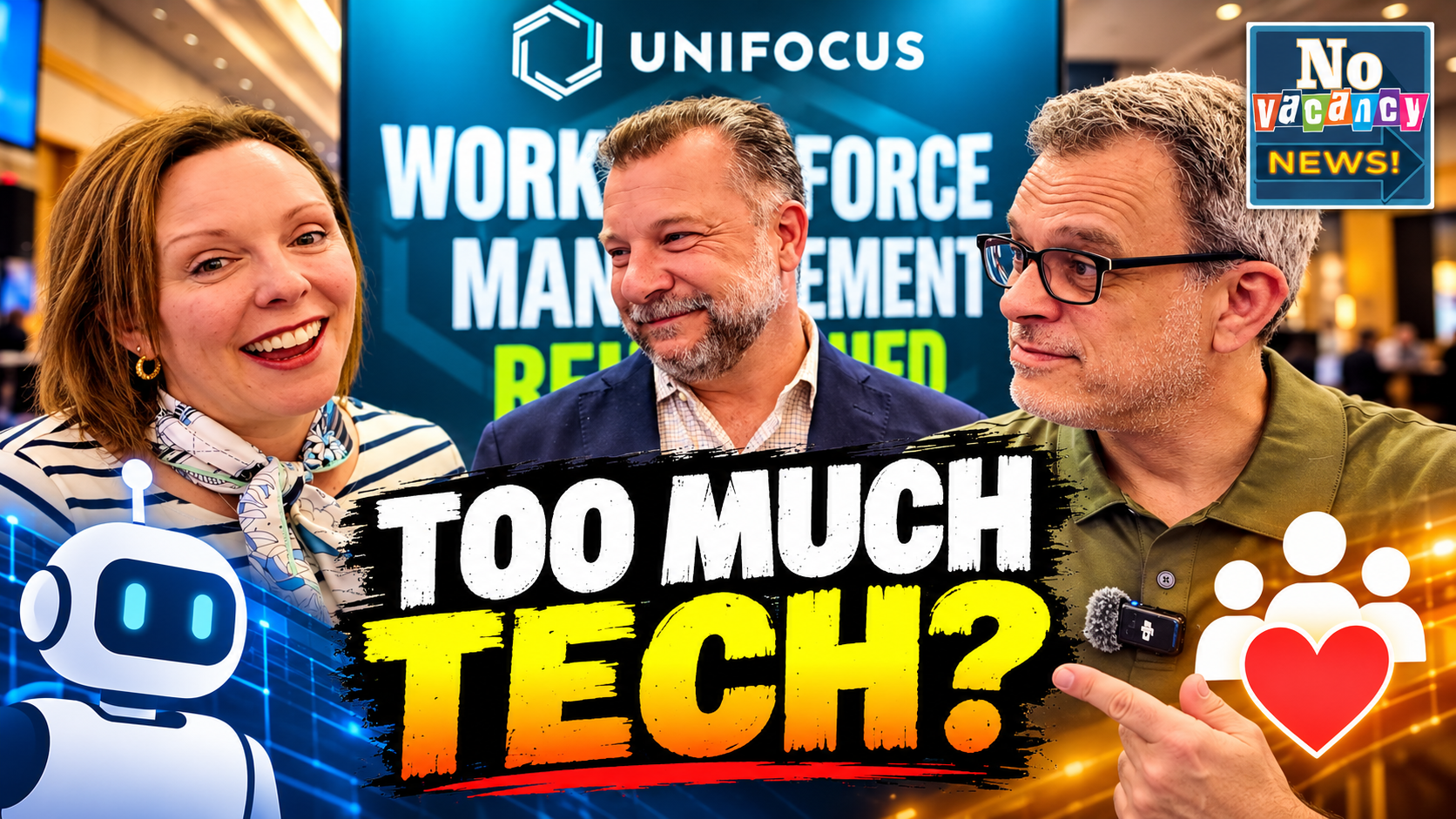
During The Lodging Conference in Phoenix earlier this month, No Vacancy News host Glenn Haussman caught up with Sara Masterson, President, and John Schultzel, Chief Growth Officer at Olympia Hospitality, about the growing tension between hotel technology and human connection.
John shares why guests at an Olympia hotel in Chicago love playing vinyl records in their rooms, while Sara questions whether every new technology investment genuinely improves the guest experience. They also examine why a knowledgeable hotel employee sometimes beats online reviews and AI recommendations.
Plus, Sara explains her approach to automation, employee productivity and protecting the personal interactions that define great hospitality. As hotels embrace AI and digital convenience, are they losing sight of what travelers actually want?
Thanks so much to Unifocus for supporting this podcast. Unifocus: Workforce Management Redefined. Visit unifocus.com.
Want the weekly roundup of news, videos, and what you might’ve missed from #NoVacancyNews? Text HOTEL to 66866.
Transcript
Glenn: [00:00:02] Hey, everybody. It’s your hospitality friend Glenn here at. What was the lodging conference? It’s over now. I’m hopefully home asleep. But before I take a great nap, I want to talk to these guys. But first, I want to thank our friends over at Unit Focus. Workforce management Redefined. Do me a favor, unit focus.com. All right. My friends at Olympia Hospitality. Sara Masterson, President and John Schultze, Chief Growth Officer. Guys, how are you? We’re doing.
John: [00:00:22] Well. How are you, Glenn?
Glenn: [00:00:23] I’m effing tired, guys. Yeah. This is. You know why? Because this event is so much fun, and all of our friends are here, and we really are having a great time talking hospitality shop, right? You know, so I’m curious to you as to what you see going on. These guys have a great management company up in like the main kind of area. Oh, no. Sorry. What are consumers thinking? How are you appealing to them right now? What’s going on in that mindset? And as you know, I’ve been talking about how I think hospitality is still full, full boats ahead, you know?
Sara: [00:00:54] Yeah, I think people are looking for experiences. They want to get away from their devices. They want to get away from their home offices and they want to get out and they want to travel and they want to explore and see things and they want connections. And so I actually think it’s a great time for hospitality operators to kind of remember the basics of our business. Yeah. Great service, great experiences, you know, be genuine to who you are. And that’s resonating for people.
Glenn: [00:01:17] What are the basics mean to you, John?
John: [00:01:19] Well, we were talking about it a little while ago and sort of the more things change, the more things that stay the same, right? And lodging. It’s about hospitality, staffing, engaging with staff, engaging with guests, and doing it in a, you know, earnest, genuine, authentic way. Right. At the end of the day, the toolkit is getting more complicated. The distribution is getting more complicated. There’s all these variables in our business. And yet if you have all the fundamentals in place, success is right in front of you.
Glenn: [00:01:44] So, Sarah, how do you balance all of this necessity to make technological change, to stay ahead of stuff? Say in the consumer zeitgeist, etc., etc., while still making sure that the fundamentals are taken care of.
Sara: [00:01:58] I actually think they’re not, they’re not. They’re part and parcel to one another. So when you look about things like visibility in the LMS, what’s really important is that we manage our basics around marketing, that we are visible, that we’re true to our brand, that we’re messaging appropriately, that we have. You know, we’re back to using public relations as a real form of communication. He’s kind of gone full circle in a lot of ways where we’re actually leaning out of solely technology platforms in order to make sure that we stay visible and kind of reengaging in some of those fundamentals to make to, to communicate with consumers.
Glenn: [00:02:34] And what I love about them talking about the fundamentals is I do think we’re starting to see in general society people feeling stressed out by technology. You said wanting to get away from their devices. I’m seeing it as a coming technological backlash because you know, big data and stuff like that is kind of consuming all of us and we kind of want our lives back. How, John, do you start to play into that shifting mindset to be able to make sure you stay ahead of where the consumer is?
John: [00:03:02] It’s a, it’s kind of a silly example. We were just talking about this years ago. We were watching children who are teenage years kind of getting away from streaming and devices and playing records again. Yeah. It’s crazy, right? We have a hotel in Chicago that really leans into sort of culture and community, and one of the things we hear all the time is I love this hotel. They have record players in the guest room. You can check out albums. I think it’s like really something a lot more fundamental. You can certainly order whatever you want to order from a QR code, but isn’t it nice when you can actually ask the server, like, what do you like more, the chicken or the hamburger like we did the other day? Right. I feel like you want to get consultation from the lodging expert who lives in the space. Where’s the best restaurant? You can sort of do that with your AI assistant, but at the end of the day, it’s sort of nice to get a vote of confidence from someone who lives where they where they work.
Glenn: [00:03:48] Exactly. And then one of the things that I, as much as I rely on some of those things to find what the next nearest restaurant is, I prefer a person because I can’t necessarily trust what all this aggregate reviews are. I don’t know if they actually like food or they like the way I like to eat, right? I’m a spoiled, sophisticated eater. You know, I have different needs. Maybe. So talking to a human being, you sure would understand what my needs are and then be able to cater to those needs in conversation.
Sara: [00:04:14] Absolutely. And so I think that, again, goes back to the fundamentals of hospitality really are around service and execution and connecting with our guests.
Glenn: [00:04:23] Let me let me throw something out that I’m just starting to think about right this second. So forgive me if it if it sounds half assed. So we’re talking a little bit about the yin and yang of technology and analog kind of life. I think that we all embraced all of this technology because it’s new and exciting. But I think after all the Covid years and being so focused on technology, I think our souls are getting tired because we’re not designed to be looking at screens. We’re designed to be out doing things and being with people. And I think we’re starting to realize that on a subconscious level, and maybe it’s a really great opportunity to do what you’re saying, create analog experiences that connect in a real emotional way, that doesn’t rely on technology, but use that technology to simplify the person’s opportunity for better experience. Does that make sense to you, or am I hundred percent? All right. Good.
Sara: [00:05:13] I think technology should reduce friction.
Glenn: [00:05:15] Yeah.
Sara: [00:05:16] Add friction to the experience.
Glenn: [00:05:17] I feel like sometimes with technology, we feel like we have to because we have it as opposed to thinking about how it will make our lives easier. So in that sort of vein, when you’re thinking about incorporating a new technology into what you do, what’s the process you go through to make sure it’ll be actually additive, not add that complexity and kind of bring you closer to customers and hopefully better profitability.
John: [00:05:40] That one’s for you.
Glenn: [00:05:40] Yeah.
Sara: [00:05:41] We really look at technology through the lens of how can we create more opportunity for our team members to engage with guests. So repetitive tasks, back office functions, things that need to be done but don’t really require a human to engage in, right? Great applications for AI technology and new technologies rolling out because what it really does, it’s not about cutting labor or cutting costs. It’s about redirecting that expense that you have toward the guest and toward the team.
Glenn: [00:06:07] Yeah, and I’ve said it a thousand times, or we were still trying to find more people to work in hotels. If we’d been trying to find people for a decade or more, they’re not there. So we need to find ways to make sure the humans that we have could to connect with our customers and not have to do all that boring stuff, right? That stuff probably adds to people wanting to.
John: [00:06:24] And I’ve had this conversation before about the beauty of hospitality is, is the humanity that’s involved. And it makes us somewhat immune to the sort of the long term trajectory of technology and how it influences our lives. I think travel’s been around forever. We’re we’re consummate optimists about that. It’s going to be around forever. And I do believe it’s because of the, the as we sort of have a declining need for humanity, we have a actually enhanced need for humanity. And travel is the best way to do that for sure.
Glenn: [00:06:50] And getting back to our theme of back to basics, when I was blessed enough to do the keynote speech at High Tech a couple of years ago, we showed pictures of hotel rooms and how they really fundamentally haven’t changed from the 1950s through today. Sure, it’s a flat panel TV and the phone might be different, but everything is basically the same, right? And I think we can really lean into that going forward. Sarah. Right.
Sara: [00:07:15] Yeah. I think it’s true. I mean, people are always looking for modern conveniences and our homes and hotel rooms, there’s not a big separation between them anymore. This bar to differentiate strictly on a product level, it really is the experience level that differentiates you.
Glenn: [00:07:29] Remember back back in the day, like 15 years ago, we were all talking about how hotels are going to have more of a residential experience, and you have to give them something that you can’t have at home. But then everyone has a 100 inch TV and everybody has everything. So now you have to kind of think differently on how to compete. And again, that brings back the human element, I think, to it. What’s the secret to making sure you have a great staff that is able to connect with people and really learn and understand what the guests want.
John: [00:07:56] My personal philosophy is that it really hasn’t changed. I’m going to keep using the word humanity. Yeah. As employers, you know, that is the ultimate personal connection. We see guests for a day, a week at a time, but our staff members are our permanent relationships, hopefully. And they are the sort of the welcome, the welcome mat for everything that happens in the building. So we sort of always viewed the relationship we have with our team members is somewhat sacred. It involves just a lot of genuine commitment to the individual. And I think the themes that people know as employers are the same. Does my manager care about me? Yep. There’s wages and there’s workflow and whatever, but it’s recognition for a job well done. How do we have a coaching counseling conversation that actually feels like you’re trying to make me better instead of put me down? That’s right. And I think how you apply that voice, how you use a value system to engage with people, and then how you live up to the expectations you set for those folks is sort of where going back to authenticity. You can tell if an employer is a good employer or they just say they’re a good employer.
Glenn: [00:08:57] Yeah, a lot of people definitely say that. Sarah, take us home. How about a good final thought?
Sara: [00:09:02] Good. Final thought is keep traveling. It’s there’s so much to see out there. It’s such a great time to be out and exploring and, and connecting with people who have different views and different lenses and different perspectives. Like that’s really important part of what we do.
Glenn: [00:09:15] Yeah. It is. Get out there. Have fun. Thanks so much for watching. Please like, share and subscribe. Let me thank InFocus again. Workforce management redefined. John. Sarah. I’m Glenn. See you later. Bye, everybody.

More Episodes
-
October 21, 2026
Why Aren’t More Hotel Deals Getting Done?
-
October 21, 2026
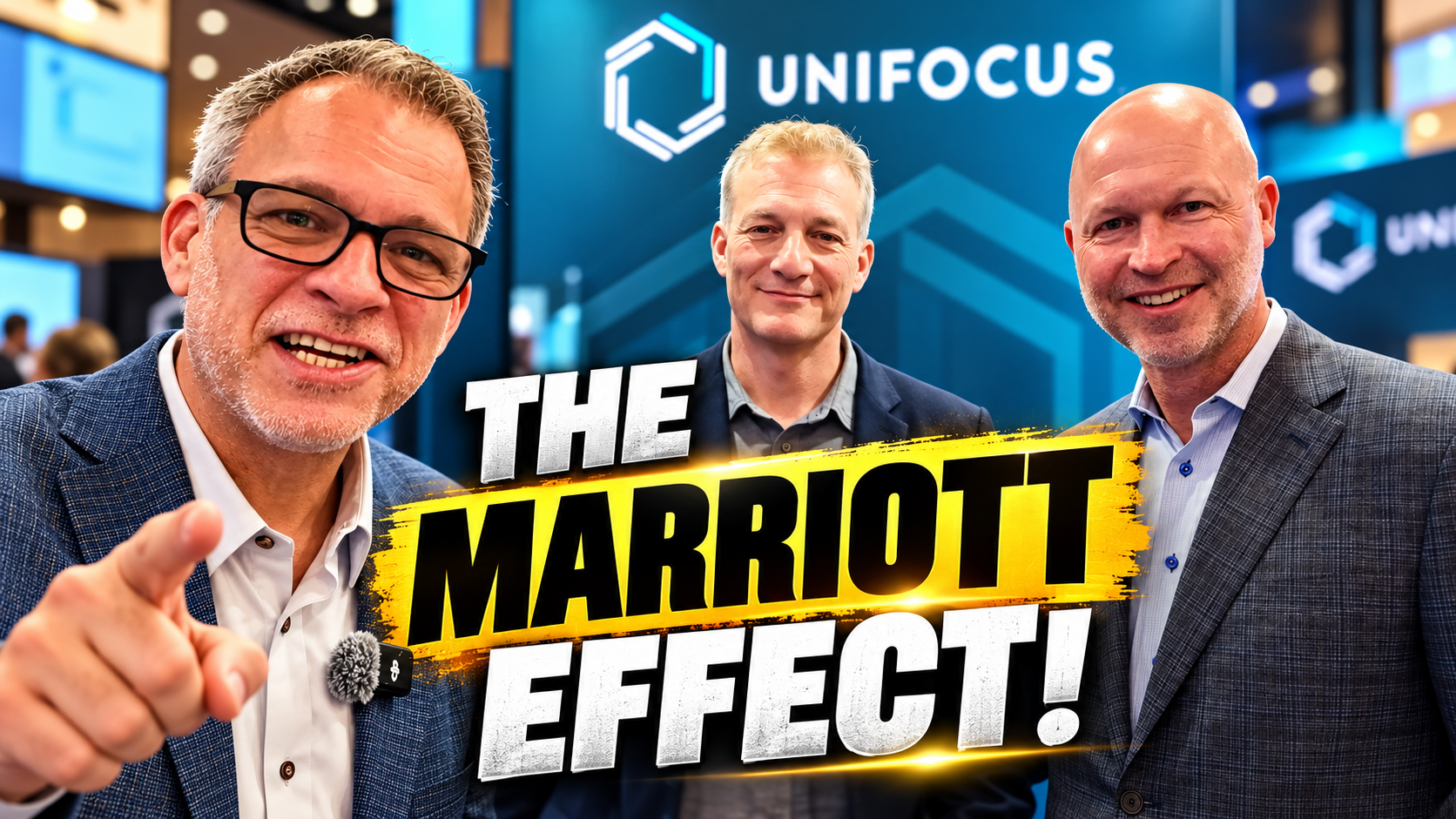
What Happened When This Independent Hotel Joined Marriott?
-
October 17, 2026
FNA 222: Hospitality Avalon
-
October 16, 2026
How My Place Hotels Makes Small-Market Hotel Development Work


Subscribe