July 7, 2026
The Luxury Boom Is Reshaping Where Operators Are Betting
Your mid-market property is about to get a neighbor it didn’t expect.
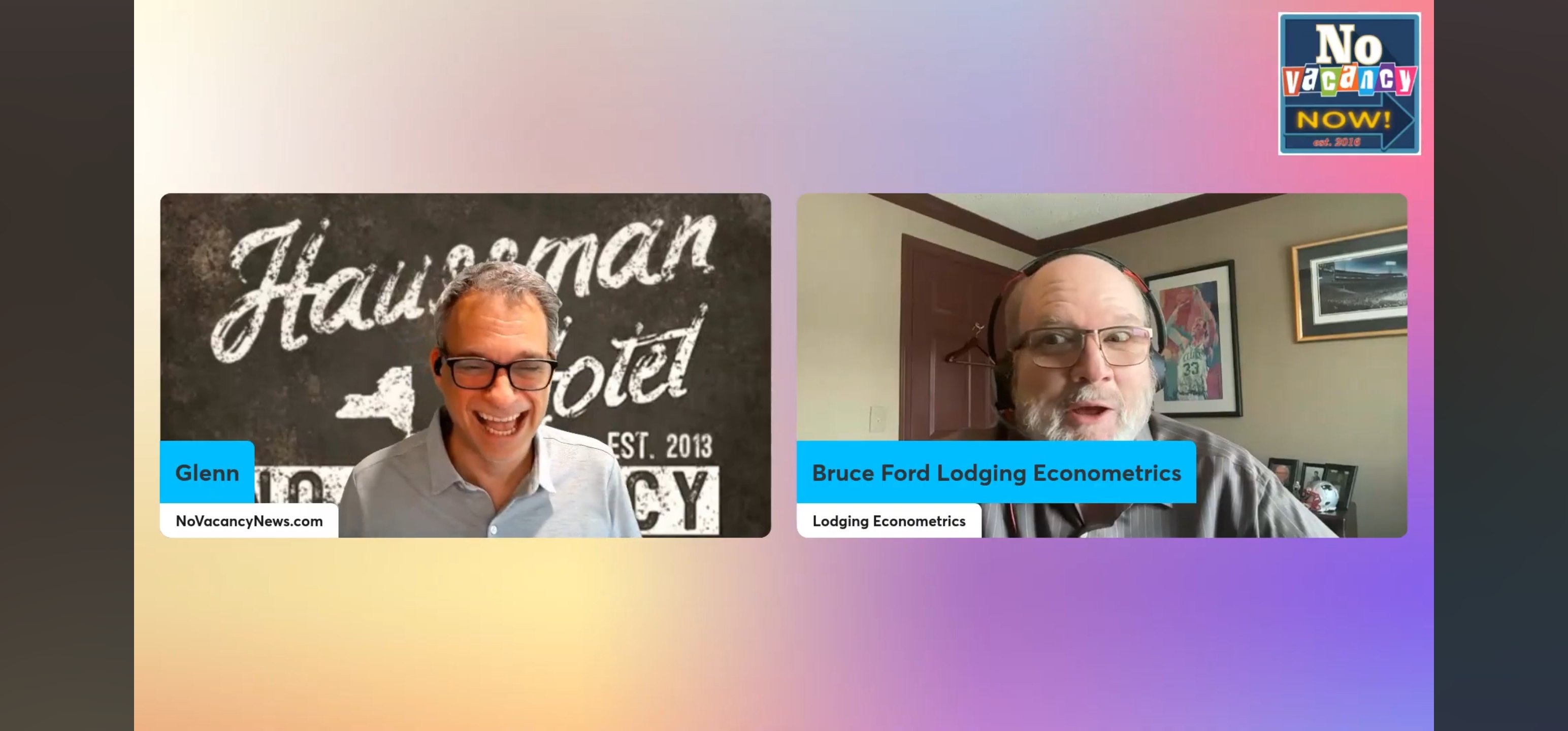
Bruce Ford, SVP of Lodging Econometrics, told Glenn Haussman that luxury used to be exclusive, expensive to build, hard to convert. Not anymore. Brands are loosening their grip. Third-party operators are moving in. Mid-market properties are being stripped down and rebuilt as five-star, with new tech and new standards. And they’re happening fast.
Once a guest stays at the converted property next door with better itinerary management and a total customer value strategy, they’re not coming back to yours. Bruce walks through the pipeline — where the money is actually flowing, why 158 luxury conversions are in motion, and why your market might be next.
China has three to 3.5 times more luxury rooms under construction than every other country combined. The Middle East is accelerating. New Orleans went from one luxury hotel to seven on one street. This isn’t coming. It’s already here.
Visit lodging econometrics.com/global insights.
Want the weekly roundup of news, videos, and what you might’ve missed from #NoVacancyNews? Text HOTEL to 66866.
Transcript
Glenn: [00:00:00] Hey, everybody. It’s your hospitality friend. Glenn, thank you so much for tuning in. I’m excited to have you here today because today we’re going to be taking a look at that luxury hotel pipeline. What’s going on? How’s it changed? How does that set against the backdrop of what guests expectations are and all of that kind of fun stuff? But we couldn’t do that without our friends over at Actabl. Actabl, they give you the power to profit. Please visit actabl.com, actabl.com. So we got our one and only friend, Bruce Ford, SVP of lodging Econometrics over here. Bruce. One day maybe I’ll have other friends. But right now, you satisfy all my friend needs because you bring so much great information to this show.
Bruce: [00:00:37] I’m overwhelmed. Glenn. I’m not even sure what to say. You have left me speechless.
Speaker 2: [00:00:43] Yeah.
Glenn: [00:00:45] It’s so great. It’s so great to see you and Bruce over the last couple of years, it really seemed particularly well. Sorry. Let’s go back because we got we’re in Covid time. Since Covid luxury seems to have really exploded in a way that we haven’t seen. And I think there’s a lot going on and a lot of factors at play. So I’m going to just say, tell me and I’ll shut up now for the next 15 minutes, I think.
Bruce: [00:01:10] Well, you have your own luxury opinions, Glenn. And most of the time when you’re looking at luxury today, it’s looks very different from a landscape of what it used to be. Okay. And luxury has attracted a lot of investment dollars, and largely because their revenue has been stable and growing at rates that are faster than any other chain scale. Secondly major branded luxury properties have gotten smaller and a little bit more manageable in terms of size and scale. We’re getting urban resorts now for types of properties. We’re getting lifestyle luxury, which lifestyle was really kind of a four star thing, but it’s very much a five star thing now too. And then we’re also getting these branded residences that come out a number of different ways, from Ritz Carlton ships to, you know, stand alone residential projects under Ritz-carlton’s name. Those types of things were not as common, not nearly as common in America ten years ago, 15 years ago as they are today. Right. So you can get a a different feel for that. Okay. Looking over the landscape in other markets outside of America, because in Asia, that’s been the case for a long time. Okay. Right. And in some of the resort destinations and other places in the world, that’s been the case for a long time also.
Glenn: [00:02:50] So I remember back in the day, just so everybody knows the notion of luxury is much more elevated than here. You would have mid-market brands here in the United States that would be much more luxury, feel and vibe, particularly with the services and amenities they have. So it’s a very kind of different world over there. For lots of time now, it feels like all the major brands and all the new emerging super luxury brands are kind of taking over.
Bruce: [00:03:16] Yes. And we’re getting some of those international brands coming to America for the first time. So you know, obviously many of those global banking destination cities is kind of a place where you start, you think Singapore, you think Shanghai, you think Hong Kong, you think London you think Paris, you think Brussels, you think Munich, all of Frankfurt, all those types of places. Those are international luxury destination cities. Okay, obviously, you put New York in there, you put Los Angeles in there. But now you start talking about markets like Phoenix and Las Vegas, right? And even the South Padre Island in Texas has luxury developments. New Orleans has more luxury hotels than they’ve ever had. Traditionally, in New Orleans, there was 1 or 2 luxury hotels on Canal, and then there was a lot of boutiques. Now there’s like seven luxury hotels on canal. So everybody wants to be there. Okay. Right. So that’s a changing landscape and it’s really just a larger inventory of luxury. So we’re continuing to see people invest in that. We have new construction for luxury in the United States. It’s really about 15% of the total overall. So luxury happens much more outside of America. But we’ll show some of those comparisons for renovations and conversions. Again, this is taking existing inventory and bringing it up to the luxury level, perhaps adding additional amenities, bringing a fine, unbranded property into a luxury brand through conversion is something that is really taking hold across the United States, and it’s a way to grow some of these brands quicker and faster. So we may not have ever seen that before. And I think some of the loosening there is the brands and are allowing individual third party operators in more cases also.
Glenn: [00:05:20] Right. It used to be like I, it probably still is, but like Ritz Carlton must be operated by them kind of a, of a deal.
Bruce: [00:05:27] Not always the case now.
Speaker 2: [00:05:29] Right.
Glenn: [00:05:30] I wasn’t sure of that, but. Yes, but it used to be like that. So now it’s a particular good good example of loosening of of that. Because there’s a lot of great management companies that really understand how luxury products work these days. And I would argue back when our career first started in the late 1990s and the whole hotel investment business really started to take off, they didn’t necessarily have that skill set. Right. So we’ve seen a lot of change over these last few decades that have kind of led us to that higher luxury. But how are we seeing actually with the pipeline over here, Bruce?
Bruce: [00:06:05] So on the construction pipeline or the first column here that’s showing the new construction projects that are in the pipeline in the United States that would commonly be referred to as luxury branded. And then the unbranded projects are what they say about themselves. So we would place them into a five star category. And we’ve listed casino here because there are certainly some elements that replicate and in many casino developments today, you’re talking a lot of food and beverage. You’re talking a lot of convention space. You’re talking number of tiers of guest rooms. So we thought that the comparison comparable.
Glenn: [00:06:42] So casino just is the broad strokes of casinos. So it could be the hard rock in Vegas. It could be a a quality expansion of, of a Native American casino somewhere in across the.
Speaker 2: [00:06:55] U.s. but.
Bruce: [00:06:56] We’re still seeing most casinos come out at the four star level, at least a portion of the inventory at that level, I think. Yeah, you gotta have some of those rooms. I mean, certainly you want to have some economically affordable rooms, but you and I both know when you go to a casino resort on the weekends, they want to have a product. They can charge 5 or $600 a night for people that want to stay there. And then they have that whole top tier underneath that too. Yeah. That’s right. And they’re also getting a lot of entertainment venues there too, as, as part of that. And in some cases, you’re even getting brands at the casinos. So Resorts World would be an example of that. And of course we have the Mandarin at Aria and we have a number of different branded assets that are considered luxury on the strip too. So what.
Glenn: [00:07:52] About.
Bruce: [00:07:52] Globally? So on the global side, you can see the total construction pipeline really accelerates globally. Again, this is focused around the Middle East. It’s focused around Southeast Asia. It’s focused around China. China has 3 to 3 and a half times more rooms under construction than any other country in the world. So as a result, they have a lot of luxury. They always have. And the rate elasticity is very good there. From a casino construction perspective, you can see most of that is occurring in the United States. 41 of the 55. Yeah.
Glenn: [00:08:29] You got notable projects like the MGM project in Japan, and then you’ve got Wynn Al Marjan in the Middle East as well for a couple.
Bruce: [00:08:39] Correct. Yep. Yeah. So then on the conversion side, you can see 158 other luxury projects coming in through conversion. And that’s significant. About two thirds of that is in the United States. And again, this is conversion brands coming out that are seeking locations quick and fast and hurry up. And with transactions heating up in the United States, I only expect that number to keep growing. So it’s something that where we have a conversion coming into a large franchise company for the first time. There’s new standards, there’s new expectations, there’s technology investment, there’s guest facing technology investment, and there’s worker technology as well too. So they’re able to deliver some services through the new tech that would have been hand to hand services before that now can be delivered almost with very, very limited human interaction, which is.
Glenn: [00:09:42] Yeah, that’s true because I don’t think people at a mid level scale hotel and the luxury level hotel scale, if they want a text to get their pillow, they care. They don’t feel like that’s taking away from the service. If that’s what they initiate and want to do.
Bruce: [00:09:57] And it can be as simple as just knowing the guest and managing their itinerary for them, and making sure you’re capturing as much revenue inside of the property gates as you possibly can. The last thing you want them to do is leave.
Glenn: [00:10:13] That’s right. You got to get in that total customer value mindset over there. Right. Bruce.
Bruce: [00:10:19] And many of these management companies are getting better and better in that at every day. And tech has a big part of that. Software has a big part of that, engaging the booking at the time that it’s made, and not just accepting the room night, but saying, what else can I do for you? And, and you can do a lot of that through technology and kind of encouraging and prodding the guests to continue to give more information about what their intentions are for their travel.
Glenn: [00:10:45] And then create the right type of offers at the right time. And Bruce, you’re very good with helping people at the right time. How can we learn more about what’s going on with you?
Bruce: [00:10:55] So Lodging Econometrics will be publishing new forecasts coming up at the end of July. You can always visit our website, lodging econometrics.com/global insights for our latest publications, and visit us on LinkedIn and Facebook and Twitter as well. It’s a dynamic time in the industry. I think people are feeling pretty good about what’s been happening with the World Cup. And of course, as the knockout rounds begin, it’s has been pointed out by many consultants. This is a change in hotel demand because the higher end guests are the ones that are coming now who just really want to do the experience for a few days and they don’t mind paying and they want to see their team win. So going to be more of that. I think the performance will, will echo that. And we, I think we need an interview with our friend producer Dave on how that’s all going.
Glenn: [00:11:51] Oh, yeah. We should we should do that. Dave he’s been hiding out in the bunker, but he actually runs a a major hotel near a major World Cup venue and also a major airport. All right, everybody, thank you so much for being here. Bruce. Thank you for being here. Please be sure to like, share, subscribe wherever you get your shows, all of that kind of good stuff. Love you all out there. Remember, you’ve got one life. So blaze on and Bruce, say goodbye to everybody.
Bruce: [00:12:14] Goodbye, everybody.
Glenn: [00:12:16] See you later.

More Episodes



Subscribe