March 2, 2026
Global Hotel Pipeline: What Brands See vs What Owners Feel
Global hotel conditions matter most to the major franchise companies. Most owners still live in a street-corner reality: debt terms, operating costs, and what they can execute on one property.
Glenn Haussman talks with Bruce Ford (SVP, Lodging Econometrics) about global economic pressure and what the worldwide hotel pipeline says about where brands and owners place their bets next.
Inflation and cost pressure (including hotel operating costs up ~25% since the start of the pandemic)
Debt/rates and why the math still slows deals
Why renovations and conversions dominate globally (about 2.5x more than rooms under construction)
Brand standards vs owner ROI pressure (revenue per square foot)
Why the global pipeline matters more to Hilton/Marriott/IHG than single-asset owners
Thanks to Actabl for supporting this episode. Actabl gives you the power to profit. Visit Actabl.com.
Transcript
Glenn: [00:00:00] Hey, everybody. Hospitality. Friend Glenn here. And yeah, we’re going to be talking about the numbers or should I say the numbers, because I got our friend Bruce Ford, SVP of Loddging Econometrics back over here on today. But first, before we bring him in, our friends over at Actabl, they give you the power of profit. Please check them out at Actabl.com. All right. Here. That is the one the only resource. Hey, buddy. ow are you doing?
Bruce: [00:00:24] So you’re starting to sound a lot more like Jerry Daley. You know, he changed the spelling of my last name to f a w d yeah. Justified.
Glenn: [00:00:37] That is true. So it’s great to see you. And I’m really happy we’re going to have this conversation today. So for you folks out there going to be talking about the global pipeline, but we’re not going to get into a lot of the specific numbers. We’re talking about overarching premises for a lot of this. And we’ll just get into some numbers for some of the major hotel brands, because quite frankly we could get stuck all day parsing over some of the data. We want to give you actionable insights you could take away. But you know, Bruce, I’m feeling like I know you very well, but maybe there’s some people that don’t quite get what you and your team over at Lodging Econometrics do. Why don’t you have 30s on what you all are up to over there?
Bruce: [00:01:18] So we’re processing information every 30 days from all of the major franchise companies, in addition to our regular tactics of working with the owners and management companies and the project team members to recertify and reverify the pipeline on a regular basis. So if you’re a subscriber to Lodging Econometrics, the database actually refreshes every single week. Oh, cool. So it constantly is in a state of update, but it it’s live every Friday morning if you will. And that has really led to some great opportunities for many project team members out there or product suppliers, but also for the owners and management companies. The data doesn’t sit dead in the database. We process it all the time.
Glenn: [00:02:11] All right. So based on you’ve been processing and processing and I like process what’s going on in some of the big picture stuff with the the economy and all that kind of stuff. Have that.
Bruce: [00:02:21] Did you talk about inflation yet, Glenn?
Glenn: [00:02:24] No, I haven’t really been talking about inflation, but it’s been something we’ve all been suffering with over here mostly. Yeah. Go on.
Bruce: [00:02:34] It basically costs each American family about a thousand more dollars to live in America this year than it did last year, and that’s just a result of costs rising on things you buy every day. That has nothing to do with taxes. It has nothing to do with income. It has everything to do with.
Glenn: [00:02:56] With beef, coffee, you know all the stuff that we we enjoyed here on a day to day life. I’ll tell you. Try buying a new car. These days, it’s. It’s gotten really, really expensive.
Bruce: [00:03:08] Right. So in case you didn’t know. To run a hotel cost 25% more today than it did at the beginning of the pandemic.
Glenn: [00:03:19] Oh my goodness. And of course, some of that is probably labor. But a lot of it really is the price of goods and services that have increased to 100%.
Bruce: [00:03:28] So when you go to a suburban hotel and they say charge for parking, well, that’s some of it. Okay. The hotels, it’s way more expensive to run it today than it was. So when it comes to kind of credit and debt and and how are we surviving out there with that? Okay. Just a report yesterday that said, for the first time since 2022, the 30 year average annual mortgage interest rate was under six. Yeah.
Glenn: [00:04:02] Just saw that article Yesterday morning.
Bruce: [00:04:05] So that’s not commercial debt. But that’s you know, if you want to buy a home. But yeah that’s a positive sign. But still it’s too high. Okay.
Glenn: [00:04:14] Actually I was actually really surprised to see that. But it’s not only it’s not only that that’s the problem, it’s just that the price of homes, for example, are really inflated, that young people can’t afford them either. I’m not quite sure why that has to do with the hotel business, but it is a fact.
Bruce: [00:04:30] So the interest rate on your debt is obviously part of the math problem in terms of acquiring a hotel. It’s part of the math problem in terms of renovating a hotel, converting a hotel. Yeah. So we have two and a half times more renovations than conversions that are active across the world than we do new construction and even in this market. Okay. It’s really about working the operating properties because it is easier to finance cash flow, and that’s a result of operating performance being stable.
Glenn: [00:05:08] Right?
Bruce: [00:05:09] Okay. That’s a great word to use around the world right now.
Glenn: [00:05:12] Stable.
Bruce: [00:05:13] Stable.
Glenn: [00:05:14] Particularly since there seems to be a lot of things out there that could make us feel like things are not stable.
Bruce: [00:05:22] Yeah, but we’re still going to hotels, we’re still traveling. We’re still providing ourselves the luxuries we’ve always enjoyed. The people that have are traveling more. The people that don’t can’t, but the people in the middle won’t be neglected, won’t be left behind or however it is. You want to say it. Glenn.
Glenn: [00:05:44] Yeah. That is that is true. So Bowden over here, and.
Bruce: [00:05:49] We won’t be left behind, Glenn. Because they announced a bunch of new brands already this year, and we’re supposed to hate all of them, right? I mean.
Glenn: [00:05:58] Yeah, that’s only because we’re aging out of that.
Bruce: [00:06:01] Those demographics certainly are, but brand conversions are a real thing. Boutique lifestyle. Wellness. All those. Those are the three biggest words today. We’re still doing new brands. The fourth word would be extended. Stay. We’re still doing new brands and we’re going to have some more new brands. Yeah. But again, two and a half times more renovations than conversions active today than rooms under construction for new hotels.
Glenn: [00:06:36] I know if you’re thinking about it, the obvious answer is because interest rates have been higher, people converting hotels. But it’s more nuanced than that. In previous episodes, we’ve talked a lot about how a lot of franchise contracts are coming up. It’s a natural time in the cycle to reevaluate what your flag is going to be. Plus a lot of properties have changed hands, and that’s a good opportunity for changing flags and all of that as well. Right.
Bruce: [00:07:02] Fair enough. Glenn. I mean, when when a hotel reaches that kind of critical age of 16 to 18 years old. You have to figure out what you want to do with your life. It sounds like when we were teenagers and we needed to figure out what we wanted to do with our life. It’s same thing 16, 18 years old.
Glenn: [00:07:21] Yeah, man. Speaking about one of your.
Glenn: [00:07:23] Teenagers, though, I saw things as very black and white, and I didn’t realize that there’s a lot of nuance and stuff like that, and that’s kind of what I’m trying to get across today. Or I should say, we are trying to get across today. If you look at something and it seems obvious, there’s peel back those layers and there’s obviously a lot more that goes into any single variable that we’re looking at, and we might not be able to go into depth on all of them. So how are owners feeling, our brands feeling and all that kind of stuff?
Bruce: [00:07:52] So owners are trying to make sure that they are getting every revenue dollar out of the square footage that they own. Yeah. Number two the brands are pushing back on renovations and conversions and CapEx. And we’re not we’re holding fast. You have to do that. We no more extensions, all those types of things. And obviously that leans into the tariff slash supply change slash.
Glenn: [00:08:24] So what we’re talking about is over the last five or so years, a lot of properties have been coming up their natural cycles where they need a property improvement plan to maintain the standards within the brand. But the bridge is really very good. And they got behind the owners and operators, and they said because of Covid, we’ll let this go on a little bit more. We know he got financially punished. Now, unfortunately, things are so much more expensive. The brands are in a position where in order to maintain brand integrity, they have no choice but to kind of push these renovations now. And that loan might be enough of a grease to get people to start doing transactions and kind of change the whole market. As well as another factor.
Bruce: [00:09:05] The negotiating these brand terms going forward is also changed as a result of the amount of brands that the franchise companies now control in a given marketplace. It’s really changed the dynamic quite a bit. So there’s lots of fluency to that in terms of where we’re going. And Glenn, I’m looking forward to discussing this with you in Atlanta.
Glenn: [00:09:32] Yes. Where we will be for the Hunter Hotel Investment Conference. And I guess Bruce Gordon’s finally committed to going. And I’m glad to learn that in real time with all of you. But how how are the brands doing, my friend?
Bruce: [00:09:45] Well, so this is a select list of top full service brands with their pipelines across the world. So we’re showing total new construction, total conversions, total development pipeline. And then what’s going to open this year. Glenn, did you realize that there are 120 Intercontinental Hotels in the pipeline.
Glenn: [00:10:11] I did not realize there are 120 countries.
Bruce: [00:10:15] They are the only luxury brand on this chart. Everything else is upper upscale, but they actually are third in full service and first in luxury. And it’s not close. What Intercontinental is a brand is doing is really going to change luxury because, well, they’re going to have more locations than anybody and it’s probably going to be by two x. Wow. And really quite striking. And and a new understanding for me. So we have two collection brands on here. We have two mainline standard brands and and and Intercontinental obviously the flagship for IHG. But you have a traditional Hilton, a traditional Marriott IHG and then Autograph is Marriott and Tribute is also Marriott right.
Glenn: [00:11:21] Yeah. Moving on.
Bruce: [00:11:25] So here is the next six or the next five if you will. Okay. Again J.W. being luxury. But the remainder of these okay are quote with Indigo is a unique brand, obviously kind of the first one out there with kind of lifestyle. And Sheridan mainline brand. But again, a lot of remaking going on with Sheridan, 69 new construction projects across the world.
Glenn: [00:11:57] Significant that is that is significant for a brand that in the last 15, 20 years hasn’t historically been at top of mind for the average consumer. I would say.
Bruce: [00:12:11] Well, yeah, particularly in America. And, you know, now there are more markets opening up for Sheridan that have just had a long time, long term location that is now not so now 40 year old hotel and selected the 20 year old hotel right.
Glenn: [00:12:28] You know we typically with these we try to hit that 15 minute mark. But I think we’re going to go over that. And I’m okay with that Bruce because I want to I want to dig a little bit deeper into something here and then continue. I want to go back to this intercontinental luxury notion over here. Right. How much is it because Hilton and Marriott might have been ahead and already have some of that distribution. So therefore they can’t develop again, necessarily versus intercontinental maybe having more opportunities with locations to develop. I’m just trying to get a little bit of sense of where people were and what it’s actually the reflection of the overall strategy for each of those respective companies.
Bruce: [00:13:11] Well, there’s 2 or 3 things to read into here. First of all, Intercon is a luxury brand. Marriott and Hilton are upper upscale. So that’s the first thing. So in a luxury brand, typically the more selective on the markets that you go to because they have to have higher.
Glenn: [00:13:30] Ritz-carlton will already be in X amount of cities where maybe Intercontinental is not. I’m curious if that notion that I’m making up in my head now is correct.
Bruce: [00:13:41] Ritz-carlton is going to have half of the locations that Intercon does if they build out that whole pipeline.
Glenn: [00:13:49] Oh, so then then I’m completely off base. So then this is really so what’s going on? Intercontinental is able to close all of these deals where some of the more traditional luxury players that we know have not been able to do that.
Bruce: [00:14:04] I think it’s 2 or 3 things. I think the first thing is, is that they are underdeveloped in some Asian cities. So they have Asian markets their under developed in the United States too. And so they’re looking for more locations and have more locations. Also you’ll notice the project size is a little bit lower. Okay. In terms of the size of the hotel. So Intercon has taken more of a position of it doesn’t have to be a 400 room, full service luxury hotel. It can be 180 rooms. And some of those smaller platforms with some of their other brands. Six senses being one of them. Vignette. Couple different ones with the vignette collection as well as the latest one that they put out, they continue to look at kind of these smaller platforms that maybe provide a more luxurious and exclusive experience versus going up and down 35 floors of a hotel.
Glenn: [00:15:15] Yeah. It’s totally. I like I like that, and it’s got me thinking. I’ve got an interview that’s dropping. I think just after we’ll run this conversation at the about the Boca Raton, I spoke to the president and CEO of there. They’re celebrating the 100th anniversary. They just did a massive reinvention over the last five years. But the 1000 room property. So they broken it into different concepts. So that way they can have that 200 room luxury concept and really go full throttle on that, while then building other types of business and having certain rooms geared towards the convention market and all of that. I thought that was an interesting approach to be taking as well.
Bruce: [00:15:56] Well, that is that’s work in the building. Okay. And that is figuring out how to maximize the revenue, because traditionally, in a luxury hotel, when you and I started in the business 30 years ago. Yeah, luxury hotel occupancy was like 59%. Okay, but the rate here and there are so many fewer of them. The rate was through the roof, though, because people stayed at luxury hotels when they expected service and security. Okay. And we lost that a little bit since the beginning of the cycle or since the beginning of our time in the industry and now it’s kind of starting to come back. And so that exclusive don’t have to go up 35 floors to get to my beautiful suite. I can walk up five stairs. Is a real thing now.
Glenn: [00:16:54] Yeah. Yeah, totally. All right, so moving on to where we were.
Bruce: [00:16:58] So we’re going to go to select service now. Glenn. One more. So again, the select service being a combination of a variety of different types of brands, but really upper mid scale upscale and mid scale. Okay. And running these two things together. So on this page you have one extended stay brand that’s sticking out which is home to suites.
Glenn: [00:17:26] Wow to a 740 projects.
Bruce: [00:17:30] Right. Right. But the size of the properties are a little bit smaller than even a Hampton Inn. Okay. So they’re so they’re doing some of these together with another brand. And this is a direct result of the dual brand situation.
Glenn: [00:17:46] A lot of times we see them paired with trues for example.
Bruce: [00:17:50] Correct.
Glenn: [00:17:51] Yeah.
Bruce: [00:17:52] So I’m amazed.
Glenn: [00:17:53] I’m amazed by this number. Total Hamptons as well. Bruce Ford really showed to me that they’re really increasing around the world because as we talked about in a previous episode, there’s one like within 30 minute drive everywhere. America already. Right.
Bruce: [00:18:09] They’re going everywhere across the world. So it’s Hampton by Hilton, okay. Across the rest of. Yeah, man. And here we just call it a hempelmann. Yeah. But in this particular case, this is an update as of the year end, 2025. This would reflect what the brands have said about themselves. Yeah. Okay. In terms of hotels that are converting into their brands for the first time and then the signings that they have out there in the marketplace across the world aggregated.
Speaker 4: [00:18:42] Yeah. What do we got over here? We got number six through ten.
Bruce: [00:18:45] Yeah. So we’ll take the next in the next five if you will. And again this is dominated by Hilton and Marriott Knights. Yeah okay. Yeah. The remaking of the Holiday Inn brand. Glenn, look at that.
Glenn: [00:19:00] Awesome.
Bruce: [00:19:01] 230, you know, over 220 new construction Holiday Inns across the world. I don’t think we’ve seen that in our professional lifetime.
Glenn: [00:19:12] I couldn’t tell you, but you can because you’re the expert on the numbers. So I.
Bruce: [00:19:15] Can. And I will tell you, we haven’t seen it in our lifetime.
Glenn: [00:19:21] Well, that is incredible to me. That’s that’s pretty awesome. You got such great information here. Unbelievable. I want to I want to learn more.
Bruce: [00:19:30] Well, Glenn, we’ll give you anything else you need. Again as Glenn alluded to earlier, I will be in Atlanta for the Hunter conference. Great. It’ll be wonderful to see everybody. And the insights that we provided today are just the scratch of the surface for what is available. Please feel free to visit Lodging Econometrics, Global Insights, but also you can reach me at the contact information below. And I’m happy to assist you with your strategic plans for 2026.
Glenn: [00:20:03] Excellent. And my strategic plan for 2026 is to hang out at the Hunter Hotel Investment conference. I feel like everything else. Well, we’re.
Bruce: [00:20:11] Gonna do that, baby.
Glenn: [00:20:13] Alright, everybody, remember, you got one life. So blaze on and we’ll see you next time. Ciao, everybody.


More Episodes
-
August 15, 2026
FNA 218: Red Roof, Red Jackets & Really Bad Advice
-
August 13, 2026
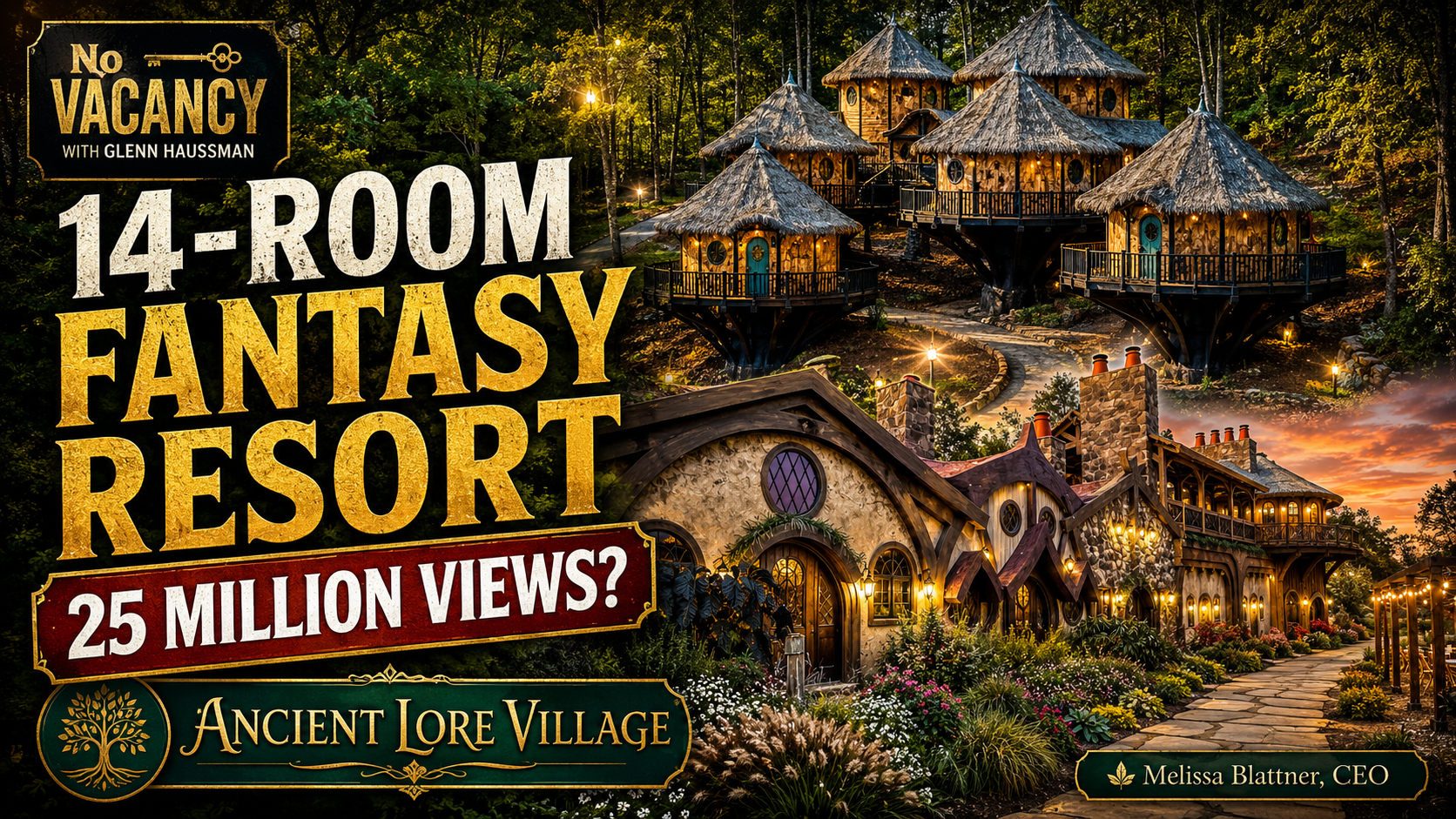
Why This 14-Room Fantasy Hotel Gets Millions of Views
-
August 13, 2026
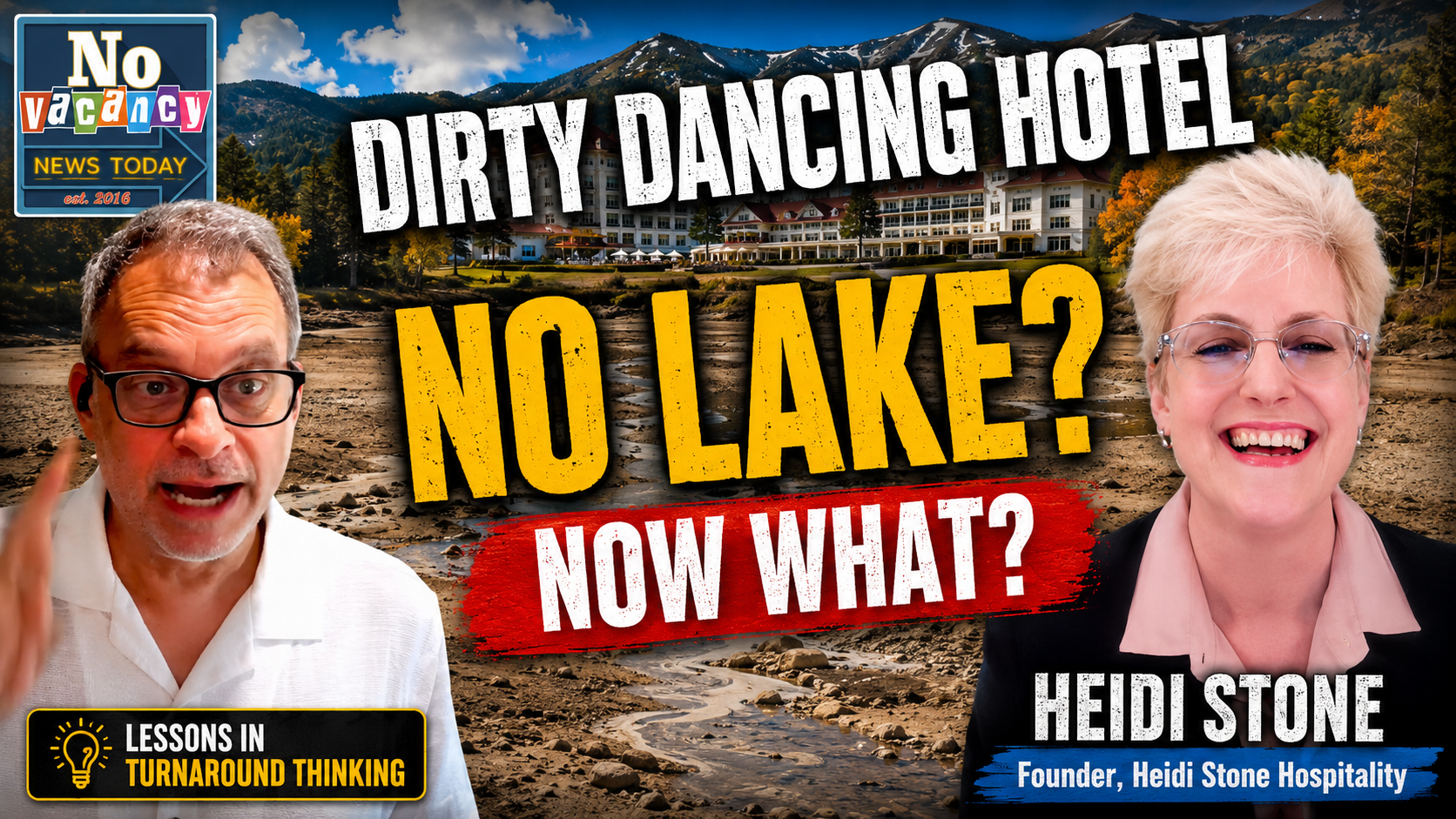
The Dirty Dancing Hotel Lost Its Lake. Here’s What Happened Next
-
August 11, 2026
SBA Hotel Loans Just Got Bigger: How Owners Access Up to $10 Million


Subscribe