
December 16, 2025
What the Global Hotel Pipeline Actually Says About 2026
Hotel development didn’t stop. It just changed.
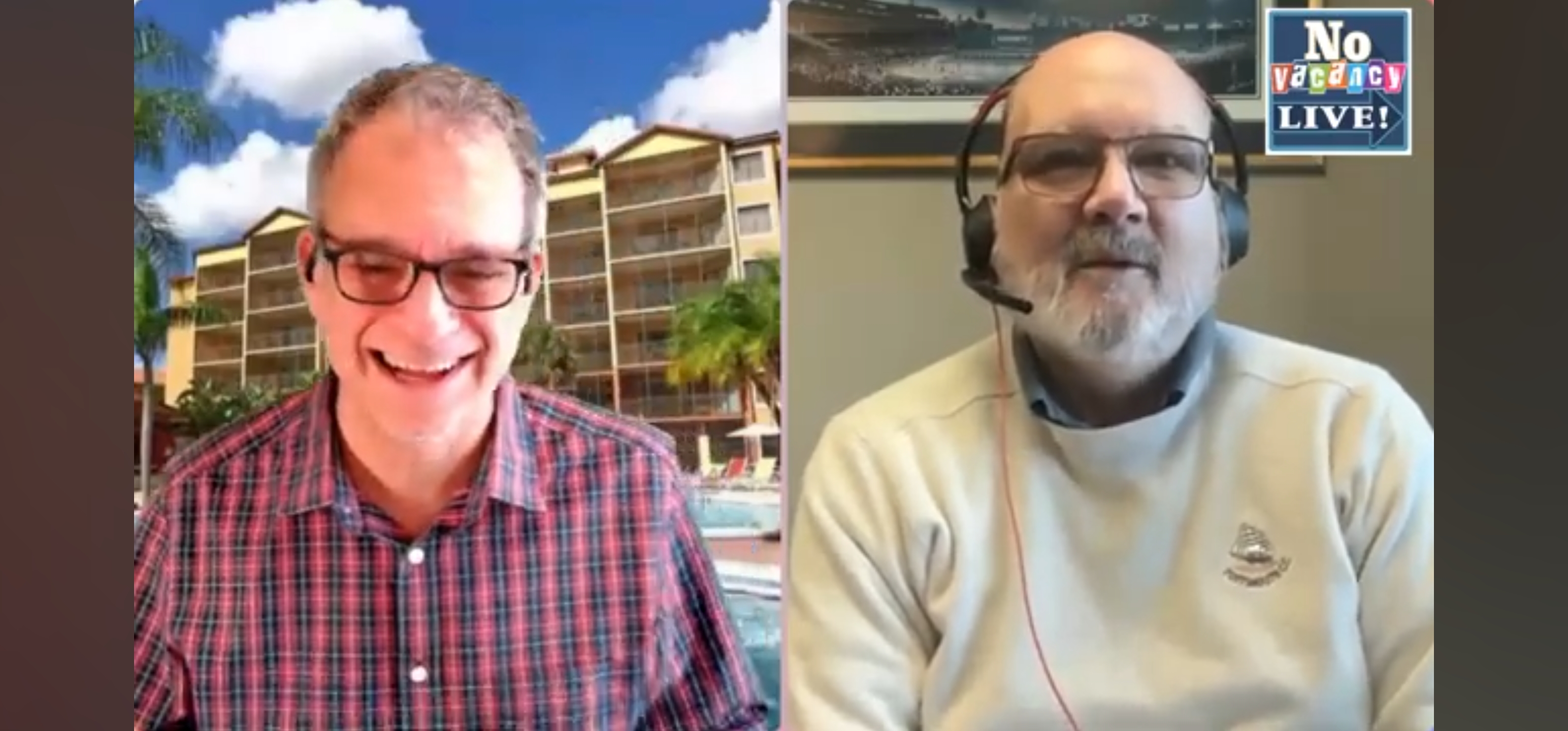
In this episode, Glenn Haussman talks with Bruce Ford of Lodging Econometrics about the latest global hotel pipeline data and what it really signals for 2026 and beyond.
Bruce walks through where rooms are actually being built, why luxury behaves differently than other segments, how renovations and conversions reshape supply faster than new construction, and why many developers intentionally delay openings instead of racing to market.
This conversation avoids forecasts for the sake of forecasting and focuses on how capital, timing, and demand interact when uncertainty enters the system.
This episode is brought to you by Actabl — Actabl gives you the power to profit. Visit Actabl.com.
What we cover:
🌍: Where global supply truly concentrates
🏗️: Why “under construction” matters more than pipeline headlines
🏨: How luxury continues to separate itself
🔄: Why renovations and conversions now drive supply change
📆: The strategic reasons behind delayed openings
🏙️: What Orlando, Las Vegas, and Dallas reveal about demand
Transcript
Glenn: Hey, everybody. Happy holidays. It’s your friendly neighborhood glen here. I’m very excited because I’ve got a friend back. Before that. I want to thank our friends over at Actabl, you know, Actabl and give you the power to profit. Check them out at actabl.com save yourself some money over there. Now, speaking of saving money, you don’t want to make a mistake and build a hotel in the wrong part of the world, right? That global pipeline is doing pretty well. Or maybe it’s not. I don’t know, I don’t know what I’m talking about. So I got our friend Bruce Ford, SVP of lodging Econometrics, back with us today. How are you, man?
Bruce: Welcome home. I sent some snow. I hope you got it.
Glenn: Yeah, as a matter of fact I’m recording this the day before air. Yesterday, we had Major Snow five, six inches over here, but we were only supposed to get one, so we got.
Bruce: A we got a few more than we expected to. Yeah. Just kept just kept snowing.
Glenn: And you know, because I’m in such amazing physical shape shoveling twice yesterday didn’t do anything to my body and I am not in any pain whatsoever today. And by not any pain, I mean. Oh, God.
Bruce: Well, there’s extra pain up here. They’re saying that December has been ten degrees colder than the average December up here which is close to the coldest on record, so. Well.
Glenn: We gotta get this thing. Don’t you think.
Bruce: It’s for sure today?
Glenn: All right speaking about records, how are we doing with the global pipeline BF?
Bruce: So, first of all, the numbers that you see here today have been researched by our staff, have been verified as projects that have signed that have not yet opened. If we report a project, there is a confirmation that the project is being actively pursued in the marketplace. If 40 people doing research around the world checking on both new construction as well as projects that existing hotels like conversions and renovations, and we’ll talk a little bit further about those today. But what you’re reading down the left here is a chain scale representation, a grouping together of the brands, the charts like type rates and offer like type services. You have a full unbranded line there. You have a full casino line which will include Tribal and Las Vegas style casinos. And that first column. There is the total new construction pipeline, which is going to reflect under construction, scheduled to start in the next 12 months, and early planning. And globally, we’re at about 2.45 million guestrooms, which is not a peak. It’s not a low but it is definitely elevated. And of those 2.4 million guestrooms, about 1.1 million of those guestrooms is a pipeline in China. About 1.1 million of those guestrooms are physically in the ground today. So that is not a peak either, but it is within a few percentage points of that peak. So we have definitely begun to see all projects that may have slowed down and or ramp down during the pandemic. I now ramped back up and looking to open up in many markets across the world. We continue to see intercontinental travel being strong but yet domestic. Sorry, international arrivals not as great.
Glenn: To the United States, you’re saying?
Bruce: Well, in a lot of places, Asians aren’t going to Europe, the Europeans aren’t going to Asia. The Americans are probably putting more outbound travel than they are than we have inbound travel. So it’s we’re still going places. And again, we’ve said on a couple of casts in the past few months that the people who have are continuing to spend. So luxury looks good, but economy and mid scale doesn’t look as good.
Glenn: And that is not necessarily represented in the global new construction figures that we’re seeing here. Because obviously luxury is a smaller pool of people. So we’re not going to see as many projects geared towards that that group. Right.
Bruce: Really the aggressive luxury development is in places where we’re building a new city. We’re building a new area of town, which you see in some of the Chinese cities, you see in some of the Middle Eastern cities where they fill out the top end of the pipeline simply because there’s nothing there that’s at that level. Right? And do we see luxury development in developed cities? Sure we do, but it’s typically smaller projects. It’s typically kind of put in there as some of those soft brands more than the hard brands, you know, Four Seasons has pipeline projects, but you probably look at 75% of those and say, there’s never been a hotel of a four season quality in this location, and this will be the first one, right?
Glenn: Yeah. That makes a whole lot of sense. So even though that middle part of the market is suffering generally speaking, How how are we seeing so many projects being built right now? Are they approved beforehand? Had to go through with it. Are there new areas of development? How does all of that work to rationalize what we’re seeing?
Bruce: So many new brands and mid scale, so many new brands and economy and upper mid scale that they’re going to continue to grow and continue to seek new locations. Some of the downscaling of the industry has begun in in places 15 to 20 years ago in the United States, we built a lot of hotels. And the next phase in Asia is, if you think about it, 2008 was the first year that China hosted the games, and they built a lot of hotels there. Well, those are all 17 years old now. And so another wave of renovation, another wave of conversion is coming soon. So this second column talks about the new construction openings that have occurred so far this year by chain scale. And then the third column is what will happen in the fourth quarter. So you see that there are a number of hotels that are scheduled to open in the fourth quarter, and even though we’re this close, some of those won’t happen. Meaning that they’ll just slough off into next year. Right. Hoteliers don’t want to open into a downshifted cycle. They want to open when there’s good business on the books to get started and get ramped up, because you have to hire so much staff. And when you turn the lights on, it costs so much money. So they have to kind of think about that. So the final thing on the last three columns to look at here is that there is a significant bump in openings between what is scheduled for 2025 and then what will happen into 2026. So exciting times. We’re going to get over 400,000 rooms of opening probably in 2027, and I anticipate that the new construction will continue to be as big of a story. But what’s unique is that we now have over 500,000 rooms in renovation and conversion across the world today.
Glenn: Wow.
Bruce: And that’s significant because the projects that are happening in existing hotels are beginning to permeate the marketplace in more regions. In the United States today, we’re renovating and converting about 320,000 to 350,000 rooms a year.
Glenn: That’s a lot.
Bruce: It’s a lot. But these new brands, they’re conversions.
Glenn: Right? And those brands came about because smart people in franchising the executive boardrooms realized that we’re moving from a construction cycle to a potentially conversion cycle. They wanted to be ahead of that. Is that correct?
Bruce: Yes. And they’re also able to bring those hotels into the fold much quicker. In some cases, we’re seeing hotels being allowed to convert without necessarily completing the whole renovation. So we’re seeing a trailing renovation in some cases. And that’s kind of due to market conditions, some supply chain conditions, some financing Conditions, some labor conditions. But I think, you know, really renovating in the down cycle and trying to do that when the hotel is a little bit soft from an operating performance standpoint is very key.
Glenn: That makes sense. All right, Bruce, what I’m curious about is where the majority of projects are taking place. But you kind of already said something about China and India.
Bruce: China has a very big portion of the pipeline, again, about 1.1 million of the guest rooms. You have a couple of Chinese cities on here, Shanghai, Guangzhou and Chengdu. Many of those have had impressive pipelines over time. They continue to be spilling out the pipeline. And a reminder that China, unlike really any other cities in the world, slowed construction almost to a halt during the pandemic because no one was coming. And for safety reasons, they sent everybody home. Yeah. So those projects that got wrapped that now are unwrapped and moving on, it still takes longer in China to build a hotel than many other places, and that’s because the buildings are just so tall. There’s no horizontal development in China. It’s all vertical.
Glenn: Yeah, well, fortunately, they don’t have a lot of rules.
Bruce: What’s a rule?
Speaker3: Yeah. Yeah, exactly. What I’m curious.
Glenn: About here, Bruce, is 99 projects and the total construction pipeline in Orlando. Sure. Epic universe open. That’s driving some new development. But that is all of product in a market that I already thought had plenty of rooms. What’s going on there?
Bruce: Well, the leisure demand in Orlando has continued to be just really extraordinary. The things that are opening there from a theme park part perspective and and I’m telling you, I wouldn’t be stunned if at some point before 2030, we see more visitors to Orlando than we do to Las Vegas. Well, Orlando’s about that Glen.
Glenn: Is going down.
Bruce: So yeah, I mean but that’s never happened. That’s never happened.
Glenn: Wow. How many, how many rooms?
Bruce: At least not in our lifetime.
Glenn: Glen. Yeah. No. Definitely not. Up until recently, Las Vegas has been a story of, if you remember the old cliche that we had, if you build it, they will come. When Las Vegas really started to build those mega resorts. Now it’s now it’s not so much. However, they got two big projects coming. One, of course, is the the new hard rock, and the other is the. We’ll see if the Tropicana reopens and as a Bally’s.
Bruce: So what’s unique is, is that Las Vegas is really, truly built on events and trade shows and conventions. Yep. Okay. That’s what makes that city go. That’s why you have so many 3000 room hotels. That’s not going to be great next year. Okay. But those conventions slash business meetings lead to leisure travel that lingers after that. Whereas Orlando, you turn that table around, it’s leisure that leads to some business, right? Yes, because I got a two day conference in Orlando. Family, why don’t you come? We’ll go for seven days and we’ll do five days of leisure, two days of conference in Las Vegas that flips over. It’s five days of conference in two days.
Glenn: Oh well, yeah, because typically people have that three day rule in Las Vegas. You can’t stay there more because you’ll be dead if you enjoy yourself too much.
Speaker3: I’d say, with all due respect to somebody who just got back.
Glenn: From 11 days in Las Vegas.
Bruce: Everything in moderation.
Speaker3: Including moderation.
Bruce: So from a global pipeline perspective, here’s what we’re going to hear. Okay. We’re going to hear a lot more new announcements. But those new announcements are going to continue to be in places where growth is really very much part of the story, because we’re building new locations, we’re building new outposts. We’re building new supply in cities that don’t have the diversity of supply. How do you explain Dallas? You explain Dallas because it’s not overbuilt. It’s under demolished in every city. Dallas is one of those markets now where every brand has to be there. Yep. Okay. And they have to be there with a showpiece. Dallas has had a significant population bump. They’ve had a significant corporate bump during the pandemic. And they made a tax advantageous to go there. So they therefore we have more commercial development there than a lot of other places.
Glenn: And everybody seems to be leaving Austin, which is probably good for Dallas, too.
Bruce: Yeah, I think it’s good for Dallas. And you know, the diversity of the marketplace, that’s not even counting Fort Worth. Glenn, when you add Fort Worth together, there’s over 400 construction projects.
Speaker3: Yeah.
Glenn: We’ve talked about this before, as you just alluded to, huge population growth in that part of the country, which is driving a lot of this development. Bruce. Oh, look at that. I’m very excited. Apparently, today we are very excited. I know, all right, so how do we learn more the first day?
Bruce: Happy hanukkah. Glenn.
Glenn: Hey, thanks so much. So, as I’m writing this, this is the third day of Hanukkah, so. Yeah. Excellent.
Bruce: So visit lodging econometrics. Com slash Global Insights for our latest press releases. Glenn and I are going to do a few of these a quarter. And we enjoy spreading the industry knowledge that we can and of course, visit his LinkedIn site to see all of the historical shows that we’ve done for three. Q I think this is the fifth one and probably do 1 or 2 more if.
Glenn: Yeah, I yeah, I’m looking forward to it. All right. Go to No Vacancy news.com to check all of that out. Make sure you go to a lodging lodging econometrics.com and check that out. So for Bruce and myself Glenn like share subscribe this video and we’ll see you next time right back at another here on Pipeline Focus report or whatever we’re going to call these things. But.

More Episodes
-
August 15, 2026
FNA 218: Red Roof, Red Jackets & Really Bad Advice
-
August 13, 2026
Why This 14-Room Fantasy Hotel Gets Millions of Views
-
August 13, 2026
The Dirty Dancing Hotel Lost Its Lake. Here’s What Happened Next
-
August 11, 2026
SBA Hotel Loans Just Got Bigger: How Owners Access Up to $10 Million



Subscribe