October 21, 2025
Mitch Patel on Building a Stronger Hospitality Culture and Smarter Hotel Growth
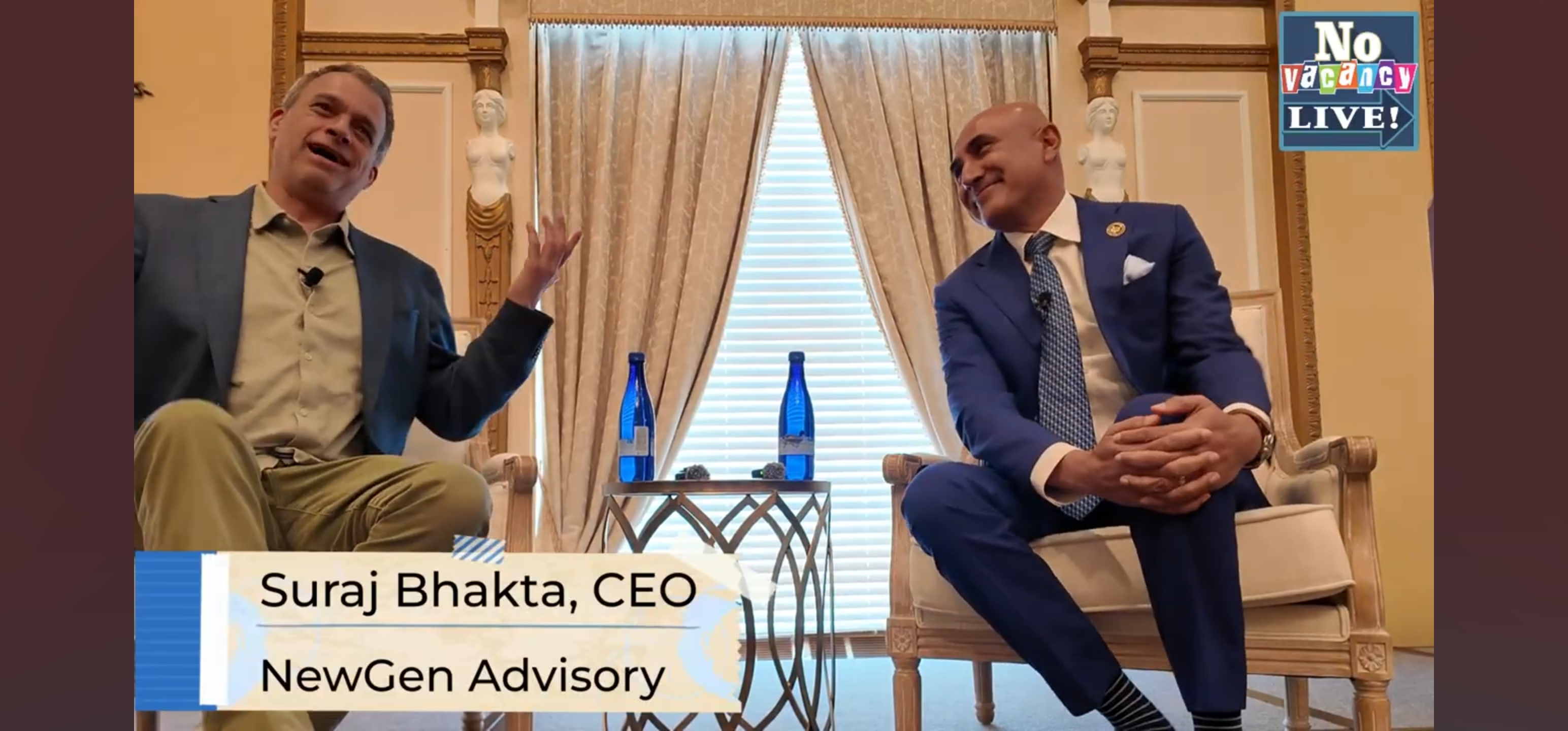
Recorded live at the Southern Lodging Summit this past August as part of the keynote luncheon, Mitch Patel, President & CEO of Vision Hospitality Group, sat down with Glenn Haussman to share his journey from a single $3,000 investment to leading one of the most respected hotel companies in the U.S.
In this conversation, Mitch explains:
Why operational excellence and team culture are the true foundations of success
How Vision Hospitality keeps growing even when the market tightens
What “building a brick house” really means for long-term profitability
How to inspire the next generation to find purpose in #hospitality
🎙️ Sponsored by Actabl — giving hoteliers the tools and data to drive real #profitability.
👉 Learn more at actabl.com
Transcript
Glenn: Everybody. Hospitality. Friend. Glen here. Listen, we already know Activo gives you the power to profit, but now they’re giving you more actionable insights to drive that profitability. Do me a favor. Take a moment and check out Hotel Datacom. You’re getting set for budget season, right? And this new benchmarking data is going to help compare your hotel’s performance for the rest of 2025 and into 2026. Please check out hotel.com or the classic.com. Have a great day and enjoy the show.
Speaker2: How’s everybody doing? Good. Alright. Come on, we got Mitch Patel here. How’s that? That’s great. Glad you guys are as excited as I am. It’s so great to see you. What are you seeing? You as well. Oh, great. Thank you so much.
Glenn: For giving me the opportunity to talk with you up here today.I will say I love being in this business because there are so many amazing people and a great entrepreneurs, and this year is one of the best in the industry that I’ve seen. So I’ve really admired your career over the last 30 years and can’t help but look back how I started out in 1996. You started out in 1997 and you’ve come and I haven’t even and I’m still a journalist. So there’s that bitch. Congratulations on all your successes and particularly opening up three hotels in the last week. And I think a good place for us to start might be you had talked to me back at March at the Hunter hotel investment conference, and you said the secret to success is strong brands, markets you know, your markets and operational excellence. How are you feeling today about the general vibe in the hospitality industry and that philosophy? Absolutely.
Mitch: First of all thank you for having me. Wayne greatly appreciate the invite. Chuck, as well. And I have to say that I don’t know who gave Frank that bio, but I really, really appreciate really appreciate the kind words. Yeah. You did a lot of research there. Appreciate that. And it’s really okay. Yes. It’s great to be in the my home state of Tennessee and and congratulations. Doug. This is a iconic, iconic hotel. We’re very proud that this hotel is in our great state of Tennessee. So appreciate everything you do. So this business look we could talk all day long about the challenges and we’ll talk about some of that. But every company creates value differently, and we’ve created it through development historically. Right. As Frank said, we built over 60 plus hotels, and then we purchased two only it was 28 years. And those were gut job conversions and so forth. So that’s how we were able to create value. So we just like you touched on, we opened a, a whole two hotels last year. I mean, last week, sorry, two hotels last week. It seems like last.
Speaker4: I know.
Mitch: Two hotels last week and one next week. And then we have another 8 or 10 in our pipeline and many other concerns. But I will tell you that ten years ago, even 20 years ago, you could make up just talking to Greg Presley, a former colleague of ours. Earlier today, you can make a half a dozen dozen mistakes, and you could still probably be pretty successful today. You don’t have that luxury. It’s laser. Laser thin orange. You heard that from the investment panel earlier today, too. Construction costs have gone up significantly. Operating costs have gone up significantly, but our repertoire hasn’t kept up with it. So deals, even though we’re pretty savvy developers they are very difficult to pencil. So but we’ll see.
Glenn: How that goes. Well, I’d like to go back to 1997. How did you get together that $3,000 dollars. And what did you do with it to get started? And really, I’m looking for advice over here.
Mitch: Sure. Frank told a little bit about about the story. Right. So it’s a very capital intensive business. If you are on the ownership side it’s particularly on the development side where you have to raise capital and then then convince a lender to, to give you the rest of the funds. So $3,000.
Glenn: Isn’t.
Mitch: A lot. But when you’re 26 years old, I mean, I felt like that was a lot of money, but that was my 401 K working for the engineering company that I was working for. And so I remember I think it was a little bit more than that. But right. Penalty to cash out at $3,000. And I had to get I had to raise significantly more than that from my share of the equity. So I convinced I can’t tell you how many people I call depth to borrow 3000, 5000, $7,000 just for my share of the equity. By the way, I did not get any sweat equity. I did not have a salary. My salary kicked in the day the hotel opened because I was the opening general manager. I learned about all the pre-opening. I’ve learned that later on. Yeah. And I convinced the bank to. To fund the project. Signed a document called the Personal Guarantee, but I didn’t know what that was. They could take my $3,000. That’s all I would tell you. He’s what he says. But, you know, it was it was, no question, a big challenge. You know, we I remember as a Homewood Suites, most people never even heard of the brand back then. And pre pre pre-opening marketing and all that. Didn’t really understand that first month 10% occupancy. And it was May not December 2nd month 15% occupancy 50%. Yeah, that’s that’s not a bad percentage wise. I thought, wow, did I make the right decision right here as an engineer? Nothing is guaranteed. But every two weeks I was getting a paycheck, right?
Glenn: So let me ask you. You say you made the right decision. I think every entrepreneur has to grapple with whether or not they made the right decision. How did you convince yourself that you were on the right path forward?
Mitch: Yeah. Look, I don’t think I convinced myself, but my parents were saying you’re making the wrong decision, so that.
Glenn: Probably.
Mitch: Helped you. Yeah. Yeah. Probably did. You know you know, look, you study engineering, they put you they help you through college. You know, you got your master’s in it. You’re working down in Atlanta. I guess that can be the American dream, right? Yeah, but I didn’t, and I and we’ve talked about this. Here’s the thing. I didn’t love what I was doing. I didn’t have a passion for it. And here’s the thing. If there’s some young adults in the audience you know, if you constantly are looking at your watch. Yeah, you’re probably not in the right field. And so I couldn’t wait till lunchtime. I couldn’t wait till 5:00 to get home. I hated Sunday nights because, you know what you have to do Monday morning. And by the way, I had to go to work Monday morning and fight the traffic I’m supposed to fix. And, you know, that’s no way to live a life. And I was talking to my parents, and my parents would say, you know what? You gotta. You gotta just work hard. Life’s not easy. I said, there has to be more than that. And today. Right. I’m so glad that I found my passion where I never expected to. And when you have a passion for something, a true, deep passion for something, it’s not work. Right?
Glenn: And I’ll tell you, that’s where success comes from, because you’re not looking to make a buck, but because you’re so passionate, it attracts all of that to you. So how did you learn that you were passionate about the hotel business? That’s not a common thing in the 1990s, particularly for the younger people out there. The 1990s was a time when select service hotels really started to come into their own, and we saw a massive increase in hospitality products.
Mitch: Yeah. Look, I don’t think I had any idea at that time that I was going to fall in love with this business. Because I did grow up in the business, and that’s why I didn’t want to do that. And I and I think that it just took it just took time to get there. And I’ll tell you quickly, you know, I think getting into this business, what drove me was because I didn’t love what I was doing here. I said, there has to be something more. Something different. So I didn’t know at that time that I’m going to love it at 10%, at 15% occupancy and owing people a lot of money. I don’t know if that was really fun. And so but I will tell you, Glen, Glenn, that it took us 18 months of hard work and dedication.
Glenn: I was about to say, I probably told you. Hustle and grit.
Mitch: That’s right. And then we found success. We became the number one hotel in the market and really enjoyed the team that I was working with. Really enjoyed the challenge. That was in front of us. And just the design, the construction, the people side of the business, the hospitality. Right. It’s just this is the most beautiful, you know, they call soccer the most beautiful game. Yeah. I always say this is the most beautiful business, right? It truly is. Yeah. And and and I found my passion for it. And and I thought that, you know, people ask, well, what got you to the second or third at that.
Glenn: Should be my next question.
Mitch: Okay. Go ahead.
Glenn: So what’s good? How did you get to the second hotel? At what point did you realize this is my fate? This is my destiny. I’m always sure. And so.
Mitch: 18 months of opening this hotel, we’ve we found success, right? And then continued Continue to manage it as a general manager. Then there came an opportunity three years later, actually to the hotel in Nashville. And we I took on that challenge. I said, then I got kind of tired of answering the phone with lenders and landowners and prospective partners. Homewood suites general manager. Right. And I said that it has to be something different that I need to do here. So there’s a boardroom on the second floor of that hotel. It’s called the Mallard Room. And you know where that name comes from? With the Homewood logo. And I took that sign off, and I don’t think I asked Hilton for permission for a brand variance on that. Probably at the time came up with a company name, Vision Hospitality Group, and I was the only corporate employee, but I was a proud owner. Heck, yeah. They management development company. And then we we we opened that second one. But I’ve got to talk about timing real quick. That second hotel opened in 2000. October 2000 and and we didn’t. It was a struggle. And it was at the airport market in Nashville. The third hotel, Hilton Garden Inn in Chattanooga, downtown, opened October 11th, 2001. So that 10% looked good back in the day. Yes, yes. So there are many, many moments, Glenn, that have tried to share that I would question myself. Did I make the right decision?
Glenn: And I think that’s why you’re successful. Because you listen, but you don’t allow that to control you. At what point did you make the transition from being, I’m going to own a hotel or two to really wanting to be an entrepreneur and build out the company that you’ve created.
Mitch: Yeah. So you know, that third hotel, even though it opened October 11th, 2001, we found massive success. Right. Within a couple of months, we’re doing 77% occupancy.
Glenn: Fantastic. Particularly in that time frame.
Mitch: Yeah. So what I learned, though, is people still want to travel. They just probably didn’t want to get on a plane. They probably didn’t have the money to do the bigger trips, but they still wanted to travel. We saw that during the pandemic too, right. That they’re I don’t know if it’s discretionary anymore. It’s a need and and people of Chattanooga is a safe, safer a perception of safety. It’s a drive to market. There’s value proposition there. So Atlanta and Nashville, these feeder markets, we actually got a bump in business. And so that also wound up being successful and, and, and, you know, we’ve heard a little bit about brands. Not all brands are equal. And you know, I, I.
Glenn: But I’m sure the best brands are represented in this room.
Mitch: Of course. Yeah. Of course. Yeah. So not all brands are equal. So the Hilton Garden Inn, you know, we really, really thought that brand was just a just a fantastic brand for our company.
Glenn: Well, also, I think that that brand, really it changed the dialogue between the hotel and the consumer because it fit very nicely between a big box, full service hotel and a stripped down select service hotel. It’s the first brand I call quasi full service, right? So you probably felt pretty good when that product came out to propel you to do other things.
Mitch: That is correct. So we did three more Hilton Garden Inns because we found a a blueprint. Right? Right. This is how we’re going to develop it. We’re going to build it for it’s a ridiculous number. But 85,000 a key right. 90,000 a key. All in at that time. And we were nervous with that number and, but we were getting 100, 110, $120 average rate. Right. You know that that that worked. It worked. And and we weren’t giving away food, right? Because we were actually making money on food. So initially when Hilton Garden was launched, the the big sign just said Hilton, you know, then they changed it to to to garden n so but no, no, it was a huge success. And, and then 2009, right, came around and and I gotta just share this really quickly. Storms are going to come and go in our industry, right. And it’s been a while, you know, with the pandemic was a storm.
Glenn: 2009 is a good 1.
Mitch: To 2009 was the worst one since the great the Great Recession. Right. And so we looked at our portfolio, and I remember going to I think Lee has probably left. I remember going to the Hunter conference in 2009, and somebody had this data up on the screen. And and it said, here are the top ten markets in the bottom ten or something. And Chattanooga was the least bad of the markets. We were down 9% compared to Chicago being down 26%, Atlanta being down 22%. And and quite a few of our our hotels were in Chattanooga. And then of course, we had some other markets where we were doing a little bit better. But here’s the thing. You touched on this earlier. We saw a model brands how we were developing them. Basis.
Glenn: Right.
Mitch: Markets that we were in. What is a great tool is this is a people serving people business. How do you how you operate your hotels are is so important. It’s actually more important today than ever because of the transparent world that we live in. Right. And you just heard that AI is going to make it even more transparent. You can’t buy your way up the chain anymore. If you do a great job, people are gonna know you do a great job. More than ever, right? And and so we, you know, my daughter I booked a restaurant somewhere on this trip. It was a 4.2 rating restaurant, and my my daughter comes up to me. Why do you book this restaurant? There’s other restaurants like this that are 4.8 or greater. And I said, well, you book it then. And she did. And it was a phenomenal experience. But that’s the world that we live in. So how you operate your hotel, the culture that you have within your organization, all that makes a brick house. And I just gotta touch on this. What storms coming, this pretty bad storms that we’ve all been through. Your brick house is going to save you. And you gotta ask that question to yourself. Do you have a brick house or do you have a straw house? And because a straw houses aren’t going to make it. And what also makes a brick house is the debt that you have, your debt coverage ratio, your liquidity. You know, we put all of that in there in our brick house, and we monitor it every month because it’s this business again. You could have massive success, but if you don’t do a great job, then you could be in trouble when those storms come. And we’ve seen it time and time again. Anybody can be successful when the sun is out and the right and times are good. But what is your business model look like when that tide recedes? That’s when you get exposed.
Glenn: And honestly, every single time the market goes down in a horrible anatomy, the stock market, I mean, the hospitality market, the true entrepreneurs that take the big chances at that time always find success out there. And that stuff that you’ve been doing for years and years and years. I’ll go back to 2009 for a second. So that was also, I believe, the year that the first ever soft brands started the Ascend Collection from Choice Hotels. They they identified a lot of unsold rooms in Chicago. I believe it was. And they’re like, hey, let’s come up with this idea. Since then, everybody’s got a ton of them. How are you thinking about now as you continue to expand your relationship between brands, soft brands and independent type properties?
Mitch: Yeah. No, I mean when the Soft Friends came out was like, why didn’t someone think about this earlier? This is a brilliant idea.
Glenn: Those are the best ideas, the ones that are ready to go.
Mitch: That’s right. And then, of course, all the brands companies jumped on it. And who would have ever thought that it would get segmented and tiered now, right? I mean, I was just talking to Frank earlier. I mean, he got 3 or 4 segments within soft brands now and so and probably more coming, of.
Glenn: Course, because that’s what happens in a mature market. It starts to segment because you want to cut up the pie and attract different types of people.
Mitch: That’s right. And in my wildest imaginations, I would have thought I would have never thought that we’d get 6,065% reservation contribution on a sock brand. And so I’ve got a, you know, full of these analogies. The hard brands, you know, you pay X amount, right? I don’t know what it is. Application fee. Now prank about $100,000, right? And maybe you could. Maybe you could deal from that. But you get a you get this box and everything is in that box that do not disturb sign the prototype plants. Right. There’s even an outlet you could plug in with a soft branch or an independent or a soft brand. Really, at the end of the day a soft brand hotel is an independent hotel, right? Right. I mean, it’s what it is. And you get this box and there’s nothing in it, so you have to curate every single piece in it, and it takes a lot of work and effort. And you can’t just say, okay, to a branding company and just go do it. The best executions are the ones where the owner, right? The person that’s creating the project is so intimately involved in it. And that’s that was our first experience with, with the, with the soft brand. It was an independent hotel actually initially. And then we said, speaking of that box, I did. It was daunting, but it was also fun for me to create that. But then where it stopped being fun was the PMS and where the reservation says, yeah, right. How am I how is the business going to come through the door? And that’s where I, I really believe that’s the best of both worlds, right? We could create our unique stories and a great boutique hotel. A great independent hotel should be like a great story with twists and turns and discoveries and an emotional connection that it makes. And that’s what we try to do with our independent hotels. But then we love tying it into the the two 200 plus million members with the engine. That Hilton has, our area has. And I think that that that works really well together.
Glenn: Yeah. I think soft brands are a really great opportunity. But how do you decide we’ve got this piece of land, what you’re going to build there? Well, there’s.
Mitch: A lot that goes into that. You know, I used to, you know, there’s a lot of deals that we did, Glenn, where someone came to us with a mixed use development. And here’s a site we really want you to come. And then we looked at the brand availability and and, you know, the proposition of where do we want to be? Rate rate positioning, extended stay select service, lifestyle, soft brand, all those things that you go through. We do a lot less of that today, as you say. Yeah. Now it’s like just let’s just get to the point. We have a portfolio of 44 hotels. We know what’s really working well. What could do better? And there are Hilton has how many brands? How many brands for 24. Marriott has like two two. Well 33. Probably today. 34 tomorrow. Right. I mean, there’s so many brands within the big brand companies. And so we were now saying, okay, these are the three or 4 or 5 brands. This is we want to build a chick fil A. We’re in the fast food business, you know, franchise. But the average chick fil A is 9.5 million in revenue.
Glenn: Wow.
Mitch: The average Bojangles is less than. Yeah, we.
Glenn: Were just talking. We were just talking about your.
Mitch: Average Bojangles is less than 2 million.
Glenn: Wow.
Mitch: Construction cost is the same. Land cost is the same. Someone’s not going to feel sorry for you. You’re doing a Bojangles. I’m going to give you a deal. Kitchen equipment. Sorry. For those that like Bojangles biscuits, they are pretty good. Get you know, the kitchen equipments, the same. So the marketing, the branding, the culture, the product, the consistency of the product. Yep. Makes all the difference. And so with these hotel brands, it’s not much different. You know, you could clearly, clearly tell the reservation contribution. Look our sponsor for lunch today is Hilton. So I’m gonna I’m gonna talk about them. But we have Hampton Inns that do 200 rep par index. Yep. Do you know two weeks ago, we had a Hampton Inn Kimball that did 350 rep par index for the week. For the week. So it’s Yeah. So which whatever the brand that you fly is so, so critical. So instead of here’s a site, let’s try to figure out what we could do with it. Let’s go build a top brands and then find markets where they’re available that meet our rep, our threshold, you know, ages and so forth. And it’s tough. It’s tough to find them, but they’re out there. And that is a different approach. And Brian Hennessy from our team whose responsibility is to hunt for those opportunities. But that’s what that’s what we’re good.
Glenn: You’re always one step ahead of me because I would say, how do you actually find those opportunities? But I also know the brands provide a lot of good resources to help. So have you settled on X number of brands that you would prefer to build and develop at this particular time?
Mitch: I do, but I don’t think I’m going to name them all.
Speaker5: That’s why I didn’t ask you to name them.
Mitch: Look, I’m a pretty transparent.
Speaker5: First I eat, check out our website. There are 4.
Mitch: Or 5 brands that we’re zeroing in on. Yeah. And and those are the ones that we’re going to focus on to, to develop.
Glenn: How are you thinking about currently consumer behavior and travel patterns and how you feel that’s going to affect the hotel business currently over the next year maybe as well?
Speaker5: Yeah.
Mitch: Look I think what people are going to continue to travel.
Glenn: Well, I’m a big believer that people believe it’s a right, like we were saying at the thing. I mean, I think we are in an experience economy rather than a materialist economy.
Mitch: There’s no question about it. I believe right before the pandemic, the experience economy took over its economy, and now you could clearly see it separating itself. And it’s accelerating. And I have to say, I wasn’t talking about this as much, probably even five years ago, definitely not ten years ago. But time is our most precious commodity, right time. And clearly you’re seeing like, particularly baby boomers and and that want to spend their time with their family and friends and events and experiences more than ever. And instead of buying something that’s material, right. And you’re seeing younger people that value Experiences more than ever. So look, we it bodes really, really well short term a lot of uncertainty, a lot of challenges. We could talk about that all day long. But beyond that, I really believe that travel is going to continue to grow and throughout, throughout this entire this great country and supply. That’s why we’re bullish. You’ve heard that earlier because the construction cost lending. I mean, if someone’s borrowing at 12, 13% interest rate, I don’t know how you could make these deals work on with today’s construction costs. It’s got to be really careful. So I think supply has grown about 2% annually for the last 30, 40 years. It’s going to be at one 1.25% or less. I really believe that in the next 5 or 7 years, and I think demand is going to be two plus percent. So that gives us pricing power. Yeah, and so forth. So we’re in a little rut Right? Right now, because this economy that that we have thankfully, is because of consumer spending. I do believe.
Glenn: Two thirds of the economy.
Mitch: Almost 70% of our economy, is on consumer spending. And consumer spending is determined by consumer confidence. Right. And so if you feel confident about your finances, then you’re going to go spend money. That’s right. And that right now because of the uncertainty is the reason why people are hesitant corporations consumers are hesitant. And you talked about this Glenn earlier. There’s a bifurcation that is absolutely taking place in the economy, where you probably read and you saw the data that the luxury hotels, you know, if you look at Pebblebrook quarterly report and host, you know, the average rate, they’re repar is only grown in the luxury segment, and the economy Segment has been in a recession for a couple of years now, actually. And then the mid-tier, you know, it’s been it’s been struggling a little bit too here recently. And why why is because think about it just for a second. Common sense those at the top of the the household incomes. Right. What is their household balance sheet look like. They have a stock portfolio looking great. They bought AI company bought into AI companies looking great bitcoins. I know people that put $50,000 in bitcoins and it’s gone to seven digits right within a year. So bitcoins and then you have your home values. You may not have not sold your home, but your home just doubled in value and you haven’t refinanced.
Mitch: Your debt is still the same. And now your your your net worth looks pretty good. So the rise of the thousand dollar rate hotels have grown significantly, right? We only had $1,000 rate hotel ADR hotel in the United States before the pandemic. Now we have many. And so that’s what’s happening in the luxury segment the economy, extreme economy, what’s happened there, renting. It’s doubled. They don’t have these investments, unfortunately. Right. The cost of eggs that went from $4 to $10. The luxury customer is still going to buy a bunch of it, but that customer here, it impacts them a lot. Right? Right. And so credit card debt, 45% of Americans have credit card debt. And who do you think has that credit card debt? It’s usually in the lower household income. And guess what. They’re paying 25% if they’re lucky. If they’re lucky, and it could be 30% if they skip a payment. Right. It just credit card companies are just hoping you skip a payment, right? Yeah. They can shoot it up because no one’s reading that fine print. So that’s what’s happening in America. And that’s why you’re seeing the economy. Hotels have struggled and the mid-tier hotels, right, are right there in the middle. And then of course, luxury has has done well.
Glenn: First of all, like to say thank you, Mitch, for validating everything I said yesterday during my keynote, which is awesome because I have been super confused, as I told everybody trying to figure out what’s going on. So hearing that your assessment is very similar to what I’ve come through means an awful lot. So with all of this, and the reason why I think you’re successful is because now is the time for, like I said, for people to take those risks. So you’re probably not taking your foot off the gas pedal, because if you wait till the market comes back, then you’re gonna not open at the right time, right? So how do you keep the gears moving even when everything seems to want to come to a halt?
Speaker5: Yeah.
Mitch: Look at in 2000, I go back to what we did in 2009 ten, and we put the foot on the gas and you know, there was this Warren Buffett quote Investors should be fearful when others are greedy and greedy when others are fearful. And I like to take the word greed out, but opportunistic, right? So I said, this is absolutely a time to be optimistic. If you’re looking for acquisitions, if you’re looking at even development construction costs, the first time, I would say in 15 years has stabilized and even going down even with tariffs being introduced. Subcontractors. I haven’t had a subcontractor call us in a decade, and subcontractors are calling to see that. Do you have hotels in the pipeline because they’re looking at their in the six months or a year from now? They’re looking at what they have in the books, and they’re seeing that they don’t have enough. And so I think that you’re going to start seeing, by the way, in 2010, 11 people say construction costs never go down. Incorrect. We were building hotels at 120 $25 a square foot before the Great Recession. It went all the way down to 80, 85, $90 a square foot. The same hotel? Significantly less. So why wouldn’t we put our foot on the gas? Right. Because we know that Repar is not going to be down forever like that. The one thing we do know for sure is people are going to continue to travel in this country. Right. They are. Yeah. We’re a mobile society. This country was built on exploration. So go explore this great country again. Come to Memphis, come to the Peabody. Right. And come, come explore this great, great country of ours. And I think you’re seeing people get in the car, get in the plane, going to see concerts, going to see shows. You’re seeing that. Right. And and, and I think that’s going to only accelerate. So what about one of the favorite.
Glenn: Phrases that’s coming to my mind is, if you want something done, give it to a busy person. You’re super busy. What are you doing? Being chair of the. Don’t you have enough to do? What? Why would you get. How did you get involved in this? It’s so important. But how’d you get involved in it? How much time are you spending on it? How are you balancing everything?
Speaker5: I don’t think.
Mitch: My wife was very pleased. Yeah. By the way.
Glenn: That sounds.
Speaker5: Like every.
Glenn: Woman’s.
Speaker5: Problem.
Mitch: She jokes with me and says I’m a. She jokes with her friends. I’m a single mother. But you know, it’s it I’m very passionate, as you can probably hear my voice about this industry and especially the people that are in this industry. And so when the opportunity came up to have that responsibility of course, I had to think about it because the time, the time that it takes. But I didn’t think about it long. And actually, my wife was the opposite. She said, I know how much you love this industry, and you’ve got my full support. And anything that I’m going to do. I want to give it my 100 and 110%. Right. I’m going immediately from here to to the Broadmoor for an event that I was telling many of our friends about here. So, yeah. Look, it’s a tremendous honor, and we are making a difference. We have a lot of challenges out there. You all know that you heard from John earlier from LA. But our owner’s business model. I’ve got to stress this. Our owner’s business model is challenged. Revenues have grown since the pandemic. Sure, but expenses have grown at a greater rate, right? Labor has gone up 30%. Cost of goods. Insurance has doubled and tripled in some markets. And the debt. Right. Your interest rates were at three and a half. 4% has gone to six, seven, eight and even 10% now. It cannot be sustainable. And so we are working hard on improving that business model. And on top of that, we don’t need lawmakers being onerous policies that unfairly impact our industry. Right, right.
Glenn: Yeah. Well, that seems to be their their job to keep out the lobbyists.
Mitch: That’s there. That’s absolutely. So we’re not gonna we’re not going to let it happen easily. And and we’re fighting absolutely for our livelihoods in this industry. And the 2 million let’s not forget this. Every lawmaker I don’t care if you’re Democrat or Republican. The one thing that they they all care about is jobs. And come on, look at what our industry does. 2 million plus jobs, direct jobs in our industry and not just jobs. I want to see a show of hands here who started off in a line level employee in this industry. Look at how many people that start off as a line employee in this industry. So these aren’t just jobs. These are opportunities for meaningful careers. And so advocacy is about storytelling. And we’ve got to do a.
Glenn: Better job of.
Mitch: Telling our story.
Glenn: We are. We really need to improve on that, Mitch. I’m very I’m I’m seeing the struggle every single day. And I’m talking to a lot of college professors every day, and they do not know how to get people excited about the business of hospitality. And I just don’t know what to tell them. How have you been thinking through this problem? Because you’re right. So many amazing people started taking bags or at the front desk and now are the biggest leaders you can think of.
Mitch: That’s right. Look it is a huge challenge, Glenn. I mean people don’t at the age of seven, ten. Okay? I want to be a doctor, a lawyer or an astronaut. Right? But not many people say I want to be in the hotel business. And then when they find out that you probably should have to start from the bottom then that just wings about everybody else out, but we that doesn’t mean that we give up. There are tremendous wins out there where we partnered with our local local high schools, with our our local university, the community college, as well as the four year college. And we have gone in there and showed them giving back of house tours, brought them to our hotels, brought them to our home office and let them know, talk to our team. And they’ve they told their stories. Look, I started off doing this, but at the end of the day, you know, if you wind up doing something else, the hospitality skills that you earn are priceless, right? Are priceless. You could be a dentist and you could be in assisted living. We we’ve had companies that are the dental practices and assisted living home. The hospitals come to us and want to learn about hospitality of course, and then they want to take it to their respective practices. And I’ve had people change their like this, the dentist firm that came to to to want to learn from us, they changed their whole tagline that they’re in the hospitality business that happens to be doing dentistry. Yep. And and I think that this is an amazing industry that if you wind up staying or you’re leaving, but there is a great, great opportunity for you.
Glenn: Speaking of opportunities, how do you think about creating opportunity for your associates so they stick with you and understand it’s a career, not a job?
Mitch: No, absolutely. We work on that every single day, Glenn. And we first of all, we talk about our growth, right? We talk about all the growth that we have so that with growth comes opportunities for them. So they could see that obviously we have hundreds and hundreds of people in our organization that started at a line level and worked their way up so they could see real examples of that. We have training programs. Absolutely. We have a training room in our home office. Those that have been to our office have seen it. We really, really emphasize that. And so we have created a lot, of lot of tools for, for people to grow within our company. We’re talking about it every single day, because those are the people that we want. We can. There’s some things you can’t teach, right? You could teach a lot, but you can’t teach that positive attitude, that willingness to want to learn the values. Right? So when we determine that, yes, yes, yes, you have that. I don’t care if you don’t know anything else. We’re going to show you how to get from here to here. And we’ve done it over and over and over, and there’s probably not an industry. Think about it where you can make 12, $14 an hour and within a year or two make 50, $60,000 a year, and probably within another year you can make six digit salary. Where can you do that? And only in this industry. But you’re going to have to hustle and you’re going to have to want it. Nothing is given to you. And we make it very clear that nothing is going to you’re not owed anything, right. And so you’re going to have to want it yourself because that’s something we can’t teach.
Glenn: Yeah, you’re absolutely right to focus on that. So Craig, Kate and Patrick did this great AI panel before you were talking about saving expenses. So how are you thinking about leveraging technologies in order to enhance customer service while maybe minimizing expenses?
Mitch: Yeah. Look, there’s quite a few things there, and I’ll be quick. You know, we’ve got to disrupt our business model. Let’s not let someone else disrupt it for us. In this 2025. I’m gonna leave you with this 1995, when this thing called the internet, the World Wide Web came along and how it disrupted about everything that, you know, multiply it by ten.
Glenn: Right.
Mitch: And that’s the kind of disruption that you’re going to see with AI.
Glenn: Well, let me add, like, I really hope the hotel industry reacts better than they did in October of 2001 when the internet was really taking off. And the hotel brands basically just gave everything to the OTAs because they were not technologically prepared.
Mitch: That’s right. I mean, look, we are an industry that’s been around for a long time and we do not evolve as fast. And so and we can only do so much, as much as Hilton and Marriott also are are going to advance.
Glenn: To be fair, I do think we evolve. I just saw a motel over there that advertise air conditioning and color TV. So we’re somewhere.
Mitch: Impressive.
Glenn: Pretty impressive.
Mitch: Yeah. So, look, there’s a lot there. Couple of things. These aren’t really new technology type tools, but we are pushing for this. We would like to see an industry wide standard for payment upon booking with cancellation fees. Every industry pretty much has that except us. I mean, look at when you book an Airbnb or airlines, right? Once you book, then within a certain amount of time frame, you’re locked in. Right? And you this we’re about the only industry we could tie up our inventory for 364 days without recourse, and that shouldn’t be the case. E tipping is a game changer. I really believe so. But it has to be an app, like when you take an Uber ride. Right. Immediately everything’s on the app. Yeah, I could tip and rate my driver and if I forget three weeks later, it’ll pop up to rate and tip my driver. Why cannot that happen in the Hilton and Bonvoy app? So we pushed really hard for the brand companies to develop that. And it’ll make it really good. Much better because it’s all housekeeping. It’s hard. But get people that want to clean 14 to 16 rooms a day, right? Sure. And so but having that extra five, seven, $10 an hour that they could earn by making things easy because people don’t carry cash as much as you or business travelers won’t expense you know it out like an Uber.
Mitch: Then why do they want to take cash out of their pockets to do that? So those are a couple of things. And then of course, AI I think is going to we are absolutely starting to implement a many, many areas. The Home Office at the property level office. I will tell you that you’ve heard revenues are pretty flat across the board and even down. That’s no different than us, right? Our revenues are right about where it was last year, maybe even down a little bit. But our margins are up. Our margins are up almost 150 basis points. That’s significant for the year because we are pushing everything that we can that we can control. Right. Market share, guest satisfaction margins to an extent. Right. And that’s what we’re doing. Because when that storm comes because it’s going to come. Okay. Do not think that it’s it it’s not going to come. There will be another storm that comes and we want to be ready. And instead of us fixing our House. We want to go look for opportunities even more.
Glenn: Yeah, that makes a lot of sense. So before we wrap up today, I know we’re just about out of time. What keeps you up at night? Or conversely, what do you do outside the hospitality industry? What’s your biggest passion?
Mitch: Well, you know, I used to say like, I love to travel, but that’s pretty much in hospitality. Yeah, that’s why I got.
Glenn: Involved.
Mitch: Because, oh, look, I love college football. As Frank said, I can’t wait. I guess this Saturday is it is the first kickoff of the season. Look, love, love spending time with my family. Time is our most precious commodity. We talk about yeah. So I’ve got a few passions, but not too many. But hopefully I’ll try to find more here in the next 3 to 5 years. Come January, with hla role kind of wines, that I’ll probably have a little bit more time to do that.
Glenn: Awesome. Well, Mitch, it has been an honor having an opportunity to talk with you today. Let’s hear it for Mr. Mitch Mitchell.
Mitch: I don’t think.
Glenn: You have.
Speaker6: Time for a question. All right. So I learned that Doug.
Glenn: Brown needs to ask a question after every session. And we cannot go on without it. Doug. The floor is yours for first I want to say thank.
Mitch: You for me.
Glenn: We really appreciate it.
Speaker7: Second, I want to say none of us felt bad that you’re headed to the Bronco.
Speaker4: No, no, I’ve never been. I’ve never been so great.
Speaker7: That’s a real.
Speaker6: Sad.
Glenn: It’s really. You’re gonna love it. Never me. So it’s still not as good as the Peabody, though.
Speaker6: So I’m curious. You.
Speaker7: You older manage what, 40 something mom tells. Whatever it is. Do you have a goal that you’re trying to reach, or is it as a good deal comes? That’s that’s the way you go.
Mitch: Oh great question. I mean, we’ve never had a goal of how many hotels that we want to achieve when and I and I don’t think I want to.
Glenn: I would say if you had said a number that might make you make poor decisions to hit that number.
Mitch: Yeah. I mean, look, we’re not a public company, and and we don’t have pressure to to grow at that level. Here’s the way I would answer it. We’d rather have 20 hotels that are award winning that we’re proud of, that keeps our culture alive and well, our team happy than to have 150 hotels that are mediocre. And and I really mean that from the bottom of my heart. And so we think about that a lot. And that’s why I would say we say no to 2530 deal before we say one yes to one because of that great answer. Yeah.
Glenn: Wow. All right, so I think we gotta wrap this thing up. So let’s hear it again for this gal. Back to you, sir. Thank you, thank you.
Speaker4: Thank you very much. Yeah.

More Episodes
-
December 6, 2025
FNA 195: More or Lesser
-
December 4, 2025
997: How Olympia Hospitality Blends Culture, Community, and Creativity Across Its Portfolio
-
December 3, 2025
Hidden Hospitality: The Untold Story of African American Hoteliers
-
December 3, 2025
Corporate Travel Is Changing Fast — Here’s What Hotels Must Do to Win in 2026


Subscribe