September 30, 2025
How Hotel Owners Find Opportunities in a Tough Market
Hotel owners face pressure from rising costs, subdued RevPAR growth, and a challenging deal environment. But opportunities still exist.
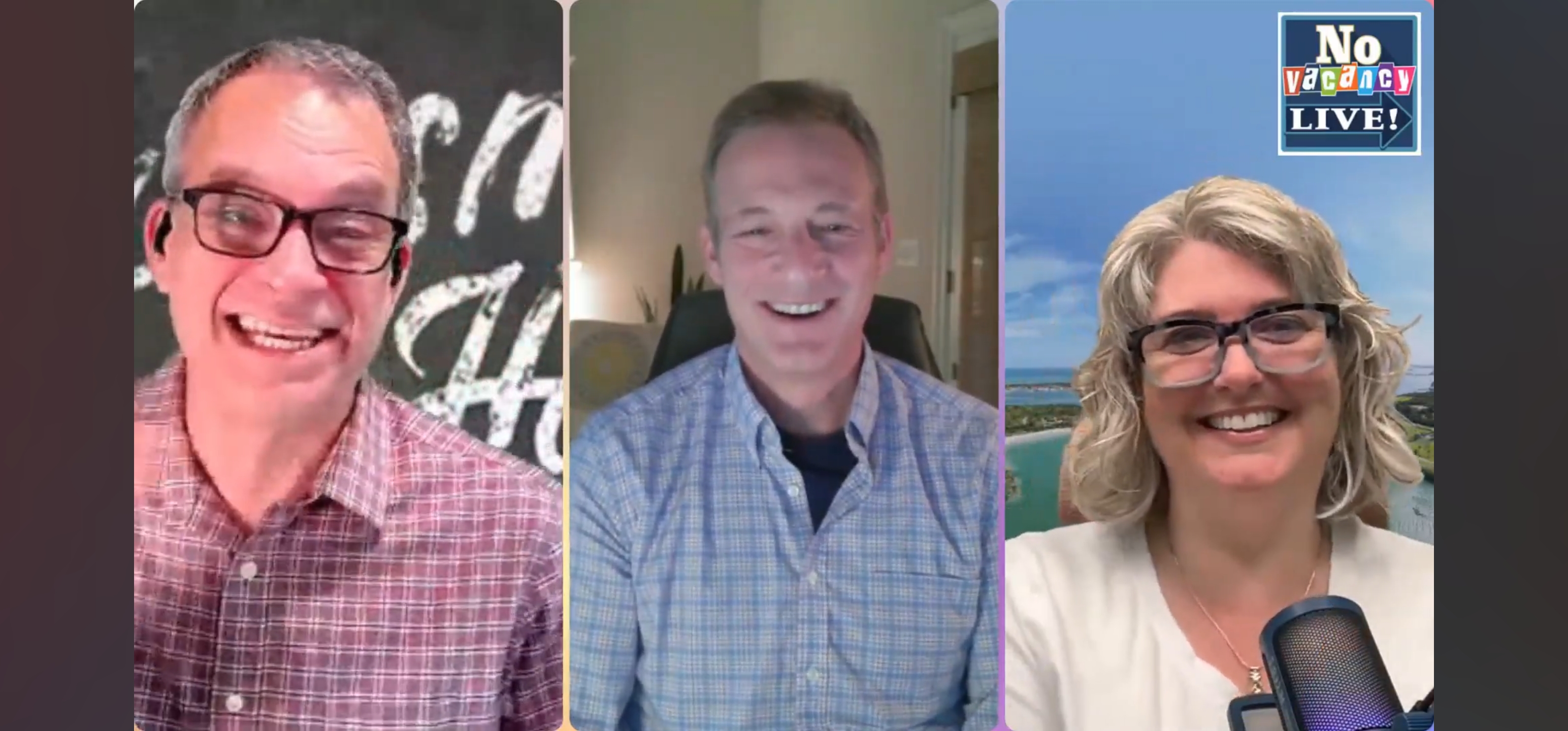
In this episode of No Vacancy Live, Glenn Haussman and Dr. Suzanne Bagnera talk with Paul Sacco, Chief Growth & Development Officer at PM Hotel Group, about how owners can adapt and thrive.
You’ll learn:
✔️ How margin pressures—insurance, labor, utilities—impact operations
✔️ Why family offices and high-net-worth buyers move into #hospitality real estate
✔️ How PM Hotel Group’s Modus division drives growth in #lifestylehotels and #wellness projects
✔️ Why balancing technology with human connection ensures long-term success
✔️ How owners uncover deals through relationships, management partners, and resilience
🌐 Learn more about PM Hotel Group: https://pmhotelgroup.com/
🌐 Explore benchmarking insights at HotelData.com
from our sponsor Actabl
👍 Like, share, and subscribe for more insights on hotel ownership, development, and strategy.
Transcript
Glenn: Hey, everybody, welcome to another No Vacancy Life. Thank you for tuning in and learning with us today. I’m, of course, Glenn Holzmann, your intrepid host, and we got the incredible co-host today, doctor producer Suzanne Bagnara. How are you, Suzanne?
Suzanne: Great. Nice to see you again.
Glenn: It’s great to see you, too. So one of the things that I really want to talk about is really what our owners are thinking about, right? There’s a lot of stuff going on. I’m not a hotel owner, I don’t know. What do you know about hotel?
Glenn: Well, I know how to manage a hotel, but I don’t know how to think like an owner, so I always guest.
Glenn: Yeah, totally. So today’s guest definitely has to think like an owner because he’s hanging out with them all the time. Of course, I’m talking about the incredible Paul Sacco, Chief Growth and Development Officer with our friends over at PM hotel Group. Paul, been too long since you’ve been here on the mic with us.
Paul: Has been way too long, I think a good couple of couple of few years. But it’s great to see you guys and it’s always a pleasure to be on No Vacancy best number one podcast in the industry.
Speaker5: Well thank you Paul. We appreciate you being here.
Glenn: And listen you know I haven’t even had a chance to talk to you since you came on to PM hotel Group this past year. And the things are getting kind of tricky out there. I’m getting a lot of mixed signals about what owners are thinking. Maybe we could start big umbrella thought. What are they thinking? And then we’ll drill down into you know, how you’re partnering with them?
Paul: Yeah, sure. It is a little bit confusing for a lot of people out there right now in terms of what both the operational outlook is and what the deal environment in the near future will be sort of going into 2026, right? A lot of a lot of tailwind, but also a lot of operational realities. Right. I think there’s some margin pressure still from things like insurance and labor and utilities pressure. Rev growth is pretty subdued in a lot of markets. And then I think on the deal side, people are optimistic. We have seen more marketed deal flow with a more diverse asset type. For a while there, it seemed like it was kind of a lot of tertiary markets where you’d see some things come to market. Now there’s some more of the core assets, but there’s still that buyer seller gap in pricing expectations. So orders I think are scratching their head a little bit on the deal side. However, remain really optimistic going into last quarter and into 2026 that things are sort of going to come together in that regard.
Speaker5: Well, thanks for.
Glenn: Giving us an explanation on both sides of it, the operations and the the deal perspective. Sam.
Glenn: That’s a great perspective because I think the scratching the head situation is probably where Glenn and I really start to see what are some of those things that are what are happening. So give us a little bit more context to what are some of those challenges that we’re coming across seeing?
Paul: Yeah. I think on on the deal front, you’re, you’re still seeing some of the sort of geopolitical effects of inbound and outbound travel and some question marks as to where that is going to go.
Glenn: I think it’s way down. Way down. There’s no question mark there. I didn’t see anybody come to the United States right now unless they have business.
Speaker5: Yeah.
Paul: We can remove the question marks. Okay. I think that there’s, you know, there’s sort of. Yeah. So the inbound travel is, is down quite a bit. I think.
Glenn: I should just say to younger people out there, that doesn’t necessarily mean the hotel you’re thinking about right now is going to be affected by that. International travel only affects specific parts of the country in a more, you know, in a larger sense. So, Paul, please continue. Sorry to cut you off.
Paul: Yeah. So to that point, Glen, I mean, urban and and resort markets are showing some resilience as well. So there’s some momentum there. The experiential travel that has really blossomed in the last few years is still super strong. So there’s lots of people that are continuing to look for experience. You know.
Glenn: That’s the opposite. International travel, that trend will go up, up up up up up up.
Paul: Absolutely. Lots of things to be hopeful for.
Speaker5: Yeah. Well, listen.
Glenn: Paul, I know when you say hopeful, what I like to tell everybody is you got to focus on what you can control, right? And I know owners are thinking this way. There’s a lot of other levers they could take. They could change their strategy. They can adapt. They can adjust. That’s why I love this business over covering it for the past 30 years, because you see that. You see that headwind, that blockade. Yet they’re able to typically sail around it and become more profitable at the end. So I do want to put that out there too.
Paul: Yeah. No, no question about it. Owners tend to be very resilient and always find a way to grow their businesses. Generally speaking, it seems across the industry. So people will continue to figure out ways to grow their businesses, to get deals done and to be successful in their hotels. And I think travel in, in our, in our industry, I mean, it’s just always going to be a positive thing and have momentum. People like to travel. People like to travel for both business and leisure. So.
Glenn: Paul, I see you like to travel and I will empty it up and give you a raise and say they need to travel it. It’s part of our right now as as people want to travel 100%.
Paul: There’s also new buyers out there. So you’ve got a lot of family offices and high net worth individuals that are stepping in, people who have been in other segments of real estate. We’re working on a lot of deals right now. Stem hotel group, with people who have been in other classes of real estate that are very interested in getting into the business and here in the US are looking to evolve, as we all know, in markets like university markets and sports markets and those sorts of areas. And we’re seeing a lot of that happen. So there’s a lot of optimism on sort of the domestic travel and what’s going to happen in the near future. And also I think with, with sort of a 26 reset, some rate cuts, potentially per key pricing coming down a bit that there’ll be some really good select for selective opportunities for owners in the wall.
Glenn: I always find there’s always good opportunities for owners out there. It’s just a matter of being able to find those opportunities. That’s why I probably goes to the hospitality conferences. That’s why there’s a whole network of off market deals for people that don’t understand. Everybody knows everybody. So if someone in LA wants to sell a property, someone up in Michigan, probably I smell something and they’re going to get get right on. Yeah.
Paul: Yeah, 100%. I mean, it’s it’s about being present, about being out there and understanding what’s going on. People have a lot of different reasons that they might sell an asset market or off market. There’s, there’s fund reasons, there’s pip pressures, there’s renovation needs and all sorts of things that are going on. So I think owners really do have a lot of hands out there to figure out where there might be deals. And they do rely a lot on people like the management companies, which has become huge. I mean, people are concerned and are focused on sort of ADR growth, RevPAR growth and those sorts of things. But management company selection has become huge, and we found ourselves in a position where we’re teamed up with owners who were looking for deals, and they’re they’re working with us and sort of their partner on uncovering those opportunities.
Glenn: How does that work? Paul. That’s fascinating.
Paul: Yeah, yeah. So we we have a great team in place. We have a terrific underwriting team and a group of deal executives. And we’re very thoughtful about the owners that we’re working with and making sure that we understand what they’re seeking and what their needs are. So we’re focused on doing that and going out and helping them uncover the deal types, deal sizes, markets that they really want to seek and seeing if we can find some of those off market opportunities with them.
Glenn: Yeah, that’s really the the way to do it. So for those of you who don’t know PM hotel Group is a great management company. You’ve seen my interviews with their president, Joseph Bozinovski, before, who will also be submitted to doing an interview with me at the lodging conference. So that’ll be that’ll be good to to to find out. So you know, Paul what do you what are you all thinking about right now over at PM hotel Group in terms of moving your organization forward? And I’m being very vague specifically with that question. Oh.
Paul: Absolutely. So right now we’re about 85 hotels and 15,000 rooms. And one key item for us is that we are independently owned, right. So we can be really thoughtful about how we operate and how we grow. We don’t have any sort of outside investor pressure, if you will, in terms of the decisions that we make every day. So we can be strategic and nimble in our decision making. And that is as it relates to both the operational side and things that we might do in best practices across the organization to operate as effectively as we can, as well as on the deal front and being really selective, making sure that we’re adding hotels that sort of fit within the breadth of the company, where we have coverage, where we have market knowledge, for example. So good mix of assets. We aim to have both independent experiential hotels through our modus lifestyle division as well as core assets, and to grow in a selective manner and operate really effectively for our owners.
Glenn: That’s the that that makes me think of a question right there, Paul. Tell me a little bit about why you separate out modus and create its own lifestyle Style category.
Paul: Yeah. So it’s a division of the company modus by PM hotel Group. There’s 20 or 30 independent some sometimes soft branded assets within that division across the country. California, the mountain states, the East coast, lots of assets that are experiential, wellness oriented, outdoors focused and those sorts of things. And we have a team of experts in that division of the business. We’re at war on the business run, the commercial run, the operations. Make sure that we’re really, really going out creating experiences and tackling what the owner’s objectives are in each of those assets and markets.
Glenn: Makes sense, because the field and stream in Bozeman is going to be very different than a typically flagged property in a tertiary or, you know, urban type location.
Paul: Absolutely. It’s about curating experiences. And and, you know, providing the best experience for the guest.
Suzanne: Well, I would love.
Glenn: To to tap into your owner drive with those in the focus of wellness. So you mentioned that as an aspect of your division, where are you seeing the growth statement in that space?
Paul: Very good question. Very good question. So we’re operating assets and specifically you’re asking about the wellness and experiential hospitality. And we’re operating really across the country. And we’re seeing owners want to evolve in a lot of different market types with this product. So we’re doing, for example under development reset in Joshua Tree which is very wellness. Think immersion in a desert environment sustainability, creativity and experiential design. Right. So we’re doing that out in, out in Joshua Tree and then back on the East Coast in Shenandoah. We’re under development on Shenandoah, which is really a very high end wellness retreat, holistic, outdoor focused. You know, think luxury, but not too far from from the metro area. Right. It’s accessible. We opened up recently in Leesburg, Virginia a boutique lifestyle hotel called the Burke, which is really high end, right in the town center. And then just a couple of miles away, there’s a great event center as well that’s very outdoor focused for weddings and events and those sorts of things. So lots of different growth in that environment. There’s multiple projects that we’ve opened or are working on that sort of fit that vein.
Glenn: Yeah, pretty exciting that way.
Glenn: Yeah.
Glenn: Now are you seeing the crossover you mentioned sustainability in the project. Are you seeing an infusion of sustainability with these wellness concepts or separate than that you’re also seeing a drive on sustainability?
Paul: No, I think we’re seeing it immersed into it. Right? I think it’s it’s across these projects. There is a certain level of sustainability that sort of goes into the formula.
Glenn: Right. And and today, what’s really great about focusing on sustainability as part of that formula is you’re really helping to lower operating expenses in a smart way over the long term. Which is great. Which gets me thinking. Paul, you’ve got a lot of owners out there are your owners, and I know there’s going to be a mix. So are they more long term hold focus? Are they more five year focused? What’s the balance and how do you treat those relationships a little bit differently maybe.
Paul: Yeah. Good. Good question. So most of our owners are fairly long term holders relative to the sort of real estate cycle of the hospitality business. We, we manage for a mix of REITs private individual owners family offices and larger private equity firms. And I think in most instances when these groups buy an asset, some are a 3 to 5 year hold. Mind frame, and some are 5 to 7, and some are even a longer term hold. I think some of these on the lifestyle side, I think some of these assets are trophy assets. That’s that some of the individual owners may own for a longer period of time.
Glenn: So let me jump in on that because this is interesting to me. So if you’re building a lifestyle hotel, there’s so much more of a creative element to it and probably a personal emotional connection for the owner of that property who’s developing that property. Whereas if you’re owning a typical flag property, that’s more of a real estate asset as opposed to this creative exploration and journey. Yeah. Right.
Paul: Well, sometimes I think, I think that it’s a heightened focus on that with the lifestyle assets within the industry. I also think, though, that owners and brands have recognized and operators have recognized that for the most part, people are looking for experiences generally, right? So I think regardless of it being sort of a core branded asset in an urban market, and we’re also under development on Westin Hotels and Marriott Hotels through our sort of core PM hotel group arm. But I think everyone’s recognized that experience and connections to the guest are really, really important because guests are looking to immerse themselves in the local environment and have an experience basically on all their trips, business or leisure. So I think we have to be mindful of that. Though I would agree with you, Glenn, that it is heightened on the lifestyle boutique side of the business.
Glenn: Finally, I got something a little bit right here that’s really something for me to share with my family over dinner. Everyone’s going to be very excited to hear that. So let’s see you know, Paul how are you thinking now as a operations group about helping your customers, your hotel owners be more successful through technology? What I’m starting to hear is, yes, it’s important, but too much, too quick can get you out of the right operations head and all of that. So as people are starting to reevaluate their tech stacks, how are you approaching this? What are you thinking about? How are you making sure your people don’t go too crazy? Cuckoo.
Paul: Yeah. I think in our industry, you always have to step back and remember that it’s about guest connection and the human connection to the guest. Right? So when we talk about things like tech stack and advancing some of our capabilities and efficiencies in that regard. Or you mentioned you bring in AI, right? And it’s all about all of that and the human balance. So I think technology and AI can really help us with predictive analytics. It can really help us with revenue management. I think it also heavily influences the way guests seek experiences today. So that’s changing. So our technology has to evolve in a way that answers that, because the guest is starting to seek experiences in a different way than perhaps they have in the past ten years or so. And that’s evolving quickly. But I think remembering that guest connection is still number one is the key. So you have to marry technology and AI with human balance.
Glenn: And that’s that’s kind of what I’m hearing. And I know people are going to do better at it than others. I’m worried about the the others. It’s one of the things I’m scared about is everybody leveraging technology to save on the expensive side without considering that human side, which in the long term is going to really just hurt that profitability side. Right, Paul?
Paul: Yeah, no I agree. I think everyone, especially in this environment where you have subdued revenue growth and you have some, you know, some operating margin pressure across the industry right now. We’re going to be coming out of that. And people are continuing to travel, as you said, they need to travel. And that, as it has in past cycles, will continue to evolve and will do well as an industry. But I think it’s really, really important to remember that, as I said, guest connection with staff at the hotel and the experience that the employees and the staff create and curate at the property level is what keeps the guests coming back. So I think that’s the key to returns long term is guest intent to return is going to be driven by the experience they have.
Glenn: Yeah, Suzanne, it sounds so simple.
Glenn: This is kind of what we we put in AI and machine learning course out for industry professionals to learn and understand is how can you take those tools and support staff members so that they can truly, as you say, generate those experiences with their consumers? Because I think we’re still in a generational divide, just like we were when Mobile Keys came out, for example. We were trying to force people to use keys on their on their cell phone, but people didn’t necessarily have enough bandwidth or cell power or apps to be able to do that. They still think we’re going to continue down that path for quite some time, and it’s a challenging aspect for owners to invest in that level of technology. And I don’t see that going away. I still see that as a very big conundrum in the next couple of years.
Paul: Yeah, I think it remains that way. I think that’s continuing to figure itself out. And I think guest adoption of the technology sort of. Eric’s right. You still have plenty of guests that just want to walk in and go to the front desk and check in two keys for their room, and that there still will be that contingency, to your point, for a couple of years.
Glenn: Yeah. Well, I.
Speaker6: Will tell you.
Suzanne: Do you still not you know.
Glenn: One of the problems I’ve had is that some of the major hotel company apps, the key function doesn’t really work, and you still have to go to the front desk anyway. I’ve had this now with multiple major brands. My understanding is the newest technology that’s that’s out there now avoids a lot of those things that cause those problems. So eventually I’ll get into it. But honestly, Paul, it’s kind of like the concert ticket thing. I kind of when those went away because now I don’t have souvenirs and I’ve got a stack of books.
Paul: Yeah, sure.
Glenn: We’re here to the moon 27 times.
Speaker6: And.
Paul: My stones one. I’ve gone to like late. 3040 concerts since they came back. And I really should have kept all those tickets I got.
Glenn: I got Phish stuff going back to like 91, 92.
Paul: Awesome.
Speaker6: That’s awesome.
Glenn: You can’t even print them out now when? When you’re on their phone. My husband did a concert and like, he literally handed me his phone. He’s like, figure it out. I was like, well, just take a screenshot and then you do that. So this does not work. I’m like, oh my goodness, this is like more complicated than.
Glenn: I will tell you. You know, we’re at a we’re at peak capitalism now because Phish does only tickets online for you, but you could buy a souvenir ticket for like ten bucks that they’ll send to you.
Paul: And more boxes. You get a souvenir ticket, I love it. I like the screenshot and print version better.
Glenn: So you go to Etsy and somebody will make a souvenir for you.
Speaker6: All right, Paul, before we.
Glenn: Wrap up today, I’m curious as to as during your career. Could you give us one story Worry about something that you didn’t necessarily want to do or think you could do, and how you got through that and how you grew from it.
Paul: Very, very good question. One thing that I didn’t necessarily want to do or think that I could do and got through it. I will tell you that you and I did a show a few years ago.
Speaker6: Prior company. Right.
Paul: I was.
Speaker6: At.
Paul: A company, and this was a very sort of akin to what we’re talking about here on the technology front. This was a very tech forward company had its sights set on all of these things that we’re talking about for advancement in technology, and was really more in that residential hospitality space. It was a very interesting challenge to be able to go out and evolve an entirely new concept in the industry. Yeah, we met some of the team, and we we really just partnered up, had a terrific concept, went out and really, really grew it. People believed in it. Guests loved it. And I didn’t know when I first started if that would be the outcome because I’d never done it before. But with an unbelievable team around me, we were able to go out and grow and evolve. So I think it’s just an example of something where, you know, there’s a great new idea out there, even if it’s sort of early adoption years, if you really put your mind to it and you have a great team around you, you can go out and make it happen. So I learned that from from that experience.
Glenn: Awesome. I absolutely love it. Suzanne. Got anything else for Paul here?
Glenn: I just love hearing your perspective and seeing that you’re something different and connecting with owners and just making the next generation of hospitality are come to the forefront. So kudos my friend.
Paul: It is a fun thing to do and this is the best industry in the world, so I’m glad we’re all in and around it. And I appreciate you guys having me on here today.
Glenn: Hey, thanks. I thought we could find out more because you’re, you know, chief growth and development officer. We got to give you a plug over here. Absolutely. So how do we find you? Give us your drop. Your drop your details. Yeah.
Paul: Okay. Verbally.
Speaker6: Yeah.
Paul: Yeah. You could you can reach me at Sacco at PM Hotel Group.com. And we can talk about the industry and growth together.
Glenn: I love it. Thank you. Paul. Really appreciate you being here. We’ll see you later. And hey, we’ll see you guys later. But before we go, make sure that you, like, subscribe and all that kind of stuff. Follow us on LinkedIn. Come on. Would you get all the great information out there? And while you’re on your journey, remember, you’ve only got one life. So blaze on and.
Glenn: Follow your passion.
Glenn: Your data.

More Episodes
-
March 2, 2026
Global Hotel Pipeline: What Brands See vs What Owners Feel
-
February 28, 2026
We Made a Hotel Pet Peeves Bracket… and It Got Personal
-
February 26, 2026
1017: Hotel Pipeline Update – Conversions vs New Construction Across the Americas
-
February 25, 2026
Customer Journey Series, Ch. 1: Why Hotel Guest Journey Matters More Than Ever



Subscribe