September 9, 2025
Scaling Up or Staying Lean: StepStone Hospitality on Leadership, Growth, and Empowering GMs
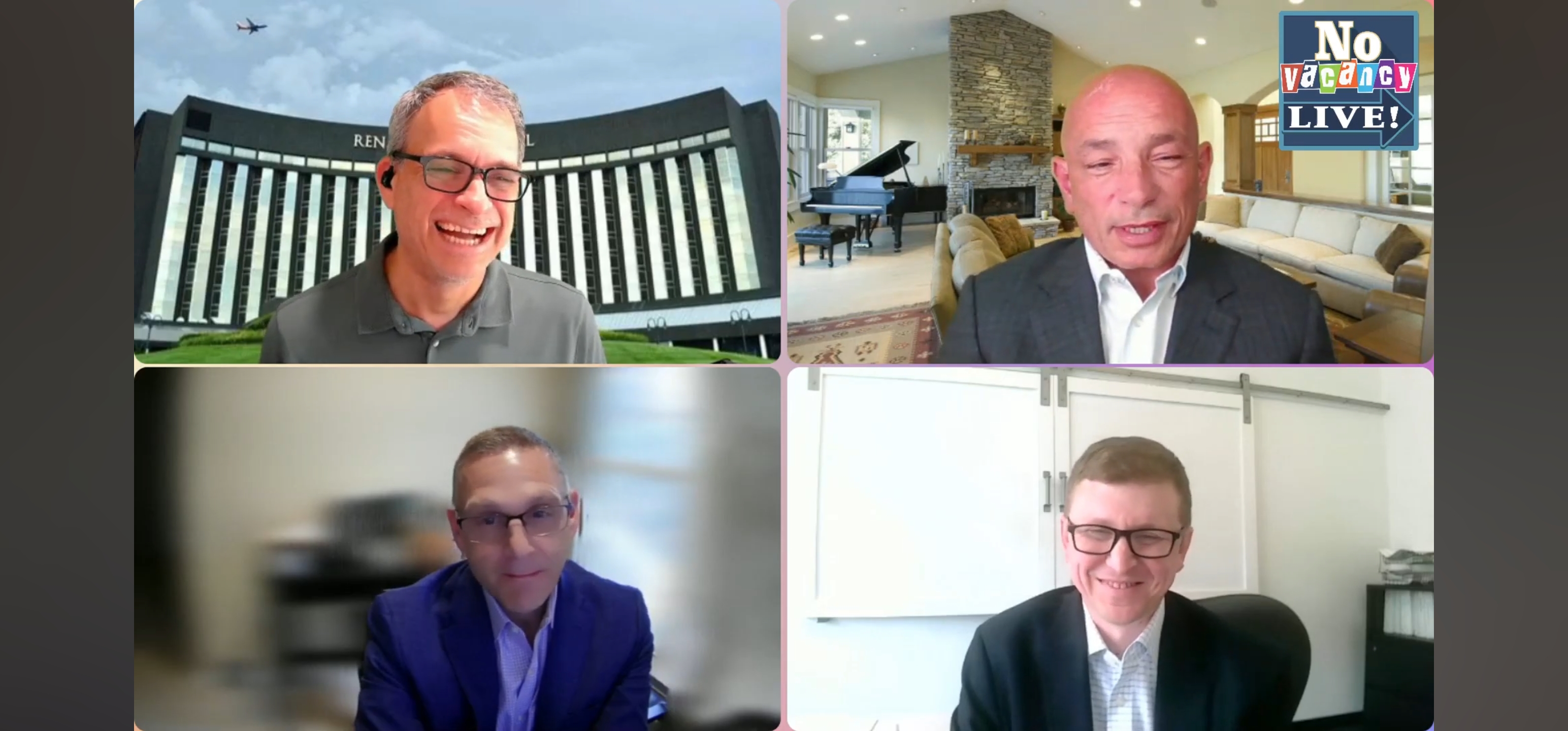
On the latest No Vacancy podcast, Anthony Melchiorri and I had a great conversation with Blair Wills, CEO of StepStone Hospitality, and Michael Broadhurst, COO of StepStone Hospitality.
StepStone has grown from a single property in 2007 to a 30-hotel portfolio today—and they’re at that critical inflection point where management companies have to decide if they’re going to stay lean or scale up.
We dug into some big topics:
👉 Why GMs are really the CEOs of their hotels
👉 The tough balance between owner expectations and on-the-ground realities
👉 How tech only matters if it actually frees up time for guest service
👉 Why “growth from within” isn’t just nice to say, but essential for long-term success
One line that stuck with me: “We’re in a people business. It’s all about finding the right people and giving them the tools to succeed.”
That got me thinking… how are you creating growth opportunities for your teams right now? Is it about training, mentorship, new tech, or just giving them more face time with guests? Would love to hear what’s working across the #hospitality community.
Big thanks to Actabl for supporting the show! They’re helping #hotels get smarter insights and stronger profitability—and now offering benchmarking data at HotelData.com
Worth checking out as we head into budget season.
Always grateful for great conversations on #leadership in our industry.
Transcript
Glenn: Everybody a hospitality friend. Glenn. Here. Listen, we already know Actabl gives you the power to profit, but now they’re giving you more actionable insights to drive that profitability. Do me a favor. Take a moment and check out HotelData.com. You’re getting set for budget season, right? And this new benchmarking data is going to help compare your hotels performance for the rest of 2025 and into 2026. Please check out HotelData.com or the actabl.com. Have a great day and enjoy the show! Hey everybody, thanks so much for tuning in to another No Vacancy I’m Glenn Haussman. We got Anthony Melchiorri back in the house today. Anthony great to see you. What were you out in your European villa all summer?
Anthony: Great. Great to be seen. I am, if anybody follows me they would call me stealth right now. I know any time I’m busy, I’m. I’m speaking. I’m flying around the country, but I’m keeping everything. Okay. That’s true. You know, big things are about to happen.
Glenn: And he’s definitely not operating as a hospitality operative for the the US government overseas. That’s. Don’t I don’t even know why you got people out there thinking that. Because it’s.
Anthony: Not. How do you. You know I’m not. If I was, you wouldn’t know. That’s true.
Glenn: All right, so today I’m excited, Anthony, because we’re going to be featuring a couple of gentlemen that we have not yet had on the show. Could you imagine? We’re coming on a thousand shows, and somehow we missed these guys. But we’re going to make up for today. I’m talking about, of course, Mr. Blair Wills, CEO of Stepstone Hospitality, and Mr. Michael Broadhurst chief Operating Officer. Gentlemen. Great to see you guys. How are you today?
Speaker3: Great. How are you? Good. Good to see you, Glenn. And good to see you, Anthony.
Glenn: Thank you guys. So I hope you all had a very good summer season. Labor day is in the past. And where my first question to get this thing started is how you feeling going into fall conference season?
Speaker3: We’re excited. The the the year in the, in the summer seems to have flown by and we’re couple weeks into budget season and and planning for 2026, which is exciting and and conferences as well. So we’re looking forward to a a busy and productive fourth quarter.
Anthony: And are you seeking the conference’s bear fruit? Are they are they changing or are they still kind of the same, or are you finding that’s where you find your business and that’s where you make connections? Is that really?
Speaker3: I think it’s a combination. I think that the conferences are productive, and I think it’s always it’s always great for us to to reconnect with everybody that we maybe haven’t seen or talked to recently. And but so I think it’s productive, but I think a majority of our, of our business development is happening in between them, and we’re connecting on a regular basis with the majority of either our clients or potential clients, but they’re definitely productive and yeah, worth worth the visit.
Glenn: So yeah. So for those of you who don’t know stepstone. Hospitality is an awesome management company. Guys, you got something like 250 years executive experience. Which is pretty awesome stuff out there. They’re also a restaurant management company out there. And, Michael it’s great to see you out there on the on the road. What’s the general tenor that you’re feeling? Out there? And what are you seeing at your hotels? Yeah. You know, and thanks again for for having us on the show. You know, really, you know, the downward pressure on on expenses and labor is still there. You know, the, the brand, you know, the brands are increasingly, you know, increasing the expectation, you know, and and it’s still a challenging environment out there. And for us, the most important thing for us is our team, you know, providing the tools and resources for our team, not only our home office team, but our property team. And, you know, really ultimately comes down to accountability and results. And that’s what we do when we go to the properties that we walk to properties, we talk to our clients, we talk to the teams, and we do as best as we can to keep on pushing the needle on this ever changing and difficult environment. You know, when rev par is basically essentially flat year over year and slightly increased projections for next year we have to become nimble and we have to figure out other sources of revenue. And we got to get creative and, and candidly get a little scrappy when we need to. So that that’s what we’re seeing and that’s what we’re doing when we’re out on the road.
Anthony: So so I have a I have a 75 part question. We’ll start with the first. Okay.
Glenn: Which is broken down into 37 parts. Yeah.
Anthony: With how we view scrappy with the margins. And we’ve been here. I mean, we’ve been at this a long time, guys, and we’ve all been here. Right? When that comes down to the guest resort fees, parking fees, you know, maybe an increase, things like that. That’s one end of it. So how are we selling that to the customer? And number two, when those margins get tighter, how do we get the general manager to perform and really feel valued and appreciated? Because we know everybody from the guest to the employees feeling squeezed. So what is your company do uniquely different? That makes the environment feel better for longer, you know.
Glenn: And that that’s a I mean, gosh, that’s a great, you know, 75 part question. But it’s it’s fantastic. I mean, first thing for us, the most important thing and you probably can’t see this, it comes down to our core values. And number one core value was hire the best people. And we solely believe that the general managers of our hotels are the CEOs of our hotels, and they have to be involved in every aspect of that operation and our sole reason why we exist is to support those, the general managers and making sure that they have the supplies. It we’ve spent, you know, a considerable investment in the last two and a half, three years on our IT and our tech stack. We have deep, you know, let’s say the best tech technology stack to support our general managers out there, making sure that they can perform if they’re not sitting in their office doing administrative day to day tasks that they’re out front facing with our customers and our associates every single day. Because, like you said, as we continue to increase parking, as we continue to look for ancillary fees, it all comes down to we must provide best in class customer service. If we’re not, they’re going to go out the door. The guests are going to go to the competitor down the street. That’s one thing that’s happened in this, you know, this, this, this environment that, you know, you have to recreate loyalty not only on the associate level. You have to recreate loyalty to the guests.
Anthony: Again, I’m preparing you know, I talk a lot to GM, and I’m preparing actually next week to do a conference at the GM roundtable. And my number one thing. My number one slide basically is kind of what I said to you. It’s, you know, people say it’s harder today than it was when we were in the business. And I disagree with that. I say it’s much harder. And, and, and I actually get a little bit more graphic than that. And, but I think it’s a self-inflicted wound. And I think you just said it. Number one core value is hire good people. But what’s happening today is people. It’s hard to find people. They’re saying, even though actually people coming back in the industry, but because they had this image in the back of their mind, it’s hard to find good people. They’re settling for mediocrity. And we know the scariest word in our in our businesses mediocrity, because mediocrity isn’t memorable. So how do you prevent your GM’s from doing that?
Glenn: Oh great question. Yeah, yeah, yeah.
Speaker3: No, look, it is a great question. And I think it’s it’s very difficult because I think you you hit the nail on the head that you know, as as as it’s harder to find people. People are basically saying that, look, we can’t replace that person. We’re going to settle. We’re not going to hold people accountable. And so, you know, a big part of our process is making sure that we have that accountability built into it. Look, we want to develop our games. We want to develop our team members from within. Our focus is on growth from within and providing them those tools and resources. And that’s our first. Our first approach is, is making sure that we’re providing them those tools to succeed. But if they cannot succeed, we as a team owe it to them to hold them accountable. And they’re going to learn from that. And if they if they can’t learn, then we’ve got to figure out what’s what’s a better role or what’s a better way to go on that front.
Glenn: Yeah.
Anthony: And and I think people are finding that it’s better, even though we’re all short staffed. It’s better to be short staffed than to spend three hours in human resources with someone that’s not performing.
Glenn: Good point.
Speaker3: Yep. Yep. Yeah. Yeah. And I think it’s, it’s, you know, you know, Michael talked about hiring the best people and, and that that’s really the focus. And, and we’ve got to make sure that as we are are working with our teams, we’re motivating them. We’re they’ve got to understand the whys behind why we’re doing some of these things and how it all ties into the big picture. And that’s something that we stress with our teams, is we’re going through our PNL reviews, talking about our strategies and our approach because they’ve got to understand, you know, we’re not just doing these things. There’s there’s a bigger picture from an investment. And then I just want to add to I think, you know, we’ve got to figure out as a, as an industry, how do we get people excited about hospitality as a career again?
Glenn: Because that, right.
Speaker3: We’re adding we’re adding technology. We’re adding these components. But the goal then is for them to be able to spend more time with the guests, create these experiences. And I think I don’t have the answer to that. If we did have it, it would be great. But I think it starts with with the schools and letting people know that there is more. There’s a career path within hospitality as part of that.
Glenn: So yeah, and I think that back into what you were saying in regards to wanting to make sure that you can grow in the organization, you we have to connect the dots of this is not a job. This is a career path. And we’ve said this a thousand times and a thousand episodes that people don’t typically realize. There’s so much more to the hospitality industry above that GM level. And I don’t mean that in a class sort of way, just different types of jobs that are.
Speaker3: Yeah.
Anthony: You know, I mentor a lot of people you know, 30, 40, 50 year olds, 20 year olds. Right. And one of the things I say to people is don’t be scared for the next step. If the next step is inside the company, that’s great. If the next step is outside the company, that’s great. But right now, where you have an opportunity that hasn’t been seen in many, many years that you can really go from a front desk clerk. And we’re seeing it on LinkedIn. Look at LinkedIn. There’s somebody who is I won’t say what hotel, but I think the vice president of PR or marketing for a major casino. And literally nine years ago, they were a front desk clerk. Yeah.
Glenn: Wow.
Anthony: Where can you go from making front desk clerk money to making way over six figures in nine years, and have a title that will get you to the next level, right pretty quickly. And that’s one of the things that we are challenged with as a, as a organization, as a company is to convince people that you can make a lot of money in this, in this industry.
Glenn: Yeah.
Anthony: For sure.
Glenn: Absolutely. Yeah. Guys, I’m curious. I’m just sitting here thinking we talked a lot about the property level stuff, but a lot of owners aren’t necessarily hotel years, right? You’re they’re trusting you with their investment, but they might have a whole portfolio of things and they don’t really get the business. So what’s your philosophy and how do you educate the owners on how they should be thinking about this as an investment in terms of your relationship with how you manage those properties, to set their expectations so you could create clear messaging and benchmarks?
Speaker3: No, I think that’s I think that’s critical. Glenn. And look, we have a 30 hotels overall 15 different clients that we work with. And it’s a wide range. It’s the, you know, we have institutional clients, we have family office, we have first time home buyer for first time hotel buyers that are just getting into the industry. And and, you know, we always outline with our, with our clients that, look, we exist to provide our owners the, the results and, and, and our focus is on meeting and exceeding their expectations. So we sit down with them and and really want to understand their goals. Is it a three year hold? Is it a we’re going to hold this forever. You know what is their what is their approach and what do they want to accomplish.
Glenn: And that would really gauge an operational philosophy with that. Sorry. Please go on. I just teach our younger viewers what that meant.
Speaker3: So yeah. So so there is a difference. And we provide that flexibility in regards to our approach with, with each different owner. And that’s how that’s how we really, really target it. And we pride ourselves on a high level of communication, a high level of transparent transparency and a high attention, you know, a low ratio of regional team members or properties to regional team members so that we can provide that attention and provide the resources and tools, whether it’s a weekly call, some owners want a weekly call that we’re on and we’re discussing some don’t don’t need that much of a communication vehicle. So but it’s it’s explaining and outlining, you know, what we’re seeing, what we’re trends are and what we’re doing. You know, this may be happening, but what are we doing to fix it or what are we doing to, to address that that situation whether, you know, rev par is is flat. How do we find creative ways to drive revenue through, you know, renting out parking spaces, unused spaces in the hotel, things like that, where we can, can, can work with them on that piece.
Anthony: Where are we as far as movement as far as either new builds, as far as rebranding as far as capital? And I know now the season’s coming in that, you know, we’re going to get together all these conferences. We’ll find out. But where do you see.
Glenn: Conversion season, baby?
Speaker3: That’s what they know, I think. Yeah.
Anthony: But are you now that they said they’re going to come down maybe a little bit and I don’t know what.
Speaker3: So no, I think, you know, on, on general acquisitions and in new builds. Yeah. It’s been slower. I mean we have seen some new build activity, but it hasn’t been nearly as much as Historics. And you know, I think the, the interest rate market and what’s going on in the economy as a whole, there’s been fewer and far fewer deals that we’ve seen materialize. And the ones that that that have penciled have been very competitive with multiple groups looking at those. So I think, you know, I think we expect as, as the as the sorry, I’m hearing an echo as the as the interest rates and, and we get into fourth quarter that we might see some more activity on that front.
Glenn: Yeah. I tend to agree with you as well. And I hope that is the the case. So, you know Michael you’re, you’re talking about investing. You mentioned before reinvesting in that tech stack. This is where I feel like we’re at a critical juncture right now, right. So how are you thinking about investing in that that tech stack? And to make this an even harder question for you, how do you know it’s the right time to invest in a particular technology? You know. You know the rest of the question. Yeah. No. Agreed. And, you know, I think I think what’s out there that, you know, the elephant in the room that everybody’s talking about is AI, right? How did AI impact our industry, which, you know, none of us really know the full impact of what that’s going to be like for, for years to come. But, you know, for us, we’ve had many, many long partners for, for years and years and years. And we went back to those partners and, you know, particularly on a bi perspective, you know, like, how can we continue to, you know, get, get, get as smart as our owners and, you know, honestly predict what we’re going to do, but how continue to drill down on our analytics. And you know, the thing the thing of what I think makes, you know, Blair and I relationship or, or however you want to call it works so well is like Blair comes up through the asset management side of, of the business.
Glenn: Right. I’ve come up through the ops side of the business. So, you know, we always take a look at it in the ownership lens. Right? Everything we do has to have an ROI, right. Our our tech stack has to have an ROI. Ultimately, how can we make our teams more productive? I don’t want to give them, you know, I’m very mindful. And unfortunately, the brands don’t necessarily subscribe to the same same thought process is I don’t want to give them 5 or 7 different, different pieces of technology to use that doesn’t interface. Right. And and they have expert in these 5 or 6 different fields. We want everything to interface. And and that way it’s it’s easy right. Whether Labour comes in you’re seeing it from your revenue standpoint. You’re able to forecast error. You’re able to budget there. And certainly on the sales and revenue front, you’re able to, you know, make make very educated decisions when it comes to the revenue strategy. Right. You know, and and then on the on the finance side, right. There’s how do you how do you do procurement and how do you do that. So those are all things.
Anthony: Yeah. And you know I think the brands do an amazing job of putting the tech stack together and making it very easy for the hotel psych. Okay. It’s really it’s really ridiculous. It’s beyond ridiculous. I have a lot of words I can use that I won’t. You’re seeing the general manager having to do more with less. It’s really more with nothing. And they’re working the desk. They’re working the outlets, they’re working everything. And when I see and there’s a company I work with that has just really redeveloped their entire tech stack stack. And you see, completely change, like accounting takes them ten minutes as opposed to three hours. You know, they’re working on one platform instead of working on ten platforms. It really is. So the ROI on tech is not always seen because you can’t really say, well, now the general manager is doing this, this and this. So now he’s more productive. It’s like some of it is just you just have to have it. Even if it’s there’s not an ROI on it because it just is easier for everyone in the hotel, especially when you have less full time employees.
Speaker3: Yeah. And I think, you know, as we look at tech, our, Our strategy has been really to focus on ways we can free up the. The team members to allow them to focus on GSS or provide that guest experience. As we are rolling these out, it’s not just rolling it out to roll it out or to your point, it’s it’s there’s there is a, a a strategy behind it so that we just don’t have all these, these tech items and it’s great. It’s then so that they can focus on those pieces. And the key in all of it is the team members can’t. They can’t. They still have to know their numbers. They still have to know what’s going on in the hotel. The tech can’t replace everything because the GM, as the as Michael was saying earlier, is the CEO needs to know what’s going on, where is he or she at from a from a checkbook standpoint, from a labor standpoint, on a daily basis, because that’s critical. We can utilize technology, but it’s meant to free them up so that they can be strategic about that and be strategic with the guest.
Glenn: Anthony you’re muted.
Anthony: And that’s and that’s another interesting thing because when I was coming up in this business you know you had an accounting department and they handled everything. The checkbook I didn’t know where the checkbook was until I went into a different business. And the owner gave me two brown bags and said, which one do we pay today? Right. I was like, oh my God, we have to, you know, there’s got to be money in the checking account, right? So that’s another brain like you talk about asset management and operations. I was operating my whole life, and then I became the first vice president of Tishman Asset Management in New York City. And someone said to me, you were in the hotel business. Now you’re in the business hotels. A general manager has to be in the business hotels. There’s no longer can they be in the hotel business. And like is are you seeing that switch with general managers? Is it is it the younger general manager easier or like is it difficult to get an older guy like me to kind of understand that?
Speaker3: No, I think we’re seeing I think we’re seeing that switch. And I mean, you look at, at owners and, and people in the industry, I mean, there’s access to so much data out there on an on an instant basis. And so the GM has to be on top of all of those different components. And I think as part of our role, and I think what we do do very well, really sifting through that data in regards to because you can get data overload, there can be so much data that it’s, you know, what do you look at and parallelizing. Yeah. How do you how do you take that data and turn it into action and turn it into results? And I think that’s what what we focus on with, with our team is we provide support to the hotels. But you’re right, the, the, the GM has had to shift from what was truly just running an operation to now multiple components on the finance and really the business of hotels overall from a real estate perspective as well.
Glenn: Yeah.
Anthony: That’s been a slow bake like the technology like to really get your managers to be businessmen or businesswomen and not just you know, be nice to the guests. And that was a real shift for me. So why don’t we. I don’t think we really went and I know we’re going to wrap up soon, but we didn’t really go deep into the history of your company and how you started. And why don’t we talk a little bit about that?
Speaker3: And yeah, no. So we yeah. So we’ve been around since 2007. Tom Russo is our founder and executive chairman. A long history with Howard Johnson’s Ponderosa ground round restaurant side of the business as well. So we started with one hotel.
Glenn: Right there because Ponderosa was the best one. I was like, yeah, let’s go over there. I’m like, I get to eat steak and they bring it to my table, but we order it there. It was the coolest beefsteak.
Anthony: Charlie’s my friend.
Glenn: Dude, I missed out on the free beer, wine and sangria. I was a little too. All right. Sorry, Blair.
Speaker3: No, no. All good. So. Yeah. So we started in 2007, started small with one hotel, and it built up to to 30. You know, a lot of the, you know, as Michael highlighted, our core values, they, they stem from, from Tom’s history in the business and the hospitality business, and those are what we really live and breathe, each and every day. And right now, we’re a portfolio of 30 30 hotels with a couple in the pipeline here in September that we should add. And, you know, we really focused on building our team as well. I mean, we are up to over 30 full time employees on, on about property basis. So really focused on as we grow as an organization, making sure that we’re hiring team members in advance and we have those resources to to facilitate that growth. That’s a big.
Anthony: So let’s talk about that for a second. 30 hotels I know what the margins are on management companies with 30 people in the executive office. You have to have a commitment for growth and you have to have a good, you know, equity somewhere to be able to fund that, because that’s where most management companies go out of business, right? When they when they do the 30 people in the exact office, you have 30 hotels. And we’re going to have that growth. So, you know, talk through that strategy because that’s a that’s a that’s a challenging, scary strategy.
Speaker3: Well yeah. You’ve hit the nail on the head. I mean, the focus.
Glenn: Let me just tell people you’re at that point now where you have to decide if you’re going to be this size or go big, because 30 seems to be around an inflection point for management companies. Sorry. Please go on.
Speaker3: No, no. And we have capacity and our focus is is on that growth Anthony. And that’s, that’s you know, that’s why we’ve we’ve structured that way is so that we can can be prepared for that continued growth. But we want to as we grow. I mean, our focus on growth is in the right spots. And and we’re not focused on growing just to grow. Like as I was saying before, our whole focus is on being able to meet and exceed our owner’s expectations. And if we can’t do that, I mean, we have passed up assignments because we’ve not we’ve not felt there was the we couldn’t achieve. We felt there was an unsurmountable goal or what was out there was not realistic. And so our focus is on growing in the right spots and growing efficiently so that we can build long term relationships with our, our owners and our clients.
Anthony: You know, just I, I thought, you know, in, in dealing with owners, when an owner comes from a franchise business or a, you know, quick serve restaurant or restaurants, and they come into the hotel business, that’s, to me the hard shift for, for an owner because they’re so cost sensitive and they don’t understand the profit margins of hotel different than, you know, restaurants. And you’re smiling so much and, and it’s it’s about revenue management and sales strategy, not about saving one penny on a pen. Do you have do you see those challenges?
Glenn: Blair, I just want to jump in. No, it’s Anthony that. That’s a great that’s a great. You know, I guess an analogy if you want to, if you want to call it that. And, and and Tom, being a, a lifelong restaurateur, he always lean with restaurants first. Right. He will he still calls our hotels units. Right. And he has some basic philosophies. And, you know, we were just in the office with him this week. And, you know, he he’s very much a part of our strategy and our and our growth. But he looks at basics like, you know, when we go to hotels, you walk the hotels and you do your line checks, right. And and the daily report right in the flash report. And, but there’s a lot of those basics that have have been around for so long, which is what we talked about earlier about general managers not understanding those basics, right, that we need to keep on doing. But as you mentioned, it’s all about driving top line. Right. How do we continue to drive top line. And that’s where our technology comes in. So we can make those informed decisions to continue to drive that top line. Because particularly on the smaller hotels, you’re your base level is your base level. You can’t really move it. You still need one person at the front desk. And a lot of our hotels are at those base levels, right. You know, so it’s all it’s all about driving that top line and being able to make those.
Anthony: I, I learned the hard way. The flash report is the most important report and I. It’s my Bible. And Well, I won’t tell you the name because you probably know his name. He’s threatening to beat me up because I didn’t know my numbers, but one morning, I. He came to this hotel, very beautiful hotel in New York City, and he asked me what the average rate was, and I was in that order, and I was getting my reports ready, and I usually look at that, but I hadn’t gotten there yet in exactly where we were. And I said, I don’t know, sir, let me go look. And he goes, if you don’t know your numbers again, I’m going to. Yep. And I was like, sir, yes, sir. You can’t talk that way anymore. But I’ll tell you, I never forgot my numbers. Yes.
Glenn: I will tell you that that Tom, it’s it daily that Tom is asking me questions about daily reports for hotels. Right. You know, and obviously we, we have, we have a team. But he is he’s zoned in to certain things on that daily report that he is looking at as, as that operator and as that owner’s mindset. Right. If your revenue is not there, your labor and your expenses have to be in line, you know. So yeah, that’s.
Anthony: I still check out what balance and adjustments and corrections. Yeah, yeah, yeah.
Glenn: Awesome. I think this is probably a great place for us to wrap this out. Otherwise, we’ll be talking for another hour. Gentlemen, any any final thoughts before we we wrap this up today? Michael Blair.
Speaker3: No, I just want to say say thank you to you guys. We really we really appreciate the time and and having us on. And, look, it’s if I was to leave, I guess a final thought. And we’re in a people business, it’s all about finding the right people. And that’s our focus here and making sure we we’ve got the right people in the right spots here at cepstrum.
Glenn: Yeah. And likewise on that, too. I mean, we’re big fans of your show and what you guys are continuing to do for the industry and, and advocates for the industry. So thank you very much for having us. We really we are the luckiest people in the world because we’re in the coolest business in the world. Michael Blair, thank you so much for being here with us. We’ll see you next time. So Anthony, take a couple of messages, a couple big messages away from today. We have to remember we’re in a people business, something that we’ve been preaching. And another thing we’ve been talking about is owners and operators are feeling that vendor overload out there.
Anthony: Oh my God. Yeah. A matter of fact, I put a no vendor policy a long time ago. If I want something, I’ll call you. But you know. But but, you know, you said two words that I really love and that we should all have tattooed on our head if we’re running businesses. Yeah. Vote more towards growth from within. Okay. Yeah. That is a policy and a philosophy. But growth from within isn’t finding good people and giving them challenges. Growth from within is asking those good people, are you okay? What’s your next move? What do I need to do to prepare you? Did we give you everything you needed? Okay. I want you to have my job. I want you to get to the next level, even if you need to leave. Every little while and get more experience. You know, you have to really want people to be successful. So hire a because people don’t want to be around people, and people don’t want to be around people. So you gotta hire a people, and you just gotta keep motivating them and keep giving them opportunities to grow and not be scared they’re going to leave.
Glenn: Are you shouldn’t be scared they’re going to leave. And I’ll tell you what, Anthony, I’m seeing on LinkedIn a lot lately because there’s a lot of jobs going on, a lot of congratulatory notes from people, from their the folks that are under them that have now gotten new jobs, that are getting promoted, that are filled with joy. And that’s the kind of leadership I like to see.
Anthony: And that’s the only way to be because if somebody said, I put too much into this person, they left. What do you think they’re going to do? It’s not long or 20 years and you get a Rolex. People leave and but they’re going to help you, you know, with your career and you’re going to help them. And that’s how it that’s how it works.
Glenn: Yeah, totally. All right, everybody, thanks so much for watching today. Be sure to like, share and subscribe this video. Follow us all that kind of good stuff. And then don’t forget if you’ve got one life. So blaze on and.
Anthony: Be kind yourself.
Glenn: See you all next time. Bye bye.

More Episodes
-
March 26, 2026
Hotel Profitability in 2026: Work Every Line Item
-
March 24, 2026
1024: Hilton + Graduate: How the Brand Scales Without Losing Personality
-
March 23, 2026
Picking the Right Hotel Operator in a Chaotic Market
-
March 21, 2026
How to Grow TRevPAR When RevPAR Slows
Subscribe