February 5, 2025
Exclusive Podcast with Grace Bay Resorts’ Nikheel Advani | Passion, Leadership & Luxury Hospitality
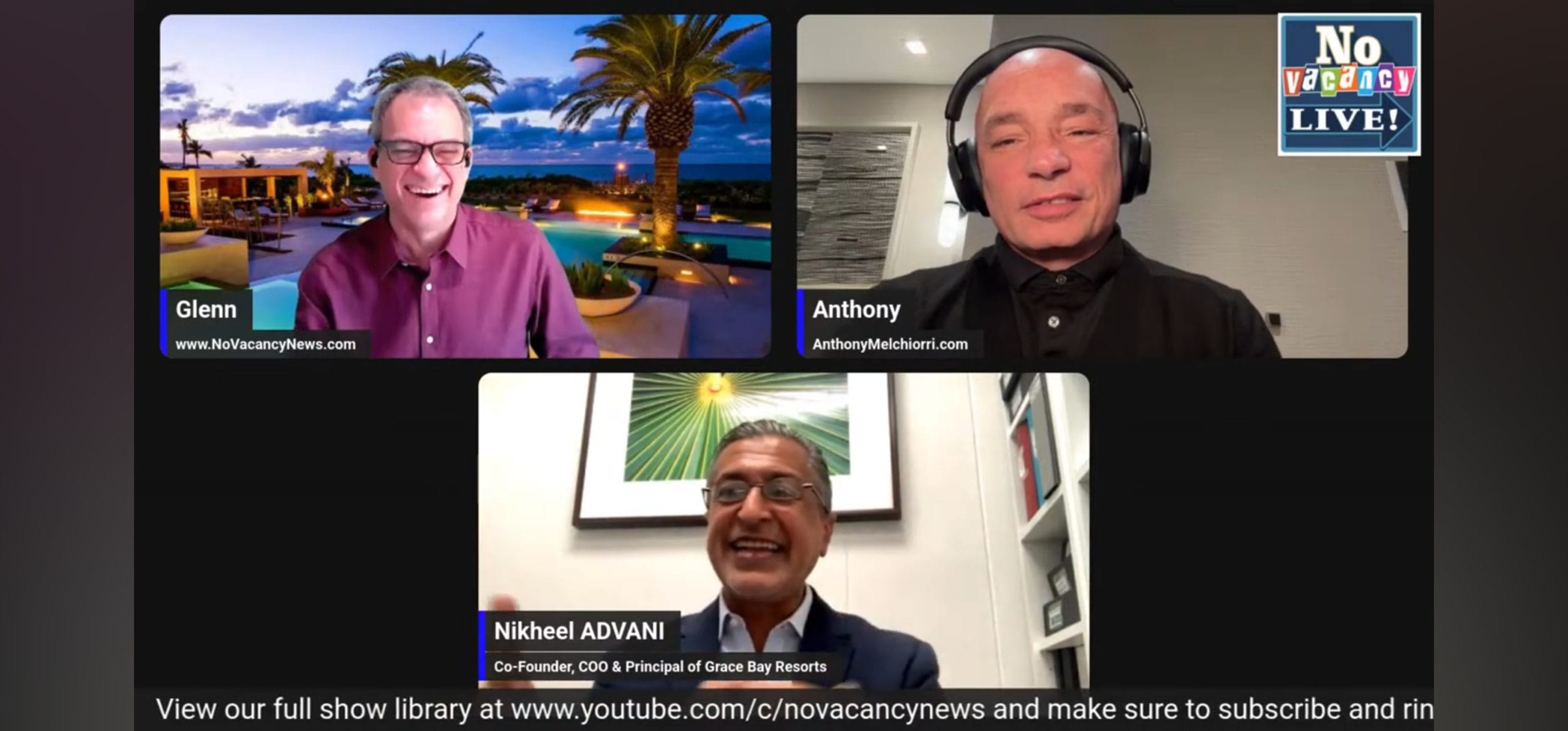
🏝️ Ever wonder what makes a luxury resort unforgettable? In this episode, we sit down with Nikheel Advani, co-founder and COO of Grace Bay Resorts, to uncover the secrets behind creating world-class guest experiences in Turks and Caicos and beyond. But this isn’t your typical business pitch, this is a deep dive into passion-driven leadership, the power of hospitality, and the relentless pursuit of excellence.
🔥 What You’ll Learn in This Episode:
• 🌍 From Dishwasher to Luxury Hotelier – How Nikheel’s journey shaped his leadership philosophy.
• 🔥 Passion as a Superpower – Why true success in hospitality (or any industry) starts with passion.
• 🏖️ The Grace Bay Experience – What makes guests return to these stunning resorts year after year?
• 🚀 The Future of Luxury – How the evolving role of GMs and asset managers is changing hospitality.
• 🏆 Lessons from the World’s Best – Insights from mentors at Ritz-Carlton, Raffles, and beyond.
• 🤝 Building a Team that Thrives – Why emotional intelligence and leadership go hand in hand.
• 💡 Excellence in Every Detail – From the perfect towel size to world-class wine selections, how small touches make a big impact.
🎧 Why You Should Listen:
This is more than a hospitality conversation—it’s a masterclass in leadership, resilience, and human connection. Whether you’re in the hotel industry or just love hearing from passionate, driven leaders, this episode is packed with takeaways that will change how you think about business and life.
👉 Watch now and get inspired to bring excellence into everything you do!
🔗 Listen & Subscribe: https://podcasts.apple.com/us/podcast…
📺 Watch More Episodes: https://novacancynews.com/
📢 Follow Us for More Hospitality Insights: / no-vacancy-podcast-rouse-media
Transcript
Speaker1: Yeah, I missed you. What do you mean by that? I mean, I was in LA outlining it up, and I wasn’t with you. And I got up at 9 a.m. every morning, West coast time, 12 noon. And I just went on air and no one was there. It was very sad.
Speaker2: I’m afraid I’m offended that you miss me. You know why? Why? Because you should carry me in your heart. And I’m never far away from you.
Speaker3: I love that. It’s beautiful. Well, Anthony, you know, talking about carrying.
Speaker1: Away in your heart. I just want to get carried away to a luxury hotel experience. I haven’t taken a good vacation in a while, and I’m, you know, it’s winter. I’m having trouble, like staying awake during nighttime hours because it gets dark so early. And I really want that vacation. And our our guest today is really, really cool. It’s a company called Grace Bay resorts, and we’ve got their co-founder and chief operating officer and also principal with us today. They’ve specialized in properties in great places like Turks and Caicos. Let’s hear for Nikhil Advani. Nikhil, how are you? Great to see you.
Speaker4: Soon, everyone. Good to see you.
Speaker1: So this is. Believe it or not, not the first appearance of Grace Bay resorts on this show. Way back, way back. I’m talking way back, Anthony. Six years ago, I had on your partner on the audio only version of our show where we learned where we learned all about that. So I encourage all of you guys to go old school, check out our old audio only catalog.
Speaker4: And of course, that’s my partner Mark. He’s a he’s an incredible guy. Yeah, that was great.
Speaker1: Anthony. You look like.
Speaker2: What? So give us a little bit about your background and tell us kind of what was your inspiration. And then you know, how many properties you have and kind of just kind of take us through it. And what’s the future look like? So
Speaker5: That’s a whole lot. One question.
Speaker2: Easy questions.
Speaker4: So where I started out, you know, I’m a I’m a I’m an innkeeper at heart, you know, hotelier. I started as a dishwasher. And actually, I started my first company when I was 16 catering to embassies at their homes. And my dad said, look, you got to go out and start working. You got to learn the value of the dollar. And I thought, well, I’m doing pretty well with that so far. I kind of understand what to spend it on. And he said, no, now you’ll learn how to earn it. So very early in life, he kind of put me out to work. And I started a company sort of catering to embassies in their homes. So the French embassy, the Belgian embassy in Singapore, I used to do their private home parties and, you know, learnt a lot from there. And then, you know, at the time I was studying engineering and I went back to my folks and said, look, this is something I love and engineering is fun. Don’t get me wrong, I like the analytical part of it, but I really love this people business and the beverages and the food and, you know, with the chefs there, I learned a lot on some of the basics on French and Belgian cuisine, which excited me. It got me, you know, really piqued my interest. So fast forward a little bit. We I did some education in Singapore. There was a school called Shatec and I got my education there, did really, really well. Got sponsored. Did University of Massachusetts at Amherst. Came out of college and decided to look at what was available. And there was a lot of options, but I got into the Pizzeria Uno business. I got into the turnaround turnaround team of their flagship properties in Boston, actually all over Framingham and the whole Maine area. And there they were basically.
Speaker2: Right now I’m actually at Framingham. Oh, are you okay?
Speaker4: So I know that place pretty well.
Speaker1: And I actually did a I actually did a Friday night audit, our happy hour comedy show from that pizzeria, who knows, a couple of years ago.
Speaker4: That is crazy. That’s just a small world. Well, you know that one. The one degree of separation. So, you know, I used to go to Framingham pretty often, making sure that all, you know, I was with a great team of leaders who were seasoned restaurateurs, and our goal was to keep the. The properties around West Roxbury or Boston, the flagship properties all at tip top condition. So learned a lot there. Then decided to head back to Singapore. That’s where I grew up and got hired by the Ritz-Carlton to open the Ritz-Carlton in Singapore. And that was in 94, 95. And so that was my foray into the luxury sector. I got, you know really understood their risk and really one of the best training grounds. And in the day, they were some of the leaders in, in creating a lot of new processes and really raising the bar for luxury overall in the industry. So learned a lot from them, got specialized in hotel openings, and then got a chance to open about 8 or 9 of the Ritz-Carlton hotels from Osaka to New York, Washington, D.C. so a lot of experience there and a lot of great mentors. I mean, one thing you learn about the Ritz-Carlton is you’ve got a great training ground. You learn so learn so much, the opportunities are endless. If you’re willing to to put in the effort and work hard and work smart. But also the mentors are incredible. I have I can I can name mentors in two of my hands, at least from people like James McBride, Peter Schalk. These are just legends in the industry of Amla, who was just recently the leader of Ritz-Carlton. You know, so many of these leaders who have been instrumental in guiding, they take a personal interest. And that team was so dynamic. So that work environment was incredible.
Speaker2: If I can let me stop you there for a second. Take all those mentors that you can put in two hands and probably more, and bring it down to one thing that they all that they all have, which the one ingredient that they all have.
Speaker1: Ooh. Good question.
Speaker4: An incredible passion for Aslan. That was that’s so simple. That is. I don’t even have to think about it. They would do whatever it takes to create excellence. And that passion is what I see in a lot of our employees, the ones that are totally successful and really, you know, enjoying that success as well. Because, you know, the one thing is, you know, everybody asks me how how do you how do you guys do this business? You work on weekends, you work long hours. I mean, an average day could be anywhere from 15 to 20 hours. And it’s not an issue in the in the young days when you’re growing up. That was kind of how it was. That’s right. So so maybe it’s kind of different today that there’s more quality of life. And, you know, there’s a little bit more time to do other things. But in whether you’re in a startup or whether you’re an entrepreneur or whether you’re in a hotel business, and I’m in almost any business, if you’re not passionate and you’re not excited to do what you do, it’s difficult to achieve excellence, you know?
Speaker2: And there’s two types of stuff, right? There’s stress of doing something that you don’t want to do and being challenged and things you’re not interested in. And then there’s stress of working 15, 20 hours a day and you don’t realize you’re stressed. You have no idea. Like people look at you and go, are you crazy? This is so stressful. Glenn Favre questions how do you guys do this all the time? It’s As I always say, I’ve never had a bad day in the hotel industry, right? It’s because, like, what else is there? Like, this is what we love to do. And you know, and when going back to the word excellence, right. I want to kind of stay there for a second. Excellence isn’t customer service. Excellence isn’t employee management. Excellence is. You know how you dress in the morning. How is your car? Clean. How’s your house look? How do you dress yourself? How is your hotel look? Everything you do, how you take notes when you do your homework in college, everything you do, you’ve just always been fascinated or fixated on doing it. As great, not as good as the next person, but as good as you can do. That’s excellent. And when people say, well, how do you train that? It’s like it’s really you can train it, but you can also it’s an accountability of yourself. It’s like everything that you do has to be like, if I have a little stain on my shirt that nobody can see all day, I’m going crazy, because that’s not excellent. That’s not. And I think that that when you we use the word excellence, people sometimes say, well, if we give a great level of service and we give great clean hotels, we’re being excellent. It’s no it’s how you comport yourself.
Speaker4: Correct. I think you could have said it better. It’s so it’s you’re you’re a hotelier at heart. You can just you can just hear it from what you say, right? And and people ask that question often. How do you do that? But I think, as you say, they say if you work and you enjoy what you do, you never work a day in your life. Yeah, that’s the thing that and in this business is so true, you know.
Speaker1: Yeah, I do work a couple of hours here and there. It feels like. Yeah, passion is such an overlooked skill. You know, we really don’t talk about that. I mean, that’s Anthony’s mantra. You know, passion changes everything. And we say it all the time. But it’s one of those things that we definitely don’t think about every day. If you’re not all in emotionally, then you’re never able. You’re not going to be able to sustain it and do what it takes in order to get to that top.
Speaker4: True. So true. And it’s in any business, I think, you know, I used to relate it more to hotel business. But as I’ve evolved in leadership and grown and joined the Ypo group and met a lot of entrepreneurs, I see the same quality in them. So they do it in different fields, but they’re so passionate about what they’re doing. They love what they’re doing. They work overnight to get a project delivered on time and at a high level. And then, you know, the other thing, Anthony, you probably know this as well as everybody is that, you know, how do you are you if you’re competitive, then what does excellence mean? And where like you said, we all we’re competing with ourselves. In the end, that’s what we need to know. Now you might have some goals for the company. And then everybody’s going to push the bar up a little bit. And that’s always a good thing. But I think that’s where my the mentors in our life comes in. And having the guidance from them, because they’ve done some of this before, they’ve seen it before, or they’re willing to go with you and back you up if anything goes wrong.
Speaker2: And you and you said like just real quick because you’re saying wonderful things. And I usually don’t interrupt this much, but you’re saying some fascinating things because a lot of young people. I just had a kid. I was walking through a hotel, and because I listened to the podcast where I learned so much from everybody on your podcast. So it’s really important when you say that we want to be excellent. We want to win, right? I always say it’s about the win, and the win means everybody has to win. And but this is to me, the most important part of the win or important part of excellence. When you lose, can you look in the mirror and say, I left it all on the ground and, you know, good luck to them. They did a great job. They beat me today. I’m happy for them, but I’m happy for myself because I did the best that I knew. Could I have learned something else? Could I have maybe asked that one question? Sure. Maybe I could have. Maybe I could have had an edge. But did I do everything I know that I could do? I remember when I shot the last show of Hotel Impossible. I remember sitting there and I had my best team on my best show that we’ve ever done. And when we closed those drapes and we said, this is our last show, it was the best show we’ve ever done. Now, was it the it the best show to anybody else? Maybe. Maybe not. But for us, it was like there was nothing more that could have been done. I dropped the mic and that was it. And to me, that’s when you win. Even if you lose, that’s when you win. When you know you’ve done your best. I’m like, I want to win. But when I lose, I’m the I’m the easiest solution in the world. I shake your hands and congratulations, you know. And then tomorrow you better wake up earlier than me. Because I’m going to win next time.
Speaker4: You see. But that’s that. That’s the attitude. There’s always a tomorrow. You know, if we didn’t win today, let’s sit back. Let’s analyze and see what it is and let’s celebrate as well, because we all work hard if we can look and you said you did your best, then that’s good enough, you know. And we just need to look at tomorrow. Tomorrow is a new day and it starts again. And the other thing I’ve noticed with a lot of our entrepreneurs and in our company in Grace Bay resorts, is you’re allowed to fail. It’s okay. It’s all right. If you don’t fail, you’ll never learn. And like my mentors, come in really handy and kind of pump you up and support you. I failed miserably, and I still fail today. And having my mentors and my team comes in and say, listen, don’t take it so hard, don’t worry about it. There’s tomorrow. And you know that camaraderie, whether it’s mentorship or whether it’s your team that you build around you. That’s so valuable, I think today. And we want to fail. As entrepreneurs. We have to fail. And we don’t have all the answers. You know, one of the recent strategic retreats we did with a lot of our vice presidents and MDS and GMs is I said, guys, we don’t have all the answers. But together, I feel that we have an incredible team that can win. What is winning look like? Well, each year it’s going to be different. You know.
Speaker1: That’s all. That’s awesome.
Speaker2: And you know, celebrating failure. Meaning when you sit and you talk to somebody and go, okay, this is what you did. Maybe that we can improve on, but let’s look at why we did it and let’s celebrate that. You really thought that this was the way to go. You thought about it, studied, you asked people’s opinion and you really did it with open heart. I always say, as long as you do things with an open heart that heart that benefits the owners, the employees and the guests. You know I got your back. It’s always in the spirit of winning. Once you start putting a business together or any corporation or hotel company, whatever it is, and you start kind of undermining people, you start making decisions. And then when somebody else fails, you’re like, why did they do that? The worst thing you can do, why did they do that? And then and then you undermine and you can’t get to the next level by being a Monday morning quarterback. Monday morning quarterback is only to analyze. It’s not to it’s not to to to to place blame. You know.
Speaker4: I think what we learn as we grow in the industry as well. And you’ve probably seen this Anthony and Glenn is, you know, yes. We need to look at what went wrong and correct it and do all that. But where we want to spend our energy is how do we make it better? What’s the solution? That’s where you want to spend your energy because that that boosts your energy. We can talk about the stuff that didn’t work out and it’s important to document it. So we learn. But let’s not spend too much energy there, because that sucks energy out of people trying to get them to see the positive after that. Very difficult.
Speaker2: Right. I remember I remember having a meeting with somebody a long time ago, and they were so pissed off about their company and all these people and everything, this person, that person. And I simply said in a very calm manner, go, who hired them? Yeah. Yeah. So, so as many, as much as many mistakes as you’re making. They’re making you made more mistakes than they did just simply by hiring them. So so so we’re humans, right? We all make mistakes. But you can’t like when talking to you like no one trained you. No one. Maybe when you grew up and you saw your parents and they were entrepreneurs and there’s that spirit, but there’s no amount of Ritz Carlton training. There’s no amount of mentorship that’s going to get you to talk the way you talk and to have the energy you have. That’s just something innate in you because you’re you’re a happy person, you know, and I always say, you know, when you wake up in the morning, your number one job is don’t get out of that bed until you’re getting out of that bed in a good in a good headspace. You ought to be happy. You ought to be in a good mood, but you have to be in a good headspace. Too many people get out of bed in the morning and they’re miserable before they hit the ground. Like I always say, I mandate myself, don’t put your foot on the ground until your head is clear. And I think that you wake up and you and you understand that kind of. You understand?
Speaker1: I’d never get out of bed if that was my policy for me. I’m allowed to be a cranky until I have some coffee, and then I gotta get my act together.
Speaker4: Look at you. That’s why as long as you have your coffee, everybody has their magic. Do your magic. You know, I say do your affirmations. I tell my kids I have two kids, nine and ten. Ellen and Leah. Right? So two things we do in the morning, actually three things. One, we make our beds that always make our beds. And this is this Army general or rear admiral. You’ll see him on social media, and he’s incredible because you make your bed, you can have a bad day, but you’ll come back to a great bed and tomorrow’s a new day. And I live by that, you know, because you have great days and you have some that are not as great. And then the second thing is we give hugs. You know what? Let’s get the energy going. There is a psychological thing if you hug for 60s. So our kids we hug, you know, and then you do your affirmations. You don’t have to do a ton of affirmations, but do 1 or 2. That’s really passionate, you know? And that’s how we start our day every morning. And I share that with our team members as well, because there are kids in some way, shape or form, some of them are older than us, but it’s a family that’s a, you know, many people say that word family. And I think a lot of environments, they have it, but in a lot of environments they’re very corporate. In the Caribbean, relationships are everything. But what’s.
Speaker2: Happening? Okay, so I’m going to ask you, first of all, I agree with you. I love that Admiral. I was in the military, so I always made my bed. Last night I stayed in a hotel. I made the bed. That’s ridiculous. I love You I did, I did, I literally made the bed and I kicked all the towels. I put them in a pile, I put the garbage in, I put the I basically in the room and then I leave. But the, the thing that is happening today and we have to talk about it. Right. Especially with someone that has been doing this as long as you’ve been doing it. Something has changed. There’s there’s a difference. We had a creativity and an authority back in the day that general managers don’t have today. They have. And that’s that’s kind of a broad statement. I see that they’re a little bit their hands are held a little bit. They have an asset manager. The asset manager’s job is not to get fired. The asset manager reports into the ownership. The ownership job is to report into their investors and to make sure the bank and their investors are happy. And somehow we’re starting to take the creativity out of the general manager’s hands. What do you see that? And two, how do we counter that?
Speaker4: So So yes. You see that? Definitely. I mean, post crisis is when you see that the most, then the freedom opens up a little bit until the next crisis. Right. We’ve been through how many of these bumps in the road? I think I’ve been through 5 or 6 major crises, from the Great Recession to Covid to before that we had the Asian downturn. We had nine over 11. So tell me, tell me all about it. We’ve all been there, hurricanes. But they forgot that in the Caribbean. So what happens is we see that there are a couple of things. Investors have goals and they usually equity groups. Now if you’re if you’re lucky to have a family office with a long term vision that GM has a lot of freedom to do things differently. If you’re a smaller outfit like us we have 5 or 6 properties and we don’t look at the short term. We don’t report on Wall Street. Our owners want long term benefits. They see the long term goals. So whenever you see long term, the GM’s are able or the MDS that we have are able to really invest in their people, invest in the assets. The return doesn’t have to come to come right away or they’re not held to quarterly results. And I think what you’re talking about, Anthony, is where we see certain hotels, even luxury hotels, sadly, are held to quarterly results. And so you start to do cost cutting because it’s faster than developing the top line.
Speaker4: Our goal has always been how do we raise the top line. You raise the top line. Everything falls into place, right? That’s one of the basics that I grew up with. And you got to be judicious about your cost. But also when your luxury property people need to feel the luxury. You know, the type of tissue paper you use is important. The type of tiles, the size of towels you use is important. So I think it’s difficult to change it unless the ownership wants it, because the GM in the end reports to the asset manager who reports to the owners. Right. And if they’re on a Wall Street schedule, that hotel will be a different property. You know, it doesn’t matter what brand and flag they fly because they can cover the minimum standards. But if you want to be rated by Forbes Travel Guide, or you want to be rated by Leading Hotels of the world or Small Luxury Hotels of the world, those quality standards are a lot higher. And you definitely have to have a long term mindset because you’re investing in people and assets. You might spend $2.5 million on a bar, but on the long term, with the branding and all that, you’re able to see the benefits. We saw that when we created the Infinity Bar many years ago, and we’ve just refreshed that. So those kind of things are, yes, cost benefit analysis, but there has to be a bigger picture around it because you’re building the brand.
Speaker2: And when you have people that go to the luxury hotels and they’re used to live in a luxurious life when they get a little different quality paper towel or tissue or toilet paper or they get a shorter towel that literally they may not complain about it. They may not even consciously realize what’s happening, but they immediately become. Everything else becomes, becomes critical. Now, of course, now all of a sudden, mistakes not that good or all of a sudden, oh, I did see that little dust bowl in the corner. And there’s. And you come from luxury, so you understand everything is important. And when people say, what do you mean everything’s important? There’s a person that walks into a hotel room and said, doesn’t mean anything to them. Then there’s a person that said something. Some people like carpeting, some people like, you know, wood floors, some people, whatever. It is every single thing that could be important to a human being you have to worry about. So to me, it’s easy. Just worry about everything.
Speaker5: I totally agree. Detail. Detail. Detail.
Speaker2: I used to say to my kids, just worry about everything. You have nothing to worry about.
Speaker4: Yeah, yeah, you’re right, you’re right. There are certain touch points that are really important. I think the human touch, the calling guests by their name. It seems pretty simple, but it’s something that we’ve seen resonates with our guests. And it happens naturally because in a resort environment, you get to spend between 6 and 7 days with the guests and sometimes even more. So you really get to build a relationship with the guests here. And then we also have a lot of owners that come back, which is a very important part of our model, our business model. We run consecutively a high end residential, branded residential and a luxury resort all in one. But they have two guests. There’s the owner who comes back, who this is their home. This is their third or fourth or fifth home. But they come often to the Caribbean. And there’s also guests who come because they’ve loved it. We we enjoy a 40% repeat clientele so they know when things have changed. They see things. They’re they’re very open with their views. And we appreciate that. We take it constructively. And they need to have a couple of touch points that are, you know, familiar with them and some that are their personal preferences. So we need to record personal preferences because like you said, somebody to somebody the scent is really important. So another person they couldn’t be bothered. But the wine that you serve them is really important because that’s what they love. So for us, it’s trying to understand our guests and trying not to make it too cookie cutter. But also understanding if, if amenity can go in a room. Can we personalize it? Do we know enough about this guest? And if they’re new, then we need to learn. But at least 40% we know come back to us regularly. They share feedback and we’re not always perfect. We’re a human business. But how do you resolve that? Glitch is vital.
Speaker1: Or you could even make them like you more. If you make a little mistake and you.
Speaker5: Handle it well.
Speaker2: Yeah, yeah. You know, there’s there’s there’s, you know, I think about it in the way of the way. It could be your grandmother, your mother, whoever it was in your life that when you went to them, the world stopped, right? You went. And maybe it was your grandmother. Maybe it was a teacher. My daughter sent me a picture today of her. She’s a theater teacher. And I said, I wish I had a teacher like you when I was in high school. I can go to their theater office, sit there and just talk to you about theater or whatever I want to talk about. I wish I had that safe place when I was in school. So. So when someone has 4 or 5 houses, they’re not impressed by anything. They’re impressed by that feeling that somebody was in their life, whether their grandmother, their mother, their father made them feel something, right? Like the hugging. Like your children. Like I will. I will get in the car, go down the block and stop my kid at the light and go, hey, hon, you didn’t hug me. It’s like you didn’t kiss me goodbye. It’s like that, really. I’m 25 years old, I say when you kiss me goodbye, you didn’t kiss me goodbye. We have a rule. You have to say goodbye to everybody in the house before you leave. And so to me, they’ll remember that. So? So what you’re doing is you’re not doing anything. That’s I. You’re not doing anything. That’s insane. What you’re doing is you’re giving them a feeling that they remember from something or someone in their life, and they’re like, wow, I need to go to that place because it makes me feel something. It’s not what you say. It’s how you make people feel. And you have to do that. If you ever walk into a place and you walk out and you have no idea why, you’re happier.
Speaker4: No doubt, no doubt, it happens regularly. And the Caribbean, you’ll feel it. You’ll definitely feel it. And you won’t know what it is, really. But there is, You know, when I moved to the Caribbean, it was my first time. It was early 2000. My partner had just bought Grace Bay club. It was a storied resort, but nobody really knew where. Turks and Caicos was 20 years ago. Today is one of the hottest islands with the best beaches in the world. But then 20 years ago, nobody really knew where it was when I told people I’m moving. So after. After. After the Ritz-Carlton, I moved to the Raffles Hotel in Singapore, which is, you know, that that hotel gives you more than you can give it. We worked as hard as we could and tried to keep the standards as high, but I think I took away more and I learned so much more than I could have ever given that hotel. So, moving from Raffles, we moved. I moved to the Caribbean. It was. I moved from a property that was, you know, number two in the world. And it had 800 staff. We had 150 chefs, 20 restaurants, 100 suites. You know, it was I FMB, you know, the revenues were 70% FMB, 30% rooms. Very, very opposite usually in most hotels.
Speaker4: So I moved to the Caribbean to a 21 suite hotel. Mark was my partner then. And, you know, we I was a general manager to start out and we said, if we like this, we’ll build a brand together. Yeah. I had 30 odd employees. And it was just as difficult to run than the bigger property. We just had different issues to deal with. Right. But but you realize one of the employees came up and gave me a hug after hugging a guest. So firstly, when you come from a Ritz-Carlton background or a raffles and slightly more corporate sometimes and you don’t have the guests, there is a line right in the Caribbean. There’s no line. And and so when I saw them hugging a guest, I was like, oh my God, this is this is odd. This is really odd. And then that same staff came and hugged me. And I have to tell you, I was a bit stiff for a moment, and then I just loosened up and I felt what that guest felt. Right. And from that point on, I learned we got to take away the standard language of certainly my pleasure. Say it the way you do. I want all your hairstyles to be Caribbean because it’s so unique and and you learn if you come to the Caribbean you’ll see one of your staff today and tomorrow.
Speaker4: You’ll think it’s a new staff, but it’s not. They’ve got a new hairdo, and so allowing them to be themselves allowed their natural hospitality to come out and and that we saw a lot. And hugging guests. I mean we’re a hugging community. Today I hug people, you know, I hug our guests and they’ve responded in the same way. And I think that’s a very unique thing about the Caribbean. You know, they say everybody needs a little bit of Caribbean in their life. And what it is, is these many small touch points that create this environment of a feeling, you know? Yes, it’s the amazing ocean. Yes. It’s you’ve got the best beaches, powder white sand, you know, umpteen colors of blue and turquoise in the water. People are nice. You’re having a cocktail. It’s great. The sun is out. But it’s all these touch points that make you feel special. And then they remember you when you come back. And it’s the small things. And for all the guests, I ask whether it’s in the restaurant business or in the hotel business or any, any business that you frequent. When you come back, it’s usually because of a person. Not a thing, not a dish.
Speaker4: Yes, the food is incredible. The beach. Wow. How can you complain? It’s the best beach in the world. But really, they come back because of Franklin and how Franklin made me feel. Or you know how John made me feel. Who’s our MD at Grace Bay resorts? Or how Frank at Rock House made me feel, or Stella at South Bank? These are the things and Lindy at West Bay club. Those are the things that make a big difference. And I got to mention two more because I can’t leave them out. Fred at point Grace and Tiffany, who runs our private villa division. So each of them create an environment that people feel loved. Because you got to start from home. And then then it it flows. Now, we don’t always have perfect days. Let me let me let you know that, you know, there are times we have to do the discipline. We gotta make sure we, you know, readdress processes that are not working because we are caught off guard. We just didn’t see enough or we didn’t think enough. But that’s okay. As long as you learn for the next day, like Anthony, you say it really well. I love that, you know, tomorrow’s a new day. Well, we did our best today. Let’s do better tomorrow.
Speaker1: Awesome.
Speaker2: You know, you know, I think guests and employees the same thing. Like, you know, you always hear my favorite saying is employees don’t leave jobs. They leave people. Right. Get off the stove. We hook up, they leave the staff. They leave the feeling. And so, you know, a hotel is a hotel, right? We, me and Glenn did something at High Tech where we show the hotel room in 1950, in the hotel room today. And outside of design and technology, it’s the same footprint. You got a bed, you got a chair, you got TV. You got a bureau. It’s the same thing. And the only thing that’s changed is technology and design. But it’s the same thing, you know? So people want that. Like, they don’t like there’s some things they’re going to change, right? But you have to you have to understand that the one thing that AI and technology is not going to change is they’re not going to take our heart. They can’t take our heart. That and that’s it, you know. But in the way of the things that I get frustrated with in this industry sometimes and talking to you inspires me is people talk a good game, but then you go into a boardroom and you hear the way they talk to each other and you’re like, this doesn’t make any sense.
Speaker4: Yeah, there’s no it doesn’t fit. Right, right.
Speaker1: Yeah.
Speaker4: I think that’s always a difficult thing. And having alignment through your investors, your board, your team, your leadership team, and then the team itself, the whole family. I think that’s not easy. I see that. I mean, we’re very lucky. We have we have great investors. We have a leadership team that’s super passionate and we have a great team that’s that, you know, that wants to do, you know, that we built over time. They’re proud. We’re one of the preferred employers in the Turks and Caicos. And so people are proud I mean I was just having drinks. We just did a big launch event on last Saturday for a new project called the Point by Point Grace. One of our properties, a new development, which is already 75 or 80% sold. And we haven’t even put a actually, we just put a shovel in the ground last Saturday. And, you know, I went out for drinks with some of our team members. And, you know, maybe I take for granted that, you know, we’re very casual. We we don’t, you know, you can come see me anytime you want. It’s an open door policy. I’m in the resorts at all times. Meeting guests, meeting staff. We talk, we motivate each other. We bounce ideas off each other. You know, we’re not. There’s. There’s no this boss and, you know relationship.
Speaker4: So and they were at the bar, and one of them is telling me he’s come from Africa. He’s he’s worked in so many great hotels, leading hotels of the world. His mentor is a good friend of mine. And we sit on an advisory board and leading hotels of the world together. And he said, I’ve got a great guy coming to you. He’s going to be awesome. He’s been with us now for a year and a half. He’s been incredible. And he said, you know what? We get motivated because you come in and or your other leaders, not just me, but it’s the leadership is in general is in connection with them. And we share ideas and we talk and and we try things. You know, he wanted to implement in in Grace’s cottage, which is a modern French restaurant that we run every wine by the glass. And these are high end wines. This is Petrus and that. And I said, do you think it’ll work in our FNB head of FNB? Chris was very passionate about it and he tried it out with a few bottles to start with. And now you get almost a whole list by the glass and people are spending $150 in a bottle on a glass of wine where they want to spend 1500 on a bottle, but they will spend the 250.
Speaker4: Let’s sing a few other glasses or a cocktail to start with. And I was amazed. So? So he was able to show us a different way. But because we had that trust in relationship, because you tell an asset manager you’re going to pour Petrus by the glass, that’s going to set him on fire. I can tell you that because I tried it before and I was not successful, but he heard he puts he was very successful. So I think we learn and I think I didn’t realize how being, you know, being part of the conversation with him and kind of inspire him a little bit and motivate and bounce ideas because I love it for me as well, would be so valuable to them. And and they were all proud to be part of it. And we had somebody from South Africa. Somebody from Turks and Caicos. And all of them in that conversation had that same pride of working for this company. And for me, that’s that that speaks a lot. I mean we’re so humble because we’re only as good as our last lunch. Tomorrow we might be very different, so we’ll work hard on that. But it’s, you know, once in a while, we need to stop and smell the roses.
Speaker2: You know, I imagine someone has said this to you or have thought this about you. What? Somebody came to me years ago and said I’ll follow you anywhere. And I was like, I didn’t even think you liked me. And he goes, I really like you. Yeah, I don’t know where you’re going. I don’t know where you’re going, but it looks like fun, right? With you. Probably people like you, but. But it was like, I don’t know where you’re going, but I want to be on your team because enthusiasm is contagious. And I would imagine, you know, you’re having this great podcast with us and you’re a great guest, but I’d imagine having breakfast with you or having dinner with you or having a meeting with you, I get the same guy you get.
Speaker4: In fact, my staff limit the number of code zeros I can have. And coffee. They said I don’t need too much of it. I do love it, don’t get me wrong, but my team limits it when I’m doing meetings with them. So I think you might be right. Is it to politely tell me on the side? Look, boss, go to tea. You have to tea.
Speaker5: No, no, these are all right.
Speaker4: Good. I know.
Speaker2: We got to.
Speaker5: Wrap it up. I’m sorry. Oh, we do.
Speaker6: You know. What is that? The Gil?
Speaker1: Great show. One of those shows where I thought it was going to go this way. Totally went the other way and wound up being amazing. Let’s get you back. Let’s get you back in a few months and actually talk about your business as opposed to your philosophies behind your business. Awesome. Great. Thank you. Yeah. Really appreciate you being here.
Speaker2: I think I think that’s what’s great about this show. Right? I know you have a line and I never have a line. And we go, we. To me, I think what the show is about is thinking about our audience, right? And how many times have has our audience heard somebody come on and talk about their business, and we’re going to grow and we’re like this. It’s like a it’s a sales pitch, you know, getting someone on to teach young people some of the things that they need to hear or haven’t heard don’t have a leader, like, who knows? I think that’s so critically important to what we do on this podcast.
Speaker1: Yeah, I agree with you. And I would also agree that it’s probably a great idea to download this particular show wherever you get your audio podcast. Hey, while you’re at it, why not go all the way back to 2019 with the original Grace Bay show that we had? So check that out. And of course, all of our shows are on video wherever you like to watch them. Anthony, thanks for being here.
Speaker2: Your ability to just streamline two ideas. It will never, will never, ever, ever cease to amaze me.
Speaker1: Bro. I wish I could get paid for that. You know, that would be amazing. Meanwhile, remember you’ve got one life. So blaze on and.
Speaker2: Be kind to yourself.
Speaker1: See y’all tomorrow.

More Episodes
-
June 27, 2026
FNA 213: At our Baikowitz-end
-
June 26, 2026
Curator Hotels VP on Why Labor Costs Drive Every Tech Decision
-
June 25, 2026
Why Your Hotel Manager Spends Hours on Dashboards (Hint: They Shouldn’t)
-
June 25, 2026
Why Aimbridge’s CIO Says AI Doesn’t Work Without Humans


Subscribe