
June 23, 2026
Why Better Hotel Revenue Doesn’t Always Mean Better Profit
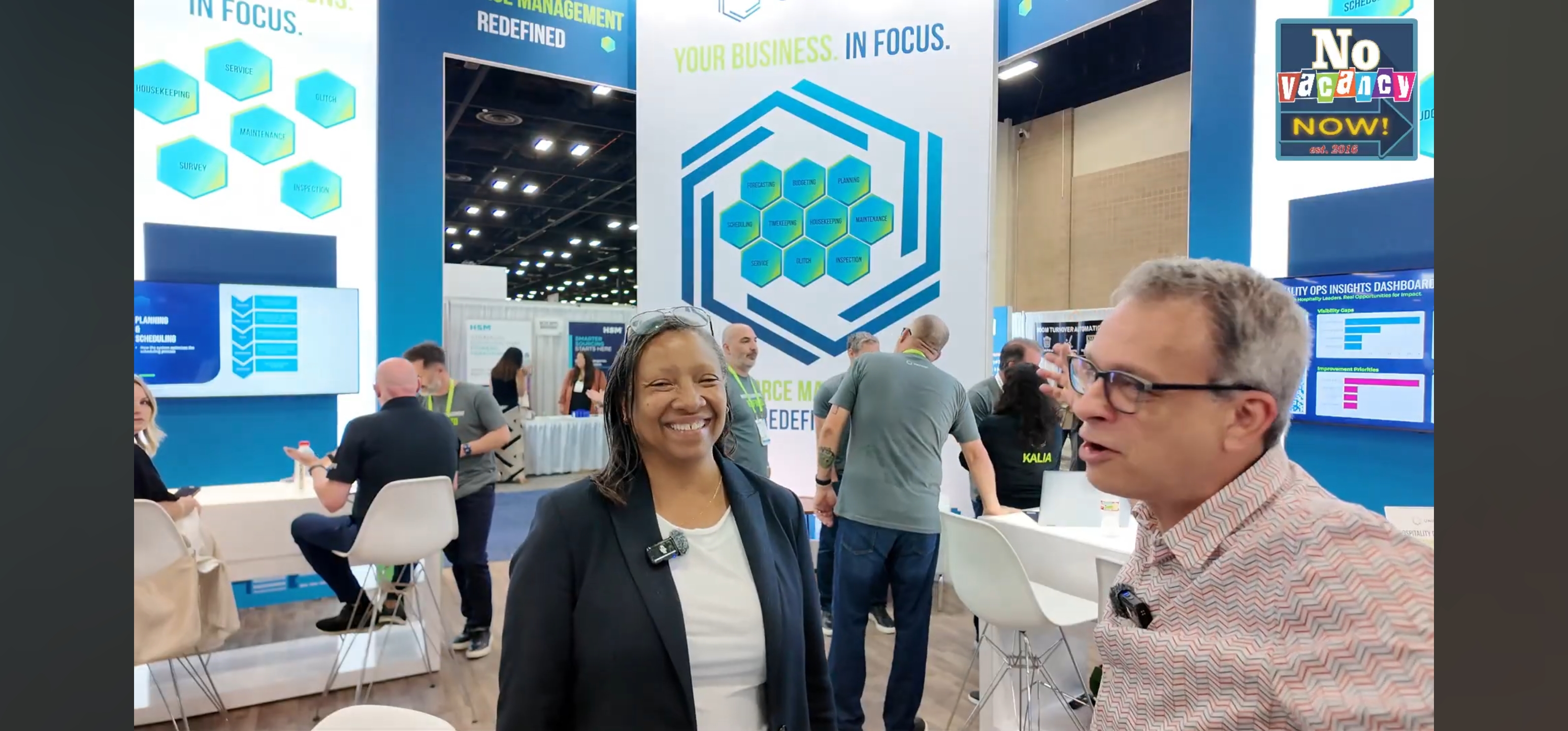
Recorded at HITEC, Glenn Haussman talks with Michael Grove of HotStats, now part of Duetto, about why hotel performance needs a bigger lens than rooms revenue.
Michael shares what HotStats sees in U.S. profitability, global travel patterns, food and beverage pressure, ancillary revenue, and the shift toward what he calls “performance engineering.”
For owners, operators, and commercial teams, the conversation moves past topline revenue and gets into the harder question: where does the profit actually come from?
Want the weekly roundup of news, videos, and what you might’ve missed from #NoVacancyNews? Text HOTEL to 66866.
Transcript
Glenn: [00:00:00] Everybody. It’s your hospitality friend Glenn coming at you from the show floor at HITEC, where I found my friend Michael Grove. We’re gonna be talking some hot stats out there for you. How are you doing, buddy?
Michael: [00:00:10] I’m very good. Thank you. Oh, yeah. Yeah, yeah, I love.
Glenn: [00:00:13] It. Well, you’re definitely in the Texas spirit, and if I’m a little sluggish, it’s probably because I ate too much brisket. But I want to know what is going on first in the United States when it comes to our people profitable. How is it going roll out some of those hot stats for everybody?
Michael: [00:00:30] Sure. I mean, we met a couple of months back, right? We were chatting about hotel performance. It was pretty dire. Right? 2025 was a really tough time for hotels certainly in the United States. Conversion, the big challenge. So profitability being you know, under, under a lot of pressure. This year has really changed as of January, the year to date picture looks pretty strong. And so we’ve seen pretty good growth throughout 5.3% growth in our year to date. And that has basically helped us catch up with the profitability drop we saw in 2025. Margin is back to where it was in 2024. So what we lost last year, we’ve already gained so far this year.
Glenn: [00:01:02] That’s that’s great. So practically speaking, how should hoteliers use that information to even be more successful?
Michael: [00:01:09] Well, I think that’s the point is in good times and bad times, right? You need the various levers to pull. And I think in moments like this strong demand generation from the various different revenue streams. So, you know, being able to maximize that is obviously one half of the challenge, whilst also understanding the costs that comes with that from the various different channels to be able to maximize it. Right. So the data, for instance, will allow you to understand where the trends are, which direction the trends are going, and where you should probably be applying the right pressure. We’re calling this term it’s, it’s far from revenue management, right? So revenue management was the kind of, you know, the idea that you’re going to maximize the amount of money.
Glenn: [00:01:45] I like the word. I don’t know what you’re going to say next, but I like the word strategy. Yeah. Strategy we like.
Michael: [00:01:50] To call it. So I think there’s a new term for what we’re trying to do here. It’s not quite revenue management. It’s not necessarily just the total commercial strategy. It links with the cost management as well. We’re calling this term performance engineering. Right. I quite like the term.
Glenn: [00:02:02] It’s much better than strategy I like that. Yeah. Because it’s a race to whoever thought of that one. Yeah.
Michael: [00:02:07] But it comes from the idea that like you’re not just revenue managing, you’re not certainly not revenue managing just rooms. There is these other demand generators that you’re, you know, you’re hopefully maximizing. And at the same time, there’s a cost attributed to it. So it’s not just revenue management anymore. And that for us is like the, the term that, you know, we’re really using around everything we’re building now. So it all links back to how we enable people to engineer performance, right?
Glenn: [00:02:30] I want, I want you all to know we’re coming at you, like I said, from the high tech show floor here at the the Dueto booth, which is why we got such a awesome logo behind us. Now that we look focus on the United States, how are we thinking about Europe and globally?
Michael: [00:02:42] So I mean, globally, the the general trends are a bit dragged down by the Middle East performance. Obviously, it’s been a tough time in the Middle East, albeit the first two months were pretty strong. Second two months have obviously been very, very difficult. But that has also, you know, and it’s always hard to say this, but there are always beneficiaries of these kind of crises, right? So.
Glenn: [00:03:00] Well, if somebody’s not in the Middle East, maybe they’re staying somewhere else.
Michael: [00:03:02] That’s what.
Glenn: [00:03:03] We’re changing their vacation.
Michael: [00:03:04] Plans. Yeah. So they go into Asia. So if you look at Asia Pacific, you’ve got the whole basically every market we’re tracking there is seeing pretty strong performance all from, you know, at least positive performance. But even China. So we’ve seen the recovery of Chinese performance about 2% up year to date in Gopal performance. But that is on the back of a pretty difficult 5 or 6 years. Europe, Southern Europe is already booked up for the summer. You can imagine a lot of those people who would have traveled to the Middle East, and actually those that would have traveled to the US, speak of the World Cup on they’ve chosen the southern Europe as, as the alternative.
Glenn: [00:03:33] That was going to be that was going to be my next question. Are they are some of those people also going to Canada and Mexico to watch the games?
Michael: [00:03:39] Yeah, exactly. And, but then, you know, because Southern Europe is so strong because a lot of that demand has moved there, it also means that those northern European countries are seeing a lot more staycation demand this summer. So I’m really bullish and positive about this year. I think this year is looking really strong. Obviously the difference between those are really maximizing, and those at the bottom end of the scale are those who are doing things smartly and seeing the bigger picture than rather than just riding the wave.
Glenn: [00:04:03] But what’s what’s really good about what you’re doing is you’re providing that information to give people an understanding of really what’s happening so they could engineer their performance. See, I’m picking up on these things in order to be more successful. No matter where you are in the world, what else do we need to know right now going on?
Michael: [00:04:21] Well, I think outside of the the profit performance right there are, you know, there are many different dynamics into in the hotel performance, right? So for instance, you know, we’ve seen food and beverage trends generally suffer over the last few years. And there is an ongoing trend there. Profitability has been squeezed most parts of the world. On the flip side, we’re seeing areas like wellness, golf, some of those ancillary services drivers, you know, we’re pretty strong. So I think again, there’s almost like two parts of that conversation that depend on the type of hotel you probably need to look at the data slightly differently.
Glenn: [00:04:52] I agree, because I think basically what you’re saying is if you’re a focused service hotel, you don’t have as many levers that you could pull in order to maximize profitability. But if you’re in that wellness sector, which is really exploding right now as baby boomers get older and Gen X like me start to get a little bit older, we’re more focused on those things and willing to spend money outside of just the hotel room to take care of ourselves. Right? That’s kind of what we’re talking.
Michael: [00:05:17] I assumed you’re a millennial, by the way.
Glenn: [00:05:19] Oh. Thank you. Could you tell from the gray hair? Yeah. Well, I’d like to have that millennial mindset. Right? But I’m definitely Gen X. But why would you know that? We’re all forgotten about. So nobody thinks about us. All right, big picture for you. What are you thinking about these days?
Michael: [00:05:36] Well, obviously the buzzwords, AI, you know how we’re going to embrace that going forward. It’s interesting from a, from a stats and a dueto side, you know, when you look at the future of, you know, the direction of travel, the way that the data is kind of distributed is slightly different, right? So do people want to log into the website? It’ll always be available. It always be something that’s there. But actually the way we can connect with the various different systems in order to enable some of this on property, depending, no matter which systems you’re using, right, you want to be able to integrate this data. So we’re working quite a lot on that at the moment on, you know, how you can you can help get that in the hands of the various people in the industry. But the trend is all around then how the AI models can then utilize that and put it in the hands of the people who actually are going to use tools to.
Glenn: [00:06:19] Give them actionable insights in order to engineer that performance in a, in a much more robust kind of way. And I’m thinking the other message is they tell you what you knew that you didn’t know. You didn’t know.
Michael: [00:06:29] Yeah, I know, I mean, from a science perspective, we’ve always had access to the information. The great thing about this marriage with Duetto is that, you know, we’re building what we’re calling the sorry, a couple of terms for you there, but the product itself that we’re moving towards is the revenue and profit operating system. So many operators already have this in their hands, but it is that method. It’s understand where the opportunities are using the data. Use the ETL tools to be able to do something about it, and then use the data again, then to measure the impact of that performance, right? That for us is what we call the POS, the revenue profit operating system, right. That’s what like for me, I’m going all in on that because at seven years of hot stats, being able to provide the data, we didn’t necessarily have tools to help you do something about it. So this is an exciting journey.
Glenn: [00:07:08] Yeah, it really is. I love that you teamed up with the folks at Duetto, because it really gives you that opportunity to utilize technology in ways that you wouldn’t have prior.
Michael: [00:07:17] I don’t think Hot Stats would have been able to do the same thing on its own, right? So yeah, this is absolutely we’ve got the right people, the right kind of audience and appetite to do something about it. So yeah, we’re right in the middle of it.
Glenn: [00:07:27] Excellent. All right. I’m tired of the cold stats. I’m tired of the warm stats. How do I learn more about hot stats?
Michael: [00:07:31] You get in touch with us at stats.com or twitter.com. And yeah, we’ve, we’ve got plenty of information there for you.
Glenn: [00:07:37] Beautiful. And thanks for my first ever tiny head interview, giant unicorn. We’ll see you later. Hot stats. I’m Glenn. He’s my guy. Yeah.


More Episodes
-
June 23, 2026
Starwood CIO: AI Is the First Tech I Never Had to Explain
-
June 23, 2026
Why Hotel Tech Problems Aren’t Always Tech Problems
-
June 19, 2026
Hotel Revenue Managers Need Less Data Wrangling!
-
June 19, 2026
What Hotel Operators Should Know Before Choosing AI Tools



Subscribe