October 13, 2026
The Hidden Inefficiencies Costing Hotels Money
Hotels have more operational data than ever, yet employees still waste countless hours chasing information, duplicating tasks and dealing with inefficiencies that eat into profitability.
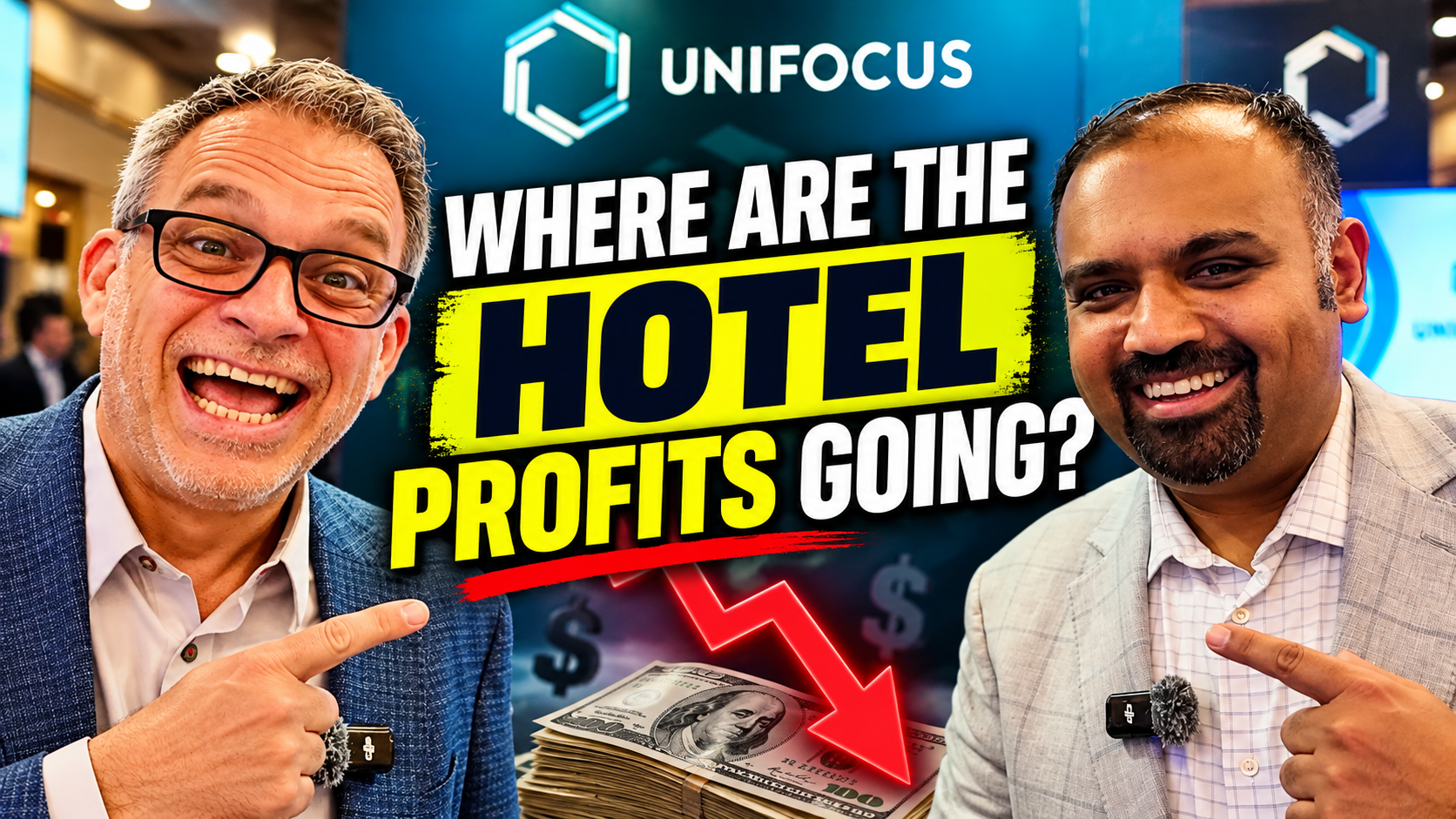
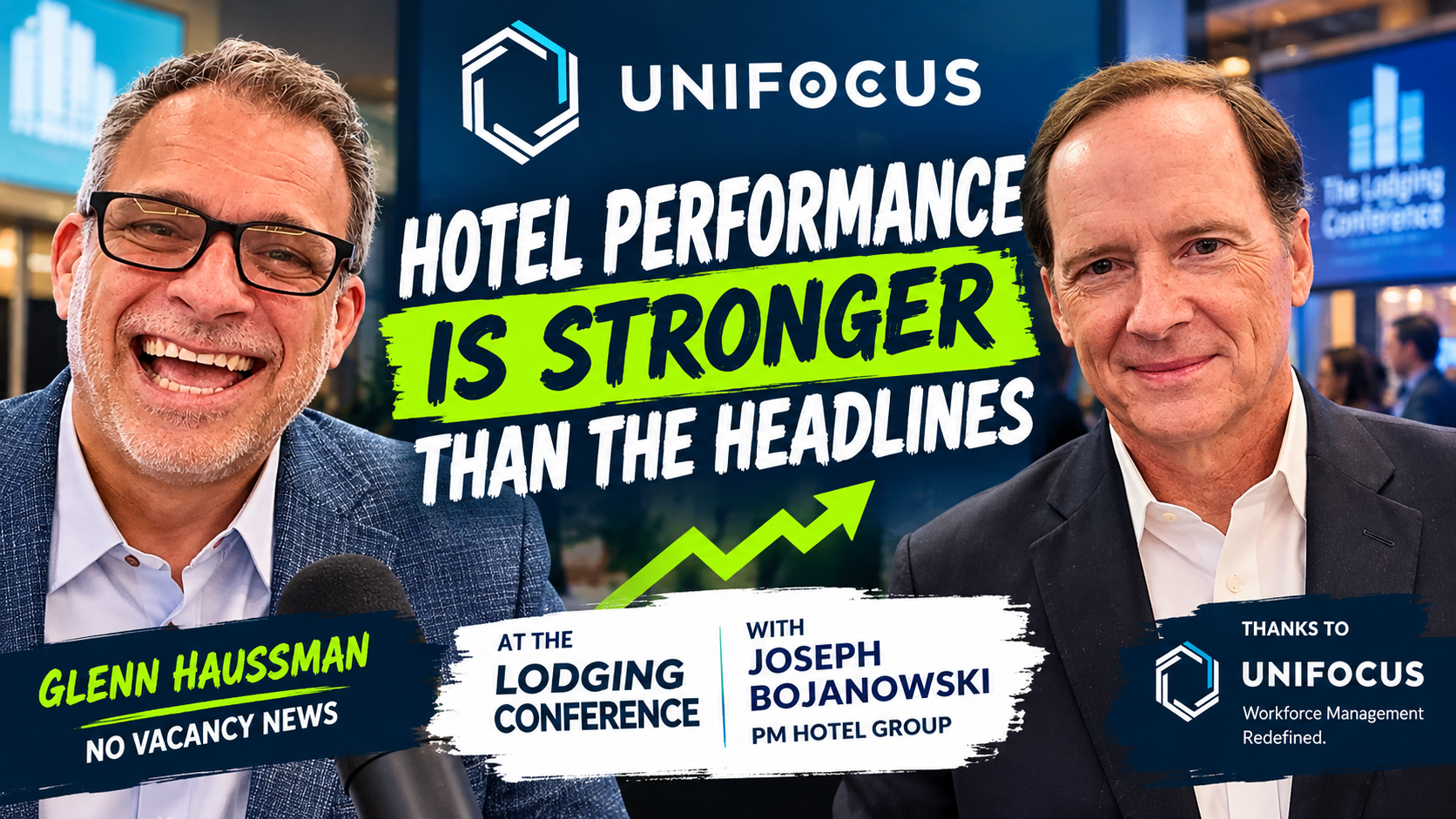
During The Lodging Conference, No Vacancy News host Glenn Haussman speaks with Shozib Khan, SVP of Strategic Asset Performance at Spire Hospitality, about a different approach to hotel management that connects technology, operations, risk management and business intelligence.
Consider something as basic as a room attendant knocking on multiple doors just to find an empty room. That might seem insignificant, but multiply those wasted minutes across an entire hotel portfolio, and the financial implications become much more interesting.
Shozib challenges hotel owners and operators to rethink how they measure productivity, support employees and improve net operating income. His approach raises an intriguing possibility: What if some of the biggest opportunities to improve hotel profitability already exist within the information and resources companies possess?
Hear why Spire Hospitality is rethinking strategic asset performance and how better coordination across departments creates opportunities that traditional management structures often overlook.
Thanks so much to Unifocus for supporting this podcast. Unifocus: Workforce Management Redefined. Visit unifocus.com.
Want the weekly roundup of news, videos, and what you might’ve missed from #NoVacancyNews? Text HOTEL to 66866.
Transcript
Glenn: [00:00:00] Hey, everybody. It’s your hospitality friend Glenn here at the lodging conference. I got my new friend Shozib Khan, SVP strategic asset performance over here from Spire Hospitality. But first, I want to thank our friends over at Unifocus. Unifocus, workforce management redefine. Do me a favor, check them out unifocus.com. Speaking about redefining Rejiggering, you guys are kind of changing everything you’re doing over there.
Shozib: [00:00:20] We have. First of all, I want to thank you for having me. Yeah, man. Number two great friends call me showbiz. It’s a lot easier to remember my name by calling me showbiz. So here’s showbiz. That’s exactly right. So here’s how we’re redefining things, right? So in all management silos, you have the sales and marketing and commercial art. You also have the ops art. But then there’s this other arm that has so much data and so much potential where you combine technology. I t risk management, business resources, right? The whole concept between strategic asset performance is to bring them all under one layer, right? So that collectively we find a way to give value and time back to our hotel owners, to our team members and most importantly, win.
Glenn: [00:01:04] All right. So let me see if I understand what we’re saying. So to me, the ultimate panacea of technology is to really kind of hold together all of this stuff because you have all of this data that’s out there, but whether or not you have access to it at the right time, in the right moment for the right opportunity is a totally different thing. So you’ve gotten all this data together, and now you’re feeling like it could power you ahead in a lot of different ways when it comes to your hotel’s performance.
Shozib: [00:01:30] That’s exactly right. For the past eight years, I’ve been overseeing Spire’s Fpna arm, where we were looking at business intelligence. We were looking at labor and things related to that, but we’ve never really found a way to take all that data and evolve it to the next step and bring a layer of, I don’t want to say AI, but some kind of automation that connects all the dots right across all of those channels.
Glenn: [00:01:54] Well, the fact of the matter is, AI is just an overused tool word that just kind of become a blanket term to mean anything at this point. Right?
Shozib: [00:02:01] That’s exactly right. And the way I take a look at AI and the way our division is taking a look at AI. First thing we need to solve for is when you take a look at the labor hours at the hotel and you take a look at our team member population, 70% of it is rooms and food and beverage. If you walk into a break room at any hotel, seven out of ten people, they are going to be room for the beverage, right? What we’re trying to solve for is how do we take AI into the break room so we can make the lives of the team members that are actually supporting our business better. Right. And what does that mean, make it better? It can be anywhere from increasing employee engagement, increasing anyway, from employee engagement to finding a way to reduce turnover. Right. Right. Keep them in this business. Keep them educated.
Glenn: [00:02:42] And we know I’ll put a pin in that. We know every time you need to change jobs, it’s going to cost you $5,000, $10,000 or more in time, effort, training, etcetera, etcetera.
Shozib: [00:02:53] That’s exactly right. And when you take that population and then you mix it up with another big ticket item that everyone’s talking about cost of insurance, cost of finding a way to cover liability insurance. Well, it naturally makes sense where you can find a way to leverage what AI has the ability to power and generate and share with the team members so that they can be more effective in the boring things, right? I’ll tell you, one of the most exciting and boring things in this whole wide world is finding a way to get that night auditor who’s there at 3:00 in the morning, a tool that will make their lives easier when that guest slips and falls. Yeah, because there’s going to be a slip and fall, right?
Glenn: [00:03:29] Right. It’s just it’s a matter of numbers. These things are inevitable when enough people pass through the doors.
Shozib: [00:03:34] That’s exactly right. And connecting technology, risk, business resources, all under one umbrella allows us to take all of the data that’s beyond what’s on the PNL and find a way to do something with it that adds value to everyone.
Glenn: [00:03:47] So that I love is the the real story here is finding ways to make it a win, win win for you, for your customers, for your operators. Right?
Shozib: [00:03:57] That’s that is, that is exactly right. And you know, we can’t we can’t take our eye off the ball of what our owners are looking for. We’ve heard about NOI over and over and over again. Right? So so we take a look at it from three different phases. We need to find a way to drive top line. That’s the easiest way to take care of NOI. And we just recently brought on an SVP of commercial services into our building. It’s going to do that. Next is find a way to find productivity increases. Well, you know, engagement increases productivity more than finding a way to shave minutes. Yep. Right. So how do we find technology to get people excited about what they’re doing? I mean, one of the things that that used to be very, very annoying for me is you’d have a guest that checks out and it takes that room attendant five tries on their door to find when that room is vacant. That’s right. How do we get that to that room attendant? So they’re not knocking on five doors to see if the guest has left on Saturday morning.
Glenn: [00:04:51] First of all, I’d like to apologize for never checking out of a room. Ever.
Shozib: [00:04:54] No.
Glenn: [00:04:54] That’s okay.
Shozib: [00:04:55] That’s okay. That’s okay. And we should be able to find technology that can, you know, you didn’t have to go to the front desk and and say, hey, I’m leaving or go someplace magical.
Glenn: [00:05:04] No, as a matter of fact, one technology that’s helped me not be as much of a jerk is you know, I got I get a text, and when you’re ready to leave, just say you’re out. Yes. So I just wrote out and that was it.
Shozib: [00:05:13] That’s it. And now life is simple for you. But now how do we take that connection from what you’re doing and pass it over to the team member that’s actually going to be serviced in the room, so they don’t have to spend time knocking on doors to find the room that’s actually wicked.
Glenn: [00:05:25] And also not spend time like for a maintenance person going back and forth and back and forth to get tools. All of these little things add up to hours and hours and hours and so much savings. You don’t need to fill those positions you haven’t been able to fill.
Shozib: [00:05:39] Anyway, when we looked at real data, the productivity was not spent inside the room. It was making sure that you have all the equipment and supplies and tools ready to go so you can get to that room and actually service it, right? So we’re trying to get ahead of what actually happens when they’re in the guest room. The goal is to get to the guest room faster so there’s not as much time lost.
Glenn: [00:06:00] I love it. Anything else you think we should know about what you guys are up to?
Shozib: [00:06:03] Yeah. From our viewpoint, AI is ever evolving. And it’s a it’s an amazing two letter word, but what we really want to find a way is give time back to our team members.
Glenn: [00:06:13] What’s the one thing you’ve learned so far while we’re here in attendance at the lodging conference?
Shozib: [00:06:17] My biggest takeaway right now is that AI is all over the place. Everyone’s talking about it yet, right? And not until the brands come up with what they’re trying to do and what some of the other powerhouses come up with, we’re trying to do well, we really have a solid direction. That doesn’t mean we can’t find wins, short wins and make the impacts right off of that.
Glenn: [00:06:37] Oh no, that’s right. There’s always now and there’s always getting set for tomorrow. And I think the point that we’re trying to make here is you’ve got to be nimble and you’ve got to be aware of what’s coming. So you could be best prepared to make changes to enhance your operations and engage those team members.
Shozib: [00:06:53] That’s exactly it.
Glenn: [00:06:54] I love it. Damn, I sound like I’ve done this before.
Shozib: [00:06:56] Yes you have.
Glenn: [00:06:57] Anyway, I’m in show biz now. We got showbiz here. I’m Glenn. See you all later. Please. Like, share, subscribe. And don’t forget to check out our friends over at Unfocus. Workforce management redefined. Check them out. See you all later. Bye.

More Episodes
-
October 14, 2026
Outrigger Is Reinventing Its Hotels. Here’s the Strategy.
-
October 10, 2026
How Raines Finds More Profit Inside Existing Hotels
-
October 9, 2026
Why Hoteliers Have More Pricing Power Right Now
-
October 6, 2026
What Higher Interest Rates Mean for Hotel Deals


Subscribe