August 15, 2024
Navigating Hotel Development Evolution
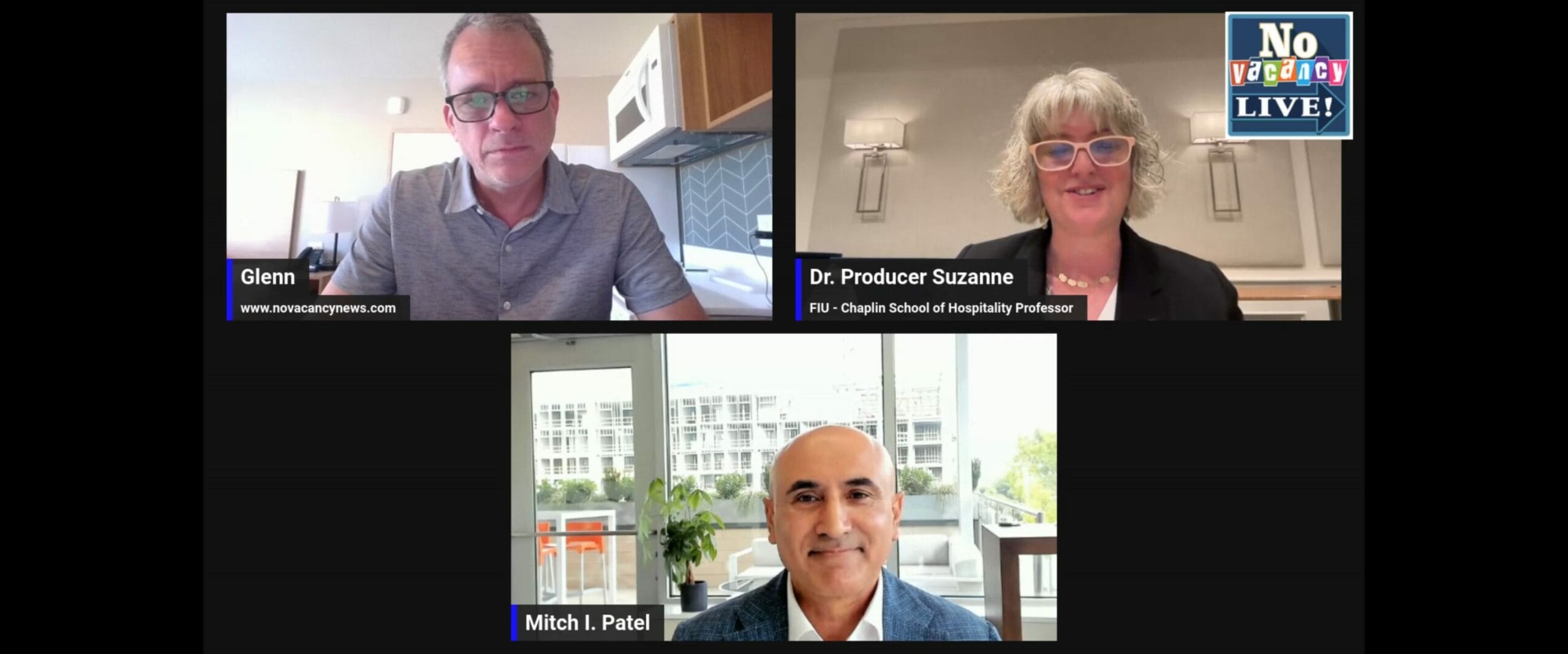
We discuss current trends and challenges in the hospitality industry with Mitch Patel, CEO of Vision Hospitality Group, focusing on the rise of extended stay hotels, innovative development strategies, and the importance of creating memorable guest experiences.
Mitch shares his expertise on:
Extended Stay Success: Why extended stay properties have become a “darling” of the industry, and how Vision Hospitality has leveraged this trend.
Development Challenges: Navigating construction cost volatility, labor shortages, and high interest rates in today’s hotel development landscape.
Lifestyle Select Service Hotels: The growing popularity of lifestyle select service hotels, combining boutique elements with efficient business models.
Experiential Design: How hotels are prioritizing memorable guest experiences, from room design to public space activation.
Profitability Beyond Room Rates: Innovative strategies to boost profit per available customer through food and beverage, rooftop bars, and more.
This episode offers valuable insights for hospitality professionals, developers, and anyone interested in the future of hotel design and operations.
Transcript
Speaker1: [00:00:00] Suzanne, I Loved You in a show where we talked so much about travel and both of us are traveling today in hotels. How fun is that?
Speaker2: [00:00:09] I love that we’re both in hotels today. I think that makes it amazing for our guest.
Speaker1: [00:00:13] And it does. And we got a great guest today. Stay tuned.
Speaker3: [00:00:16] Welcome to No Vacancy Lives. That’s my friend Glenn. You’re watching the number one show in hospitality.
Speaker4: [00:00:26] That’s it. You got it. You got it.
Speaker3: [00:00:35] Everybody, thanks for tuning into No Vacancy Live.
Speaker1: [00:00:38] I’m Glenn Haussman. That’s doctor- producer, Suzanne Bagnara. Suzanne, it’s so great to see you. Thanks for pinching in tonight.
Speaker2: [00:00:44] I am happy to help do so. I am actually live at the Opal Grand Oceanfront Resort and Spa in Delray Beach. At the Hftp conference just came off the stage when I think you reached out and said, hey, come join me So I am thrilled to step in front today and instead of hanging in the back.
Speaker1: [00:01:04] And I am here in West Jordan, Utah, it’s a suburb of Salt Lake City. Yesterday I helped open this hotel where I’m at right now during the grand opening ceremony. It’s an extended stay property, which is the darling of of the business these days. And Mike mentioned that maybe we’ll even start the conversation with the incredible developer, industry visionary owner operator. All the above. Mr.. Mitch Patel, president, CEO of Vision Hospitality Group. Mitch, how are you, sir? Doing well. Glenn. How are you doing today? Dude, I’m doing I’m doing great. Except for the fact that after we do this, I’ve got to go to an airport. So there is. There is that. But thank goodness I have a free chat. But, Mitch, you know, I know we.
Speaker3: [00:01:49] Didn’t talk about this ahead of time, but extended stay really.
Speaker1: [00:01:53] Has been the darling for the last few years. How are you seeing the extended stay market right now, being that you have such a portfolio of traditional brands and select service and lifestyle brands and all of that.
Speaker3: [00:02:07] Now look, extended stay. Our extended stay hotel is my first hotel was an extended stay hotel, and I was the general manager of that hotel right up. Yeah, really got my feet quickly wet in that segment. And we’ve developed and we operate extended stay hotels many since then and and as you know, you know, and and during the pandemic those hotels did better than others. And I think that really opened a lot of people’s eyes that, hey, going forward there, this is a day to day lease business. There is no risk. We saw the worst of it, right. And we saw some of the best of it as we’re coming out of the pandemic, as we were growing rate and extended stay has been the darling of our industry And but a lot of people are now getting into that space, and so it’s got to monitor it carefully. But we still believe in it.
Speaker1: [00:03:07] That’s that’s cool.
Speaker3: [00:03:08] Suzanne.
Speaker2: [00:03:09] I was going to say my favorite model, honestly, was extended stay. I was general manager and limited service and full service and select service. And at first there was a lot of hesitation because there there is that mindset that you don’t necessarily know how to pivot and play in that space because it is a different model, but was successful at it and really enjoyed that space with our guests and the team members. It’s a very different mind shift, but I really enjoyed it. And so it’s great to see that you’re you all are expanding in that way and started that way too. Yes.
Speaker1: [00:03:43] Yeah. So, Mitch, I was at Lending Con last week down in Orlando, Florida. So we were talking about development and deals. I had the opportunity to interview, interact and record with a couple of congressional representatives for, for example, we’re really trying to figure out what’s going to be happening as far as development goes and how government can assist with that. But I’m curious from you, Mitch, how are you thinking about the overall development climate today and how do you anticipate it going forward? Because in September everyone’s betting on an interest rate cut.
Speaker3: [00:04:17] Now, look, every every company creates value differently, Glenn. And we have historically created value through development. I mean, we built over 60 hotels and we currently have 40, 42, 43 hotels in our portfolio with another 15 in our development pipeline. So we are extremely active in the development front. We have five of those are under construction. More will be breaking ground soon. It’s not easy. I will tell you. It’s probably the most challenging environment that I’ve seen in probably 27 years. And that includes coming right out of.
Speaker1: [00:04:54] A big that’s a big statement, Mitch, because, like, I’ve been going around telling people, hey look what it was like before the Great Recession. You know interest rates were high then and even higher. So to hear you say most challenging now is pretty surprising.
Speaker3: [00:05:08] No, it absolutely. And I think there’s a there’s a lot of factors in there. One, you know, construction costs have escalated dramatically. What happened. Right. Coming right out of the Great Recession was construction costs went down, right? Construction costs never go down. They did. You know, it went down almost 20, 25%. We were building hotels at, at let’s just take a Hampton Inn blocking plank. For about 125 bucks a square foot right around oh seven. And it dropped all the way down to 80, 80, $85 a square foot. And we went out and built 14 hotels between like ten, 11, 12 around that time and opened them up. And, and this business is about basis right at the end of the day. And, and and if you could come in at a great basis and then ride that wave up with rebar and valuation, then you could be very successful. And that’s like with any investment, right? If it’s by buying stock with like the stock market with Apple or or or Amazon. Right. What’s what’s your basis and where is it today. And so we did extremely well developing during that time. And so now fast forward to today. You know construction costs escalated quite a bit. And then the pandemic hit and we kind of paused and we said okay here might here may be another great opportunity for us.
Speaker3: [00:06:44] Construction cost has to come down. Right. Right. And it didn’t. And so because of the of the inflation environment, of course, the supply chain challenges you know, the, the labor, the labor challenges. There there’s some statistic that we were building as many. Buildings you know, a few years ago as we were back in in oh seven or oh six or maybe even quite a bit more. But guess what? With 30% less construction workers. And so something has to give. And the average age of a construction worker is is only growing. So it’s been a big challenge in the construction industry. And costs that were just as escalated. So that and then you then on top of that you add the current interest rate environment. And you know, when you get into low double digit returns, high single digit returns for a development deal, that’s hard to kind of swallow, right? People are going to go, why am I taking this kind of risk building a hotel when I could put my money into some, some other some other vehicle and get extra turn. So it is challenging. But we it’s like anything you know you got to find that right opportunity Glenn. That right market with the right location. Totally brand.
Speaker1: [00:08:13] You totally anticipating my next question. So how do you think about a deal today and maybe how are you thinking about lowering the cost of of construction and these other elements to help all of those things come together when you’re paying more in interest than you have been in a number of years?
Speaker3: [00:08:30] Yeah. No, no, no question. So there’s a lot of things, you know, we this is something that I’m personally very involved in. Of my background. I’m a civil engineer. That’s what I study. And in that first hotel, Glenn, I built it as a contractor, even though I never built a shed before. And so it’s there’s a lot that goes involved in it, and there’s a saying that I, that I say all the time, and I, and I talk about with my team all the time let’s place money where guests notice and save. Money where guests don’t care. Right. And and it sounds simple, but guess what? Most people don’t execute it that way. And so I have never seen anywhere on TripAdvisor. I’m going to ask you this. Yeah. I’ve never seen on TripAdvisor. Anyone comment on steel rebar, concrete retaining walls and those kind of things. Right. So what we do is, you know, we spend a lot of time on making sure that that box is efficient. The square footage, the structural, there’s millions in those areas. And then we reallocate it and make sure that it’s in Hardscaping landscaping interiors. Epiphany that making sure that we nail the bed. The fundamentals of hospitality nailed the bed. You guys are traveling. You’re staying in hotels, right? Nail the bed, nail the shower hot water fast with good pressure and making sure that.
Speaker3: [00:10:04] Let’s not lose sight on the fundamentals and let’s make sure that we’re efficient. So we are we have a we have a way of going about it and how we go about developing it developing these hotels. And we’ve been we’ve become very good at it. I’m not going to tell you that it’s still challenging, but and I think the one thing I do want to share, Glenn, is there’s tremendous volatility in 2021, 22 and even into 23 with construction costs. What we’re seeing is there’s some more clarity. Now we’re seeing that volatility has diminished. And and I think that contractors are now finally picking up the phone calling us. Subcontractors are calling us. We’re not calling them. And we’re starting to see that turn. And I’m not going to tell you we’re going to see what we saw in 2010, 11, 12. But we are starting to see where things are, are settling down there and then interest rates. You brought up the you just came back from Lynda.com. You know hopefully that what we’re going to see some rate cuts here soon this year and that’s going to help with development costs going forward. And then hopefully it helps us underwrite where rates may be when you open the hotel. That is more critical to me than the the carrying costs of interest during construction.
Speaker1: [00:11:31] So I think what you’re saying then, we have a lot of people that don’t understand this as well as you do, whether you’re going to get one loan and then kind of refinance it once you open and you’re you’re banging on 18 months from when you open, start construction to open, those numbers are going to drop and make it a little bit easier. So then you can have more profitability than you would have budgeted for when you start construction, right?
Speaker3: [00:11:56] Yeah. That’s correct. I mean, look, most, most construction loans are really just short term, right? It’s going to be for during the the all right.
Speaker1: [00:12:07] So you have to pay them off. So you go ahead and get another loan to take care of that construction loan. And then you have an eye that makes that makes a lot of sense to me Suzanne.
Speaker2: [00:12:17] Well, I will start by saying that I did my dissertation using TripAdvisor, and I would agree that those terms are not terms, because I had over 120,000 pages of reviews, and I did some word analysis, and those were not ones that came in there. So your your assumption is right that way. But I think what I want to try to understand a little bit more for myself and for our viewers is knowing that you have these challenges and, and tied with labor, not necessarily having enough people. And the your mentality of really trying to get the hospitality basics right. What is the best model or you know, is it limited service? Is it full service? Is it extended? Stay select service. What is feeding the mix for you all now and then? Where do you all see yourselves as you continue the pipeline of adding more properties to fit the right challenge of our industry?
Speaker3: [00:13:19] Now, look, that’s a great question. You know, labor is going to continue to be a challenge for our industry. It’s been alleviated somewhat here recently. But I think going forward five, ten, 15 years into the future, it’s going to continue to be a challenge. And there’s all kinds of discussions taking place on how we could better leverage technology, right, to help alleviate that. But we are in the human capital side of the business that’s layered on top of the real estate side of the business. So we have to be very mindful of that. To answer your question, more specifically, we have full service hotels. We have boutique hotels with with multiple food and beverage outlets. And then of course we have select service hotels that an extended stay select service hotel. So we want to be in the select service segment. And what I often say lifestyle select service. And I want to dig into that a little bit. Yeah. So that’s the low low labor model. Absolutely. You know, you don’t have I’ve had hotels where I had 125 employees. You know, I don’t want those type of hotels.
Speaker3: [00:14:36] And I’ve seen during the pandemic, the, the, the really difficult decisions that we’ve had to make. Right. And if you and the select service extended stay hotels with the lower labor model flourish. Now I want to say flourish but did better than than than others. So yeah. So we want to stay in that space going forward. And that’s like a Hampton Inn, a residence. And it a great location, really top notch brands that are proven. And then I want to touch on that lifestyle select service. We were the first company to develop a ground up moxie in Denver, Colorado. You know, many years ago, we just opened. I just got back from Boulder, Colorado. Right. A moxie there in Boulder, Colorado, just just yesterday. And so AC hotels a tempo the new brand that Hilton has come up with. I really like that space a lot. I think, as you know people are craving for experiences. Thankfully, I gotta I gotta say this. I heard this somewhere that about 5 or 6 years ago, our the experience economy overtook the commodity or the material economy in this country.
Speaker1: [00:15:54] I see that as a direct reaction to the Great Recession and move away from materialism.
Speaker3: [00:16:01] That’s right. And after the, you know, during the pandemic, as you know, people are buying things because they couldn’t buy experiences because of they could they couldn’t because of safety reasons. But as soon as they could look at what happened. Right. It just took off and we saw this incredible pent up demand for travel and and human interaction and, and going out to eat and so forth. So. But lifestyle, getting back to lifestyle. Lifestyle is taking those elements that are in these boutique hotels and, and and packaging it like what, what Marriott and Hilton and some of these companies have done music, lighting, elevated design B and F beverage and food and those kind of things. And I think that I really like that space because as a select as an award winning developer operator in the select service space and having the opportunity to do boutique hotels. We’re taking we’re combining those elements and creating very unique experiences, but within a select service box in terms of the business model. And we’re getting a premium rate. And you’re saying so why? Because we’re providing a unique experience. And that unique experience becomes the commodity. And people will pay a premium for that. And do I have a minute to tell a story?
Speaker1: [00:17:35] Yes. But I’m also I’m going to write down this question I have for you while you tell that story. So I don’t forget it. All right. Go for it. Tell the story.
Speaker3: [00:17:44] No, no. So I’ll tell you my first lifestyle experience. I’ll be quick. Was when I bought a commodity to take me from point A to point B from Atlanta to London. Okay. It’s a commodity right? And when I got to and I bought it on Delta one, when I got to the airport, it was their affiliate airline, Virgin. And so it was a really small plane, and I was kind of disappointed when I initially saw it. And then when I got on the plane, it was a really small first class seat. And I’m like, again, a little disappointed. But that’s when my disappointed ended because of the music, the lighting, the uniforms, the food and beverage the entertainment system, the stand up bar, the smells. They made it a memorable experience. And the memorable experience became the commodity. And I really, really enjoyed it. And I would pay a premium for that experience again. And so why I love telling that story is with moxie. Let’s use that as an example. It’s 185 square foot room. You can’t just go market 185 square foot room. Why would people want to stay there for the music, the lighting, the entertainment, the activation, the public spaces, the the high design, the BDNF, all those things create that experience. And you know this, and people don’t hang out in the room as much as they used to. So I think rooms are going to get smaller and I think public spaces are going to get bigger. And I think that this, these kind of things, that activation of those public spaces are going to be what people crave for. So I have to share that.
Speaker1: [00:19:31] I would say that the rooms have already gotten smaller over the last ten years. Once the millennial trend started and we started discussing having people out of the room. Some of it, I think is based on consumer trends. Some of it is also based on the big brands trying to sell their sell it as a lower construction cost for one. So those two things came together. But what I want to talk to you about is yeah, you get premium pricing in the room.
Speaker3: [00:19:56] But.
Speaker1: [00:19:57] We’re really moving to an environment now, particularly with technology, that it’s really about profit per available customer. Right. So how are you thinking about these experiences on site in a select service environment that gets them to spend more money willingly?
Speaker3: [00:20:13] Absolutely. So it’s going to be much more challenging at a Hampton Inn right now. We might we might develop one of those in an urban area and a great neighborhood and put a bar you know, in, in that Hampton Inn and generate some additional revenue there. We might have a robust market. We really believe in that. Just whatever the the prototype is, we might want to expand it because people want convenience. You know, if if I could sell beer out of that or buy sell some food out of that people will do it instead of walking a blocks to get something. And so that is a way to generate some additional. But getting back to the lifestyle boutique, I’m sorry, the lifestyle select service based on, you know, we are generating a tremendous amount of revenue outside the the hotel ranks, right. And so we’re we’re oftentimes doing millions of dollars in, in BNF revenue just from the lobby itself and, and the activation, the bar and so forth with us. And essentially, yeah, you’re not giving away this stuff. You’ve got the market, you’ve got parking revenues. And, and and so these are, these are very important you know, revenue streams that we rely on to justify the development costs of that project.
Speaker3: [00:21:36] And if it wasn’t for those, then we would probably have a challenge. And and you touched on the BNF earlier with me before we went live. And why don’t we put B before F? Because I love beverage before food. There’s better margins there. I want to create food and beverage I said I said it wrong. Beverage and food outlets where people are going to go there for a drink first. And guess what? If they happen to be hungry, I will provide small plates of food. And as opposed to being in the restaurant business, which we have a few, and it’s challenging where I’m going to go there to eat. And guess what? If I’m thirsty, we happen to have drinks, you know? Right? So much better margins here with rooftop bar, speakeasies, lobby bars, sometimes as high as 4,045% margin. So if you’re looking at a million, let’s just say $1 million in BNF revenue and 4,045% margins, you put a seven and a half, eight, eight and a half cap on that. You do the math on what valuation you just created with that and and the experience. Right.
Speaker1: [00:22:47] I absolutely love that. And it’s interesting to me what’s happening in the hospitality industry, I think since like brands like Hilton Garden Inn came on the scene, I call them like quasi full service hotels. They aren’t. Select service hotels. They aren’t full service hotels. I think it’s really a coming together here. And I think what you’re setting up here right now, I think the next generation of prototypes, the next generation of new brands, are going to start to muddy the waters in that sense, where the full service hotels will still have bell people and conference space, but all the other types won’t. Right.
Speaker3: [00:23:20] That is correct. And we have we developed Hilton Gardens courtyards for decades. And and they are that they’ll have meeting space where we could accommodate weddings. They’ll have a bar. Yeah. And restaurants and the margins tend to be so much better than in the full service space.
Speaker1: [00:23:40] Yeah, it’s it’s amazing how that that works. Suzette. Got anything else I was going.
Speaker2: [00:23:44] To say on the beverage side? Because that was my one note as you were talking about before. I think that’s a piece where ironically, FIU it’s been a aspect that we’ve focused on. We have the Bacardi Center of Excellence, and we actually have students that really engage in the art of the craft cocktail and making it and learning how to be sustainable in that component, because that’s where we see the opportunity and value to drive some of those revenues. So to see that the others start to get it as you do is is fantastic.
Speaker1: [00:24:17] Yeah. She’s talking cocktails, but I’m interested in what you’re seeing in regards to the opportunity with mocktails. From my point of view, I’ve really seen them come into the fore over the last couple of few years, and I think there’s good opportunity there. Am I right about that and if so, are you leveraging it?
Speaker3: [00:24:35] No. Absolutely. You you are absolutely right about that. You know, the the trend is, is growing you know, a lot of young people, surprisingly, a lot of young people are not drinking alcohol and but they still want to get out and go to that rooftop bar and have a great experience With friends that might be drinking alcoholic drinks. And this way they feel included, you know? And to have a mocktail that looks great, that there’s a story behind it. How was it created? And or a mocktail version of something that that may be popular at, at that particular bar? So I think that trend is going to continue to grow. And yes, I do too.
Speaker1: [00:25:21] For me personally, Mitch, I it’s like I still enjoy alcoholic beverages, but I don’t necessarily want four of them when I’m at the bar. Right. So it’s a good way to experiment with flavors. Listen, I’m. Yeah, you don’t have to tell people how I really am over there, but but it’s true. Because, you know, honestly, as I’m getting older, I. I can’t drink as much, and I still want to hang out. Now, I’m one of those people, Mitch, that like, when I have anything to say, I just sip for no reason. So I feel like I could go through them a little quickly, you know?
Speaker3: [00:25:51] So I hear you loud and clear. I was just at the grand opening of the Moxie which I just mentioned. And dinner afterwards. And the guys around me wanted to drink some tequila. And so we were drinking some sipping tequila. And the next day I did not feel so good. Yeah.
Speaker1: [00:26:07] True. Before we wrap up, where do you see overall consumer sentiment as it, as it pertains to traveling, being in the hotels and spending money out and about on these experiences?
Speaker3: [00:26:21] Absolutely. So look, I’ll be quick. I think on the short term you know, there’s going to be some challenges. We have 70% of our economy is based on consumer spending and consumer spending. As you know, consumer confidence drives consumer spending. And what drives consumer confidence? Household balance sheets. So you’re seeing a tale of two cities, you know, the wealthy and the upper class. You know, they’re not seeing you know, some, some, some huge challenges with their household balance sheets, home values you know, the market. And they’re traveling, they’re spending money. But when you go down the food chain, you know, look, it’s challenging, right? Rent gasoline, food costs 45% of Americans are in credit card debt. They’re paying 28, 30% interest. Think about that. Yeah. Of course that’s going to impact travel coming into Orlando, where it could cost thousands to take your family right to, to Disney World. So we’re gonna we’re seeing absolutely. Some of that we’re seeing occupancy dip at many of the markets that were in but we had some great, great demand, though, coming out of the pandemic. So do keep that in mind. And so but we’re starting to see that and the economy hotels which we don’t have too many of them, but I do have many family members and peers that are in that segment.
Speaker3: [00:27:44] And they’re down. They’ve been down somewhat. So that’s going to be challenging. But I want to end on the on the macro economics you know, demand is going to far Are outpaced supply in the next 5 to 10 years. I strongly believe in that. If you talk to any young person, they want to spend more money on travel than any other generation. Before that, even baby boomers are spending a lot of money on travel. Go and see concerts. Go to see family members. I know some people that are just saying, let’s go down the road, down the interstate and find a place and we’re going to keep on driving and we’ll figure it out. And so people are just they want to travel. So I think travel is only going to grow, and I think it will grow at a greater clip than supply for the reasons we talked about earlier. And so I think that that that really sets our industry up for tremendous success in the next five, seven plus years and beyond.
Speaker1: [00:28:43] Yeah, I.
Speaker3: [00:28:45] Couldn’t agree.
Speaker1: [00:28:46] More. I think society has shifted permanently to experience economy. We see that with the younger people today My kids have no desire for things at all. We used to hang out at the mall. They don’t even know what that is. They would much rather go and do something with their friends and be outdoors, or have some sort of experiences. Mr. Patel, thank you so much. This has been an absolute delight and I’m sure I’ll see you on the road. I’d like the watching conference, if not sooner.
Speaker3: [00:29:17] Absolutely. Thank you for having me. It was a blast. And look forward to seeing you all soon. Awesome.
Speaker1: [00:29:22] You rock.
Speaker3: [00:29:24] I want to thank all of you.
Speaker1: [00:29:24] Guys for watching today. And of course, make sure you you follow us wherever you get your podcasts, download all of our shows. You’re going to want to listen to this one over and over again. Of course, you could watch us wherever you want LinkedIn, Facebook, and No Vacancy News.com. Thanks for being here, everyone, and we’ll be back next. Well, I’ll be at Southern Lodging Summit next week, so we won’t be live next week, but I’ll have a lot of content from there. Meanwhile, be well. Remember, you got one life. So blaze on and.
Speaker2: [00:29:52] Follow your passion.
Speaker1: [00:29:53] Y’all Later. All right.

More Episodes
-
June 4, 2026
Hotel Owners Facing Tough Choice: PIP, Sell, or Switch Management
-
June 2, 2026
Red Roof Builds an AI-Driven Website: How It Wins Search Next
-
June 1, 2026
7 Seconds Behind the Bar Can Cost $1.1M: Fix These Profit Leaks
-
May 31, 2026
Most Hotel Websites Don’t Use Video—That’s Why Guests Bounce


Subscribe