August 7, 2025
How Brittain Resorts Is Winning Myrtle Beach — One Local at a Time
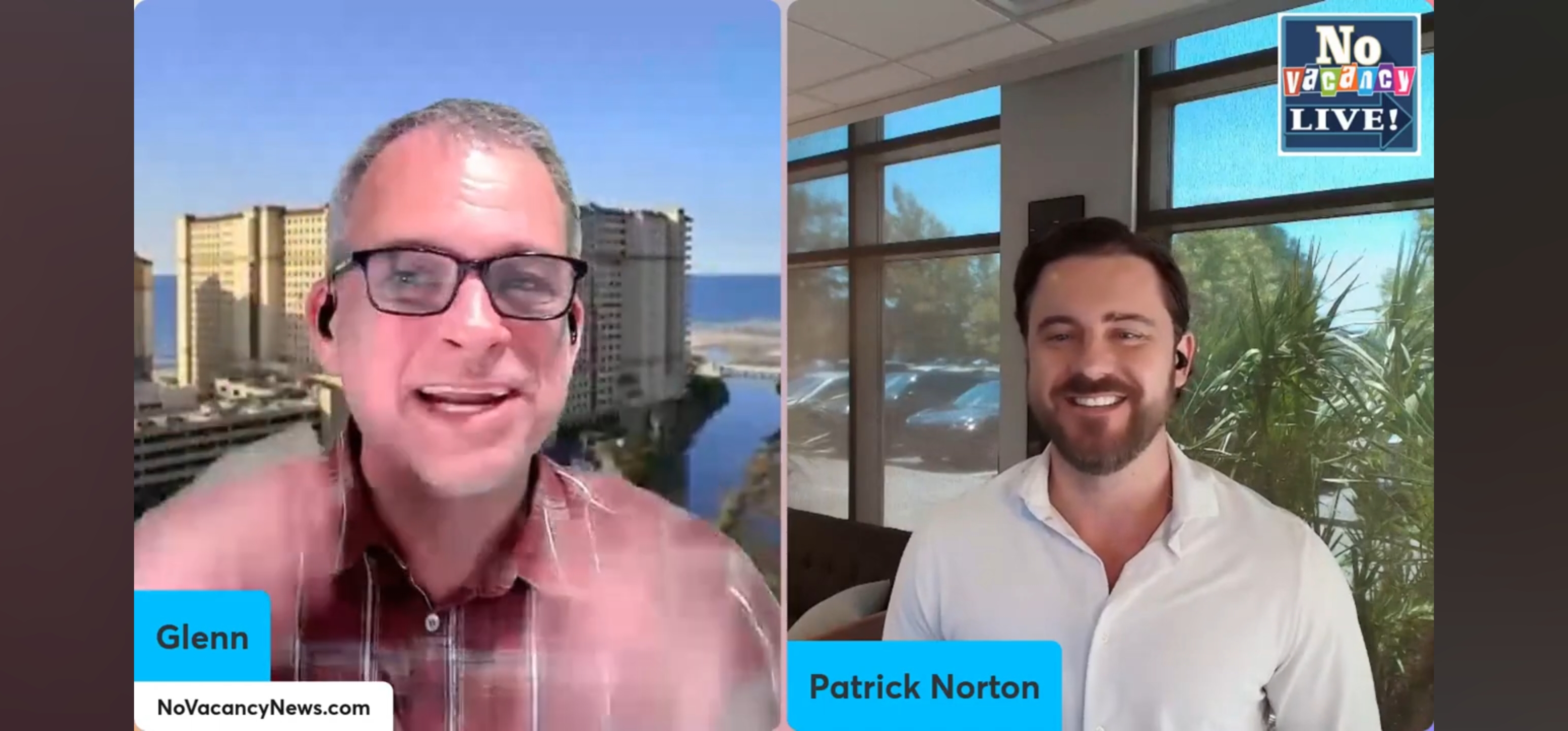
Patrick Norton, CMO of Brittain Resorts & Hotels, joins Glenn to break down the explosive growth of Myrtle Beach, SC — and how smart hospitality leaders are adapting.
Learn how:
Brittain is turning ex-tourists into loyal locals
Renovations and F&B investments are driving repeat business
Value-driven perks (like free attraction tickets) are beating price wars In-house marketing is turning email into a $250M powerhouse
A “Vacation for Life” contest generated 300K+ new contacts
Plus: real talk about booking windows, golf season economics, and why Gen Z hires are shaping the next chapter of hotel marketing.
🎯 Don’t miss this one if you’re looking for real strategies in a market that keeps changing.
💼 Thanks to Actabl — Actabl gives you the power to profit. Visit actabl.com.
📍 Subscribe for more conversations with hospitality leaders and innovators.
Transcript
Glenn: Hey, everybody. It’s your hospitality. Friend Glenn here. Thank you so much for joining me on another episode here of No Vacancy Live. I also want to take a moment to thank our friends over at Actabl. Actabl gives you the power to profit. Please check them out at actabl.com. So I got this great little property behind me here. No, it’s not what you think it is. It’s in Myrtle Beach, a town that I have come to like and love. And I think they’re really getting back to spirit of hospitality over there that is designed for everyone out there, something I love. So we’re going to talk to Mr. Patrick Norton today. He, of course, is the chief CMO of Britain Hotels, Resorts and hotels, not hotels and resorts. There we go. I say that. How are you, Patrick? Thanks so much for doing well.
Patrick: I appreciate you having me. Love the background. I’m looking forward to getting you up there. So well, when you’re.
Glenn: Ready down there, we got to keep, you know. That’s right. Appropriate. Yeah. Man, it’s been a while since I’ve been down there. And I know this is gonna start in a weird angle, but the first time I went there, I got a tour of the then under construction, now defunct hard rock theme park.
Patrick: Yes, that hard rock theme park and then freestyle theme park. And now parking lot. Right? Yes.
Glenn: Yes, yes. Yet the market has done great. I think what the mistake was, it should have been the hard Rock Golf Park. And then maybe it would have worked a little bit better for.
Patrick: It was, it was it was Disney prices and Myrtle Beach was.
Glenn: Right. And that kind of gets back to my my intro. It’s really, you know, Myrtle Beach is all about the everyday person, right? Being able to give people great experiences that they can afford, something I absolutely adore. So before we get into specifically about what you’re up to in Myrtle Beach and possibly beyond what’s going on right now in the market, how are people responding to the market? What’s it all about for those folks that don’t really get what that market is all about?
Patrick: Yeah. So travel nationally is down, which everyone knows. It’s been a bit of a struggle. Everyone’s still recovering from the inflated highs of 21 and 22. The revenge travel post Covid, which everyone thought was going to be a sustainable trajectory for the next decade, it’s clearly not. Myrtle.
Glenn: Beach, just put a pin in that one second. Warning. Everybody get away from groupthink. Just because you keep hearing it over and over again doesn’t make it true. I see this a lot of times x CEO, the X amount of CEOs will say something on stage. Everyone and everyone in the audience will then take that as fact without really thinking through what everybody’s angles are. Perceptions are. And coming up with your own conclusions. Patrick, back to you.
Patrick: Right. All right. Myrtle beach is a resilient town, though, because it is value driven. It’s it’s semi recession proof. It’s, you know, when it’s too expensive to fly to Florida. We’re a quick drive. So Myrtle Beach tends to weather the storms better than most destinations. It does have a new problem though. It is the fastest. It’s a new problem. Good problem. It’s the fastest growing city in the country for four years in a row. Why?
Glenn: There are people in Nashville right now crying.
Patrick: It’s. But the problem is, it’s our tourist, right? All our tourists are moving here. So we had 20 million tourists in 2020. We’re down to about 17.5 to 18 million. And just driving the roads to work. I think they’re all here. So there’s a housing development on every block. There’s a storage unit going up on every block. So our tourists are moving here, and it’s significantly changing Myrtle Beach from 100% travel day destination to a work stay, play live destination. So we’ve become a small city with big city problems, which which is a good thing. And the mayor, city council, everyone’s hard at work at, you know, kind of rebuilding the infrastructure of the city to prepare for this new wave of being just an awesome place to live and just a great place to relocate from the north.
Glenn: Well, that’s absolutely great for people living there. But as you set it up, if you have fewer tourists than there are fewer people potentially staying in hotels. So how are you thinking about that shifting market, which obviously you’ve been smart enough to detect? And what are you doing in order to turn the tides to your favor?
Patrick: Right. Well, there’s there’s there’s another little caveat to that too, which I don’t know if it’s an original expression, but someone at the chamber, you know, said all the all the tourists that are moved here now are drawbridge tourists, right? And I hope I don’t want every one of them to put their earmuffs on and not listen to this, because I love them. But they were great tourists. But now that they’re here, they want the tourist amenities. They just don’t want the tourists. Right, right. You know, they’re keeping the roads busy. They’re keeping the roads crowded. They’re having to make reservations for restaurants restaurant because all these dang tourists forgetting that they were tourists a year ago. It’s a it’s a tough slope to navigate. You know, it’s a little a little tough path to navigate there. But this is where the renovation of our properties come in. And that Myrtle Beach is the reason it is a value destination is because it has a mix of inventory from, you know, we’ll say we’ll generously say economy all the way up to luxury, which the background of your you have North Beach I would consider luxury. We are one of the leaders in Myrtle Beach of making sure we renovate our resorts. That is that is the tried and true tradition of good guest service. Good quality experience trumps everything. So this year we did a $60 million renovation over, over just three of our resorts. Wow. And I’m talking we handle everything from blueprint to ribbon cutting. All in-house construction partners, internal design firm, everything but we have to keep pace with the brands that we have. We have flagged hotels as well, but a majority of what we have at the moment is independent, which are significantly more complex properties to run. They have individual condo owners that you have to convince to renovate their unit as well, but it’s really about upgrading the quality of your property just to make sure that if we have a diminishing pool of tourists coming here, we’re capturing the most of them through the best customer service, the best guest experience and the best quality rooms.
Glenn: Well, you’ve got dozens and dozens of food and beverage outlets. So with that food forward approach that you’re having, you probably have already created fans with those tourists now residents, and I’m sure thinking of ways to appeal towards the entire local market instead of just those people staying in your hotel properties.
Patrick: So we’ve gone from I think we’ve gone from 30 FMB outlets to 45 in Myrtle Beach. Wow. Probably 40 in Myrtle Beach alone. And we’ve started turning. We started turning some of these oceanfront, you know, a traditional FMB outlet at a resort is an amenity, right? So it’s there to service. It’s not there to necessarily be a five star experience, although the resort behind you does have 21 main, which is an unbelievably high stakes. Look at that. It’s it’s. We’ll get you there when you come up, I promise you. T-bone. But we started to understand. Hey, we have these restaurants that are oceanfront. Right. And there’s there’s only so many places to eat. Oceanfront. Why not put them, elevate the experience there and build them for tours? So we just tried one called Tide to Table at Litchfield, which Litchfield is a little quieter part. Near near Myrtle Beach. It’s been a phenomenal success. We’re going to end up turning it into a case study. It is the only oceanfront dining experience in the entire entirety of Litchfield. So, yeah, we’ve had to adapt to kind of take advantage of that local tourist market.
Glenn: Yeah. I mean, that’s great. I love it. Patrick, I live here on Long Island. Up in New York. And one of the things I really want to do is go out and eat by the water. But there’s a real dearth of those properties. And every single one that I could go to regular restaurants not affiliated with hotels. It’s. You got to go to an off hour. You gotta. It’s just such a pain in the neck. So to me, it seems like if you put something like this in your hotel, you really open yourself up to opportunity to get more profitability right out of the gate.
Patrick: Right. Build. Build it. They will come.
Glenn: Yeah. Because it’s different. Because you’re creating something with something that’s special. I can’t I can’t do that here at the Hausman Result Pool Club, Houseman Resort Pool Club and smoke House, i.e. my backyard, because I don’t have an ocean in front of me. Right. So you know, I don’t live near the ocean. I want to eat by the ocean, so I’m going to be. That’s a great way to protect yourself and get people to come. What other types of things you’re doing, do you think that’s going to help you attract to those locals to spend money with you instead of in their neighborhood.
Patrick: Sure. So the locals in and as I’ve mentioned, they’re still tourists. Right. They moved here. They’re retired here. They moved here with low taxes to live here. It’s it’s just, you know, weather’s favorable. Although I’m from upstate New York, and I heard it was like 102 a week ago, but getting them into the restaurants is not just about having them become a customer at the restaurant. It is about the fact that if they were tourists, their family are still tourists. Wherever they come from, their friends are still tourists wherever they come from, whatever amenity we can use, whether it be a fitness club, whether it be the FMB outlets, the tiki huts down by the ocean which they love to sit at and grab a drink at as well. The beach clubs, you’re still exposing them to your property and in a creative way, getting them to become brand ambassadors of that hotel to go back. So when they have family in town and they don’t necessarily want them to stay with them, they’re recommending all our resorts. So it is an interesting kind of very untapped market because this growth has been so quick and explosive of these tourists moving here. But yeah, the bigger deals that we’ve got to we’ve got to continue to change the face of Myrtle Beach to continue to elevate the quality of Myrtle Beach so that we can replenish these tourists that have moved here.
Glenn: So what does that look like to you? Ideally, because you do want to stay rooted in your your your value history as a market place that can have a whole panoply of properties in different regions in order to keep people coming against all these other destinations that they could fly or drive to.
Patrick: Right. So, and we have the advantage now of where we are based in the Carolinas, but we, we, we manage from the Carolinas all the way down to Key Largo. So we’ve got the southeast. Pretty, pretty. That’s awesome. You know, triangulated. We’ve we’ve got a lot of good southeast data here. So we know what’s going on, what’s working in certain markets. What’s working here? One of the things that we do uniquely in our market is that we do not sit back and wait for demand, right? We don’t. We run 20 plus hotels in Myrtle Beach. We we serve on the DMO, which I know, you know, but for the audience destination marketing organization, I’m currently the chairman of our chamber, which is the DMO. The previous two years, I was the chairman of the Marketing council. So Myrtle Beach is a well-funded, well-funded second in the country, behind only I can’t mention them. We’ll just say they gamble.
Glenn: You know, totally the place I might be next week as we’re recording.
Patrick: Go push over. I’ll come with you, I love it. Yeah, the unnamed place. But we are the second highest funded DMO in the country. So Myrtle Beach has a healthy budget to attract tourism there. We as a management company, being in this community, do not sit back, wait for demand to be generated, and then hope we can get our share. We want to harvest the intent of the customer once they’re generated, but instead of that, we go back a step further and say, hey, we’re going to be part of the solution in driving demand to Myrtle Beach, to getting amenities built, to getting working with City Council to get infrastructure repaired. We’ve got an amazing mayor, an amazing city council, and we work alongside them with the chamber to say, how can we elevate the beach? So we are a unique management company and that we get involved in the community of the city and the marketing of the actual tourist town itself to generate demand so that our hotels can benefit from them.
Glenn: Yeah, Patrick, I love what you’re saying, and I know more hoteliers should do that because what you’re doing is you might be helping the others, but you’re really helping yourself. Right. And that’s a rising tide, just like the city that remain nameless. It’s that cluster effect. The more good stuff you have there, the more people want to come. And everyone can do very well in that market. So with that DMO position, what is some of the messaging today? In the summer of 2025 that’s resonating with consumers? That might feel a little bit are right about that.
Patrick: So it’s it is a it’s a booking window game this year and which seems to be a continuing theme each year.
Glenn: I want to do a movie, The incredible shrinking booking Window. You know.
Patrick: I’ll produce it. We it is it is minuscule now. And it is it is you need blood pressure medication to manage your rates in a 48 hour type booking window. You know, when you’re going into July 4th and you’re at 75% and you got a week to fill out the last 25. You are at the mercy of. Do we have a million people coming in the next seven days or don’t we? Do I drop my rates, don’t I? And we are a AI driven company. As much machine learning as we can get in there. So our revenue strategy is it’s it’s automated with human oversight. You know, we try to stay pretty cutting edge and everything we do, but, you know, even even the, the machine learning is perplexed by this year. So what seems to be resonating is the ones you would expect. It’s discounts and it’s last minute discounts. Unfortunately the rates for every destination, not just Myrtle Beach, have probably increased, you know, 40, 50% in some places. Some some destinations are paying double what they were years ago. And it’s a slippery slope for Myrtle Beach, which is a value driven, something for everybody destination. So we’ve had to get very, very creative in in trying to drive tourism this summer, without a doubt.
Glenn: That’s really that’s really stressful because it’s the exact opposite problem that you’re having. A couple of years ago when we all couldn’t get enough. But as long as you keep mentioning that value, value value and giving people different ways to enjoy that value, I think that’s right. So this last minute messaging I think makes a whole lot of sense. I do believe I just you know, now that we’ve moved off from broadcasting live daily to me doing a bulk shows at a time. I just was speaking to somebody that’s seeing the same thing. The booking window is shrinking and you have to reorient your brain in order to do it. So how do you keep the confidence up to not drop those rates when it’s getting close to the deadline? And does dropping rates really generate demand?
Patrick: So it’s a great question because a lot of people will say no, but then they’ll do it anyway. Yeah. So we we more than any company, I think in town we, we, we focus very heavily on getting a heavy base of business very early. So when I’m talking about for July 4th business, our first campaign goes out October 1st, the year before. We do three major campaigns the year before. We have such a good relationship with our guests. History. We have 75. We have 2.5 million guests at our hotels, and we have a 75% repeat guest history, Accessory wear, which is phenomenal not just for the market but for the nation.
Glenn: I think particularly because you’re competing against other hotels, you’re competing against every other destination. So congratulations to.
Patrick: You without a doubt. So we do we do 100% of in-house. Our sales, marketing and revenue team is 100% in-house. So every year we’re tasked with an $8 million marketing budget, and we have to turn it into $250 million. We outsource almost nothing. A little bit of SEO and a little bit of design work, but the the team is right outside my door here getting it done. But the biggest thing we do is get history marketing to get that base of business early so we don’t have to drop rates. And we do a best rate guarantee early. If you book early, we will we will honor this because we got to get it before they go to a competitor. The biggest piece is probably last year we sent 90 million emails and they are unbelievably effective. So email marketing is without a doubt seems dated, seems old. It is the most effective way to communicate with your customers.
Glenn: I will tell you. I will tell you that. My hunch is that when people say that, it’s because their email marketing is not being done in a way that is connecting or resonating with the potential customer, right? So if you’re sending 90 million emails, obviously you might be sending to the same person several times. How are you thinking about parsing out those messages? So you’re not just throwing spaghetti at a wall, but you’re taking direct aim with a very particular understanding of that subset of customers.
Patrick: Right. So we have a it’s a it’s probably a bad metaphor, but I always say we are we started out shotgun and we are moving towards sniper rifle and we’re in the middle. I don’t I don’t know enough guns. I don’t know which ones between those two, but.
Glenn: I don’t know. I’m from New York. I don’t know much about guns, so we’ll just go with it.
Patrick: All right, so we are. We are a shotgun. Sniper rifle at the moment. But yeah, we’ve moved into this broadcast of Just Blast Everyone because it worked. It really worked. It was cheap, it was effective. And that has become more tailored over the years. So without it would take too much of the show to say that we we now have ten auto responders that are behaviorally customized based on the interaction of the customer, based on the profile building, we get everything on the customer that we can. We collect data that I don’t even know I need yet. Your shoe size, I don’t know, but I would like we might need it someday. So we’re just building it up this huge CDP so that when it comes time to use that information, we have.
Glenn: You guys come out with the the Britain edition of Hoka. That’s going to be a very important factoid for you to know.
Patrick: The beach shoe. That’s exactly right. So. And I’ll know the shoe size. We’ll be ready to go there. So there’s no you cannot, you know, without getting into privacy issues and overstepping and overreaching, you want to collect as much as you can from them. And we put a lot of focus into the the boring fundamentals of the job. And we just we try to out hustle competitors because the fundamentals work. It’s not saying 20% of our strategy every year is not innovative. It’s not saying 5% of our strategy every year. It’s not stuff we’re sunsetting. But and the math is probably wrong here, the other 80 to 85% of fundamentals work for a reason. And if you just do those and you do them well, I call it the again, another bad metaphor, the Bill Belichick method. If everyone blocks and tackles and is boring, you will win the Super Bowl, right?
Glenn: Yeah, yeah. And that’s really what it’s all about. And Patrick, that’s what I’ve been saying my keynotes all year long. Back to the basics and focus on what you can control. And those are a couple of really great examples of what you’re doing over there. So when you’re sending out these messages, what what is the most common message that people are like, yeah baby. Oh, man.
Patrick: Value driven. So we created a partnership that we call Britton Rewards and.
Glenn: Right. I just want to say before you go on, that doesn’t mean cheap. It means making people feel good and comfortable with what they’re getting exchanged for, whatever the price point is.
Patrick: Exactly. So we talked about it earlier. It’s about it’s about value driven. So that’s fine. Destination is going to mark up my room 40%. What am I getting for it? So we have a partner with a company called Global Amenities. They have secured all the major amenities and attractions in town. So every one of our guests that check in every single day get something like 4 to 5 free attraction tickets. It might be Ripley’s Aquarium, it might be Medieval Times, Pirates voyage, miniature golf, hundreds of dollars worth of free tickets. And it’s been a great partnership because these attractions, they want to give one free adult ticket because they know you’re going to buy a second and you’re going to buy two for your kids, right? So it’s almost a cashless exchange of this. This rewards partnership with the attractions. But now when other hotels are out there saying $100 for this room and we’re saying $100 for this room plus five free, you know, so these value add is, is what’s been kind of helping justify the rate increase. And it’s not that we want we don’t want to increase our rates on our customers. We have to keep pace with the market, with the economy, with inflation. So we tried to find ways to add value.
Glenn: You got to pay your people too. So exactly.
Patrick: Wage is the wage is the number one factor of, you know the number one bill that we have to keep paid that’s increased so much over the years. So yeah, adding value to justify the additional costs for sure.
Glenn: And I think that is really what gets people to pull the trigger on those vacations right now. You absolutely nailed it. People are getting sick and tired of feeling as if they’re being nickel and dimed and being asked for a handout. Every single moment of their vacation point of getting away is to forget all of that kind of stuff. And I’m afraid that, generally speaking, in hospitality there’s too much of that Wall Street mentality taking over, and we’re losing the roots of getting back to basics with hospitality. And that’s probably Patrick. I love talking to guys like you because you really get it. You understand that this is a game about people and it could also be about profits. It shouldn’t be about profits. And then people.
Patrick: Right and right. Fatigue is an absolute real thing. And it’s been it is it is the number one thing every hotel is probably battling right now.
Glenn: Yeah, I’ve been warning I’ve been warning about this issue as well because my travel costs have probably doubled in the, in the last year, every single bit of it. Plus being asked to fork over more money for fees that never existed before. And, you know, things are starting to get a little bit silly to me. Patrick, how are you feeling about this coming the next 12 months in Myrtle Beach? Are people still are people still golfing and hanging out and you know, where do you think the biggest opportunity for the market is?
Patrick: Yeah. So golf. Golf is done well. Golf did well through Covid. It was. It was being an outdoor kind of socially distanced activity. It thrived pretty well during then. Myrtle beach has a saturation of golf courses. I don’t know if we’re somewhere between 80 and 110.
Glenn: I feel like you guys have the most of any city in the country, right?
Patrick: Yeah. A few of them have because they are beautiful landscaping and beautiful, you know, grounds. So some of them have turned into neighborhoods. Probably not the worst thing to have a few less courses. I don’t mean from where we’re at right now, but Yeah, golf is Golf’s an interesting one because it’s only about 4 to 5% of your business, but it’s in the off season. It’s about 30 to 40% of your business. So it’s yeah, shoulder season when you need it. Same as kind of winter monthly rentals and group business and all their what’s going to happen in the next 12 months. Our VP of revenue just got back from the Co Star conference, where one of the keynotes there said every single predictive model about 2025 was completely wrong last year. Every year we say this slide is going to stop and it’s not. So I think I have to finally responsibly say Glenn, I don’t know.
Glenn: And that’s great.
Patrick: You know, we got a these forecast models are finicky. They have not they don’t have a great track record right now. And so we have to play conservative, get the business where we can. Yeah. And just focus on occupancy and good ADR.
Glenn: Totally. And I want to give a good shout out to my friends over at costar, who, when I’ve heard the last few speeches, talk about how crazy that is and how they’re revising the figures. And it’s a constant game of catch up. It’s not a to use a quote from a overnight TV, set it and forget it kind of of a thing anymore out there. Yeah. Patrick, this has been a really, really awesome. But I got to ask you one more question. How are you connecting with younger travelers. Let’s say the Gen Z. Young millennials are 25 and under.
Patrick: Yeah. So to the answer is easy. And I’ve been very fortunate. I will say it’s genius. It’s not. It’s luck. Coastal Carolina is our local university. It’s an amazing school. I don’t know the one. Baseball College World Series a few years ago. Great school. So they have a rare hospitality marketing program, specifically marketing, just for hotels. So 95% of our team is recruited out of that school. So how do I communicate? Because a big part of what we do with social media to our average, which is very hard to get someone to follow a hotel, right. Why do you want to talk to them on Facebook or TikTok? I would say.
Glenn: That very short window when I’m thinking of a trip and planning it.
Patrick: Right. So we do. We use it for year round engagement through contests and they’re just creative. A creative team. So majority of the marketing team are all hired from that program and they’re under 27. They’re anywhere from 21 to 25. I don’t need to know anymore. And that’s where executives should continue to move in their head. You don’t have to be the genius at this go. If you want to learn how to talk to 21 year olds on social media, go hire a 21 year old with a marketing degree. So we replenish the team. We we promote the team and we make sure that they represent the base we’re going after.
Glenn: Could you give me one idea that they’ve come up with that you as an older person might not have considered and me probably didn’t even know existed as an option in the first place.
Patrick: When a vacation for life to Myrtle Beach. It was a brilliant campaign. We got 250,000 Facebook followers out of it. We got 200, almost 300,000 email addresses from it. And the winner ended up taking a $10,000 buyout after a two year contest which ended, which ended up being pennies. But it’s that mentality that, that, that hey, these guys don’t necessarily want to just see these. These videos here, they want if they’re going to it is hard to get an email address from TikTok, right? Or Facebook or Instagram. But they will follow a contest as long as it’s instant gratification, a kind of quick click through low, low entry, you know? Yeah. That’s that was one home run. There was a another one where we gave a car away, a car and golf clubs, the way they just. I think they understand that young people want free stuff.
Glenn: You know? Yeah, sure. They I’m going to be bold here and say even older people like free stuff.
Patrick: Yes we do. We are also I do accept I’m older now.
Glenn: I’m also curious about have you thought are you working with like, micro influencers, for example, that help promote like Myrtle Beach and your properties in particular? And how does that work then just like a catch all personality that’s out there, right.
Patrick: So there used to be that the kind of a big bucket thought there, right? Like, we you know, you have X budget, spend it all on X person. But it is so odd the way you’re dead on. I know where you’re going. It’s become so fractured that these, these like the godlike status of some of these big people, their cult followings are being fractured because there’s so many micro stars now, right? Right. And it is amazing to watch the team come up with the list and bring me a list and say we’re going to do a partnership with these 25 people. I’ve heard of zero of them. Right, right, right. But they they they know them all. But that, you know, again, they’re going after they’re here to go after an audience that I have grown out of how to reach my dad now.
Glenn: Oh, yeah, I totally get that. And I wanted to go see as we’re recording this Cyndi Lauper on her farewell tour.
Patrick: Nice.
Glenn: None of them will know who that is. All right, so generational divide is real. Listen to that generation. Influencers that are younger, that’s that are micro influencers that have those small audiences are a great opportunity to. All right. I’m I think we should really end it here, but I really we got to do this again. Patrick, I think you’ve got a lot of great ideas. So a lot. Thank you. How can we learn more about hotels.
Patrick: And resorts and just reach out to us? Follow us on Facebook. Follow us on Instagram. Follow us on TikTok.
Glenn: Awesome. Thank you friend. I really appreciate it. I will see you in in a minute. I want to thank all of you folks for being here with me today. Always great talking to all of you and learning together about how this incredible but fast changing hospitality universe is moving on into the future. All right, so you’re going to want to listen to this. Of course you do. Download this show wherever you get your podcasts. And of course, check us out on LinkedIn, our primary home, as well as YouTube and the other sources as well that those younger people use. And until then, we’ll see you next time right here on No Vacancy Live. Remember, you got one life. So blaze on and have a great day. We’ll see you later.

More Episodes
-
June 4, 2026
Hotel Owners Facing Tough Choice: PIP, Sell, or Switch Management
-
June 2, 2026
Red Roof Builds an AI-Driven Website: How It Wins Search Next
-
June 1, 2026
7 Seconds Behind the Bar Can Cost $1.1M: Fix These Profit Leaks
-
May 31, 2026
Most Hotel Websites Don’t Use Video—That’s Why Guests Bounce


Subscribe