September 23, 2025
977: Inside the World of Yacht Chefs w Below Deck’s Adrienne Gang
What does it take to cook on a yacht or private estate? More than incredible food—it’s about creating unforgettable experiences.
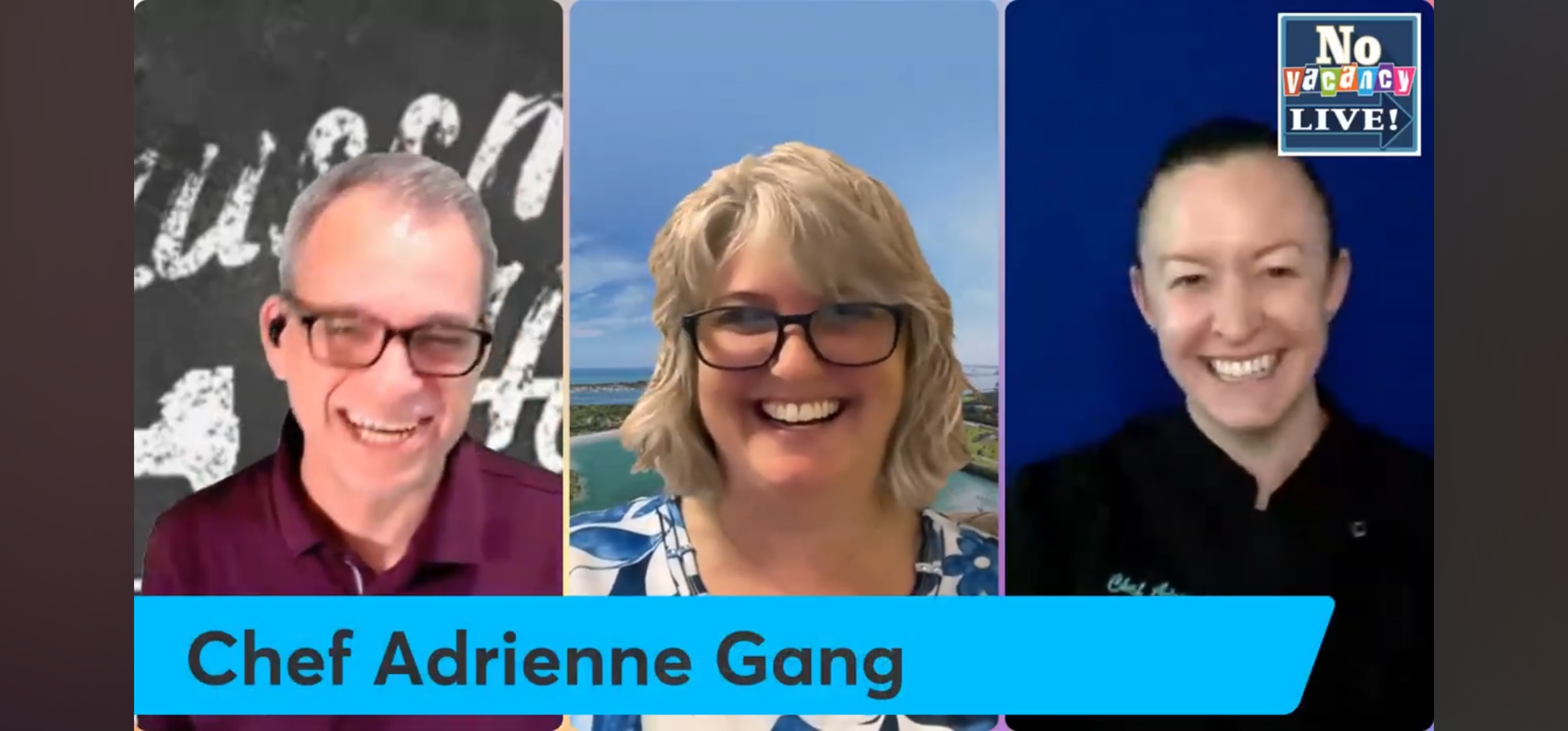
In this episode of No Vacancy Live, Glenn Haussman and Dr. Suzanne Bagnera talk with Adrienne Gang (Below Deck alum and program developer at FIU Chaplin School of Hospitality). Adrienne shares how her new course trains chefs to succeed in #yachting, #privateestate, and #hospitality service.
What you’ll learn:
✔️ Why attention to detail makes or breaks private service chefs
✔️ How flexibility—cooking, sourcing ingredients in port, even helping dock—defines the role
✔️ Why chefs must adapt to different cuisines and dietary needs on the fly
✔️ How these skills transfer to events, festivals, and even disaster relief work
Adrienne’s 20 years of trial and error inspired this first-of-its-kind program. Now, chefs can build the skills to thrive in this unique and rewarding career path.
🌐 Learn more about the FIU course: https://hospitalityexed.fiu.edu/cours…
🌐 Explore benchmarking insights at HotelData.com from our sponsor Actabl
👍 Like, share, and subscribe for more conversations at the cutting edge of #hospitality.
Transcript
Glenn: Hey everybody, thank you so much for tuning in to another episode of No Vacancy Live. I’m Glenn Haussnab and lucky me, I got doctor producer Suzanne in the house who’s not producing as much as Doctor in today in her role at FIU. How you doing, Suzanne?
Suzanne: I am doing really good. I feel like I don’t get to see you as much regularly. Like, I feel like therapy sessions need to be on the back there on the back burner. We need to, like, you know, bring that back up to the front.
Glenn: I hear you and my therapy sessions. I mean, the ones you were going to have after our experience together online to recover is like.
Speaker3: That’s for sure.
Adrienne: Yeah. So.
Glenn: I’m excited because we’re going a little bit of a different direction today. One of the things that we don’t really talk about is, you know, culinary and not enough, I would say. And another thing that we don’t talk enough about is food on the ocean. Like, you know, not in the ocean where you get your food, but the food you eat when you’re on a boat. You.
Suzanne: Right on.
Glenn: Yeah. All right. So I hate to do this to to our guest right now, but finally, after nearly 1000 episodes, the gang’s all here. Sorry, chef. All right, let’s bring in Adrienne Gang. You know her from you know, from television.
Glenn: And Below Deck. And also because she is an awesome professional in our incredible hospitality business. Chef, thank you so much for joining us today.
Suzanne: Hi.
Adrienne: Thank you for having me. Yeah.
Glenn: It’s already get things off with the the bad pun, which I’m sure you’ve heard way too many times.
Adrienne: I’ve heard worse.
Adrienne: It’s all good.
Adrienne: Oh.
Glenn: That’s good. Yeah. I really like to scrape the bottom of the barrel with my commentary over here, because that way we set the tone right. Chef. And that way you can only get better over here.
Adrienne: There we go. Forward to.
Glenn: So before we get into, you know, a lot of the other stuff you’re working with FIU right now on a, on a program. How cool is that? I want to hear all about it.
Adrienne: I’m super excited. This is a program that I have put together that is a culmination of all of the headaches and heartache that I have had to go through the terms of learning for the last 20 years working in the private service industry. So both estates and and yachting and you know, when I came in, there wasn’t a guide, there wasn’t a class, there wasn’t a mentor necessarily. There wasn’t anything that would give you any kind of insider information as to how the industry works. And because it’s so vastly different than every other element of traditional culinary. It really does require its own special set of skills. And so a couple of years ago, I started developing an idea for this. And I’m excited, you know. Suzanne, thank you so very much for seeing the value in this and bringing me in to the FIU Chaplin School of Hospitality to be able to present something that my hope is will be a bridge for Culinarians to be able to more comfortably transition into the private space and understand the operations of a little bit more fluently than I had the opportunity to do when I started. So is 20 years of trial and error?
Glenn: Hey, I wait until you hit 30 years like me. All error. So you keep you do keep learning from iteration to iteration. And chef, I got to tell you, what you’re doing is really great, because I don’t think people even realize that this is a viable, awesome opportunity for young people within the hospitality industry. When I was growing up, I never thought, oh, you could, you know, you could serve people private food on a yacht. You could be a, you know, a professional chef in somebody’s home, all of those kinds of things where you have great control and can make good money at the same time.
Suzanne: Absolutely.
Adrienne: And that’s I mean, I my pathway into yachting specifically was very unique. I was in the right place at the right time and met the right people. And the opportunity presented itself. Now that there is a much greater public understanding that this career exists, there’s a lot of interest in it. And getting started with anything is usually the hardest part. So I’m very hopeful that this will be a good jump start for a lot of people who have taken the culinary route, out. Career and now are looking to do something a little bit different. It’s it has the potential to be a lot of hustle and bustle, but it also has the potential to be something that is consistent and predictable and exciting for travel. That was one of the reasons why I was really excited about the job to begin with, because of the travel being paid to travel and to something I love at the same time is an easy sell for somebody like me. Now I’m at the point where I like to be a little bit more landlocked. I have a husband now who I like very much, and I like to see on a fairly regular basis. So it’s a little bit different than it was in my 20s. But, you know, this is this is something that I’ve made a 20 year career out of, and it’s only growing. And especially being here in South Florida where this is the US hub for yachting.
Glenn: Yeah.
Adrienne: So there’s a lot of opportunity here and the private estate side as well. There’s tons of opportunity down here, especially during the winter when there’s a lot more people who are, you know, wintering in the South Florida area. So there’s tons of opportunity. We are headed into season right now. And so things are about to get very busy, which that’s cool.
Glenn: I watch I watch a lot, believe it or not. I’m I’m so weird. I watch videos of of estate chefs on YouTube, and it’s great because they’ll go to Whole Foods, they’ll pick stuff up, and then they’ll talk about how they cook everything and what they’re thinking and how they satisfy the different members of the household. So the class that you’re going to be doing is going to be taking so much better than that, but that really helps me understand how cool it is. Doc, what are you thinking over there?
Suzanne: Well, it’s really important. I think one of the fascinating things that I’ve just myself learned through my time working with Adrian to put this program together is all of the very huge amount of attention to detail that goes into identifying the guests that we’re serving, right? So we’re looking at individuals that are wanting an experience and different than what has been maybe in the past. And so in doing that experience delivery, we have to know the client. We have to know exactly what their likes and dislikes are. And I’ve been even quite fascinated to you. You also have to make sure that you have to have everything that they like and dislike or not have that on the ship, but have that on on the yacht with them because she’s not going to be able to go hit land and go get food to make something that now all of a sudden they want to have or what have you. So really, I think maybe Adrian, you can add some more context to what that experience is like to be prepared to help elevate that service experience and deliver dynamically delicious food. In a, in a kitchen that you’re not necessarily used to preparing in.
Glenn: And you’re probably out fetching ingredients wherever you’re port of call is while your guests are out having a good time.
Adrienne: Absolutely there. I mean, lots of lots of different elements there. You know, primarily the difference between traditional culinary and what we do in the private realm is in a regular restaurant, somewhat. The guests will come to you with a certain level of expectation on the ambiance, on the food, on all of the elements that make that an experience in our industry. We go to them so the expectations are flipped and often higher than what you would normally get, depending on what the food service operation is. Right. So we are not only operating a high end restaurant, we’re also operating a high end hotel and an entertainment company. And so all of those elements have to synergize really, really well together.
Glenn: I never saw it that way. That’s pretty that’s pretty cool way of framing it. Sorry to interrupt your flow.
Adrienne: When a water sports company to boot. Yeah, well, you know, it’s for what it’s worth. There are so many moving parts, and I’m not always just a chef. Sometimes I end up having to jump in to be able to help the outside team and docking. And there’s so many other parts to the job that are not exclusive just to staying in a galley or a kitchen. And so being able to be flexible that way is really important, especially when you’re working on boats where you are the sole chef and there’s only 4 or 5 other crew members, you have to be able to wear a lot of hats and be good with that. Because you’re not just locked, you know, you don’t have just a chain tied to your leg to the to the stove and the galley. So being able to be flexible that way is really important. The attention to detail is absolutely what we’re known for and what we hope we succeed at. You know, one of the biggest elements of the success of that is being able to have the gas give you as much information in advance as possible. So I have had I preference sheets that we send out in advance to the guests, which I do for estates and for yachting to get to know the guests as well as possible. If I just handed you a blank sheet of paper and said, tell me what you like to eat, that’s a massive.
Glenn: I wouldn’t guest, I wouldn’t know where to begin. I’d be like
Adrienne: But it’s a challenge. So all of a sudden, a sample menu that is not locked in and set in stone, it’s just a guide to give you ideas. I tell people to print it off, circle the things you do like, cross off the things you don’t and write notes in the sides because that the more information that I get, the better. Not only do I, not necessarily during your trip, have access to a Whole Foods or a grocery store or a Sysco go. I also don’t have the ability to store that type of volume for whatever might happen. If you think the traditional food service operation, if you’re in an Italian restaurant, they’re not storing Indian ingredients, they’re storing what their specialty is.
Glenn: I just ask you how many times I’ve asked for a side of garam masala and hey, what are you talking about? You know, it’s not.
Adrienne: But in this environment, I can’t serve seven days worth of really good Italian food. I have to be diverse, and getting information in advance is the biggest element of that. And making sure that you are asking pertinent questions when you see a void or when something is unclear which does happen. So I can get anything from a half page of everything type preference sheet filled out, or I can get 17 pages, which is real. And I have it.
Glenn: Oh my God.
Adrienne: All right. That was the best possible one I’ve ever gotten because it was extremely detailed, and I’m not wasting my time or wasting their money purchasing ingredients for things that they are not going to enjoy, right? So knowing if people have allergies obviously is the is the most important one for health and safety. And then secondary to that is dietary restrictions you know.
Glenn: Or they choose if they’re living living a vegan lifestyle or something.
Adrienne: Right. Exactly. Exactly. So those type of things are really important to know. I’ve been surprised before where a primary guest doesn’t really know as much about their guests as they think they do, and then when they arrive, that’s when we that’s when the fun part starts and it’s.
Glenn: Yeah. And that probably makes for some good reality television when something like that happens. Oh for sure. All right. So let me ask you this, chef. You’re on a yacht going to amazing destinations. How are you competing against the food in those destinations? Because I don’t get how that works. Because they may want to eat there, eat in that country or that location sometimes, but want to be with you. And then do you try to match that style of cuisine that’s there? Counter it. What are your philosophies and thoughts behind all of that to create a cohesive experience for people?
Adrienne: There’s a lot of different ways to do that. So oftentimes I spend a lot of time in the Bahamas, and I have become very familiar with a lot of the food establishments down there. So there’s a lot of different things that I have the capability of doing. There are times when the guests want to just go over, like over the bridge in Nassau, and go get their corn fritters from one of the little shacks that’s under the bridge and have a cold click. And like, that’s an experience that I can reproduce. But sometimes the magic is in the destination, right? So I don’t want to entrap them on the boat and make them think that the only option they have is to eat with us. If they decide that they want to go have conch fritters at the shack or under the bridge, like, please, by all means, we’ll take you in the tender over there.
Glenn: Let us. Yeah. I mean, I’ve had some great, incredible meals, for example, at Baja Mar when I stayed there, but then I had to go on the beach down by the port and hang out in a shack because a guy cooking a piece of fish in the shack is an overall experience that I would think would complement my experience, that going back to the incredible yacht and being treated to incredible food by you.
Adrienne: Absolutely. I’ve also had the opportunity to have local chefs come on the boats for me and kind of do an experience that way, or we’re blending the two. We’re still using our our boat. They’re still eating in the comfort of our space, but they’re getting that local flare. And then another option is to be able to take them with me to the seafood markets and let them choose the things that they want. And then I cook it for them on the boat. So there’s a lot of different ways to get that authenticity and still incorporate it in the activities on the.
Glenn: I love that because for me, a vacation is really a mix of entertainment and learning and all of that kind of stuff. I’m I consider myself an amateur cook. I won’t say chef, because you’re much more talented than I’ll ever be, but to be able to go to the fish market and learn from an expert like, hey, I like this, I’d be I’d ask a lot of questions about what do you think would go with it? How does it work? That would be a really great experience for a guy like me.
Adrienne: Well, and it’s fun because especially in the Caribbean, a lot of those islands, when they were colonized, they brought over their spices and planted them there because the especially Indian spices do very well in that climate because it’s so similar. And they even have their own their own spices have a slightly different flavor than what you’re used to. That’s why West Indian food is so different and interesting in the way that they combine things and, you know, incredibly resourceful cuisine, honestly, because they were using what they had available to them and what they didn’t bring with them, they didn’t have. So other than what already existed natively there. So being able to understand elements of the cuisine, you know, Norman Van Aken did us all a favor with fusion cuisine and being able to understand what and kind of really put together those flavor profiles that still last today as to what that Caribbean Floridian.
Glenn: It’s got a lot of like West African influences in it as well. One of the cool things that blew my mind back in the day was like, I didn’t know okra came from like, Africa. I really had no clue. But it’s such a staple cooking ingredient in places like New Orleans and the Bahamas and the Caribbean and all that kind of stuff. So I really love getting into that. And that’s kind of, I guess, some of the things that you’re going to learn when taking your course, but more importantly, how it kind of all pairs together with that high seas adventure lifestyle. Yes, chef.
Adrienne: Oh, yeah. Absolutely. And you know, one of the things that we are going to talk about is theme. And a lot of that has to do with theming your cuisine around that will match that. And being able to put together those type of meals with the front of house staff on the boats and being able to turn that into an experience, not just a meal. Right?
Glenn: Yep, yep.
Suzanne: So I am interested in if I’m currently working in a place that might be seasonal or I’m wanting to take my career to the next level or really explore this as an opportunity. How do I go about understanding and getting on board?
Adrienne: Well, I mean, there’s lots of different avenues with which.
Glenn: I got to take a minute. Chef, and do this. Sorry for a little on board pun over there. Go on.
Suzanne: My good pun.
Speaker3: Yeah.
Adrienne: There’s a multitude of different ways. There’s a whole host of crew agencies and placement agencies that are especially based here in South Florida, but all over. And depending on what it is that you decide that you want to do, you know, part of the reason why I wanted to do this course is because I think that this industry is not necessarily for everyone. If you’re really good at one particular type of cuisine and that’s what you are known for, it might not work for you to be able to do this career, because you have to be able to be flexible. I have had charters or I’ve had boats that I was working on where a charter signed up last minute, and I had to learn a whole new crew that I was unfamiliar with before these people stepped on board the boat, because that’s what they were expecting, and I needed to understand it. And that.
Glenn: Cuisine. I’m curious now.
Adrienne: Szechuan. So a very specific type of Chinese that was not in my wheelhouse. I mean, I had generic Chinese in my soup. I mean, the.
Glenn: Difference between what we’ve been exposed to as Americans, generally speaking, compared to what Chinese food actually is, are different. I mean, chef, I grew up going to a restaurant called Sichuan Royal, but my guaranteed looking back on it now, there was nothing Sichuan or authentic about it whatsoever. But they did make.
Speaker6: It and the nuances.
Adrienne: Of it are very different. So I had to actually find out what what area these people were from to understand, because that was one of the questions that the instructor I hired to teach me asked me, where are they specifically from? Because it’s the difference between South Florida cuisine, what we think of as South Florida cuisine, and possibly New Orleans right geographically, and how vastly different. So when you’re trying to explain to people, we think of Chinese as one category, but it’s the difference between New York Deli and New Orleans Creole. It’s the difference between Midwest and Tex-Mex, right? Like those differences are inherent in our country. Why wouldn’t it exist anywhere else? And without me knowing anything about it and having to, like Cannonball Run, learned the cuisine in a handful of days and be able to acquire all the ingredients that I needed for that because that, again, was not a speciality that I possessed until that point. You know, that’s that’s a real challenge. So if you’re not a person that is excited by the challenge of learning something new on a very regular basis for an extended period of time, this might not be for you. And I fully expect that there will probably be people that will take this course and go, you know what? That’s way more than I thought I was signing up for, because I saw it on TV and it looks like it’s not that hard.
Glenn: Right? Well, that’s the magic of editing there for you right there. Not showing you toiling away to make those absolutely incredible works of edible art out there, that’s for sure. Suzanne, what else do we need to know from from chef over here?
Suzanne: I guess I’m kind of getting into that mindset, right? What is what is it like to be on a yacht because it’s very different. I’m. I’m believing from that of being on a cruise ship. Right. On some level, it’s the same because you’re on a boat. But unlike on a cruise ship, you’re out there on sea for 3 to 4 months at a time. You are more. I guess it’s considered more like an excursion. So how do you shift your mindset to being land and sea based?
Adrienne: I think it’s the same mindset. So at the end of the day, we’re still on somebody else’s vacation. The difference between a yacht and a cruise ship is space and number of people and the experience itself. So on a cruise ship, I don’t necessarily see the chef every meal. They might come by once or twice during your trip and make sure that everything is going well and shake hands and kiss babies. I am delivering your food to you near daily. You know almost every meal. Sometimes it’ll be the stewardesses that’ll bring out your breakfast or your lunch, but almost every meal I’m interacting with you and I am checking in with you at lunch for how dinner is going to go. What time do you want it? Are you good with this menu? Let’s just check in and make sure everybody’s feeling okay. Sometimes. Usually the first like 24 to 48 hours. People aren’t used to being on a smaller boat, so some people might get a little queasy. And so I go a little bit more gentle on the cuisine at the beginning, because I want people to be comfortable. Sometimes I change it up depending on my reading of the guests. Once they arrive to the boat in a cruise ship, the menus are already set. You get to choose what you want, but they’re not manipulating much. Once you have arrived. Right, so we are in a constant mode of talking with each other to figure out if they’re enjoying themselves, if it’s too much food, if it’s too little food to try to adjust in the moment and meal to meal so that by the end we are completely locked in and they feel like this entire experience is tailored to them and they’re happy.
Glenn: That’s awesome. First of all, I’ve never heard of too much food, but I guess you learn something new.
Suzanne: No, now that’s not true. I think the last two times you’ve said you haven’t finished all of your steak there, Glenn.
Glenn: So true. It is true. I’m a chef. I have to confess.
Speaker6: Now, I would venture to say.
Adrienne: That you’re probably not as concerned about your bikini body while you’re on vacation.
Glenn: I’m not. While I’m on vacation. Leading up to vacation. I’m obsessive, but.
Suzanne: I’ve got one other question, Adrian. So you mentioned before that you know, this this might not be something that people are interested in, or maybe it’s more than what they thought it was going to be, because television has provided a different viewpoint. What are some of the transferable skills that an individual taking this course are going to walk away with? Because again, we’re also not just focused on yacht but private and the estate space. And so even if you weren’t involved in those two areas or you’re not quite ready to leap that way, how can you take the knowledge that you’re going to get here and apply it to your current culinary experience?
Speaker6: I think a couple.
Adrienne: Of different ways, the most important of which is understanding the attention to detail. And that element of what I’m teaching can transfer to anything. It doesn’t even limit itself to culinary. I think, you know, being able to get into the minutia of what this job is and understanding how all of these terms work can apply to everything. I don’t just do chefing on boats and in estates, I do events, I do relief work. There’s a lot of different ways that this can scale into a lot of the other elements of of things that you’re doing. And so I have taken the principles that I learned through my years in the yachting industry and carried it with me through to things like South Beach Food and Wine festival or catering events, or helping my friends with their businesses. There’s so many different ways that my education, my self-education and the yachting industry has impacted directly the other things that I do professionally. And I think that that’s one of the things that when once you walk away with a really comprehensive understanding of what this looks like and and then you can utilize that in other elements, too, in other facilities of the hospitality industry, because it really should be her job, right? Should be attention to detail to make it the best possible experience for whoever our guests are. They don’t have to be millionaires or athletes or musicians. I treat the people that I am feeding in the disaster relief situations like they’re all millionaires because that is my mindset now is everyone is a millionaire. It doesn’t matter to me what you’re wearing or what you look like, or what your house is or what car you drive. I treat everyone like a millionaire because that is my mindset from so many years of doing this, and I think that that’s where the difference lies, is once you adapt and adopt that philosophy, it changes the way that you interact with guests.
Glenn: That’s great. And I also love, again, attention to detail, a really critical lesson to learn in life. And the other one you mentioned flexibility, flexibility and mindset that keeps you nimble, that keeps you learning, that keeps your mind open to be able to be as successful as you possibly can. All right. Let’s do let’s do our shameless plugs over here. Chef and doctor producer Suzanne, how do we get involved in this? In this class?
Suzanne: So on, on screen, you’ve got a QR code. You definitely give that a scan. You can connect with us at go edu slash yacht, and you can email me at at edu. I will have a special discount just for you. Mention that you heard us on No Vacancy Live, and we are thrilled to be able to support your learning journey.
Glenn: Beautiful. I love it, chef. Thank you so much for being here. This was absolutely wonderful. We appreciate you.
Speaker6: Thank you guys. Thanks.
Glenn: All right. We’ll see you in a bit. All right. So I do want to recommend before we wrap up if you haven’t seen it, you got to see Cannonball Run 1981 movie. It’s got all the superstars from the 60s and 70s. In it. It’s a real hoot about an illegal road race going from Connecticut all the way to the West Coast. Hilarity ensues. I haven’t seen it in decades. Hopefully the humor holds up and I won’t be flame for for that one. You know, it reminds me of, like, those hucksters and realized they were smoking throughout the entire movie. I’m like, what the what the.
Speaker6: What are you, grits?
Glenn: All right, so anything else that you want to add here, Suzanne?
Suzanne: I would say just take advantage of all opportunities to learn. You never know where something’s going to be transferable. And I really love, you know, think like a millionaire and be able to service your client that way. And especially when we’re trying to deliver experiences to our guests to make sure that they’re memorable. This is definitely the class that you really want to take part in.
Glenn: It sure is. So please sign up now. And while you’re signing up for things hey, why not sign up for our shows, follow us on LinkedIn, blah, blah, blah, all of that kind of good stuff. All right, everybody, thanks so much. Remember, you’ve got one life. So blaze on and.
Suzanne: Follow your.
Speaker6: Passion.
Glenn: See you all next time. I hit the wrong button. Oh.
Speaker6: Goodness.

More Episodes
-
June 26, 2026
Curator Hotels VP on Why Labor Costs Drive Every Tech Decision
-
June 25, 2026
Why Your Hotel Manager Spends Hours on Dashboards (Hint: They Shouldn’t)
-
June 25, 2026
Why Aimbridge’s CIO Says AI Doesn’t Work Without Humans
-
June 23, 2026
Starwood CIO: AI Is the First Tech I Never Had to Explain


Subscribe