March 31, 2026
1026: How Women Advance in Hospitality: The Data and the Playbook
Why do women start in hospitality at the same rate as men… but still show up less at the top?
Glenn Haussman and Suzanne Bagnera talk with Emily Goldfischer of hertelier about hertelier’s leadership study with Forbes Travel Guide and what the data says about advancement in hotel leadership.
Benchmark: women lead 19% of Forbes Travel Guide partner hotels; hertelier heard from 99 women leaders
Pipeline vs progression: where careers stall
Real obstacles: flexibility, leadership expectations, and access to informal networks
Mentor vs sponsor: what actually changes outcomes
Practical career moves: stretch roles, lateral moves, and owning the P&L
What progress looks like in the room at major conferences
Thanks to Actabl for supporting this episode. Actabl gives you the power to profit. Visit Actabl.com.
Transcript
Glenn: [00:00:00] Hey, my fellow hospitality out there, thanks so much for joining us for another episode of What Else? No vacancy. Now. Right now you’re watching it. It wouldn’t be it wouldn’t be a great show without having our friend doctor producer Suzanne with us. Of course, I’m Glenn Haussman. Suzanne, good to see you.
Suzanne: [00:00:17] Nice to see you. I’m excited for today.
Glenn: [00:00:20] Yeah. Also nice to see our friends over at table please. That’s not the right ad for table. They give you the power to profit. Please visit active.com.com. All right. There we go. That’s enough whispering insistently for the for today’s show. All right. You want to just jump right into it.
Suzanne: [00:00:39] I do you know, listen, this is the month where amazing things happen. And obviously behind every great podcast host like you, there’s amazing women that make things happen.
Glenn: [00:00:51] So Dave, Dave, Dave made an announcement that we didn’t expect. Sorry. I don’t mean to be. I don’t mean to be jerky. Yes, I do. You know, I can’t help it. I’m like I said, I, like I told everyone beforehand, I’m a little crabby today. Alright. You want to introduce our amazing guest today?
Suzanne: [00:01:12] I am happy to introduce our guest. So our guest has been a fabulous friend of our podcast for quite some time. And we are thrilled to have with us the editor of her tenure, Emily Goldfischer.
Emily: [00:01:26] Thank you. Hello. Great to see you.
Glenn: [00:01:31] Congratulations on your continued to success. It has been so much fun watching you grow this platform from nothing to something that everyone’s always talking about.
Emily: [00:01:41] Well thank you. That’s very kind. And thank you also for having me here on No Vacancy. I’m so happy to be here with you, Glenn and Suzanne, to chat. It’s Women’s History Month and to chat about the ladies in our business that keep everything moving and going well.
Glenn: [00:01:59] Yes. Well, I’m looking forward to talking about that too. And just for the record, everybody knows that I have a negative relationship with special months because I feel like it puts people into a category. But I wanted to talk to you about the survey and stuff like that. So just because it happens to be a month where we’re focusing on women, I want to say I’m not focusing on women because it’s March. Alright. It’s a good story to talk about.
Emily: [00:02:27] You know.
Emily: [00:02:28] I share that with you, Glenn. I really feel like we celebrate different things all year long. We don’t need to be hung up on a month. And in fact, I should say that the survey that we’re going to talk about today that her tenure did with Forbes Travel Guide, we actually released it in February. So.
Emily: [00:02:48] I just want to put out there. And for me, it’s.
Glenn: [00:02:50] A 55 year old white guy. It’s a little bit awkward sometimes, right? Because I definitely know I’m a 55 year old white guy. But I do. Part of my foundation is that I want everybody to be treated the same. And at some point it’s great to put people forward, but at some point, I feel like it puts you into a category. And I just want to see people excelling, not certain people at certain times of the year. That’s a that’s what I’m saying. So I want to talk to you about people excelling today.
Emily: [00:03:19] How’s that?
Emily: [00:03:19] I love that. And actually, Glenn, I mean, I think there’s an important thing and we’ll get into this later, but it’s now it’s our male allies because really most of the women at this, you know, who have made it to senior leadership, to the C-suite CEO level, they talk about the guys who helped them along the way. Of course, because there weren’t women to do that. But we’re going to talk about the change that we hope to see as as time goes on.
Emily: [00:03:46] And can I tell.
Glenn: [00:03:46] You about one change that I’ve seen as time has gone on in my 30 years in this business? Financial conferences at hotel industry events. I gotta tell you, when I first started you could point out the women in the room because there were 1 or 2 of them. Right? And it was really weird, I think, for those women to be in that situation. I just came back from the Hunter Hotel Investment Conference last week. As we’re recording this, I was not able to see a discernible difference in numbers between men and women in that room. That made me very happy. That made me say that we’re getting somewhere, but obviously there’s still lots of strides yet to to come. So how are you seeing the general overall situation of the hospitality universe?
Emily: [00:04:33] Yeah, I mean, just a note on the Hunter conference is that Stacy Silver, who contributes for us at her tenure? She did a great article about what what happened at the conference. And I would agree that having looked at the photos and from her report, that it was very much a balanced crowd, and I know that they’ve been working on it for several years to also make the speakers more gender balanced. And a shout out to Rachel Humphrey of the Hospitality Women’s Leadership Alliance, who put together this wonderful speaker directory, which I’m sure you use as well. I think there’s now something like 1800 women on there that can speak on a variety of different topics. So I do feel that we are seeing progress. My partner and co-founder in her tenure is Nancy Mendelson. And for years she actually produced the NYU conference and we.
Emily: [00:05:33] Were a.
Glenn: [00:05:34] Pioneer.
Emily: [00:05:35] I think she.
Glenn: [00:05:36] She preceded me in the industry.
Emily: [00:05:38] If I’m not.
Glenn: [00:05:39] Mistaken.
Emily: [00:05:39] Yeah, yeah.
Emily: [00:05:40] So we were just talking about this the other day, and that was one of the inspirations when I called her up to say, hey, you know, what do you think about doing her tenure in the concept for the site. She was like, yeah, that conference, they used to struggle to find women to put on stage. And then they would find 1 or 2. I mean, there was the, the woman who was the CEO of Four Seasons. I’m blanking on her name. You’ll know it was it Kate?
Glenn: [00:06:08] No, I know exactly who you’re talking about.
Emily: [00:06:10] Anyway, she was, like, the one person that they could put on stage, and then they would always try and find, like, a female broadcaster to do the interviews so that there were at least.
Glenn: [00:06:20] Don’t forget, in the in the 90s, we had Marilyn Carlson Nelson.
Emily: [00:06:24] And Marilyn. Right, right. So it was like those two women and it was a bunch of guys. So no.
Glenn: [00:06:30] Totally. And I’d say, and I’m embarrassed that like, I know basically every single female executive from the early part of my career because there were so few of those.
Emily: [00:06:40] Yeah, yeah. They stood out. I mean, and, and, and, you know, Nancy and I just to give a little backstory for your for your listeners about hotelier, in case they don’t know, is that Nancy and I worked together at Loews Hotels in the early 2000, and at that time, Jonathan Tisch, he was a real, you know, visionary in terms of he had gender equality in the C-suite. He had, you know, Charlotte Saint Martin, Cherie Leverone running operations. Also, of course, Nancy Mendelsohn, who was running marketing and he had a woman leading development. So he, he really I think set the standard. And I think at that time, Nancy and I working there, we didn’t realize, even though, yes, going to conferences, you’d be like, where are the women? Like how special that time was and how ahead of the industry John was and that he liked having really strong and competent women around him. So, you know, with that, that was sort of the inspiration of her tenure was that when I moved to London in 2010. We. I started writing for Luxury Travel Advisor and working at Questex. And I was reporting on luxury hotels here in London and I was like, where are the women? And I was like, this is weird and why isn’t anyone writing about them? And then the pandemic hit and I said to Nancy, I was like, we should, we should make a website, a media platform and community for women and hospitality. And if you can believe it, it’s been five years.
Glenn: [00:08:15] I can, because I somehow got to be ten years. And I in my business, I saw your five year anniversary stuff earlier this year. I’m like, dang, that went really quick.
Emily: [00:08:25] Crazy.
Glenn: [00:08:26] But not only are you a great platform, but now you’re putting out leadership information out there. And Suzanne, maybe you could tee up the conversation for this part.
Speaker 5: [00:08:36] Yeah.
Suzanne: [00:08:36] So I think that’s a great aspect as we start looking at really kind of digging into those numbers. And I think between all of the correspondence and the reports that you’ve been able to share over the last five years from a variety of different conferences, I think it puts you at a place where you’ve got that great connection. So tell us a little bit more about this relationship that you’ve now created with Forbes in this partnership.
Emily: [00:09:02] Happy to thank you for the opportunity to share it. It’s so we basically launched a study because after more than five years of building her tenure and publishing over 800 articles and interviews, we kept hearing the same disconnect again and again that women are entering hospitality pretty much at the at the same rate as men. So at the entry level, you’re at gender balance or actually there’s even more women at the very entry level. I think, you know. Yeah. And then there’s succeeding in it and helping shape it. And yet there’s still underrepresented at the very top. So we wanted real data to better understand what is driving women forward, what’s getting in their way, and what the industry needs to do differently. And we partner with Forbes Travel Guide, and this gave us the opportunity to examine the experiences of women who are leading some of the world’s finest hotels and turn this sort of long running conversation into something more concrete and useful and actionable. So as a benchmark, the Forbes travel guide they shared with us, and again, this is like as it is right now and we hope to make improvement. But 19% of their partner hotels. So that would be Forbes recommended hotels four and five star hotels are led by women. So against that backdrop we heard from 99 of them. So there’s more than that. But we heard from 99 to better understand what’s helping them, what’s helped them rise in their career. What’s holding them back and how they see the future of leadership and hospitality? So essentially it’s not a pipeline problem. It’s really a progression problem.
Glenn: [00:10:52] Okay, I want to, I want to ask a question about the pipeline first. So I get a better understanding of where we’re at. I still feel as societal norms and mores and stuff like that, women choose to opt out of the workforce more because they either choose to or feel like they need to be the primary caregiver at home, which either takes them out of the workforce entirely or sets these women back X amount of years. So I’m curious as to how that plays into the data, and then how you equalize it for a 1 to 1 basis of people that stay in the field, then where are we with their ability to move forward compared to the average guy.
Emily: [00:11:38] Yeah. Okay. Point one yes, women have children, and that is one reason that they might take a career pause or do something different. They the, but that’s not the only barrier. And you know, if you.
Speaker 5: [00:11:58] Know.
Glenn: [00:11:58] That’s what I’m getting at. I want to see like I’m, I want to get that group out. So I understand where the benchmark is to fully understand the level of issues these women are dealing with currently. Does that make sense? By having it, you know, by having more women in the workplace, it may not give us that choose to leave. It may not give us an accurate representation of what the situation is today. So that’s what I’m trying to get.
Speaker 5: [00:12:22] Yeah.
Emily: [00:12:23] I mean, I think if you think about the sort of the idea of a hospitality leader, a someone who runs hotels, you know, the industry itself, it does. It’s a 24 over seven business and the hours are antisocial, so it draws a certain personality. We can just say that up front. And absolutely.
Glenn: [00:12:44] I would argue that every career out there draws a specific personality. And I think at least here in American society, we tend to ignore all of that kind of stuff. There’s a particular disposition that makes certain people want to be a surgeon versus wanting people to to be a nurse or a caregiver. Right?
Emily: [00:13:03] So yeah, yeah. Oh, that’s a good analogy. So, you know, there is that, but yes. And, and, and women can work to a certain level. Maybe then they have kids and then they feel like, oh, I want to pull back. But that isn’t, I would say when we look at the leaders who we spoke with, we didn’t ask them, you know, do you have kids? Do you not have kids? But they all, you know, it was mentioned as a thing either for themselves. 34%, said one. Said the biggest obstacles were limited flexibility for family life. I think today and this was you know, we did reveal the these survey findings at the Forbes Travel Guide Summit in Monaco at the end of February. And we had a gentleman on the on the panel to discuss it, Frank Sibley, who is a regional VP for Hyatt. And he said that actually when he had kids, he, he, he took kind of a not a lesser job, but he just said, I don’t want to travel as much. And if it means I’m not going to get promoted as fast, I’m fine with that. So again, it’s like, it’s not necessarily I think today it’s not such a gender issue. I think that that’s.
Speaker 5: [00:14:19] Great.
Emily: [00:14:20] With these new generations. I mean, I don’t know if you saw this, but Rosewood just announced that they’re doing I think it was 16 weeks.
Speaker 5: [00:14:28] Yes.
Emily: [00:14:29] Double check that it might be for.
Glenn: [00:14:31] Yeah. For both men and women.
Speaker 5: [00:14:33] Parental. Yeah. Yeah.
Emily: [00:14:34] Gender neutral or whatever. And so I think that’s one of the things. I mean, one of the biggest obstacles or, you know, 40% of the surveyed said gendered expectations of leadership were, were an issue. So I think, you know, we did a story a couple years ago, actually, Leon Elliot wrote it and it was called childfree by choice. And it talked about women who don’t have kids and all the bias that they still face. And even now, when I interview women who work in the, let’s say, the careers that might take you to CEO, like working in the real estate and or finance, she just said like this wasn’t lan another woman who I interviewed recently, recently. And actually I haven’t written it up yet, but she said that as she progressed in her career and she got older guys who she used to go to the bar with and they would have drinks. And it’s those conversations outside of the office where people get to find out about new opportunities and promotions that as she got older and the guys got married and she was partnered up or whatever, it was a little weird then to go out at night or she wouldn’t get the invitation. So I think there’s just like, you know, in the stuff playing golf and those different things, sort of the soft, I’d say the soft kind of networking. Women are still excluded from that. And which, you know, I think what’s exciting today and that we’ve seen in the last five years is that women are doing their own networking groups and they’re doing more of that. So I think if we look historically, that’s also been something. It’s like the networking that then leads to the mentorship and sponsorship. I think that’s really held women back.
Speaker 5: [00:16:25] Interesting.
Emily: [00:16:26] Yeah. So that I think that answered the question.
Speaker 5: [00:16:29] I think that’s a.
Glenn: [00:16:29] Great observation that I never would have thought about. That’s why you’re doing such great work over there, because we could see the obvious. But that’s one of those things that has a could potentially have a long lasting effect. But you don’t normally think about that. Right, Suzanne?
Suzanne: [00:16:45] Yeah. And I think what I’ve been seeing with so many more conferences, the intentionality where there is that networking, I was just at the Hftp annual conference back in October, and there was a breakfast for females. And many of the women were just so appreciative, appreciative of having that space to be able to connect. And we talked about actually, I referred to you, Emily, in that great conversation we had had a couple of years ago on our show and talking about the difference between a mentor versus a sponsor and how can you leverage those right people in your corner to help advocate for you when it’s necessary? And, and I think those are pieces where those women were always saying like, oh, it feels so good to know that I’m not alone or I’m hearing those same challenges and that I’m not alone in that and that I’ve got someone to turn to.
Emily: [00:17:38] Yeah, I that’s definitely a topic that we write about a lot. And that has been a challenge as well, just like the mentorship and sponsorship and and, you know, all these things just have a trickle down effect. And when we looked at what was the number one thing, so we, you know, this is the group we surveyed was, were very, are successful women, they’re leading big businesses, you know, five star hotels with, you know, hundreds of millions in revenue. So 80% said it was mindset and resilience were the primary enablers of their success. Now, I think if you ask anyone, you know, guy or woman or man, why were you successful? I think anyone would say that. But it just goes to show you that the current, the way that that society has structured the workplace is, is one that’s looks for resilience rather than supporting correct. The people to do their jobs in a way that can fit a more rounded lifestyle. And 65% sighted ambition and determination as essential to reaching senior leadership. Now, I think if you ask men that they might say the same thing.
Speaker 5: [00:18:54] Well.
Glenn: [00:18:55] Yeah, if you’re not going to hustle, you’re not going to get up the corporate ladder. You gotta, you gotta, you gotta make it happen if you don’t want it, they sure as heck ain’t going to give it to you.
Speaker 5: [00:19:04] You know. Exactly.
Emily: [00:19:05] Exactly. But again, I think that you bring up a good point there and that you have to want it, but you also need to hustle for it in a way that women haven’t necessarily been socialized to do so.
Speaker 5: [00:19:21] Right.
Emily: [00:19:22] You know where there’s been study after study. And we may have even talked about this on our last episode, but you know, when there’s a new job available guy, if he has 40% of the skills required, he’ll apply. Whereas a woman will wait till she has 80 or 90% or even thinks she can do everything, which means that women aren’t going for the stretch roles that then would get them again to proceed up the career ladder.
Suzanne: [00:19:54] So yeah, and I guess here’s the other piece. And the researcher kind of me is coming out, right? So the partnership is with Forbes. So typically you’re looking at what I would gather to be four and five star properties.
Speaker 5: [00:20:09] And.
Emily: [00:20:09] Recommended. Yeah.
Suzanne: [00:20:11] So, so.
Emily: [00:20:12] Kind of three levels.
Suzanne: [00:20:13] Yeah. And I would almost think of what is the limitation to that audience for those females, because those particular properties are going to have more layers of department heads and managers because of the caliber of hotel that they have, versus someone that is in a limited stay extended stay select, stay type of property where you’re, you know, you have to wear so many different hats. So that could be you. Well, it’s a limitation of this study. It serves as a great opportunity or spin off to what is that next level. And seeing where some of that disparity might be in the different operations in our industry.
Emily: [00:20:55] Yeah, yeah. I mean, certainly these are, you know, like you say, larger, although some can be, they can be small as well. Interestingly, you can have some really high end boutique hotels, but I think we can safely say they’re all luxury hotels. And and that does present, you know, a unique type of person that it attracts. But you know, in terms of what, what else the women said in terms of advancing, it’s just like, there’s just a bit more friction for women that’s just built into the system. And it’s not really a pipeline problem. It’s just a more of a progression problem. So we try to look. We also asked them, you know, what, what, what’s, you know, what could be the next level. And it was like, what do we think leadership is going to look like the next five, ten years? And what are the skills? And it was like emotional intelligence and strategic thinking. I mean, especially, and I know you all cover a lot about hospitality and technology, but certainly I think those skills as we even get more tech centric are going to be, you know, the ones that we need.
Glenn: [00:22:20] Okay, so what should women be doing to make sure that they solve the knot pipeline issue and that they’re in the conversation? One of the things that I have coming out in this book that I wrote coming out in the fall is if you wait until you’re prepared, you’re too late. Right? And you mentioned you mentioned great advice.
Emily: [00:22:41] Yeah, that’s great advice. Yeah, certainly there’s, that’s a bit of self self-selection. I mean, we talked about one. So it’s like, you know, you have to be in the right rooms to be considered for things. You have to get mentors and sponsors who are talking about you when promotions and opportunities come up.
Glenn: [00:22:59] Getting in the right rooms, does that mean I would, I would say joining committees, organizations, whatever it might be to get you out there and interacting in a networking way with as many people as possible? Is that.
Speaker 5: [00:23:14] Correct? Yes.
Emily: [00:23:14] I want to make one important point though, and that is that it’s not. It’s not what women aren’t doing, right. It’s about how we need to change the system to make it more egalitarian.
Glenn: [00:23:27] No, I don’t think I don’t think we were thinking what women are doing. Right?
Speaker 5: [00:23:30] Yeah, yeah.
Glenn: [00:23:31] Giving women the edge in order to be more successful.
Emily: [00:23:35] Yeah, I just, I, I think also like as people who are listening to this, when you’re writing a job description, like there’s a lot of unconscious bias and it’s just like, how do we write jobs so that the image that comes to mind isn’t going to be a white guy?
Speaker 5: [00:23:53] Well, to be.
Glenn: [00:23:54] Fair, Emily, AI is just going to ignore everybody for job applications. So no.
Emily: [00:23:59] So I see that with my kids applying for jobs, it is, it is it’s crazy now. Yeah, well, we could go on a whole tangent.
Speaker 5: [00:24:09] About we.
Glenn: [00:24:10] Don’t need to.
Speaker 5: [00:24:10] Do that. I’ll need to do.
Emily: [00:24:12] There is a lot of bias that’s been baked into the AI now that’s crazy as well. But yeah, I think what you mentioned, yes, putting yourself in positions where you can network with people, that’s very important. Going for stretch roles. Also just going for lateral moves. I think it’s also just like a lot of the successful women that we’ve interviewed in general, not just the Forbes survey is is that lateral moves can also be really great for moving up because you just broaden your knowledge set. And yeah, and then yeah, it’s just the other thing is that it’s really important to own your PNL and to really have a good understanding of how your business runs and to be the person who’s responsible for it to advocate for yourself. That’s the other challenge that we talk about. A lot that we hear about a lot is that, again, women don’t want they they think that their work is going to speak for themselves. It doesn’t you have to talk about your work. You have to put yourself out there, whether it’s doing podcasts, being on conferences. And I’m sure you have heard this as well, Glenn, because I know you’re so involved with so many conferences. Is that and is that, oh, well, we try to ask, we asked women, we asked as many women as we asked men, but we ended up with three quarters men. And I’ve heard that a lot. And I think it is true that women won’t always say yes right away, because they think of all the things that they need to do to prepare, whereas like a guy will be like, yeah, I’ll be on stage like.
Glenn: [00:25:56] Yeah, yeah, totally. And I will say anecdotally speaking, not scientifically based most of the men that I deal with just they’re good to just wing it. They don’t need to.
Speaker 5: [00:26:06] Yeah.
Glenn: [00:26:06] You know.
Speaker 5: [00:26:07] Right.
Emily: [00:26:07] Whereas women like to be prepared. Again, we are generalizing and these are stories.
Speaker 5: [00:26:13] Absolutely.
Glenn: [00:26:14] But it sounds like what we’re talking about, Emily, is a personal branding opportunity for a lot of people.
Emily: [00:26:22] Yes. I, you know, that’s, you know, it’s a bit overused as a word, but yes, it’s like putting yourself out there on LinkedIn, doing things like that just to get noticed. What I actually did a great interview with my former boss from Lowe’s, Charlotte Saint Martin, and she talked about something you just mentioned, which was getting involved with associations, and she used that throughout her career to not only meet new people, but to demonstrate her leadership abilities. And she found that a really great way. She was super involved with like AC and a lot of the other associations where she would be in front of the customer representing those hotels. So I think that this is all great advice. And but also I think the industry itself, not just for women, but as we look at the younger generations, they that we need to make systemic change in terms of quality of life and not and not have this performative leadership. It needs to be more human.
Glenn: [00:27:33] Yeah. Well, that’s an issue we’re going to be struggling with for quite some time. Suzanne, any final questions there?
Suzanne: [00:27:41] I would just love to see that women continue to expand beyond their own four walls and a roof for their own business. Right? I think that opportunity that exists by being involved in an association or committee starts to expand the reach and network that can help give more confidence and give you that additional exposure for other people to see your worth and your value, and sometimes someone externally bring that, bringing that back internally, people see a different side. And I know I’ve personally seen that help others as well.
Speaker 5: [00:28:17] Yeah.
Glenn: [00:28:17] Awesome. Emily, any final words from you? And make sure to tell us how we can learn more about her. Tell you.
Speaker 5: [00:28:23] Yeah.
Emily: [00:28:24] Well thank you. Thanks again for having me on. I’ve really enjoyed this conversation. And to be able to share the research with Forbes travel Guide anyone that’s interested to see the full study, you can find it on our site. It says research report and it’s w w.com. Or I can give you the link to put it in the show notes. We also do a weekly newsletter called the Hotelier Roundup, where we cover the week’s news in travel and business in general with a feminist slant, so anyone can sign up for that for free. And and then just look for us on LinkedIn. We’re posting things and sharing ideas all the time. So thank you so much.
Glenn: [00:29:03] Awesome. Emily, thank you so much for being here. I really appreciate you.
Emily: [00:29:05] All right. Thank you.
Glenn: [00:29:08] Hey, that was a that was a lot of fun. I think we learned something today. Although we’re never going to get to solve all the world’s problems.
Suzanne: [00:29:13] We can. But you know what? I think if we make ourselves and others a little bit more aware of and be more thoughtful than we are doing the right thing, I think Emily’s work in what she’s accomplished in the last five years has been remarkable, and I almost think in some ways she discredited herself in terms of saying it was just a platform. It was more than just a platform. It is now a true community that she has created, and that is going to continue. And for that, I’m just so proud of her, especially in those early contexts of when she got started.
Glenn: [00:29:47] So it’s I love it. So hey everybody, thank you so much for being here. We’ll be back with another episode soon. Remember, you’ve got one life. So blaze on and.
Suzanne: [00:29:57] Follow your passion.
Glenn: [00:29:58] See y’all later. Bye everybody.


More Episodes
-
August 15, 2026
FNA 218: Red Roof, Red Jackets & Really Bad Advice
-
August 13, 2026
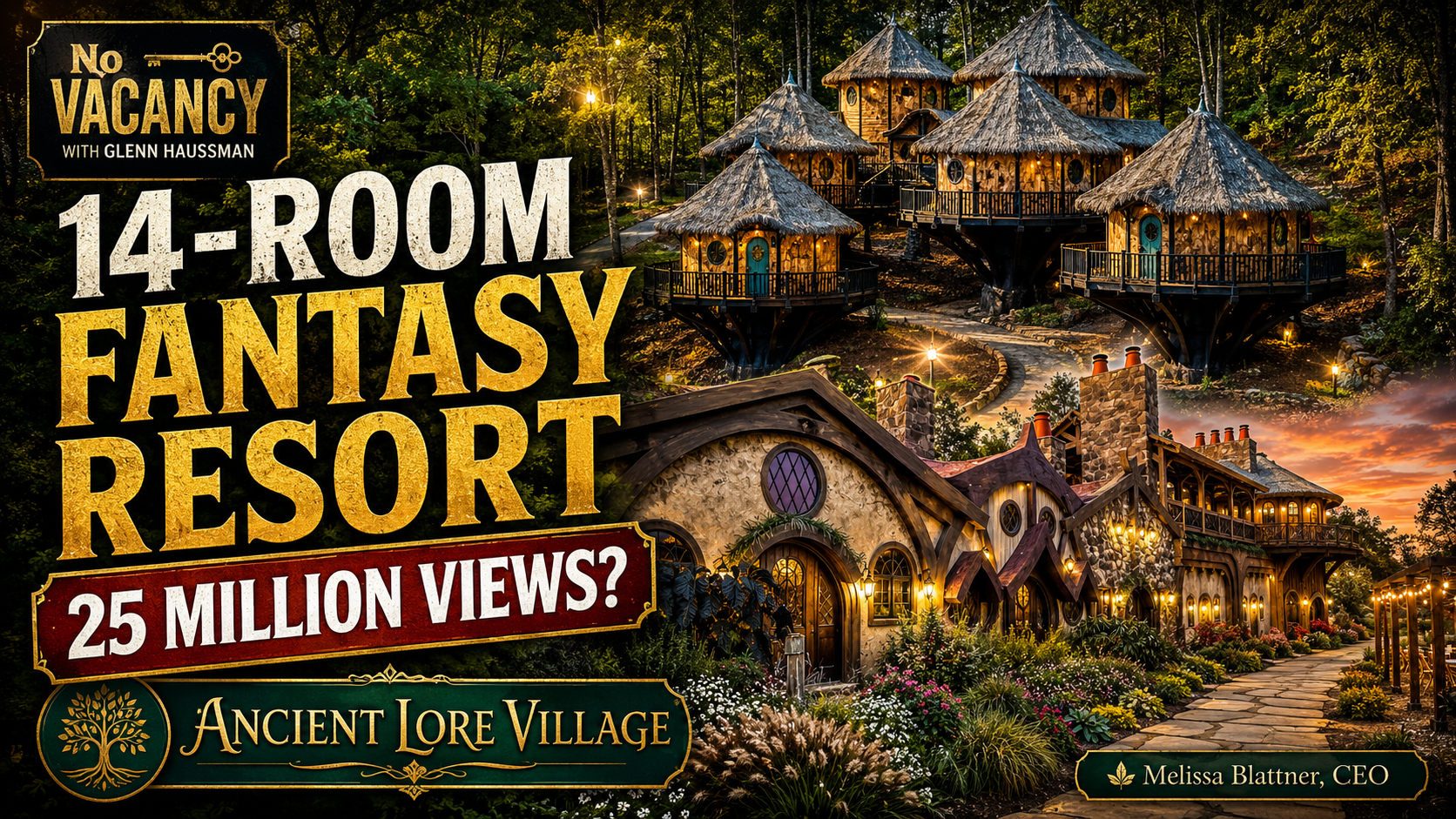
Why This 14-Room Fantasy Hotel Gets Millions of Views
-
August 13, 2026
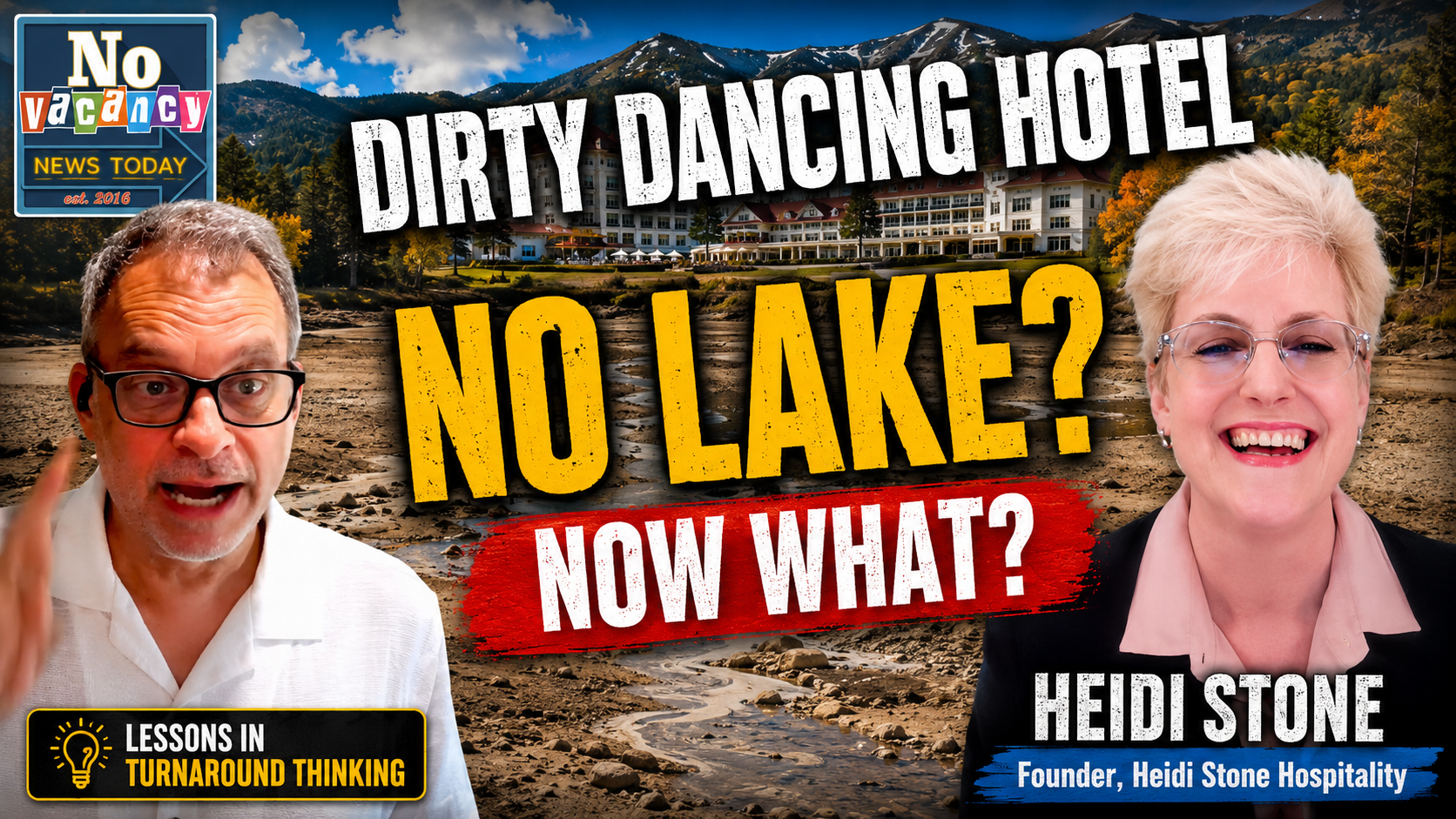
The Dirty Dancing Hotel Lost Its Lake. Here’s What Happened Next
-
August 11, 2026
SBA Hotel Loans Just Got Bigger: How Owners Access Up to $10 Million


Subscribe