February 23, 2026
2026 Hotel Outlook: World Cup Demand, Travel Shifts, and Conversions
2026 hotel headlines sound confident. The numbers don’t.
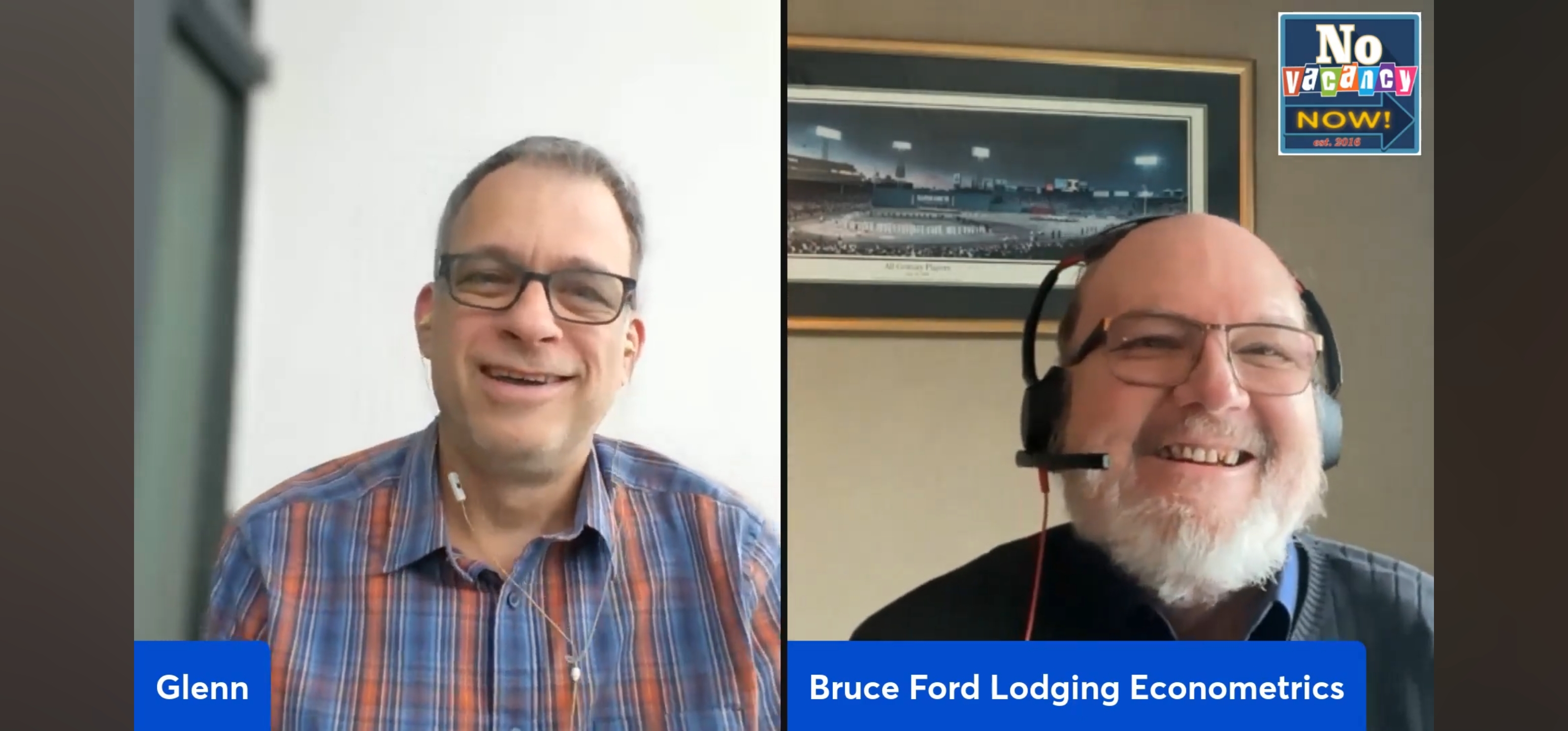
I talk with Bruce Ford (SVP, Lodging Econometrics) about World Cup-year demand, softer international travel, and the conversion-brand surge. We keep it practical:
2026 World Cup: 48 teams across the U.S., Mexico, and Canada
International plane arrivals down about 6%
Canadian trips to the U.S. down about 22–23%
The operator mandate: work the P&L and monetize every square foot
Booking shifts coming in 2–3 years, with AI influencing discovery
Brand strategy: more conversions and more flags filling “white space”
Thanks to Actabl for supporting this episode. Actabl gives you the power to profit. Visit Actabl.com.
Transcript
Glenn: [00:00:00] Hey, everybody. Your hospitality. Friend Glenn here from the road at a really cool resort. And it’s got me thinking about what’s going on in the state of the hotel industry. So I figured I got to talk to one of our good friends out there. But first, I want to thank our friends over at Actabl. Actabl, they give you the power to profit. Please check them out at actabl.com.
[00:00:19] All right. Bring it right in. Bruce Ford, senior vice president of Lodging Econometrics. Hey, buddy, it is great to see you. Looks like you’re home today.
Bruce: [00:00:29] I’m definitely home getting ready for spring training. Glenn.
Glenn: [00:00:34] Oh.
Bruce: [00:00:35] Yeah. I guess to a theater near you.
Glenn: [00:00:40] That’s very exciting there. Bruce Ford. So I’ve been out on the road. I’ve been having a good time. But you’ve got the ears of everyone in the industry. What are you thinking? What’s on your mind these days about the state of all things hoteling?
Bruce: [00:00:54] Well we have some interesting events going on in the United States this year that will definitely impact performance results. And today are definitely impacting investment in hotels. So we have the World Cup in the United States for the first time since 1994, but also the first time it’s a 48 team World Cup. So that’s going to have some games in Mexico, some games in Canada, and some games in the United States. The investment that’s happening in those cities is substantial. But it’s already in the can, if you will, because it’s the event happens in four months.
Glenn: [00:01:34] Well, it’s coming up very soon.
Bruce: [00:01:35] What we’re talking about more now is who’s coming and how they’re going to sell all those tickets. So what we said the last time.
Glenn: [00:01:47] Last time, last time we talked, you were saying, right? You were saying last time that it was going to be probably a lot more domestic people. And unfortunately, they don’t stay as long they don’t spend as much money. Is that still where we are right now?
Bruce: [00:02:01] So the end results on four Q kind of led me to see that travel is really down about 6% on international arrivals, which was a not too bad. It is the departures of Americans to go overseas that is big. And so they’re not choosing, in many cases to travel or to road trip in the United States. They’re going to Europe. But the US is still pretty inexpensive as it relates to where the dollar sits today. So that that always makes a difference. It’s just whether they can get here safely. They can feel safe. They want to come. They want to see their teams. That’s a big question.
Glenn: [00:02:46] So yeah.
Bruce: [00:02:48] I think it’s.
Glenn: [00:02:48] I think it’s a big question. I’m very concerned about international arrivals for for World Cup this year to the United States. I’m pretty sure Mexico and Canada are going to do just fine. So we’ll see. Yeah, we’ll see what happens. I did see Air Canada canceled. One of their airliners, canceled all their flights to the United States this summer, which does not bode well for international tourism. Now, you mentioned that drop of 6%. Obviously that’s a nationwide statistic. So places like Florida might hurt more. Places like Las Vegas might hurt more because I think they have a lot more Canadians for example. So again, I think it’s like a story of the haves and have nots in hospitality that’s coming, that’s showing.
Bruce: [00:03:32] Well, let me make sure I’m clear on the international arrivals. That’s a plane deport deportation. Okay. That’s not necessarily a drive over the border. We know the drive over the border is terrible. They don’t want to come here. And so as a result, it’s it’s caused a drop of I think I saw 22 or 23%.
Glenn: [00:03:54] That’s driving over the border.
Bruce: [00:03:57] Canadian travelers coming to the United States. Yeah, yeah, yeah.
Glenn: [00:04:01] Yeah, yeah, that’s pretty pretty rough. So that’s a big challenge that’s coming up. And I’m really sensing Bruce from being on the road and talking to a lot of hoteliers out there that last year might have been about getting back to basics, but this year is really about really rethinking the operation and figuring out ways to be a lot more efficient and do more with less, and hopefully finding ways to get closer to the customer at the same time.
Bruce: [00:04:27] Yep, we’re working the PNL again this year. Glenn, we’re working expenses. We’re working revenues. We’re trying to make sure we’re generating revenue on every square foot. We’re trying to make sure we’re paying the least to get that revenue into the books. And that’s there’s a lot of impact on that, both at the brand and franchise company, both at the OTA level, but also some of the new ways to book hotels that are coming soon to a theater near you.
Glenn: [00:04:57] Yeah. Exactly. I think Marriott just plugged into ChatGPT for for example, all official like.
Bruce: [00:05:05] We could we could have a whole podcast series on that, Glenn. And we don’t have enough time for that today. But suffice it to say, in 2 to 3 years you’re going to be booking hotels very differently than you do today.
Glenn: [00:05:20] Yeah, I agree, it’s going to be a big sea change that we’re seeing ahead. But Bruce, what are the what do you think’s going on with the big branding and franchising companies. What are they thinking this year? What are realistic expectations for them selling more units?
Bruce: [00:05:34] Well, they have to keep generating revenue and all many of the big public hotel companies the Marriott Hilton, the the choice, the Wyndham their stock is doing well. But what they’re also doing internally is really working the general and administrative costs inside the company for whether that’s subscriptions or products they no longer need, or departments that don’t need to be 12 people only need to be nine. And so lots of that work going on has been going on for a couple of quarters and continues now into the, into 26, and that’s one of the ways that they’re going to turn a higher profit is to really work the DNA. Also signing the new franchise agreements, whether those are conversion brands or new construction brands. Glenn, did you hear that we have another new brand?
Glenn: [00:06:33] Yes. As we’re doing this, IHG announced a independent hotel conversion brand. I believe it’s four. But to be fair, I was traveling yesterday and I still don’t have all the details, so I’m going to be terrible in this part of the conversation.
Bruce: [00:06:44] Well, they now have four what we’ll call boutique style. They’ve created really a tearing now between the vignette collection, the vocal collection now adding in the noted and then Garner is below that. So they’ve created that whole kind of boutique lifestyle, more unbranded than IHG has ever felt. But still very connected to IHG Rewards. So it’s it’s it’s an interesting play there as built out in that chain scale and segment as Hilton is now and comparable to Marriott who doesn’t necessarily go for the very unbranded look. But they do put together culturally different brands and bring them around the world. So Ruby would be one that’s a European brand. And AC being a Spanish brand and bringing that to North America. Yep. It’s just a different, different method. Okay. Ultimately end up in the same place. We got another 500 property brand. But noted by IHG was released very, very recently. And Hilton also announced that they’re going to do a couple new brands. One of them is called undergraduate. I don’t know whether you picked up on that or not, but that’s below the graduate brand that they purchased. Just a smaller version of the Graduate Hotel.
Glenn: [00:08:23] So which makes which makes a lot of sense. More of a focus service kind of offering. And when I saw Mr. Said last month at the Waldorf event in New York City, he was talking about the couple of brands. So it’s nice, it’s nice to hear a little bit more out in the public about that.
Bruce: [00:08:38] Yeah. They didn’t they didn’t name the the other new brand, but they did say that it would be a conversion style brand and it would be boutique style conversion. So right.
Glenn: [00:08:49] If everybody out there, it really makes sense. When you’re thinking about what the brand strategy is out there, because right now new construction is not as robust as the opportunity to do conversions, particularly if you’ve been following Bruce and I’s talk about how a lot of contracts are coming up after the big boom of hotel of hotel contracts like 20 or 30 years ago. And all of this stuff is kind of creating a confluence of opportunities for lots of shifting around. And the major brands want to continue to have offerings in their white spaces that really fill out those gaps, so they could scoop up as much opportunity as they can for shareholders.
Bruce: [00:09:21] And the way they talk about it, business to business is white space, but the way the consumer sees it is that if I want to pay $100, $115, $130, $160, there’s a brand for me.
Glenn: [00:09:35] That’s right.
Bruce: [00:09:36] In many markets.
Glenn: [00:09:38] Yep. Any other big observation you’re seeing?
Bruce: [00:09:41] I don’t know, add this up and we’ll contemplate this on another podcast. Okay.
Glenn: [00:09:46] Yeah.
Bruce: [00:09:46] Alright, so these are soft brands. We just spent five minutes talking about soft brands. Those are going to be better booking by AI right. They’re unique experiences Glenn. They’re supposed to be localized but nationalized.
Glenn: [00:10:08] Right. Well we’ll see, we’ll see.
Bruce: [00:10:10] I have today’s comment of the day.
Glenn: [00:10:13] Listen I’m hopeful, but I’ve also been hopeful for decades that all this stuff is going to happen. So forgive me if I’m a little gun shy, but I will say this, Bruce, something people shouldn’t be gun shy about. That would be making sure that you sign, like, share, subscribe to all of our content over here. I think Bruce and I are. Somehow it looks like we’re amping up the amount of shows we’re doing. So get ready for our analysis based on 60 years combined in the business.
Bruce: [00:10:41] Are scary stuff, man.
Glenn: [00:10:43] I’m going to go back to, say, 30 years now, 30 years each. We have a scary stuff. All right, all right, everybody, thanks so much, Bruce. How do we find you?
Bruce: [00:10:53] Lodging, econometrics. Com slash global insights will give you all of our latest press releases. We are closing regions as we speak, and we’ll be publishing quite a bit of information on the year end lodging, new construction, renovation and conversion cycles. You can find us on LinkedIn as well. We put about, put out and publish a report on each one of the regions every quarter.
Glenn: [00:11:19] So awesome.
Bruce: [00:11:21] Yeah.
Glenn: [00:11:21] Well thank you. It was great.
Bruce: [00:11:23] To see you.
Glenn: [00:11:23] Glenn. Great talking to all of you guys out there. Good seeing you. All right everybody, we’ll see you next time on another no vacancy. Bye bye.

More Episodes
-
September 29, 2026
Inside HomeTowne Studios by Red Roof: Why This Extended Stay Model Works
-
September 28, 2026
Why Hospitality Leaders Must Stay Uncomfortable
-
September 28, 2026
Hotel Marketing With AI: How My Place Hotels Competes With Bigger Brands
-
September 26, 2026
My Place Hotels: Growth, Leadership and the Next Generation

Subscribe